Tag Archives: November 2014

Interesting Words and Expressions – Floccinaucinihilipilification

Floccinaucinihilipilification

What does floccinaucinihilipilification mean?

It is an uncountable noun that is often used humorously. It is the act or habit of describing or regarding something as unimportant, of having no value or being worthless.

How do you pronounce it?

/flɒksɪˌnɔːsɪˌnɪhɪlɪˌpɪlɪfɪˈkeɪʃ(ə)n/

or

[flok-suh-naw-suh-nahy-hil-uh-pil-uh-fi-key-shuh n]

Where does it come from?

A jocular coinage, apparently by pupils at Eton College in England, combining a number of roughly synonymous Latin stems. The word was inspired by a line in the Eton Latin Grammar Book.

It is a rare word and is also an example of the longest word in the English language. The word is used chiefly as a curiosity.

How do you use it?

For example, “There’s a little bit of floccinaucinihilipilification going on here.”

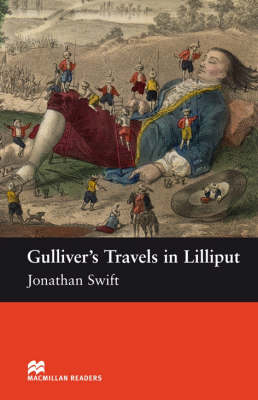
Book of the Week: Gulliver’s Travels in Lilliput by Jonathan Swift

Nov 13 - GulliversTravels

Gulliver’s Travels in Lilliput is a novel by Anglo-Irish writer and clergyman Jonathan Swift, that is a satire on human nature. It is Swift’s best known full-length work, and a classic of English Literature that was first published in 1726.

During his voyage, Gulliver is washed ashore after a shipwreck and finds himself a prisoner of a race of tiny people, less than 15.2 centimeters (6 inches) tall, who are inhabitants of the island country of Lilliput. After giving assurances of his good behavior, he is given a residence in Lilliput and becomes a favorite of the court. From there, the book follows Gulliver’s observations of the Court of Lilliput and life on their island.

[button color=”blue” size=”small” link=”http://englishbookgeorgia.com/catalogue/shop/macmillan/gullivers-travels-in-lilliput/” target=”blank” ]Buy the Book[/button]

On this day…

ellis1

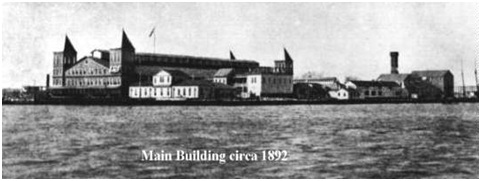
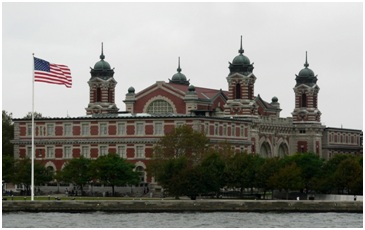
On this day in 1954, Ellis Island, the gateway to America, shuts it doors after processing more than 12 million immigrants since opening in 1892. Today, an estimated 40 percent of all Americans can trace their roots through Ellis Island, located in New York Harbor off the New Jersey coast and named for merchant Samuel Ellis, who owned the land in the 1770s.

On January 2, 1892, 15-year-old Annie Moore, from Ireland, became the first person to pass through the newly opened Ellis Island, which President Benjamin Harrison designated as America’s first federal immigration center in 1890. Before that time, the processing of immigrants had been handled by individual states.

ellis2During the busiest year of operation, 1907, over 1 million people were processed at Ellis Island. With America’s entrance into World War I, immigration declined and Ellis Island was used as a detention center for suspected enemies. Following the war, Congress passed quota laws and the Immigration Act of 1924, which sharply reduced the number of newcomers allowed into the country and also enabled immigrants to be processed at U.S. consulates abroad.

ellis3After 1924, Ellis Island switched from a processing center to serving other purposes, such as a detention and deportation center for illegal immigrants, a hospital for wounded soldiers during World War II and a Coast Guard training center. In November 1954, the last detainee, a Norwegian merchant seaman, was released and Ellis Island officially closed.

ellis4Beginning in 1984, Ellis Island underwent a $160 million renovation, the largest historic restoration project in U.S. history. In September 1990, the Ellis Island Immigration Museum opened to the public and today is visited by almost 2 million people each year.

Did you know…

Drive to Space

If you could drive your car straight up at 95km/h (60mph), you would arrive in space in just a little over one hour.

To get to the Moon would take a little longer though, since it’s 400,000km (250,000 miles) away – driving around the Earth ten times – just under six months. Your only real problem (apart from having no oxygen for your lungs and for burning the petrol) would be finding a petrol station – and a place that has a bathroom!

5 Things You Should be Doing to Have an Insanely Productive Week

productive

A productive week depends largely on what you focus on every working day and how much time you allocate to activities that take up your time (i.e. busy work). Working harder does not necessarily mean you are being productive. There will always be a better way to complete that task. Find it, work smarter and get more done in your working week.

These are a few things you can do to have an insanely productive week this and every other week:


[box type=”shadow” align=”aligncenter” ]1. Stop planning, start doing.

It’s okay to make time to plan what needs to be done in the week or month but when you get back to the planning table often, you lose precious productive hours. So instead of plan, just do it. The option to work on a task in the future instead of now seem comfortable but not prudent. While you keep telling yourself you don’t have to do it now, that task won’t go away. And somebody will have to eventually account for it. So instead of procrastinating, get on with it and check it off your to-do list.

Also, are your meetings really worthwhile? Most people spend too much time in meetings, when they should be working and getting things done. To ensure you are making the most of your time, create a time budget. This will help you realize how much time you are losing to meetings or planning when you should be doing actual work. You will be surprised at how much you can get done every week if you start tracking how much time you spend planning or meeting.

2. You don’t have to say “yes” to every request.

“The difference between successful people and very successful people is that very successful people say “no” to almost everything.” — Warren Buffet.

Saying “yes” to a request seem easier than a simple “no”. Yet every time you agree to do something for somebody that brings low or no result, it makes it difficult to have a schedule you can really control. You don’t want that. You can achieve more if you know what you have to do, when you have to it and what you expect to accomplish. All that can be done in controlled schedule.

3. Don’t be a perfectionist.

If you keep chasing perfection, it could take you longer to get your tasks done – and you will most likely be less productive than you planned. The reason being is when you activity strive for perfection you spend more time on a single task than required, causing your other responsibilities to get pushed back. This will cause you to lose time and possibly annoy your immediate boss in the process. Perfectionism is even higher when you don’t account to anyone but yourself, as the fine tuning never ends.

4. Get everything out of your head.

Don’t rely heavily on your memory. It will fail you when you need it most. Instead, write things down.

There are hundreds of options for taking notes — everything from the good old sticky notes to applications like Evernote, Any.do, and Wunderlist. By jotting down everything that needs to get done in the week, you will have a better picture of what needs to be accomplished – and set priorities accordingly.

5. Review and measure your accomplishments.

Just before you close the week and prepare for next week, review your achievements, along with everything else that needed to be done, to see if you really got work done. Get back to your to-do list and check them off and find out what you were not able to do and why. Celebrate your accomplishments, take note of everything you postponed and learn from your mistakes. You will be better prepared for the following week.[/box]

[button color=”blue” size=”small” link=”http://www.entrepreneur.com/article/237985″ target=”blank” ]Source[/button]


David Spencer: MOTIV8: Eight Key Factors in Motivating Teenage Students

On Saturday the 8th of November, English Book in Georgia, in conjunction with the Ministry of Education and Macmillan Education held a conference discussing “English Language and Economic Development in the Globalized World”.

One of the speakers, David Spencer, talked about “Motiv8: Eight Key Factors in Motivating Teenage Students ”.

During his talk, Spencer referred to the article below. We’d like to provide it for you today, so that you can review your notes and introduce these ideas to your classrom or school.

[divider]

MOTIV8: Eight Key Factors in Motivating Teenage Students

David Spencer

Tbilisi, Georgia

8th November 2014

 1.) Personalisation

For students to communicate comfortably in another language, it’s important to create an atmosphere of personal trust in the classroom, where students feel at ease talking about their lives.

Activities:

  • Talking T-shirts: Ask students to bring to class (or simply describe) one, two or three T-shirts that have some personal significance to them. They give a short presentation to the class explaining the significance. This allows the students to learn about each other in a relaxed, interesting away.
  • Selfies: After the holidays or weekend, draw two or three simple rectangles on the board. Ask students to imagine that this is the screen of their mobile phone. They should draw ‘selfies’ or photos of their holiday/weekend. Then they show their ‘photos’ to a partner. Their partner asks them Yes/No questions to find out about what they did.

2.) Challenge

 If you treat teenagers as if they know nothing, they’ll act as if know nothing. Try to challenge students in terms of grammar, vocabulary, texts, and interesting content. Think also about having open-ended activities for fast finishers to avoid bored, potentially disruptive students.

Activities for fast finishers:

  • Rose-Rise-Rice…: Students continue the list by changing one letter (any letter) at a time. E.g. Rose-rise-rice-nice-nine-fine-…
  • The Three Letter Game: Write three letters on the board. Students think of as many words as possible containing those three letters, in any order. Remind them that word formation can help them. Example answers for the letters RTN: train, north, natural, naturally, unnatural, presentation…


3.) ‘Do-ability’

Give teenage students structured activities that help to make difficult things easy, or do-able.

Activity:

  • Madlib story:

Ask students to write down:

1. a country   2. a boy’s name – famous, fictional, unusual…   3. a girl’s name– famous, fictional, unusual…   4. a city   5. a verb in the past simple (+ object if necessary)  6. an animal   7. a superhero   8. a place   9. a type of food   10. a number

Then give them a skeleton text below to put their words into. Let them compare texts. Then analyse the linkers and use those linkers as a structure for the students’ own text.

[box type=”shadow” align=”aligncenter” ]This story took place in (1) _______. It all began when (2) _______ met (3) _______. They decided to go to (4) _______. Lots of things happened there. First they (5) _______. Then they saw a big (6) _______. The (6) _______ attacked them but just at that moment (7) _______ came and rescued them. (7) _______ took them to (8) _______ and they ate (9) _______. In the end, (2) _______ married (3) _______ and they had (10) _______ children.[/box]


4.) Engagement

The main thing we need in any class is that the students are engaged and active in our activities. Enjoyment is an important factor.

  • Kim’s Game: Show the students 15 objects (on a tray/in a photo). Give students time to memorise the objects, then take them away. Students, in pairs, try to remember what they saw. Then show the same objects again, but having taken away three or four. Can they identify the missing objects?


5.) Progress / 6.) Success

Help students to see the progress they’re making. Do regular progress checks, guiding them to extra practice if they need it. Include cumulative practice and revision throughout the year.

Activity:

  • Rewriting a low-level reader: Give B1+/ B2/B2+ students a simplified reader at A1/A1+/A2 level. Ask them to ‘improve’ short sentences by adding linkers, relative pronouns, and conjunctions.


7.) Variety

Make sure there is variety of skills and language work, interaction, task types, and media. Activities that are out of the ordinary will help to keep the students’ interest.

Activities:

  • Mime the picture: Ask for a volunteer to come to the front of the class. Secretly show them a photo. The students should adopt the same position as the person in the photo. The rest of the class ask the student Yes/No questions to discover what exactly is in the photo.
  • Alphabet Cards: Distribute the cards to the class.

(a) Spell words. Students who have a letter that appears in the word come to the front of the class and position themselves to spell the word correctly.

(b) Call out a category. Students have to think of a word beginning with their letter for the category. They hold up their card and say the word. If they can’t, they lose a point.


8.) Teacher Motivation

Activity:

Interesting Words and Expressions – When the going gets tough, the tough get going

“When the going gets tough, the tough get going.”

What does it mean?

When you break it down and put it into context, “the going” means “the situation,” “gets tough” means “becomes difficult,” “the tough” means “people who are strong or enduring,” and “get going” means “become fully engaged.” Taken together, the meaning of the phrase is “When the situation becomes difficult, the strong will work harder to meet the challenge.”

Where does it come from?

The origin of the phrase has been attributed both to Joseph P. Kennedy (1888–1969), father of U.S. President John F. Kennedy (JFK), and sometimes to Norwegian-born American football player and coach Knute Rockne (1888–1931).

Enjoy a very popular American song that uses this proverb below.

Which Book Would You Read?

To celebrate Francis Hodgson Burnett, we’d like to ask, which book would you read?

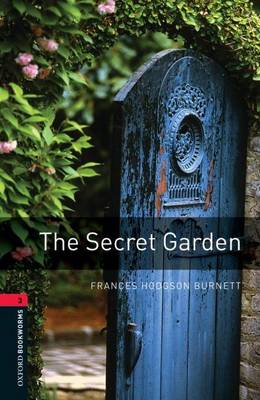
secretgardThe Secret Garden

Author: Francis Hodgson Burnett

ISBN: 9780194791298

Though Frances Hodgson Burnett wrote more than forty books, none remains so popular as this miraculous and magical masterpiece. Has any story ever dared to begin by calling its heroine, “the most disagreeable-looking child ever seen” and, just a few sentences later, “as tyrannical and selfish a little pig as ever lived?” Mary Lennox is the “little pig,” sent to Misselthwaite Manor, on the Yorkshire moors, to live with her uncle after her parents die of cholera. There she discovers her sickly cousin Colin, who is equally obnoxious and imperious. Both love no one because they have never been loved. They are the book’s spiritual secret gardens, needing only the right kind of care to bloom into lovely children.

Mary also discovers a literal secret garden, hidden behind a locked gate on her uncle’s estate, neglected for the ten years since Colin’s birth and his mother’s death. Together with a local child named Dickon, Mary and Colin transform the garden into a paradise bursting with life and color. Through their newfound mutual love of nature, they nurture each other, until they are brought back to health and happiness.

Price: 8,5 GEL

[button color=”blue” size=”small” link=”http://englishbookgeorgia.com/catalogue/shop/bookworms/the-secret-garden/” target=”blank” ]Buy the Book[/button]

little lordLittle Lord Fauntleroy

Author: Frances Hodgson Burnett

ISBN: 9780194789295

At the age of sixteen Frances Hodgson Burnett moved to Tennessee with her bankrupt family and began writing for American magazines as means to support herself. Over two decades later Burnett published Little Lord Fauntleroy, modeling the character after her son, Vivian. Burnett’s text and Reginald Birch’s original illustrations helped popularize a very romantic style of dress for boys — a velvet suit with a broad lace collar — in the late nineteenth and early twentieth centuries.

At a very early age an American boy named Cedric is told that he is the sole heir to a British earldom. So, he leaves New York to take up residence in his ancestral castle, where, after some initial resistance, he is joined by his middle-class mother, ”Dearest”, the widow of the late heir. His grandfather, the Earl of Dorincourt, intends to teach the boy to become an aristocrat, but Cedric inadvertently teaches his grandfather compassion and social justice, while the artless simplicity and motherly love of Dearest warms his heart.

Price: 7,5 GEL

[button color=”blue” size=”small” link=”http://englishbookgeorgia.com/catalogue/shop/bookworms/little-lord-fauntleroy/” target=”blank” ]Buy the Book[/button]

Theme of the Week: Frances Hodgson Burnett

francisburnett1

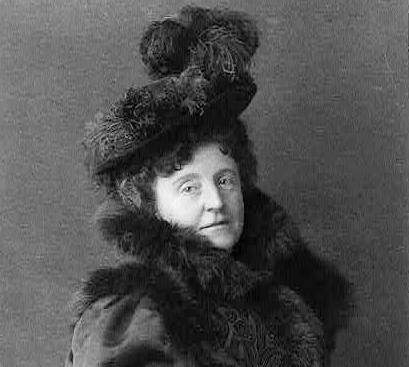
The theme for this week is about Frances Hodgson Burnett, who was an English-American playwright and author. She is best known for her children’s stories, in particular Little Lord Fauntleroy and The Secret Garden.

Little Lord Fauntleroy and The Secret Garden have had many film adaptations, plays and musicals made from them since publication.

Enjoy the trailer of The Secret Garden film:

And enjoy a clip from the 1936 film version of Little Lord Fauntleroy:

http://www.youtube.com/watch?v=fRZ_YDGw7Rg

Inspirational Quotes


Deprecated: preg_match_all(): Passing null to parameter #2 ($subject) of type string is deprecated in /home2/englita2/public_html/blogebg/wp-includes/media.php on line 1893

Deprecated: str_contains(): Passing null to parameter #1 ($haystack) of type string is deprecated in /home2/englita2/public_html/blogebg/wp-includes/shortcodes.php on line 150

Deprecated: preg_split(): Passing null to parameter #2 ($subject) of type string is deprecated in /home2/englita2/public_html/blogebg/wp-includes/formatting.php on line 3492