Notice: Function _load_textdomain_just_in_time was called incorrectly. Translation loading for the content-views-query-and-display-post-page domain was triggered too early. This is usually an indicator for some code in the plugin or theme running too early. Translations should be loaded at the init action or later. Please see Debugging in WordPress for more information. (This message was added in version 6.7.0.) in /home2/englita2/public_html/blogebg/wp-includes/functions.php on line 6170
Notice: Function _load_textdomain_just_in_time was called incorrectly. Translation loading for the js_composer domain was triggered too early. This is usually an indicator for some code in the plugin or theme running too early. Translations should be loaded at the init action or later. Please see Debugging in WordPress for more information. (This message was added in version 6.7.0.) in /home2/englita2/public_html/blogebg/wp-includes/functions.php on line 6170
Notice: Function _load_textdomain_just_in_time was called incorrectly. Translation loading for the gravity-forms-pdf-extended domain was triggered too early. This is usually an indicator for some code in the plugin or theme running too early. Translations should be loaded at the init action or later. Please see Debugging in WordPress for more information. (This message was added in version 6.7.0.) in /home2/englita2/public_html/blogebg/wp-includes/functions.php on line 6170 January 2015 | Blog EBE
Skip to content
Deprecated: preg_match_all(): Passing null to parameter #2 ($subject) of type string is deprecated in /home2/englita2/public_html/blogebg/wp-includes/media.php on line 1893
Deprecated: str_contains(): Passing null to parameter #1 ($haystack) of type string is deprecated in /home2/englita2/public_html/blogebg/wp-includes/shortcodes.php on line 150
Deprecated: preg_split(): Passing null to parameter #2 ($subject) of type string is deprecated in /home2/englita2/public_html/blogebg/wp-includes/formatting.php on line 3492
A rare sighting of an upside-down iceberg has been captured on camera, revealing a striking deep blue underbelly that once resided beneath Antarctica’s frigid waters.
Usually icebergs are white because they are made of compressed snow, which reflects all frequencies of visible light. However, if high pressures squeeze the flakes together, or sea water freezes, the gaps between the snowflakes disappear.
Now and then, an iceberg flips over, allowing us to see what has happened to its lower reaches. Most often this occurs when the iceberg has just calved, but occasionally it transpires later, for example in a storm.
When visiting Antarctica at the end of last year, filmmaker Alex Cornell came across the aftermath of one such event.
Cornell has also provided this comparison of an ordinary iceberg set against an upturned one.
It is a noun and means a noisy and overexcited reaction or response to something.
How do you pronounce it?
ˈ/bro͞o′hä-hä′/
or
[brou·ha·ha]
Where does it come from?
Some etymologists think the word is onomatopoeic (imitating a sound) in origin, but others believe it comes from the Hebrew phrase “bārūkh habbā’,” meaning “blessed be he who enters”.
Although we borrowed our spelling and meaning of “brouhaha” directly from French in the late 19th century, etymologists have connected the French derivation to that frequently recited Hebrew phrase, distorted to something like “brouhaha” by worshipers whose knowledge of Hebrew was limited. Thus, once out of the synagogue, the word first meant “a noisy confusion of sound” — a sense that was later extended to refer to any tumultuous and confused situation.
How do you use it?
A brouhaha erupted over her statements about the president.
There’s been a lot of brouhaha in the city about the prime minister’s decision to raise taxes.
On this day in 1985, American recording artists gather to record “We Are the World”.
The special instruction Quincy Jones sent out to the several dozen pop stars invited to participate in the recording of “We Are the World” was this: “Check your egos at the door.” Jones was the producer of a record that would eventually go on to sell more than 7 million copies and raise more than $60 million for African famine relief. But before “We Are the World” could achieve those feats, it had to be captured on tape—no simple feat considering the number of major recording artists slated to participate. With only one chance to get the recording the way he and songwriters Michael Jackson and Lionel Ritchie wanted it, Jones convened the marathon recording session of “We Are the World” at around 10 p.m. on the evening of January 28, 1985, immediately following the conclusion of the American Music Awards ceremony held just a few miles away.
Among the 45 stars who sang on “We Are the World” that night were huge-in-the-80s figures like Cyndi Lauper and Huey Lewis; Country stars like Kenny Rogers and Willie Nelson; pop icons like Smokey Robinson, Tina Turner and Paul Simon; and musical giants like Stevie Wonder, Ray Charles and Bob Dylan. Also in the studio that night were half of the Jackson family, one Irishman (Bob Geldof, co-organizer of Band Aid) and one party-crashing Canadian, comedian Dan Aykroyd. Egos fully in check, the group laid down the chorus and solos before sunrise on the 29th, and “We Are the World” was in the stores and on the airwaves just five weeks later.
Some sources say that crocodiles don’t have tongues at all, while others say that the tongue is attached to the rest of the mouth. But either way, they can’t stick their tongue out at you if you do this:
Since the 1960s people have talked about “the generation gap,” the difference in ideas, opinions and behaviors that separates older from younger people.
The divide narrows or widens from time to time, but it’s always there, and at the moment it seems to be cutting through the workplace in a particularly complex way: Very soon, four generations will be working together or living under the same roof.
With retirement disappearing as a concept for more and more mature professionals who are having to work longer than they intended to supplement their pension, there are fewer job opportunities for those who are younger. That’s led not just to higher levels of youth unemployment, but also of a sense of unfulfillment among greater numbers of professionals around the world who suffer from increasing levels of stress and lack of purpose in their work.
When the baby boomers (born from 1946 to the 60s) and generation X (those born in the 60s and 70s) do come together in the workplace with the much younger millennials (the connected generation of “digital natives” born in the 80s and 90s), there are often tensions.
It will be interesting to see the new and very real challenges and opportunities arising when all these groups are joined by those among generation Z (those born from the mid 1990s onwards), who have never known a life without super-fast communication and unlimited access to media technologies, smartphones and online shopping.
The baby boomers and some in gen X often perceive their younger counterparts as having an unjustified sense of entitlement, with no real work ethic, and unwilling to “pay their dues” by starting at the bottom and working their way up.
At the same time, younger employees see their seniors as intransigent, inflexible and no longer best equipped to make the right decisions. Generations Y and Z expect to have knowledge at their fingertips and the independence technology gives them to be able to work anywhere and for whom they choose. Highly transient and mobile, they expect immediate responses from others.
However, because they prefer to sit behind and communicate through the screens of their PCs, laptops and smartphones, their under-developed ability to communicate face to face could put them at a disadvantage when it comes to managing staff, making presentations and connecting with those in other generations.
Whatever the relative truth of the matter, this can make for a challenging mix.
For many in this generation war, the young seem to be winning so far, with the millennials squeezing out the baby boomers and even gen X’ers in a battle of salary cuts as companies, cash strapped after the recent downturn, seek to rein in spending.
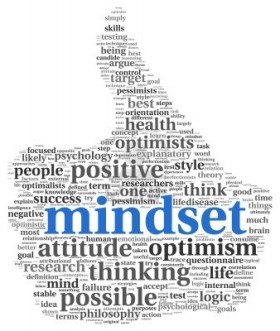
However, while age and lifestyle preferences are often seen as the major dividing line between us, I believe there’s one that’s even more important — mindset, something that goes beyond age, gender, education, wealth and geography.
It is by focusing on mindsets and values that I believe we can transcend the traditional generational descriptions that so often seem to create division rather than harmony and unity.
I see mindset and attitude as the real differentiator of talent in our world. But while it is crucially important, it’s something that, as yet, very few companies consider when recruiting or selecting staff.
In my book Corporate Escape: the Rise of the New Entrepreneur, I coined the terms SUPER– (negative) Generation and SUPER+ (positive) Generation to separate the two opposing mindsets I see prevalent in organizations and society as a whole, with SUPER being an acronym for the characteristic way in which each sees and approaches the world.
So those in the SUPER– Generation tend to be superficial, focused primarily on their possessions and external appearance. They have an ongoing need to purchase the latest gadgets and want whatever others have.
They are also unfulfilled, feeling “empty” because of an excessive focus on their appearance and “external” things, which don’t really satisfy their inner needs.
Consequently, with few real “anchors” in their lives, they feel left out and often become negative about the future. Without any sense of purpose or direction, this makes them pessimistic, as well as rather self-centered and egocentric. They believe the world is all about “them,” so they’re rarely willing to take responsibility for their behavior and actions or take ownership for their own success.
And since all this makes their lives less than happy, they are restless, always searching for the next “new thing.” Their world revolves around others and what is fashionable, superficial and temporary.
Unfortunately, a large percentage of those in any kind of work and experience fall well and truly into this category.
Then there are those who are members of that other club: the SUPER+ Generation.
These are individuals who don’t wait for things to happen, but who make them happen, which tends to make them more successful.
They aren’t frightened to stand out and be different, which means they are independent thinkers, often with an unconventional outlook and approach.
Driven to succeed, they are energetic and passionate about making a difference, which frequently comes through in their innately entrepreneurial approach to life, taking responsibility for their own actions.
Finally, they believe in making things happen through a collaborative approach, which is why they are relational, global thinkers who are able to see beyond “me” and “you” to “us.”
As an entrepreneur, business owner or manager, who would you want more of on your side?
Those in the SUPER+ Generation I suspect, because it’s they who will drive companies and societal evolution forward. They are the leaders of tomorrow.
And since this fundamental division between generations goes largely unrecognized, businesses continue to employ based on other criteria — normally the traditional CVs and cost — a short-term approach that can leave mature professionals with plenty of knowledge and industry experience standing on the wrong side of the door. However, given increasingly volatile, uncertain and complex economies and global markets, if you really want to make things happen in the best way, experienced heads are often still needed alongside the energy and new perceptions of those who are younger. You are created to work with others, to collaborate and learn together, not to be in constant opposition.
The great thing is that at any moment you have the power to create the professional world you want to be part of. One in which where you come from, your age and gender, or and what you have done before is less important than your vision of what is possible.
When the future is created one step at the time, isn’t it time to see beyond the generations?
It’s best to do something on time. But if you can’t do it on time, do it late.
Where does it come from?
This proverb is often expressed with a degree of sarcasm, apparently saying something positive but in fact merely remarking on someone’s lateness. A teacher might say it to a child arriving late for school, for example. Geoffery Chaucer appears to have been the first person to have put the proverb into print, in The Yeoman’s Prologue and Tale, Canterbury Tales, circa 1386:
For bet than never is late. [Better than never is late.]
This week we celebrate our authors of January by asking which book would you read?
Cold Comfort Farm
Author: Stella Gibbons
ISBN: 9780194792554
Winner of the 1933 Femina Vie Heureuse Prize, COLD COMFORT FARM is a wickedly funny portrait of British rural life in the 1930s. Flora Poste, a recently orphaned socialite, moves in with her country relatives, the gloomy Starkadders of Cold Comfort Farm, and becomes enmeshed in a web of violent emotions, despair, and scheming, until Flora manages to set things right.
It is just before Christmas and the marshal wants to go South to spend the holiday with his wife and family, but first he must recover from the flu and also solve a murder. A seemingly respectable retired Englishman, living in a flat on the Via Maggio near the Santa Trinita bridge, was shot in the back during the night. He was well-connected and Scotland Yard has dispatched two officers to “assist” the Italians in solving the crime. But it is the marshal, a quiet observer, not an intellectual, who manages to figure out what happened, and why.
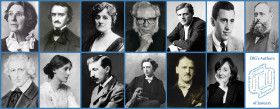
This week we celebrate authors of the past and present who had birthdays in the month of January. Check them out below.
(Top L-R) Stella Gibbons, Edgar Allan Poe, Edith Wharton, Isaac Asimov, Jack London, J.D. Salinger, Wilkie Collins (Bottom L-R) Jacob Grimm, Virginia Woolf, E.M. Forster, Lewis Carroll, W. Somerset Maugham, Magdalen Nabb
J.D. Salinger
(January 1, 1919 – January 27, 2010)
Jerome David “J. D.” Salingerwas an American writer who won acclaim early in life. He led a very private life for more than a half-century. His novel, The Catcher in the Rye (1951) brought him a lot of public attention-which he did not like. He published Franny and Zooey in 1961 and gave his last interview in 1980.
[button color=”blue” size=”small” link=”http://englishbookgeorgia.com/catalogue/shop/books-fiction-nonfiction-publishers/the-catcher-in-the-rye/#/” target=”blank” ]Buy the Book[/button] [button color=”blue” size=”small” link=”http://englishbookgeorgia.com/catalogue/shop/books-fiction-nonfiction-publishers/franny-and-zooey/#/” target=”blank” ]Buy the Book[/button]
E. M. Forster
(January 1, 1879 – June 7, 1970)
Edward Morgan Forster was an English novelist, short story writer and essayist. He is known best for his ironic and well-plotted novels examining class difference and hypocrisy in early 20th-century British society. Forster’s 1924 novel, A Passage to India brought him his greatest success.
[iphorm_popup id=”1″ name=”მოითხოვე სასურველი წიგნი”]Order the Book[/iphorm_popup]
Isaac Asimov
(January 2, 1920 – April 6, 1992)
Asimov was an American author and professor of biochemistry at Boston University, best known for his works of science fiction and for his popular science books, such as I, Robot. Asimov was prolific and wrote or edited more than 500 books and an estimated 90,000 letters and postcards and was considered one of the “Big Three” science fiction writers during his lifetime.
[iphorm_popup id=”1″ name=”მოითხოვე სასურველი წიგნი”]Order the Book[/iphorm_popup]
Jacob Grimm
(January 4, 1785 – September 20, 1863)
Jacob Ludwig Carl Grimm was a German philologist, jurist and mythologist. He is known as the discoverer of Grimm’s Law, and as one of the Brothers Grimm (with his brother Wilhelm), as the editor of Grimm’s Fairy Tales.
[button color=”blue” size=”small” link=”http://englishbookgeorgia.com/catalogue/shop/tweens-kids-books/the-brothers-grimm-the-complete-fairy-tales/#/” target=”blank” ]Buy the Book[/button]
Stella Gibbons
(January 5, 1902 – December 19, 1989)
Gibbons was an English author, journalist, and poet. She established her reputation with her first novel, Cold Comfort Farm (1932), which won the literary Prix Femina Étranger and has been reprinted many times.
[iphorm_popup id=”1″ name=”მოითხოვე სასურველი წიგნი”]Order the Book[/iphorm_popup]
Wilkie Collins
(January 8, 1824 – September 23, 1889)
William Wilkie Collins was an English novelist, playwright, and author of short stories. His best-known work isThe Woman in White.
[button color=”blue” size=”small” link=”http://englishbookgeorgia.com/catalogue/shop/books-fiction-nonfiction-publishers/the-woman-in-white/#/” target=”blank” ]Buy the Book[/button]
Jack London
(January 12, 1876 – November 22, 1916)
John Griffith “Jack” London was an American author, journalist, and social activist. He was a pioneer in the then-burgeoning world of commercial magazine fiction and was one of the first fiction writers to obtain worldwide celebrity and a large fortune from his fiction alone. His most famous works include The Call of the Wild, set in the Klondike Gold Rush.
[button color=”blue” size=”small” link=”http://englishbookgeorgia.com/catalogue/shop/books-fiction-nonfiction-publishers/the-call-of-the-wild/#/” target=”blank” ]Buy the Book[/button]
Magdalen Nabb
(January 16, 1947 – August 18, 2007)
Nabb was a British author, best known for the Marshal Guarnaccia detective novels such as Death of an Englishman.
[iphorm_popup id=”1″ name=”მოითხოვე სასურველი წიგნი”]Order the Book[/iphorm_popup]
Edgar Allan Poe
(January 19, 1809 – October 7, 1849)
Poe was an American author, poet, editor, and literary critic, considered part of the American Romantic Movement. Best known for his tales of mystery and the macabre, Poe was one of the earliest American practitioners of the short story, and is generally considered the inventor of the detective fiction genre. His most famous works include The Tell-Tale Heart, The Murders in the Rue Morgue, The Masque of the Red Death and The Pit and the Pendulum.
[button color=”blue” size=”small” link=”http://englishbookgeorgia.com/catalogue/shop/books-fiction-nonfiction-publishers/the-murders-in-the-rue-morgue-and-other-tales/#/” target=”blank” ]Buy the Book[/button] [button color=”blue” size=”small” link=”http://englishbookgeorgia.com/catalogue/shop/books-fiction-nonfiction-publishers/the-pit-and-the-pendulum-and-other-stories/#/” target=”blank” ]Buy the Book[/button]
Edith Wharton
(January 24, 1862 – August 11, 1937)
Wharton was a Pulitzer Prize-winning American novelist, short story writer, and designer. She was nominated for the Nobel Prize in Literature in 1927, 1928 and 1930. The Age of Innocence was Wharton’s twelfth book which won the 1921 Pulitzer Prize for Fiction, making it the first novel written by a woman to win the Pulitzer Prize for Fiction.
[iphorm_popup id=”1″ name=”მოითხოვე სასურველი წიგნი”]Order the Book[/iphorm_popup]
W. Somerset Maugham
(January 25, 1874 – December 16, 1965)
William Somerset Maugham was a British playwright, novelist and short story writer. He was among the most popular writers of his era and reputedly the highest paid author during the 1930s. He is most remembered for his novels:Of Human Bondage, The Moon and Sixpence, Theatre, The Painted Veil and The Summing Up.
[button color=”blue” size=”small” link=”http://englishbookgeorgia.com/catalogue/shop/books-fiction-nonfiction-publishers/of-human-bondage/#/” target=”blank” ]Buy the Book[/button] [button color=”blue” size=”small” link=”http://englishbookgeorgia.com/catalogue/shop/books-fiction-nonfiction-publishers/theatre/” target=”blank” ]Buy the Book[/button] [button color=”blue” size=”small” link=”http://englishbookgeorgia.com/catalogue/shop/biography/the-summing-up/#/” target=”blank” ]Buy the Book[/button]
[button color=”blue” size=”small” link=”http://englishbookgeorgia.com/catalogue/shop/books-fiction-nonfiction-publishers/the-moon-and-sixpence/#/” target=”blank” ]Buy the Book[/button] [button color=”blue” size=”small” link=”http://englishbookgeorgia.com/catalogue/shop/books-fiction-nonfiction-publishers/the-painted-veil/#/” target=”blank” ]Buy the Book[/button]
[button color=”blue” size=”small” link=”http://englishbookgeorgia.com/catalogue/shop/bestsellers/orlando-a-biography/” target=”blank” ]Buy the Book[/button] [button color=”blue” size=”small” link=”http://englishbookgeorgia.com/catalogue/shop/bestsellers/between-the-acts/#/” target=”blank” ]Buy the Book[/button]
[button color=”blue” size=”small” link=”http://englishbookgeorgia.com/catalogue/shop/books-fiction-nonfiction-publishers/the-common-reader/#/” target=”blank” ]Buy the Book[/button] [button color=”blue” size=”small” link=”http://englishbookgeorgia.com/catalogue/shop/books-fiction-nonfiction-publishers/a-room-of-ones-own/#/” target=”blank” ]Buy the Book[/button]
Lewis Carroll
(January 27, 1832 – January 14, 1898)
Charles Lutwidge Dodgson, better known by his pen name, Lewis Carroll, was an English writer, mathematician, logician, and photographer. His most famous writings are Alice’s Adventures in Wonderland, and its sequel Through the Looking-Glass.
[button color=”blue” size=”small” link=”http://englishbookgeorgia.com/catalogue/shop/books-fiction-nonfiction-publishers/through-the-looking-glass-and-what-alice-found-there-oxford-bookworms-green/#/” target=”blank” ]Buy the Book[/button] [button color=”blue” size=”small” link=”http://englishbookgeorgia.com/catalogue/shop/books-fiction-nonfiction-publishers/alices-adventures-in-wonderland/#/” target=”blank” ]Buy the Book[/button]