Tag Archives: For Teachers

Gail Rebuck

Random_House_logo_bw2-1024x819

Gail Rebuck

Back in April, Penguin Random House UK Chair Gail Rebuck gave a 20-minute talk at the London Book Fair’s Quantum conference, during which she shared her views on the effect technology has on books today. According to Rebuck, books will forever remain the “DNA of our civilisation”, despite the technological changes that have already happened or will happen in the future.

That is not to say, of course, that technology hasn’t changed anything. To the contrary, Rebuck believes that publishers’ jobs are made easier by the huge amount of online research tools, since they can learn more about the world’s tastes in literature. It’s not all positive, however. Rebuck also thinks that technology has its dangers. In her speech, Rebuck noted a “concerning decline in authors’ revenues”, as only one out of ten writers live on the money they make from writing. She believes that modern problems such as price deflation and more competition from other media forms could be responsible for this situation.

That being said, Rebuck urged publishers to not think of digital and physical media as “enemies”. After all, books are books, no matter how or where they’re read. She hopes for a balanced future, one which will allow the possibility of giving young writers more options for getting published, but also one in which “the uniqueness of the author” is never put under risk.

For more than 20 years, Gail Rebuck has been the most important publisher in the UK. As the head of Random House, she’s been responsible for many literacy projects and industry promotions, achieving success in a very difficult industry. Surprisingly, no one could’ve predicted this when she was appointed back in 1991; she had a reputation as a publisher of lifestyle titles rather than “serious” books. However, in the years that followed, she has become the dominant force in UK publishing.

For Rebuck, this success has come as a result of her approach to work. Failure is not an option. She wants only the best efforts from all of her employees. However, she’s not arrogant, despite her success; she believes it’s always the authors that are responsible for a publisher’s success.


Source : Albanese, Andrew “Rebuck: technology ‘cuts two ways’.” London Show Daily, April 2016, 1

Clee, Nicholas “Gail Rebuck: making things work.” London Show Daily, April 2016, 24

Tiger Time – English time is Tiger Time!

TT_banner


Welcome to Tiger Time!

Tiger Time is a vibrant, six-level primary course based around different settings and characters which grow and change with the students, reflecting their evolving interests and needs.

Units contain humorous stories told through different genres, which use everyday language as well as catchy songs, chants and raps at the lower levels. Within each unit lessons are carefully structured focusing first on vocabulary, grammar and skills, and building to CLIL, culture and projects, allowing children to practise and consolidate their learning throughout the unit. Each unit ends with a review, encouraging active communication.

Written with classroom management in mind, activities are practical and well-staged. The accompanying Presentation Kit and Teacher’s Resource Centre help teachers create dynamic lessons, which cater to diverse classroom situations. The Student’s Resource Centre provides a home-school connection offering extra activities and support.

Components for students:

  • Student’s Book
  • Activity Book
  • Student’s Resource Centre
  • Student’s eBook

Components for teachers:

  • Teacher’s Book
  • Flashcards
  • Teacher’s Resource Centre
  • Presentation Kit
  • Class Audio CDs
  • Student’s eBook

Authors

Carol Read and Mark Ormerod

Source : www.macmillanenglish.com

Grammar Goals – Go for Gold!

SBCOVERSrgb72DPI_2

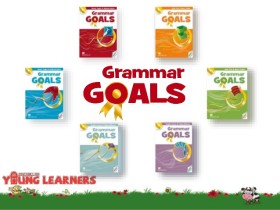
Welcome to Grammar Goals

Grammar Goals is a new six-level grammar series for children aged 6-12 years. It presents and practises grammar in lively and meaningful age-appropriate contexts that reflect pupils’ real lives and interests. Linked to the Cambridge and Trinity external exam syllabuses, Grammar Goals offers regular exam-style practice tasks in the Pupil’s Books.

The visually appealing nature of the course ensures that grammar is presented in a child-friendly format that keeps pupils actively involved in learning the language form, function and meaning. The careful staging of the units provides three levels of challenge and success – bronze, silver and gold – helping students reflect on their progress and aim for higher goals.

Key features:

  • Clearly contextualised language makes grammar pratice meaningful.
  • Interactive grammar boxes break down form and clarify use.
  • Carefully graded activities build confidence and accuracy.
  • Cross-curricular topics link grammar to everyday life and teach pupils about the world around them.
  • Activities develop young learner competences, such as thinking and interpersonal skills.  –
  • A separate writing syllabus teaches key skills and strategies.
  • Exam-style activities practise task types from the Cambridge English: Young Learners English tests.
  • Step-by-step lesson notes with extra, mixed-ability and extension activities provide extra teacher support.

GRAMMAR GOALS

Authors:

Nicole Taylor and Michael Watts and Julie Tice and Dave Tucker and Angela Llanasand Libby Williams

Source :  www.macmillanyounglearners.com

Dramatic Results

breaking-bad-sti-news


Dramatic results

Roleplaying activities in classes can benefit students in many ways. This fact is well known among experts. In such activities, students can practice new words while using English more naturally than in grammar exercises. However, it’s usually hard to organise big roleplaying activities, like entire drama projects (mostly because of not having enough time or money), which is unfortunate, because these projects can be very good for children. They get a chance to meet new friends and improve their self-esteem.

Of course, the lack of time can really be a problem, but drama projects don’t have to be very complicated. All it takes is children that are willing to participate. Even if they’re shy, they can still work off-stage as script writers; as long as they’re working in English, they’ll benefit from the activity.

Picking the drama to stage can be tricky. You can find a huge number of scripts, especially those adapted for English learners, but it’s also possible to have the students write their own play. This is incredibly important and beneficial for their English education, since they’ll be able to express their ideas using vocabulary that they find themselves.

Everyone can get involved. Even those that are still beginners can have roles that require more movement and less speaking. The only requirement is for everyone to feel like they’re participating and having fun.

It’s also important to make the children discuss the project throughout the process. Ask them questions about their characters and the situations they find themselves in during the play. This gives the children an opportunity to become familiar with the vocabulary of their characters.

However, don’t forget that drama projects don’t just involve English. The children have to act instead of just memorizing lines, they have to be comfortable with moving on the stage, and, most importantly, they have to be confident on the stage.

Drama project preparation also gives teachers a chance to “sneak in” some pronunciation practice. Since the atmosphere is more relaxed during rehearsals, students won’t be too embarrassed to practice some parts of pronunciation that they find difficult.

Naturally, many students have trouble memorizing lines, especially in English. A good idea is to not make the students remember their whole text in one rehearsal; instead, rehearse only scene by scene.

Using drama projects in English class can give you the chance to improve students’ pronunciation, vocabulary and even intonation without boring them. Though staging a play isn’t easy, it’s worth it.

Source : Hill, Trev. “Dramatic Results.” English Teaching Professional, March 2016, 30-32.

Macmillan Education Training 2017

cover photo

კომპანია „ინგლისური წიგნი საქართველოში“ და Macmillan Educationსაქართველოს განათლებისა და მეცნიერების სამინისტროსთან თანამშრომლობით მართავს ტრენინგს ინგლისური ენის მასწავლებლებისთვის, რომელიც ჩატარდება 2017 წლის 6-10 თებერვალს თბილისსა და საქართველოს სხვადასხვა რეგიონში:

  • ბათუმი-6 თებერვალი, 14:00 საათი. ბათუმის შოთა რუსთაველის  სახელმწიფო უნივერსიტეტი
  • ქუთაისი-7 თებერვალი, 12:00 საათი. ქუთაისის N1 საჯარო სკოლა,ცისფერყანწელთაქ.N6
  • თბილისი-8/9 თებერვალი, 14:00 საათი. დიდი დიღომი, მე-3 მ/რ, ნესტან-დარეჯანის N2
  • თელავი-10 თებერვალი, 12:00 საათი. თელავის იაკობ გოგებაშვილის სახელმწიფო უნივერსიტეტი

ტრენინგი შედგება ორი სესიისგან:

  • Reading, Listening and Life Skills
  • Speaking, Writing and Life Skills

სესიებს გაუძღვება Macmillan Education-ის ტრენერი და სახელმძღვანელოების –

Open Mind, Laser, Destination ავტორი, Steve Taylore-Knowles.

რეგისტრაციისთვის დაგვიკავშირდით:

ტელ: 0322001244

მობ: 599 31 32 89

Email: englishbookteam@englishbook.ge

Integrated skills – Vocabulary : Phrasal verbs

-OSE-Skills-376x23_376

Phrasal verbs: Teaching phrasal verbs using equivalents/ definitions – tips and activities

Tips and activities for teaching phrasal verbs to intermediate students and above.
Introduction | Stage one | Stage two | Stage three | Stage four | Stage five

Anchor Point:introIntroduction

Many phrasal verbs can be said or written another way. This can be a Latinate one-word equivalent (to put out a fire is to extinguish a fire) or by a series of words (to get on well with someone is to have a good relationship with someone). Whether it is one or several words, many learners of English tend to favour the non-phrasal verb equivalent. This often makes them sound formal:

“Can I remove my shoes?” and sometimes inappropriate “Just a minute, let me extinguish my cigarette”.

It is important to point out to learners that phrasal verbs are often a more informal way of saying something, and as such they are more common in spoken English than in written English. When teaching phrasal verbs according to their equivalents, it is not enough just to have a simple matching exercise. There must be some opportunity to use the language.

In the lesson at the bottom of the page the phrasal verbs and their equivalents are all personalized with a Find Someone Who activity.

Aim: To present and practise 12 phrasal verbs

Level: Intermediate and above


Anchor Point:1Stage one

Distribute the worksheets and explain the Find Someone Who activity. The learners must go around the class asking each other questions to find a person who fits one of the sentences. When they find that person, they write their name in the space. Write the first two sentences on the board and elicit the question for each (Do you recover from illnesses very quickly? Do you often begin arguments with strangers?) Tell them that they cannot have the same name written down more than two times during this exercise. Instruct everyone to stand up and begin the activity.


Anchor Point:2Stage two

After five to seven minutes, stop the activity and ask learners to sit down. Do some feedback on the activity, asking what learners found out about each other. Tell them that today they are going to learn some phrasal verbs related to the Find Someone Who activity they have just completed.


Anchor Point:3Stage three

Distribute the second worksheet. Ask learners to match the phrasal verb to its equivalent. To help them, each phrasal verb is listed with some common collocations (words that go with other words). Tell learners that they can look at their original Find Someone Who worksheet for more help.

Answers: a) 8 b) 1 c) 2 d) 7 e) 9 f) 12 g) 10 h) 3 i) 4 j) 11 k) 6 l) 5


Anchor Point:4Stage four

Write on the board the following phrasal verbs: bump into, get over, launch into, get on well with, give back, put out, talk over, bring up, put off, take off, look into, take down. Tell learners to rewrite the completed sentences from the first worksheet (Find Someone Who) using the phrasal verbs on the board. Tell them that they must try to do this without referring back to the second worksheet.

Answers

____ gets over illnesses very quickly; ______ often launches into arguments with strangers;
 ____ borrows things but sometimes doesn’t give them back; _____ has looked into changing jobs/schools recently; _____ gets on well with his/her brothers and sisters; _____ was brought up in the countryside; ____ puts everything off until the last minute; ____ likes to talk things over before making a decision; _____ never takes down notes in class; _____ bumped into an old friend last week; ______ has put out a fire; _____ doesn’t take off their socks when they go to bed.

Stage five

Ask learners to write an original sentence about themselves using each of the phrasal verbs in their notebooks. Learners could do this for homework.

Source : www.onestopenglish.com

Speakout

6a00d83452d45869e20147e14e7b73970b

Speakout – The real world in your classroom!

The award-winning course that invites you and your students to discover English as it is really spoken. Speakout builds up all the skills and knowledge students need to express themselves confidently in a real English-speaking environment.
Lessons cover all four skill areas as well as grammar and vocabulary. Each unit ends with a DVD lesson based around an extract from a BBC programme which provides a springboard for meaningful speaking and writing tasks.

Models of authentic English are also provided through ‘on the street’ interviews filmed by the BBC. MyEnglishLab is a flexible online tool that enriches learning, informs teaching and enhances your Speakout course ,Enriched Learning MyEnglishLab has a wide range of activities that are instantly graded and correlated to your Speakout course,Informed Teaching MyEnglishLab for Speakout gives teachers instant access to a range of invaluable diagnostic tools ,Flexible Solutions You can assign tasks to the whole class, groups of students, or individual students to help them reach their goals more effectively.

ActiveBook is the Students’ book in digital format with integrated audio and video from the course and includes: Easy navigation of the Students’ Book pages with zoom facility ,Video and audio available at the touch of a button Video Podcasts with accompanying worksheets,BBC programme clips that can be played in a DVD player or computer.

Authors : Frances Eales, JJ Wilson, Antonia Clare, Steve Oakes.

Read More http://product.pearsonelt.com/speakout1e/#speakout

Source : www.pearsonelt.com

Open Mind

Open-Mind-life-skills-discussion-wheel-poster-image

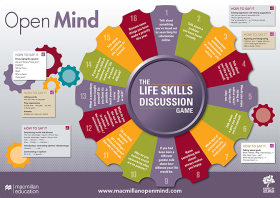
Open Mind opens doors

Open Mind allows teachers and students to enjoy the best combination of digital and print material. This flexible new course combines language development with the crucial skills students need to be effective and adaptable for work and study.
Open Mind is a ground-breaking adult course that provides learners with the professional, academic and personal skills they need. Not only are language skills developed in the course, but also the important 21st-century skills that students need in order to have a better awareness of self and society, to handle the demands of their study and learning and to deal with challenges in their work and career.

The course offers a flexible combination of materials to ensure that students are learning from a variety of sources: content-rich reading texts, speaking and writing workshops, high-quality video, self-study Online Workbooks, and projectable Student’s Books. The series now comes with new Digital Student’s Books, optimised for tablets, for a smart and versatile learning environment.

Authors

Mickey Rogers and Joanne Taylore-Knowles and Steve Taylore-Knowles and Ingrid Wisniewska and Dorothy Zemach

Read More
: www.macmillanopenmind.com/about

Source : www.macmillanenglish.com

Minimal Resources: Students’ Ideas

2710

Minimal resources: Students’ ideas

Run out of ideas yourself? Let your students come up with the ideas! Adrian Tennant provides tips and ideas for incorporating ideas from students in your lessons.

Some of the most productive lessons, and the most useful, can come from the learners. Here are some ideas of how you can incorporate ideas from your learners.

The student test

Most tests actually check what your students don’t know rather than what they do (unfortunately this is the very nature of most testing). However, it doesn’t need to be like this. Here is an idea to make the whole process far more useful.

  1. Divide your students into small groups (between 3 and 5 students is best).
  2. Ask the students to look back over what they have been learning (you might want to set a time limit).
  3. Then, ask the groups to write a test for the other students. The tests can then be exchanged and each group try another test. Once the tests have been done the original group can mark it.
  4. Finally, collect all the tests in and take a look at them – particularly at the questions, not just the answers.

Oops!

  1. Make a note of 8 sentences that contain mistakes that your students make – these can be from written work or from when they speak. You will need two pieces of paper (for larger classes you may need more).
  2. On one piece write down the eight sentences, but correct 4.
  3. On the other piece of paper write down the same eight sentences, but correct the four sentences that on the first piece of paper were left incorrect.
  4. Now divide your class into two groups and give each group one of the pieces of paper.
  5. Ask the students to work in their groups and decide which sentences are right and which are wrong.
  6. Tell the students to correct the sentences that are wrong. The students should make their own copies of the sentences.
  7. Next, put the students into pairs – so they are working with someone from the other group – and compare their answers.
  8. Finally, collate and discuss as a class.

A student dictogloss

  1. Find a suitable piece of writing from one of your students (sometimes it is fine to work with a piece that contains mistakes as these can become part of the focus of the activity. However, it is worth thinking about how the individual student may react to their mistakes being discussed by all the other students).
  2. Tell the students you are going to read out a short text.
  3. Ask the students to put their pens down and just listen.
  4. Read out the text once and then ask the students to note down all the words they can remember – this should be done focusing on key words and NOT trying to remember everything verbatim.
  5. Read out the text again and then ask the students to work in pairs and reconstruct the entire text. Then ask the pairs to compare their texts.
  6. Finally, compare their texts to the original and discuss.

An object feast

  1. 1st lesson: bring in a small object, or a photo. (For example, I would bring in a photo taken from a visit to the rainforest in South America. Another friend would take in a Boomerang they bought while on holiday in Australia). Tell the story behind the photo/object and then put the students into groups. Ask the students to write questions to ask you. Conduct a Q&A session.
  2. 2nd lesson: Ask the students to bring in an object or photo. If your class is large divide into small groups and get them to discuss their photos/objects. In small classes the whole activity can be done together.

Word limits

  1. Ask your students to choose 3 words that they have recently learnt and to write these words in their notebooks.
  2. Next, ask them to write 4 words that they associate with each of their ‘key’ words. Put students into pairs or groups and explain the task.
  3. Students should take it in turns to explain each of their key words to the other students in their group. However, when explaining they must not use the other words that they wrote down (those that that they associated with each key word). They must not mime, draw or resort to L1 either.
  4. Often students get better at explaining if they have to do it more than once. Therefore, after the first go put students into new groups and get them to repeat the activity.


The question box

  1. 1st lesson. Ask students to write down three questions (you could limit the focus or allow the questions to be about anything) that they would like answered. If you want, this can be done for homework. Put all the questions in a box.
  2. 2nd (and subsequent lessons). Put students in groups and ask each group to pick a question from the box. In their groups they should discuss the question (you might want to set a time limit. e.g. 10 minutes) before reporting back to the class. If there is one question of particular interest you might want the class to spend more time on it.

Our project

  1. 1st lesson. Put students into groups and explain that over the next X weeks/lessons they are going to be involved in a project. Give the groups 6 minutes to brainstorm project ideas and then two minutes to vote/choose which project their group will do. (Alternatively, ask students to think of projects on their own and then form groups where all the students have similar ideas).
  2. 2nd (and subsequent lessons). Devote a section of the lesson (from 10 minutes upwards) to the groups discussing their project. During this time they can set tasks for themselves, and each other, that can be done outside the class, discuss progress, exchange information etc.
  3. Note: It is important to have an outcome and time limit for the project. i.e. In 10 lessons time you will ‘present’ your project to the rest of the class.
    This type of project work is extremely motivating for many learners, especially those studying at school where classes are levelled by age, not ability.

    Source : www.onestopenglish.com

Crack down in China Worse and Worse

worse-and-worse

Crack down in China Worse and Worse

Despite its undeniable status as a global economic superpower, China has been heavily criticized in recent years for an apparent return to a Leninist-style leadership under Xi Jinping. Though the Chinese Communist Party has long been the only significant political force in the country, it abandoned the ruthless dictatorial style of Mao a while ago. However, Jinping’s style of government has raised fears that he’s actively working to restore the very same political philosophy that terrorized the country in the 1970s.

One of the General Secretary’s initiatives, the targeting of “tigers and flies” (corrupt officials and businessmen), has by now transformed into a mass political purge aimed at all those who oppose the government. The Party controls an extensive network of surveillance in the country, which has become even more active during this initiative. As a consequence, the media has found itself under even stricter censorship than before. In August 2015, a financial journalist for the business magazine Caijing was detained after having reported on government manipulation of China’s stock markets. He was forced to refute his own words on China Central Television.

The media hasn’t been the only victim, however. Religious minorities have been targeted, with “hundreds of crosses ripped from the steeples of Christian churches”. Even women’s rights activists and human rights lawyers have been affected.

At the same time, the domestic changes are perhaps less surprising than the foreign ones. The government is denying “unfriendly” foreign journalists entry into the country and blocking websites that disagree with the Party’s policies. Even more shocking is that instead of denying all this, the CCP publicly refutes Western liberal values, viewing them as obstacles to strong leadership and immediate economic growth.

The Central Commission for Discipline Inspection (CCDI) is the government agency in charge of overseeing the new anti-corruption campaign. It’s headed by Wang Qishan, an old friend of Xi Jinping, who essentially acts a grand inquisitor. Under Wang’s leadership, the agency has gained so much power that it’s allowed to hire and fire outside the Organization Department, which generally oversees high-level appointments. One reason for his agency’s success is of course the level of corruption that exists in the country; as officials are poorly paid, they often tend to accept bribes. As a result, they’ve had a lot of targets. Worryingly, their investigations seem to be above the law; they only stage show trials at the end of high-profile investigations. They’ve even designed a smartphone app that lets people upload photo and video evidence of officials violating the law.

For the Chinese themselves, this all is highly reminiscent of chilling rein of the Ming dynasty. The court went through several such agencies like the “Embroidered Guard” and the “Eastern Depot” (even a “Western Depot”, eventually), that gathered secret files on officials. Though Jinping’s approval rating is the highest of any world leader, the people are slowly realizing the danger he poses to even the most basic of freedoms. Heavy criticism is finally finding its way through the extreme censorship. Zhou Fang, a reporter for the New China News Agency, published an open letter criticizing censors for their violations of online freedom of expression. It was soon taken down, but not without causing a stir.

Jinping’s authoritarian style isn’t just a danger to China, of course. It directly affects everyone who depends on the Chinese economy. His aggressive foreign policies ensure that the Chinese economy will encounter many obstacles in its path to reformation. Though some are finally waking up to the threat, it could already be too late.


Source : Schell, Orville  “Crackdown in China: Worse and Worse.” The New York Review, April 2016, 12-14