Tag Archives: fact

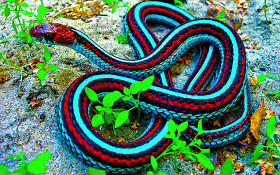
Super Snakes and the Truth Behind Them

snake

Snakes are masters of disguise, skilled hunters, and champion eaters. Here are eight awesome things you may not have known about these carnivorous reptiles.

1. They can smell with their tongues

A snake uses its tongue to help it smell. It flicks its long, forked tongue to pick up chemical molecules from the air, ground, or water. The tongue carries the smelly molecules back to two small openings in the roof of the snake’s mouth where they’re analyzed. Mmmm, lunch!

2. They can “see” heat

Some snakes—such as pythons, rattlesnakes, and copperheads—can’t see well and use other senses to find prey. These creatures have openings called pit holes in front of their eyes. These pits sense the heat given off by warm-blooded prey. The snakes’ heat vision allows the vipers to track prey day or night.

3. Their venom can kill and cure

By sinking two hollow, pointy fangs into their prey, many snakes inject venom to paralyze or kill victims before devouring them. But scientists have also discovered that the same poison that causes awful symptoms—and even death—in people who have been bitten by a venomous snake can be turned into medicines.

4. Some species can fly

Flying snakes flatten their ribs into a concave C shape to trap air under their bodies as they fall. By undulating back and forth in an S-shape, they can actually glide through the air.

5. They can change their skin

Snakes literally grow out of their skin. Every few months, most start rubbing against the ground or tree branches. Starting at the mouth, a snake slithers out of its too-tight skin. Like a sock, the skin comes off inside out.  Voilà—the snake has a fresh, shiny look. Nice makeover.

6. They “hear” with their jaw

Snakes don’t have external ears to hear sound waves in the air. Instead, bones in their lower jaw pick up vibrations in the ground or water. The vibes trigger signals in the snakes’ brains, which are received as messages. “Juicy mouse coming closer!

7. There a lot to love

More than 2,500 species of snakes slither around the world.

8. They are speedy

The black mamba snake slithers up to 11 kilometers per hour (7 miles per hour)!

On this day…

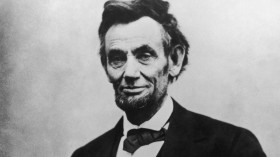
LincolnGivingGettysburgAddress

On November 19, 1863, Abraham Lincoln delivered the Gettysburg Address at the dedication of a military cemetery at Gettysburg, Pennsylvania, during the American Civil War. In just 272 words, Lincoln brilliantly and movingly delivered one of the most memorable speeches in American history, reminding a war-weary public why the Union had to fight, and win, the Civil War.

The Battle of Gettysburg, fought some four months earlier, was the single bloodiest battle of the Civil War. Over the course of three days, more than 45,000 men were killed, injured, captured or went missing.  The battle also proved to be the turning point of the war: General Robert E. Lee’s defeat and retreat from Gettysburg marked the last Confederate invasion of Northern territory and the beginning of the Southern army’s ultimate decline.

Reception of Lincoln’s Gettysburg Address was initially mixed, divided strictly along partisan lines. Nevertheless, the “little speech,” as he later called it, is thought by many today to be the most eloquent articulation of the democratic vision ever written.

Four score and seven years ago our fathers brought forth on this continent a new nation, conceived in liberty, and dedicated to the proposition that all men are created equal.

Now we are engaged in a great civil war, testing whether that nation, or any nation so conceived and so dedicated, can long endure. We are met on a great battlefield of that war. We have come to dedicate a portion of that field, as a final resting place for those who here gave their lives that that nation might live. It is altogether fitting and proper that we should do this.

But, in a larger sense, we can not dedicate, we can not consecrate, we can not hallow this ground. The brave men, living and dead, who struggled here, have consecrated it, far above our poor power to add or detract. The world will little note, nor long remember what we say here, but it can never forget what they did here. It is for us the living, rather, to be dedicated here to the unfinished work which they who fought here have thus far so nobly advanced. It is rather for us to be here dedicated to the great task remaining before us—that from these honored dead we take increased devotion to that cause for which they gave the last full measure of devotion—that we here highly resolve that these dead shall not have died in vain—that this nation, under God, shall have a new birth of freedom—and that government of the people, by the people, for the people, shall not perish from the earth.”


[button color=”blue” size=”small” link=”http://www.history.com/topics/american-civil-war/gettysburg-address” target=”blank” ]Source[/button]

Did you know…

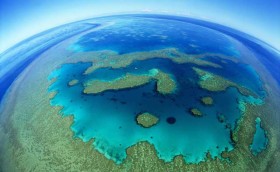
Great-Barrier-Reef

At over 2000 kilometers long The Great Barrier Reef is the largest living structure on Earth.

The reef is located in the Coral Sea, off the coast of Queensland, Australia.

The Great Barrier Reef can be seen from outer space and is the world’s biggest single structure made by living organisms. This reef structure is composed of and built by billions of tiny organisms, known as coral polyps. It supports a wide diversity of life and was selected as a World Heritage Site in 1981. CNN labeled it one of the seven natural wonders of the world. The Queensland National Trust named it a state icon of Queensland.

A large part of the reef is protected by the Great Barrier Reef Marine Park, which helps to limit the impact of human use, such as fishing and tourism. Other environmental pressures on the reef and its ecosystem include runoff, climate change accompanied by mass coral bleaching, and cyclic population outbreaks of the crown-of-thorns starfish. According to a study published in October 2012 by the Proceedings of the National Academy of Sciences, the reef has lost more than half its coral cover since 1985.

The Great Barrier Reef has long been known to and used by the Aboriginal Australian and Torres Strait Islander peoples, and is an important part of local groups’ cultures and spirituality. The reef is a very popular destination for tourists, especially in the Whitsunday Islands and Cairns regions. Tourism is an important economic activity for the region, generating over $3 billion per year.

In November 2014, Google launched Google Underwater Street View in 3D of the Great Barrier Reef.

Did you know…

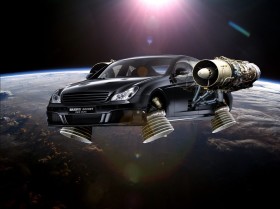
Drive to Space

If you could drive your car straight up at 95km/h (60mph), you would arrive in space in just a little over one hour.

To get to the Moon would take a little longer though, since it’s 400,000km (250,000 miles) away – driving around the Earth ten times – just under six months. Your only real problem (apart from having no oxygen for your lungs and for burning the petrol) would be finding a petrol station – and a place that has a bathroom!

Interesting Facts about the Earth

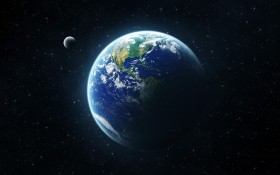
earth-and-moon-from-space

Did you know that:

  • The Earth was formed approximately 4.54 billion years ago and is the only known planet to support life
  • The Earth was once believed to be the centre of the universe
  • Earth is the only planet not named after a god: the other seven planets in our solar system are all named after Roman gods or goddesses
  • 70% of the Earth’s surface is covered in water
  • A year on Earth isn’t 365 days -it’s actually 365.26 days. It’s this extra .26 days that creates the need for leap years
  • Only 3% water of the earth is fresh, rest 97% salted. Of that 3%, over 2% is frozen in ice sheets and glaciers?