Tag Archives: Interesting People

Things You Didn’t Know About William Shakespeare

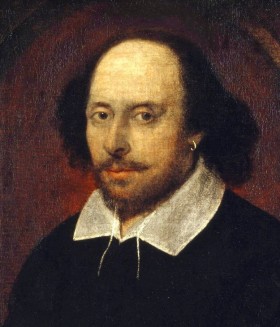
The UK National Portrait Gallery’s inaugural portrait was of William Shakespeare.
Image source: npg.org.uk

1. According to the Oxford Dictionary of Quotations, Shakespeare wrote close to a 1/10 of the most quoted lines ever written or spoken in English.What’s more, according to the Literary Encyclopaedia, Shakespeare is the second most quoted English writer after the writers of the Bible.

2. Shakespeare has been credited by the Oxford English Dictionary with introducing almost 3,000 words to the English language. Estimations of his vocabulary range from 17,000 to 29,000 words – at least double the number of words used by the average conversationalist.

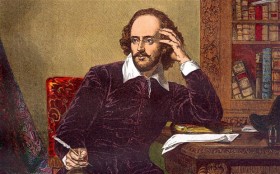
3. Shakespeare never published his plays. They are known today only because two of his fellow actors – John Hemminges and Henry Condell – recorded and published 36 of them posthumously under the name The First Folio, which is the source of all Shakespeare books published.

Shakespeare never published his plays.
Image source: wikipedia.org

4. Copyright didn’t exist in Shakespeare’s time, so there was a thriving trade in copied plays. To help counter this, actors got their lines only once the play was in progress, often in the form of cue acting where someone backstage whispered them to the person shortly before he was supposed to deliver them.

5. Aside from writing 38 plays and composing 154 sonnets, Shakespeare was also an established actor. He performed in many of his own plays as well as those of his contemporaries, such as Ben Jonson.

6. “William Shakespeare” is an anagram of “I am a weakish speller”, “I’ll make a wise phrase”, “Lame Swahili speaker” and “Hear me as I will speak”.

7. The moons of Uranus are named after Shakespearean characters. The moons were originally named in 1852 after magical spirits from English literature. The International Astronomy Union subsequently developed the convention to name all further moons of Uranus (of which there are 27) after characters in Shakespeare’s plays or Alexander Pope’s The Rape of the Lock.

The moons of Uranus are named after Shakespearean characters.
Image source: daviddarling.info

8. Shakespeare had close connections with King James I. The King made the actors of Shakespeare’s company ‘Grooms of Chamber’, in response Shakespeare changed the company’s name from the ‘Lord Chamberlain’s Men’ to the ‘King’s Men’. The new title made Shakespeare a favourite with the King and in much demand for Court performances.

9. Unlike most artists of his time, Shakespeare died a very wealthy man with a large property portfolio. He was a brilliant businessman – forming a joint-stock company with his actors meaning he took a share in the company’s profits, as well as earning a fee for each play he wrote.

10. There are more than 80 variations recorded for the spelling of Shakespeare’s name. In the few original signatures that have survived, Shakespeare spelt his name “Willm Shaksp,” “William Shakespe,” “Wm Shakspe,” “William Shakspere,” ”Willm Shakspere,” and “William Shakspeare”. There are no records of him ever having spelt it “William Shakespeare”, as we know him today.

There are more than 80 variations recorded for the spelling of Shakespeare’s name.
Image source: public.wsu.edu

11. The original Globe Theatre came to a premature end in 1613 during a performance of Henry VIII, when a cannon set light to the thatched roof. Within two hours the theatre was burnt to the ground. It was rebuilt in 1614.

12. The Royal Shakespeare Company sells more than half a million tickets a year for Shakespeare productions at their theatres in Stratford-on-Avon, London and Newcastle.

13. Nobody knows Shakespeare’s true birthday. It’s celebrated on April 23 – three days before his baptism, which was recorded on April 26, 1564. However, as Shakespeare was born under the old Julian calendar, what was April 23 during Shakespeare’s life would actually be May 3 according to today’s Gregorian calendar.

William Shakespeare Activities

Its William Shakespeare week and we have some Shakespeare activities that you can do with your English class that are fun and educational. Enjoy!


1. Who am I?

Tell your students to imagine that you’re a very famous Briton! Get them to ask you ‘yes/no’ questions until they guess who you are. (You are Shakespeare!)

If you want to, play a few more rounds of the guessing game using other famous Britons, or use it in another class to practice question forms again.

Alternatively, write an anagram of WILLIAM SHAKESPEARE such as MALILIW RAKESHAPEES on the board and have a race to see which student can find the name first.


2. Shakespeare Mind Map

Once you have established that Shakespeare is going to be the topic for the lesson, write the word Shakespeare with a little picture if you are artistic, inside a bubble on the board. Ask students what they know about him or what comes to mind when they think about William Shakespeare. This will help you to know how much or how little your students already know in order to gauge the level of input for the class.


 WILLIAM SHAKESPEARE


3. Shakespeare Quiz

Here is the printout for the Shakespeare Quiz (make sure not to include the answers):

[box type=”shadow” align=”aligncenter” ]How much do you know about William Shakespeare? Try this quiz to find out.

1) When was William Shakespeare born?

a) 1498

b) 1564

c) 1895


2) What period in English history was it when Shakespeare was alive?

a) Elizabethan

b) Georgian

c) Victorian


3) Which of these plays was not written by Shakespeare?

a) Hamlet

b) Romeo and Juliet

c) The Taming of the Rat


4) Where was Shakespeare born?

a) Stratford Upon Avon

b) Cambridge

c) Oxford


5) How many plays did Shakespeare write?

a) 8

b) 38

c) 108


6) Which type of plays did Shakespeare not write?

a) Tragedies

b) Comedies

c) Musicals


7) What’s the name of the ‘Shakespeare theatre’ in London?

a) The World Theatre

b) The Globe Theatre

c) The Old Shakespeare Theatre


8) Who played Romeo in the most recent film version of ‘Romeo and Juliet’?

a) Leonardo Dicaprio

b) Johnny Depp

c) Brad Pitt[/box]


Quiz Answers:

1-b, 2-a, 3-c, 4-a, 5-b, 6-c, 7-b, 8-a


4. Information gap reading.

Put students into pairs to do this activity. It’s very important that your students don’t look at each others’ texts during the task so make this clear when you give the instructions. If this type of task is new to your students, demonstrate it with one of the stronger students before the class begin. Before students begin speaking they need to read the text carefully and prepare the questions that they are going to ask their partner. The first question is given as an example. You may need to help your students write the questions.

Here’s the complete text for you to check the students’ answers.

William Shakespeare was a poet and a playwright, and is widely regarded as the greatest writer in the English language. He was born in Stratford-upon-Avon, in central England, in 1564 and he died in 1616. His surviving work consists of 38 plays, 154 sonnets (a special type of poem with 14 lines), and some other poems. He is best known for his plays which have been translated into every major language and are performed more than those of any other playwright in the world.

When William Shakespeare was 18 years old he married Anne Hathaway, and they had three children. Shakespeare went to London to work as an actor and a writer. In 1599 the Globe Theatre was built in London and it was in this theatre, situated on the banks of the River Thames, that some of Shakespeare’s plays were first performed. In 1613 the theatre was destroyed by a fire. However, a modern reconstruction of the theatre was built near the original site in 1997 so even today you can go to the Globe Theatre to see one of Shakespeare’s plays.

Here are the printouts for Student A and B:

[box type=”shadow” align=”aligncenter” ]Student A

Text adapted from Wikipedia – http://en.wikipedia.org/wiki/William_Shakespeare

William Shakespeare was a poet and a playwright, and is widely regarded as the greatest writer in the English language. He was born in 1) _____________________, in central England, in 1564 and he died in 2)_______. His surviving work consists of 38 plays, 154 sonnets (a special type of poem with 14 lines), and some other poems. He is best known for his 3) ______ which have been translated into every major language and are performed more than those of any other playwright in the world.

When William Shakespeare was 18 years old he married 4) ______________, and they had three children. Shakespeare went to 5) ________ to work as an actor and a writer. In 1599 the Globe Theatre was built in London and it was in this theatre, situated on the banks of the River Thames, that some of Shakespeare’s plays were first performed. In 6) _______the theatre was destroyed by a fire. However, a modern reconstruction of the theatre was built near the original site in 1997 so even today you can go to the Globe Theatre to see one of Shakespeare’s plays.

Prepare your questions here (the first one is done for you):

1) Where was Shakespeare born?

2)

3)

4)

5)

6)[/box]


[box type=”shadow” align=”aligncenter” ]Student B

Text adapted from Wikipedia – http://en.wikipedia.org/wiki/William_Shakespeare

William Shakespeare was a poet and a playwright, and is widely regarded as the greatest writer in the English language. He was born in Stratford-upon-Avon, in central England, in 1) _____ and he died in 1616. His surviving work consists of 2)____ plays, 154 sonnets (a special type of poem with 14 lines), and some other poems. He is best known for his plays which have been translated into every major language and are performed more than those of any other playwright in the world.

When William Shakespeare was 3) ______ years old he married Anne Hathaway, and they had 4)_______ children. Shakespeare went to London to work as an actor and a writer. In 5) ______ the Globe Theatre was built in London and it was in this theatre, situated on the banks of the River Thames, that some of Shakespeare’s plays were first performed. In 1613 the theatre was destroyed by a 6) ______. However, a modern reconstruction of the theatre was built near the original site in 1997 so even today you can go to the Globe Theatre to see one of Shakespeare’s plays.

Prepare your questions here (the first one is done for you):

1) When was Shakespeare born?

2)

3)

4)

5)

6)[/box]

5. Find somebody who…

The aim of this task is to get students talking to each other. Your students may well be familiar with the classic ‘Find Somebody Who..’ task. First get students to complete the last row with something they’d like to find out about their classmates, then remind students how important the extra information column is. Demonstrate a few of the question forms or elicit these from students and if necessary write the questions on the board to support weak students during the task. For example, ‘Can you name three of Shakespeare’s plays?’ and ‘Have you ever seen a film of a Shakespeare play?’ etc. When your students are ready to start, make sure everyone is standing up and has something to lean on and a pen with them, and off they go. As students are speaking to each other and completing the table make sure you monitor carefully so you can offer some constructive feedback at the end.

Here is the printout for your students:

Find someone who                Name                                Extra information           
…can name three of Shakespeare’s plays.
…has seen a film of a Shakespeare play.
… likes going to the theatre.
 … would like to be a writer.
… would like to be an actor / actress.


6. Complete the Shakespeare Quotes

This is a task for higher levels, as it’s quite challenging. Put students into small groups or pairs and give your students time to try and match the quotes. If you like, cut up a set of quote halves so students can move them around on a table to experiment with different combinations. Encourage your students to look for words that normally go together, such as ‘borrow and lend’ or ‘blind and see’. Then check their answers and ask them what they understand by them.

Here is the printout for your students (make sure not to include the answers):

Here are some famous quotes from Shakespeare. Can you match the two halves to make the quote?

 All the world’s a stage  that I shall say good night till it be morrow.
 Love is blind  never did run smooth
 that is the question  Neither a borrower
 and lovers cannot see  Good Night, Good night! Parting is such sweet sorrow,
 what’s done is done  To be, or not to be:
 and all the men and women are merely players  Things without remedy should be without regard;
 wherefore art thou Romeo?  The course of true love
nor a lender be  O Romeo, Romeo!


Answers:

All the world’s a stage and all the men and women are merely players

Love is blind and lovers cannot see

Neither a borrower nor a lender be

Good Night, Good night! Parting is such sweet sorrow, that I shall say good night till it be morrow.”

To be, or not to be: that is the question

Things without remedy should be without regard; what’s done is done

The course of true love never did run smooth

O Romeo, Romeo! wherefore art thou Romeo?


Theme of the Week: Henry James

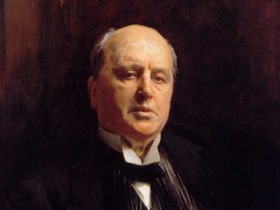
“Portrait of Henry James”, oil painting by John Singer Sargent (1913)

Henry James was an American-British writer who spent most of his writing career in Britain. He is regarded as one of the key figures of 19th-century literary realism.

He is best known for a number of novels showing Americans encountering Europe and Europeans. His method of writing from the point of view of a character within a tale allowed him to explore issues related to consciousness and perception, and his style in later works has been compared to impressionist painting.


[box type=”shadow” align=”aligncenter” ]5 Facts about Henry James

1. Henry James was born and raised in America but loved England so much that he traveled there often and eventually died there as a British citizen.

2. Even though he died in England, his body was returned to the United States and buried in Cambridge, Massachusetts.

3. Henry James influences as a writer were Honoré de Balzac, Nathaniel Hawthorne, Henrik Ibsen, Ivan Turgenev and George Elito.

4. He frequently wrote about character differences between people from the Old World (Europe) and people from the New World (United States).

5. For most of his life, James possessed ambitions for success as a playwright. He converted his novel The American into a play that enjoyed modest returns in the early 1890s. In all he wrote about a dozen plays, most of which went unproduced.[/box]


Theme of the Week: Harper Lee

Image Source: Stephen Shugerman/Getty Images

Nelle Harper Lee is an American novelist widely known for her 1960 Pulitzer Prize-winning To Kill a Mockingbird which deals with the racism she observed as a child in her hometown of Monroeville, Alabama. Though Lee only published this single book for half a century, she was awarded the Presidential Medal of Freedom for her contribution to literature.

Theme of the Week: Nick Hornby

Nick Hornby is an English novelist, essayist, lyricist, and screenwriter. He is best known for his novels High Fidelity and About a Boy. Hornby’s work frequently touches upon music, sport, and the aimless and obsessive natures of his protagonists. As of 2009, his books have sold more than 5 million copies worldwide and have been adapted into Academy Award nominated films.

[button color=”blue” size=”small” link=”http://onlinebookshop.ge/?s=nick+hornby&post_type=product” target=”blank” ]Nick Hornby Collection[/button]

Take a look at the trailer for the American film adaptation of his popular novel, Fever Pitch.

Theme of the Week: Celebrating Authors of March

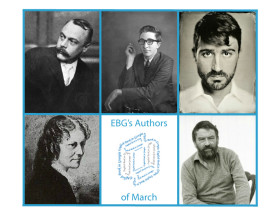
This week we celebrate authors of the past and present who had birthdays in the month of March. Check them out below.

Scott Hutchins                  

(March 4, 1974 – Present)

Hutchins is an American novelist and short-story writer. His work has appeared in The New York Times, San Francisco Magazine and Esquire Magazine. His debut novel A Working Theory of Love has been called both “revelatory and exciting” and “ambitious and accomplished.”

Mar 5 - hutchins


[button color=”blue” size=”small” link=”http://onlinebookshop.ge/product/working-theory-of-love-by-scott-hutchins/” target=”blank” ]Buy the Book[/button]

Kenneth Grahame         

(March 8, 1859 – July 6, 1932)

Grahame was a Scottish writer, most famous for The Wind in the Willows (1908), one of the classics of children’s literature. It was later adapted into a Disney film.

windwillows


[button color=”blue” size=”small” link=”http://onlinebookshop.ge/product/wind-in-the-willows/” target=”blank” ]Buy the Book[/button]

John Updike

(March 18, 1932 – January 27, 2009)

Updike was an American novelist, poet, short story writer, art critic, and literary critic. His most famous work is his “Rabbit” series, which chronicles the life of the middle-class everyman Harry “Rabbit” Angstrom over the course of several decades, from young adulthood to death.

03.03-updike


[button color=”blue” size=”small” link=”http://onlinebookshop.ge/vendor/john-updike/” target=”blank” ]Buy the Book[/button]

Anna Sewell

(March 30, 1820 – April 25, 1878)

Sewell was an English novelist, best known as the author of the classic novel Black Beauty.

black


[button color=”blue” size=”small” link=”http://onlinebookshop.ge/product/black-beauty/” target=”blank” ]Buy the Book[/button]

John Fowles

(March 31, 1926 – November 5, 2005)

Fowles was an English novelist of international stature, critically positioned between modernism and postmodernism.

ebony


[button color=”blue” size=”small” link=”http://onlinebookshop.ge/product/the-ebony-tower/” target=”blank” ]Buy the Book[/button]


Mark Zuckerberg: I Would Only Hire Someone to Work For Me If I Would Work For Them

prof

When it comes to onboarding new employees with whom he’ll work directly, Facebook CEO Mark Zuckerberg bears in mind a single guiding principle that he says has never steered him wrong.

“I will only hire someone to work directly for me if I would work for that person,” Zuckerberg told an audience gathered in Barcelona yesterday for the fourth installment of ‘Q&A with Mark,’ an ongoing series of town hall-style discussions.

While employers generally have more work to do than staffers to get it done, Zuckerberg says business owners should resist the urge to settle for lesser candidates in the name of manpower. “Over the long term,” he said, “you’re only going to be better if you get someone really good.”

Sherly Sandberg is the perfect example of the kind of employee that, in an alternate universe, Zuckerberg says he would be happy to serve. Rather than mentors outside of the company, he said, the most influential figures in his life are the colleagues he sees on a day-to-day basis. “Sheryl would be at the top of that list,” he noted, adding that she is largely responsible for the fact that 2 million businesses advertise on Facebook today.

If selecting candidates is one thing, attracting them is another. The key to wooing top talent, Zuckerberg said, is “just being upfront about what you stand for.” Facebook, for instance, is bullish on its mission to connect the world — which he acknowledges isn’t a value or priority shared by everyone.

And finally, Zuckerberg had some wisdom to share in the realm of delegation. His management style, he says, is fairly flexible. “[Employees] need the ability to fully exercise all their creativity and all their capacity, or else they’re not going to be having the biggest impact that they can have on the world, and they’re going to want to go do something else.”

At the same time, Zuckerberg has always striven to keep a streamlined team and to do as much work as possible himself. Facebook serves over a billion people, for instance, but counts a team of fewer than 10,000. “My first move when I was building Facebook wasn’t to hire a team of engineers to go build a product,” he explained. “I generally each step along the way have tried to do as much as I can myself.”

[button color=”blue” size=”small” link=”http://www.entrepreneur.com/article/243660″ target=”blank” ]Source[/button]


Theme of the Week: John Fowles

John Robert Fowles was an English novelist of international stature, critically positioned between modernism and postmodernism. His work reflects the influence of Jean-Paul Sartre and Albert Camus, among others. Fowles’ books have been translated into many languages, and several adapted as films. He was named by the Times newspaper of UK as one of the 50 greatest British writers since 1945.

Take a look at Lyme-Regis, England where a majority of Fowle’s novels take place.


5 Facts about John Updike

1.            He was only the third American to win a second Pulitzer Prize in the fiction category.

2.            His first story was published in the New Yorker at the age of 22.

3.            He wrote The Witches of Eastwick (1984), which was turned into a movie in 1987 starring Cher, Jack Nicholson, Michelle Pfeiffer and Susan Sarandon. In 2009, it was turned into a television show starring Rebecca Romijn.

4.            He won a Knox fellowship for study at the Ruskin School of Drawing and Fine Art in Oxford University.

5.            He began his career as a poet in 1958 by publishing his first volume, a collection of poems titled The Carpentered Hen.

Theme of the Week: John Updike

John Updike was an American novelist, poet, short story writer, art critic, and literary critic.

Updike’s most famous work is his “Rabbit” series (including the novel Rabbit, Run), which chronicles the life of the middle-class everyman Harry “Rabbit” Angstrom over the course of several decades, from young adulthood to death. Updike is one of only three authors (the others were Booth Tarkington and William Faulkner) to win the Pulitzer Prize for Fiction more than once. He published more than twenty novels and more than a dozen short story collections, as well as poetry, art criticism, literary criticism and children’s books. Hundreds of his stories, reviews, and poems appeared in The New Yorker, starting in 1954. He also wrote regularly for The New York Review of Books.

Enjoy an interview of John Updike discussing “Family Affairs” in the video below.