Tag Archives: on this day

On this day…

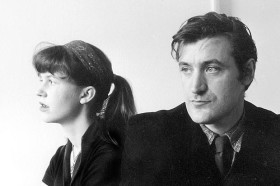
Poets, Ted Hughes and Sylvia Plath

On this day in 1956, Sylvia Plath meets her future husband, Ted Hughes, at a party in Cambridge, UK. The two poets fell in love at first sight and married four months later.

Plath and Hughes with their child

Her first poetry collection, Colossus, was published in 1960 to favorable reviews. After that, she moved to London and wrote dozens of her best poems in the winter of 1962. Her only novel, The Bell Jar, a semi-autobiographical account of a college girl who works at a magazine in New York and suffers a breakdown, was published in early 1963, but received mediocre reviews.

The Bell Jar by Sylvia Plath

On this day…

On this day in 1985, American recording artists gather to record “We Are the World”.

The special instruction Quincy Jones sent out to the several dozen pop stars invited to participate in the recording of “We Are the World” was this: “Check your egos at the door.” Jones was the producer of a record that would eventually go on to sell more than 7 million copies and raise more than $60 million for African famine relief. But before “We Are the World” could achieve those feats, it had to be captured on tape—no simple feat considering the number of major recording artists slated to participate. With only one chance to get the recording the way he and songwriters Michael Jackson and Lionel Ritchie wanted it, Jones convened the marathon recording session of “We Are the World” at around 10 p.m. on the evening of January 28, 1985, immediately following the conclusion of the American Music Awards ceremony held just a few miles away.

Among the 45 stars who sang on “We Are the World” that night were huge-in-the-80s figures like Cyndi Lauper and Huey Lewis; Country stars like Kenny Rogers and Willie Nelson; pop icons like Smokey Robinson, Tina Turner and Paul Simon; and musical giants like Stevie Wonder, Ray Charles and Bob Dylan. Also in the studio that night were half of the Jackson family, one  Irishman (Bob Geldof, co-organizer of Band Aid) and one party-crashing Canadian, comedian Dan Aykroyd. Egos fully in check, the group laid down the chorus and solos before sunrise on the 29th, and “We Are the World” was in the stores and on the airwaves just five weeks later.

https://www.youtube.com/watch?v=rZ26DMkMFks

On this day…

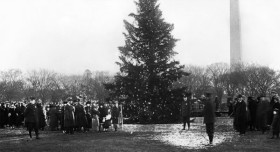
On this day in 1923, President Calvin Coolidge touches a button and lights up the first national Christmas tree to grace the White House grounds in the USA.

Not only was this the first White House “community” Christmas tree, but it was the first to be decorated with electric lights–a strand of 2,500 red, white and green bulbs. The balsam fir came from Coolidge’s home state of Vermont and stood 14.6 meters (48 feet) tall. Several musical groups performed at the tree-lighting ceremony, including the Epiphany Church Choir and the U.S. Marine Band.

At 17:00 on Christmas Eve, President Coolidge touched a button at the foot of the tree which lit the ornaments. Later that evening, President Coolidge and First Lady Grace were treated to carols sung by members of Washington D.C.’s First Congregational Church.

On this day…

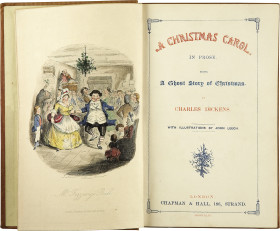
On this day in 1843, Charles Dickens’ classic story A Christmas Carol is published.

Dickens was born in 1812 and attended school in Portsmouth. His father, a clerk in the navy pay office, was thrown into debtors’ prison in 1824, and 12-year-old Charles was sent to work in a factory. The miserable treatment of children and the institution of the debtors’ jail became topics of several of Dickens’ novels.

In his late teens, Dickens became a reporter and started publishing humorous short stories when he was 21. In 1836, a collection of his stories, Sketches by Boz, later known as The Posthumous Papers of the Pickwick Club, was published. The same year, he married Catherine Hogarth, with whom he would have nine children. The short sketches in his collection were originally commissioned as captions for humorous drawings by caricature artist Robert Seymour, but Dickens’ whimsical stories about the kindly Samuel Pickwick and his fellow club members soon became popular in their own right. Only 400 copies were printed of the first installment, but by the 15th episode 40,000 copies were printed. When the stories were published in book form in 1837, Dickens quickly became the most popular author of the day.

The success of the Pickwick Papers was soon reproduced with Oliver Twist (1838) and Nicholas Nickleby (1839). In 1841, Dickens published two more novels, then spent five months in the United States, where he was welcomed as a literary hero. Dickens never lost momentum as a writer, churning out major novels every year or two, often in serial form. Among his most important works are David Copperfield (1850), Great Expectations (1861), and A Tale of Two Cities (1859).

dickens books

Beginning in 1850, he published his own weekly circular of fiction, poetry, and essays called Household Words. In 1858, Dickens separated from his wife and began a long affair with a young actress. He gave frequent readings, which became immensely popular. He died in 1870 at the age of 58, with his last novel, The Mystery of Edwin Drood, still unfinished.

On this day…

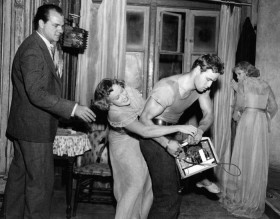
On this day in 1947, Marlon Brando’s famous cry of “STELLA!” first booms across a Broadway stage, electrifying the audience at the Ethel Barrymore Theatre during the first-ever performance of Tennessee Williams’ play A Streetcar Named Desire.

The 23-year-old Brando played the rough, working-class Polish-American Stanley Kowalski, whose violent clash with Blanche DuBois (played on Broadway by Jessica Tandy), a Southern woman with a dark past, is at the center of Williams’ famous drama. Blanche comes to stay with her sister Stella (Kim Hunter), Stanley’s wife, at their home in the French Quarter of New Orleans; she and Stanley immediately hate each other. In the climactic scene, Stanley rapes Blanche, causing her to lose her fragile grip on sanity; the play ends with her being led away in a straitjacket.

Jessica Tandy and Marlon Brando in the Broadway version of A Street Car Named Desire

Streetcar, produced by Irene Mayer Selznick and directed by Elia Kazan, shocked mid-century audiences with its frank depiction of sexuality and brutality onstage. When the curtain went down on opening night, there was a moment of stunned silence before the crowd erupted into a round of applause that lasted 30 minutes.

On December 17, the cast left New York to go on the road. The show would run for more than 800 performances, turning the charismatic Brando into an overnight star. Tandy won a Tony Award for her performance, and Williams was awarded the Pulitzer Prize for Drama.

In 1951, Kazan made Streetcar into a movie. Brando, Hunter and Karl Malden (as Stanley’s friend and Blanche’s love interest) reprised their roles. The role of Blanche went to Vivien Leigh, the scenery-chewing star of Gone with the Wind.

Vivien Leigh and Marlon Brando in the film version of A Street Car Named Desire

A Streetcar Named Desire earned 12 Oscar nominations, including acting nods for each of its four leads. The movie won for Best Art Direction, and Leigh, Hunter and Malden all took home awards; Brando lost to Humphrey Bogart in The African Queen.

On this day…

LincolnGivingGettysburgAddress

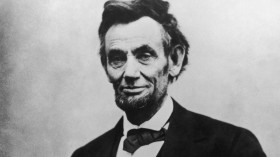
On November 19, 1863, Abraham Lincoln delivered the Gettysburg Address at the dedication of a military cemetery at Gettysburg, Pennsylvania, during the American Civil War. In just 272 words, Lincoln brilliantly and movingly delivered one of the most memorable speeches in American history, reminding a war-weary public why the Union had to fight, and win, the Civil War.

The Battle of Gettysburg, fought some four months earlier, was the single bloodiest battle of the Civil War. Over the course of three days, more than 45,000 men were killed, injured, captured or went missing.  The battle also proved to be the turning point of the war: General Robert E. Lee’s defeat and retreat from Gettysburg marked the last Confederate invasion of Northern territory and the beginning of the Southern army’s ultimate decline.

Reception of Lincoln’s Gettysburg Address was initially mixed, divided strictly along partisan lines. Nevertheless, the “little speech,” as he later called it, is thought by many today to be the most eloquent articulation of the democratic vision ever written.

Four score and seven years ago our fathers brought forth on this continent a new nation, conceived in liberty, and dedicated to the proposition that all men are created equal.

Now we are engaged in a great civil war, testing whether that nation, or any nation so conceived and so dedicated, can long endure. We are met on a great battlefield of that war. We have come to dedicate a portion of that field, as a final resting place for those who here gave their lives that that nation might live. It is altogether fitting and proper that we should do this.

But, in a larger sense, we can not dedicate, we can not consecrate, we can not hallow this ground. The brave men, living and dead, who struggled here, have consecrated it, far above our poor power to add or detract. The world will little note, nor long remember what we say here, but it can never forget what they did here. It is for us the living, rather, to be dedicated here to the unfinished work which they who fought here have thus far so nobly advanced. It is rather for us to be here dedicated to the great task remaining before us—that from these honored dead we take increased devotion to that cause for which they gave the last full measure of devotion—that we here highly resolve that these dead shall not have died in vain—that this nation, under God, shall have a new birth of freedom—and that government of the people, by the people, for the people, shall not perish from the earth.”


[button color=”blue” size=”small” link=”http://www.history.com/topics/american-civil-war/gettysburg-address” target=”blank” ]Source[/button]

On this day…

ellis1

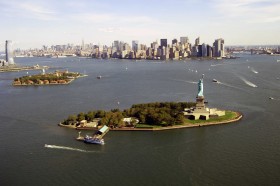
On this day in 1954, Ellis Island, the gateway to America, shuts it doors after processing more than 12 million immigrants since opening in 1892. Today, an estimated 40 percent of all Americans can trace their roots through Ellis Island, located in New York Harbor off the New Jersey coast and named for merchant Samuel Ellis, who owned the land in the 1770s.

On January 2, 1892, 15-year-old Annie Moore, from Ireland, became the first person to pass through the newly opened Ellis Island, which President Benjamin Harrison designated as America’s first federal immigration center in 1890. Before that time, the processing of immigrants had been handled by individual states.

ellis2During the busiest year of operation, 1907, over 1 million people were processed at Ellis Island. With America’s entrance into World War I, immigration declined and Ellis Island was used as a detention center for suspected enemies. Following the war, Congress passed quota laws and the Immigration Act of 1924, which sharply reduced the number of newcomers allowed into the country and also enabled immigrants to be processed at U.S. consulates abroad.

ellis3After 1924, Ellis Island switched from a processing center to serving other purposes, such as a detention and deportation center for illegal immigrants, a hospital for wounded soldiers during World War II and a Coast Guard training center. In November 1954, the last detainee, a Norwegian merchant seaman, was released and Ellis Island officially closed.

ellis4Beginning in 1984, Ellis Island underwent a $160 million renovation, the largest historic restoration project in U.S. history. In September 1990, the Ellis Island Immigration Museum opened to the public and today is visited by almost 2 million people each year.

On this day…

guyfawkes

Remember, remember, the fifth of November

Gunpowder treason and plot

We see no reason

Why Gunpowder treason

Should ever be forgot,…..

It is an annual celebration observed on November 5th for more than 400 years following the Gunpowder Plot of 1605 when 13 conspirators planned to blow up Parliament and kill King James I.

Fawkes was arrested while guarding explosives the plotters had placed beneath the House of Lords.

People in London lit bonfires to celebrate the failure of the plot, and an act of Parliament was passed to appoint the date as a day of thanksgiving for the “joyful deliverance of James I”. This act remained in force for 254 years, until 1859.

To mark the occasion, here are some facts about Guy Fawkes, gunpowder and fireworks:

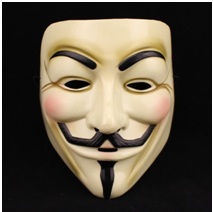
[box type=”shadow” align=”aligncenter” ]• Political protesters sometimes wear Guy Fawkes masks to protect their identity. You might recognize these masks if you’ve seen the film V for Vendetta, which is very loosely based on the story of Guy Fawkes.

• The only place in the UK that does not celebrate Guy Fawkes Night is St. Peter’s School in York. Guy Fawkes went there as a boy and they refuse to burn his image in respect for their former pupil.

• Guy Fawkes wasn’t the main conspirator in the Gunpowder Plot, but he had one of the most important roles. He guarded the gunpowder underneath the Houses of Parliament, and had he not been caught, he would have been charged with lighting it.

• Physicists from the Institute of Physics have calculated that the 2,500kg of gunpowder Fawkes hid would have wreaked damage almost 500 meters from the centre of the explosion.

• Fireworks were invented when a Chinese cook accidentally discovered how to make explosive black powder – the early origin of gunpowder – during the 10th century. The cook accidentally mixed three common kitchen ingredients – potassium nitrate or saltpeter (a salt substitute used in the curing of meat), sulfur and charcoal and set light to the concoction. The result was colorful flames. The cook also noticed that if the mixture was burned when enclosed in the hollow of a bamboo shoot, there was a tremendous explosion.

• Fireworks arrived in Europe in the 14th century and were first produced by the Italians. The first recorded display was in Florence. The first recorded fireworks in England were at the wedding of King Henry VII in 1486.

• Dummies have been burned on bonfires since as long ago as the 13th century, initially to drive away evil spirits. Following the gunpowder plot of 1605, the focus of the sacrifices switched to Guy Fawkes’ treason.

• It is said that the word ‘guy’ actually comes from the name Guy Fawkes. It originally meant “an ugly, repulsive person” but, throughout the years, simply became a synonym for “man”.

• One suggested origin for the word ‘bonfire’ is that derives from ‘bone-fire’, and comes from a time when the bodies of witches, heretics and other misfits were burned instead of being buried in holy ground.

• The Houses of Parliament are still searched by the Yeomen of the Guard before the state opening which has been held in November since 1928. The idea is to ensure no modern-day Guy Fawkes is concealed in the cellars. [/box]

[button color=”blue” size=”small” link=”http://www.newsshopper.co.uk/news/10783340.10_facts_ about_Guy_Fawkes__fireworks_and_why_we_remember_ Gunpowder_Plot_on_November_5/” target=”blank” ]Source[/button]

Did You Know…

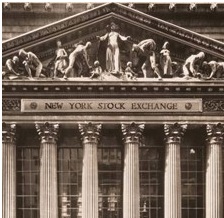
On this day in 1929, The New York Stock Exchange crashed on what came to be known as “Black Tuesday” or the “Stock Market Crash of 1929”, starting the Great Depression.

nysenewspaper

It was the most devastating stock market crash in the history of the United States, when taking into consideration the full extent and duration of its fallout. The crash signaled the beginning of the 10-year Great Depression that affected all Western industrialized countries.

[button color=”blue” size=”small” link=”http://www.history.com/topics/1929-stock-market-crash” target=”blank” ]Stock Market Crash of 1929[/button][button color=”blue” size=”small” link=”http://www.history.com/topics/great-depression” target=”blank” ]The Great Depression[/button]