Tag Archives: Charles Dickens

A Christmas Carol

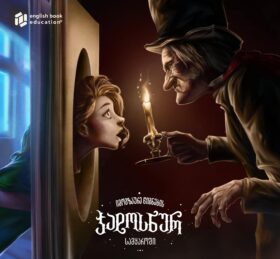
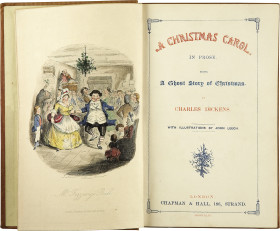
“Bah, Humbug” – an iconic line from a story we all love, said by a character that was written for us to hate. A week before Christmas in 1843, Chapman & Hall published a novella by Charles Dickens that would become one of the most popular stories that still inspires millions of people. A Christmas Carol turns 176 years old this year and over the course of its long life, it has become so iconic, that even if you’ve never read the book, you probably know what it’s about.

 A Christmas Carol takes place on a cold, snowy Christmas Eve in London, England, during the Victorian period in the 1840’s. It is a story of a man who feels no love or joy in his heart, the story of Ebenezer Scrooge, the bah-humbug-shouting man who hates Christmas, charity, the poor, and everything besides his own goodwill. To be more exact, these are his own words at the beginning – “If I could work my will, every idiot who goes about with ‘Merry Christmas’ on his lips should be boiled with his own pudding and buried with a stake of holly through his heart. He should!” He is described as ‘a tight-fisted hand at the grind-stone’, this metaphor suggests that Scrooge works hard for his money but is very tight with it. Dickens also uses the harshest weather to describe him ‘the heaviest rain, and snow and hail and sleet, could boast of the advantage over him in only one respect.’ indicating how horrible of a man Scrooge is, which shows the reader that Scrooge’s personality will play an important role throughout the book.  The story unfolds when he is visited by three ghosts – the ghost of the past, the present and the future. Over the course of his three separate journeys with them, he evolves into someone different, a person that he buried deep inside of him many years ago.

A Christmas Carol could be considered as a metaphor for life. The amount of life lessons that can be learnt from this book is tremendous. One of them being that as uncomfortable as we might feel about it, time only moves in one direction – forward. So, we should live our lives to the fullest, for there may be no tomorrow. Another reason that makes A Christmas Carol so beloved is its morality, the way Scrooge remembers his lost humanity and is led to find it in others. With the ghost of the past he re-experiences the loneliness of boarding school, his father’s cold disapproval and the kindness of his sister. He reminisces his most authentic memories, when he was still innocent and happy. One more great lesson from this novel, that applies to all the generations is that it shows us how easy it is to get caught up in the materialism that surrounds us, especially during the holiday season. Nowadays, we fixate so much on sales and buying many things, that we forget spending quality time with those we care about, and that they are really what should be our priority. Another aspect of Dickens’s original tale is the idea of learning to be compassionate, generous and kind, a timeless aspiration for every generation. Dickens also speaks about ignorance and want. He demonstrates a world in which the poor and suffering are ignored and taken advantage of.

Opposite from Scrooge’s initial statement, this is what he has to say in the end  – “I will honor Christmas in my heart, and try to keep it all the year. I will live in the Past, the Present, and the Future.” by which Dickens suggests to us the importance of carrying out that philosophy year-round, not just for one day. A Christmas Carol has withstood the test of time and will never cease to touch peoples’ hearts.

David Copperfield

“The most important thing in life is to stop saying ‘I wish’ and start saying ‘I will’ ”         – David Copperfield, Charles Dickens 

14921982384_d2b0cd0b25_b

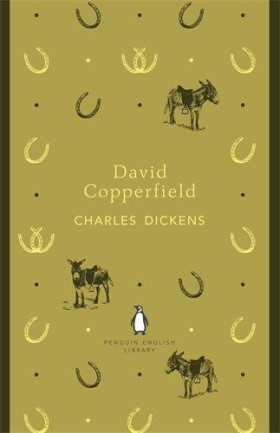
Dickens wrote of David Copperfield: ‘Of all my books I like this the best’ and by the end of the novel it is clear to see why.

A simple, yet lengthy, story, David Copperfield is the tale of a young boy on his journey from an unhappy & impoverished childhood to the discovery of his vocation as a successful novelist. Here is described  the obstacles he faces as he navigates adulthood and the eventualities of love, loss and death that come with it.

Buy the book online here and  compare the book to the movie.

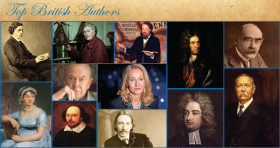
Top British Writers of all time

William Shakespeare – William Shakespeare was baptized April 26, 1564, in Stratford-upon-Avon, England. From roughly 1594 onward he was an important member of the Lord Chamberlain’s Men company of theatrical players. Written records give little indication of the way in which Shakespeare’s professional life molded his artistry. All that can be deduced is that over the course of 20 years, Shakespeare wrote plays that capture the complete range of human emotion and conflict.

Thomas More- Sir Thomas More , known by Catholics as Saint Thomas More since 1935, was an English lawyer, social philosopher, author, statesman, and noted Renaissance humanist. He was an important councillor to Henry VIII of England and was Lord Chancellor from October 1529 to 16 May 1532. He is commemorated by the Church of England as a “Reformation martyr”. More coined the word “utopia” – a name he gave to the ideal and imaginary island nation, the political system of which he described in Utopia published

Jonathan Swift was an Anglo-Irish satirist, essayist, political, poet and cleric who became Dean of St. Patrick’s Cathedral, Dublin. He is remembered for works such as Gulliver’s Travels, A Modest Proposal, A Journal to Stella, Drapier’s Letters, The Battle of the Books, An Argument Against Abolishing Christianity, and A Tale of a Tub. Swift is probably the foremost prose satirist in the English language, and is less well known for his poetry.

Daniel Defoe born Daniel Foe, was an English trader, writer, journalist, and pamphleteer, who gained fame for his novel Robinson Crusoe. Defoe is notable for being one of the earliest proponents of the novel, as he helped to popularize the form in Britain and along with others such as Richardson, is among the founders of the English novel. A prolific and versatile writer, he wrote more than 500 books, pamphlets and journals on various topics.

Jane Austen was an English novelist whose works of romantic fiction, set among the landed gentry, earned her a place as one of the most widely read writers in English literature. Her realism and biting social commentary has gained her historical importance among scholars and critics.

Charles John Huffam Dickens was an English writer and social critic who is generally regarded as the greatest novelist of the Victorian period and the creator of some of the world’s most memorable fictional characters. During his lifetime Dickens’ works enjoyed unprecedented popularity and fame. Now his novels and short stories are popular too.

Charles Lutwidge Dodgson better known by the pseudonym Lewis Carroll was an English author, mathematician, logician, Anglican deacon and photographer. His most famous writings are Alice’s Adventures in Wonderland and its sequel Through the Looking-Glass, as well as the poems “The Hunting of the Snark” and “Jabberwocky”, all examples of the genre of literary nonsense. He is noted for his facility at word play, logic, and fantasy.enson

Robert Louis Stevenson – Scottish essayist, poet, and author of fiction and travel books, known especially for his novels of adventure. Stevenson’s characters often prefer unknown hazards to everyday life of the Victorian society. His most famous examinations of the split personality are THE STRANGE CASE OF DR. JEKYLL AND MR. HYDE. and TREASURE ISLAND .Many of Stevenson’s stories are set in colorful locations, they have also horror and supernatural elements.

Charlotte Brontë was an English 19th century writer whose novel Jane Eyre is considered a classic of Western literature. Born on April 21, 1816, in Thornton, Yorkshire, England, Charlotte Brontë worked as a teacher and governess before collaborating on a book of poetry with her two sisters, Emily and Anne, who were writers as well. In 1847, Brontë published the semi-autobiographical novel Jane Eyre, which was a hit and would become a literary classic. Her other novels included Shirley andVillette. She died on March 31, 1855, in Haworth, Yorkshire, England.

Sir Arthur Ignatius Conan Doyle was a Scottish physician and writer, most noted for his stories about the detective Sherlock Holmes, generally considered a milestone in the field of crime fiction, and for the adventures of Professor Challenger. He was a prolific writer whose other works include science fiction stories, plays, romances, poetry, non-fiction and historical novels.

Joseph Rudyard Kipling was an English poet, short-story writer, and novelist .Kipling received the 1907 Nobel Prize for Literature. Kipling is best known for his works of fiction, including The Jungle Book (a collection of stories which includes “Rikki-Tikki-Tavi”), Just So Stories , Kim , many short stories, including “The Man Who Would Be King” ; and his poems, his children’s books are enduring classics of children’s literature.

Dame Agatha Mary Clarissa Christie was a British crime writer of novels, short stories, and plays. She also wrote romances under the name Mary Westmacott, but she is best remembered for her 66 detective novels and more than 15 short story collections (especially those featuring Hercule Poirot or Miss Jane Marple), and her successful West End plays.
According to the Guinness Book of World Records, Christie is the best-selling novelist of all time. Her novels have sold roughly four billion copies.

Joanne “Jo” Rowling, better known as J. K. Rowling, is a British novelist, best known as the author of the Harry Potter fantasy series. The Potter books have gained worldwide attention, won multiple awards, sold more than 400 million copies to become the best-selling book series in history and been the basis for a popular series of films.

Henry Graham Greene was an English author, playwright and literary critic. His works explore the ambivalent moral and political issues of the modern world. Greene was notable for his ability to combine serious literary acclaim with widespread popularity : Brighton Rock, The Power and the Glory, The Heart of the Matter and The End of the Affair, The Confidential Agent, The Third Man, The Quiet American, Our Man in Havana and The Human Factor.

[button color=”grey” size=”medium” link=”https://www.timetoast.com/timelines/the-most-famous-british-writers” ]Source[/button]

Who Inspired Whom?

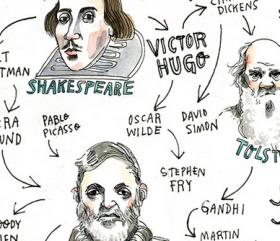
Many authors inspired or influenced people throughout the world. For example, English poet Lord Byron inspired the author Bram Stoker who then inspired film director Tim Burton. Everyone is connected. Take a look!

circlesofinfluence1


[button color=”blue” size=”small” link=”http://www.brainpickings.org/” target=”blank” ]Source[/button]


Ten Amazing Literary Facts You Should Know

1. Most expensive book ever purchased:

Everyone’s favorite billionaire Bill Gates bought ‘Codex Leicester’, one of Leonardo Di Vinci’s scientific journals for $30.8 million.

2. Longest book in the world:

‘A la recherche du temps perdu’ by Marcel Proust is the longest book in the world at 9,609,000 characters. Translated into Remembers of Things Past, the book tells the story of the narrator’s experiences growing up.

Via tumblr

3. Roald Dahl’s interesting life experiences:

Dahl served in the Royal Air Force during World War II and also tested chocolates for Cadbury’s while he was at school. (I guess we know where his inspiration for Charlie and the Chocolate Factory came from).

Via Telegraph

5. Victor Hugo’s 823 word long sentence:

In Victor Hugo’s novel, Les Miserables, you can find a sentence that is 823 words long. However, there may be other sentences that surpasses this length. But this one is worth knowing.

Via yankeeskeptic.com

6. J.K. Rowling is not actually her name:

Our favorite author who goes by initials, actually doesn’t have a middle name. After a suggestion from her publisher, she chose her grandmother’s name, Kathleen.

Via The Times

7. Charles Dickens’ superstitious behaviour:

Dickens believed that sleeping facing North, would improve his writing. He also carried a compass when travelling to make sure he was facing the right direction and he always touched things 3 times for luck.

VIa Telegraph

8. Tolstoy owes War and Peace to his wife’s efforts:

The 1400 page novel was copied around 7 times by Leo Tolstoy’s wife, Sophia, by hand – that’s love.

Via phlmetropolis.com

9. The words F. Scott Fitzgerald created that you use everyday:

Oxford English Dictionary notes the earliest use of the word ‘wicked’ to mean good/cool to be from Fitzgerald’s novel ‘This Side of Paradise’. He is also thought to have used the word T-shirt for the first time.

Via Penguin

10. The children’s story that China banned:

The Governor of Hunan Province in China banned Lewis Carroll’s Alice in Wonderland because he believed that animals should not be given the power to use the language of humans and to put animals and humans on the same level would be ‘disastrous’.


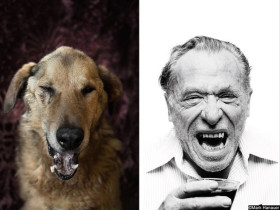
A Photographer Made These Rescue Dogs Look Like Famous Writers

Photographer Dan Bannino recently adopted a dog from a rescue shelter and it changed his life forever.

To celebrate, he decided he wanted to give his new pet, Rothko, and millions of other rescue dogs a voice by creating a new photo series entitled Poetic Dogs.

Bannino wrote on the project’s IndieGoGo page: “#POETICDOGS is a photo-project where dogs are besides famous writers: Speaking through their expressions, sounds and movements, they’re telling you everything saying nothing, just like an author would do with words in a fine poem.”

All the dogs featured in the series are from the same kennel near Turin, in Italy, where Bannino’s dog, Rothko, was adopted from.


Charles Dickens

Charles Dickens

Charles Pierre Baudelaire

Charles Pierre Baudelaire

Edgar Allan Poe

Edgar Allan Poe

Emily Dickinson

Emily Dickinson

Ernest Hemingway

Ernest Hemingway

James Joyce

James Joyce

Leo Tolstoy

Leo Tolstoy

Mark Twain

Mark Twain

Oscar Wilde

Oscar Wilde

William Shakespeare

William Shakespeare

You can see more of the pictures and learn about the dogs’ stories on Bannino’s Facebook and Instagram pages.


Inspirational Quotes


Deprecated: preg_match_all(): Passing null to parameter #2 ($subject) of type string is deprecated in /home2/englita2/public_html/blogebg/wp-includes/media.php on line 1893

Deprecated: str_contains(): Passing null to parameter #1 ($haystack) of type string is deprecated in /home2/englita2/public_html/blogebg/wp-includes/shortcodes.php on line 150

Deprecated: preg_split(): Passing null to parameter #2 ($subject) of type string is deprecated in /home2/englita2/public_html/blogebg/wp-includes/formatting.php on line 3492

Interesting Words And Expressions – Tidings

tidings

What does tidings mean?

It is an old-fashioned word that simply means news and information. Bidding someone “good tidings” wishes them good, positive news and thoughts. It’s the same if you have “bad tidings,” you bring bad, negative news or thoughts with you. This term is a little unusual since it’s almost always in the plural form; you would never say, “I bring you a good tiding“!

How do you pronounce it?

/ˈtʌɪdɪŋz/

or

[tahy-dingz]

Where does it come from?

In 1069, the Old English pronounced it as tīdung, which is related to the Middle Low German word of tīdinge information. In Old Norse it is tidhendi events.

How do you use it?

The new broadcast brought better tidings about the outlook for public jobs.

I bring you good tidings this Christmas holiday.

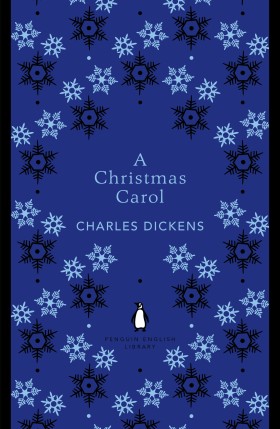
Book of the Week: A Christmas Carol by Charles Dickens

Dec 18 xmas carol

With A Christmas Carol, Charles Dickens created a modern fairy tale and shaped our ideas of Christmas. The tale of the solitary miser Ebenezer Scrooge, who is taught the true meaning of the season by a series of ghostly visitors and given a second chance, was conjured up by Dickens during one of his London night walks, who ‘wept and laughed’ as he composed it. Taken to readers’ hearts for its humor, compassion and message of redemption, it remains his best-loved book.

[button color=”blue” size=”small” link=”http://englishbookgeorgia.com/catalogue/shop/christmasgifts/a-christmas-carol/” target=”blank” ]Buy the Book[/button]

On this day…

On this day in 1843, Charles Dickens’ classic story A Christmas Carol is published.

Dickens was born in 1812 and attended school in Portsmouth. His father, a clerk in the navy pay office, was thrown into debtors’ prison in 1824, and 12-year-old Charles was sent to work in a factory. The miserable treatment of children and the institution of the debtors’ jail became topics of several of Dickens’ novels.

In his late teens, Dickens became a reporter and started publishing humorous short stories when he was 21. In 1836, a collection of his stories, Sketches by Boz, later known as The Posthumous Papers of the Pickwick Club, was published. The same year, he married Catherine Hogarth, with whom he would have nine children. The short sketches in his collection were originally commissioned as captions for humorous drawings by caricature artist Robert Seymour, but Dickens’ whimsical stories about the kindly Samuel Pickwick and his fellow club members soon became popular in their own right. Only 400 copies were printed of the first installment, but by the 15th episode 40,000 copies were printed. When the stories were published in book form in 1837, Dickens quickly became the most popular author of the day.

The success of the Pickwick Papers was soon reproduced with Oliver Twist (1838) and Nicholas Nickleby (1839). In 1841, Dickens published two more novels, then spent five months in the United States, where he was welcomed as a literary hero. Dickens never lost momentum as a writer, churning out major novels every year or two, often in serial form. Among his most important works are David Copperfield (1850), Great Expectations (1861), and A Tale of Two Cities (1859).

dickens books

Beginning in 1850, he published his own weekly circular of fiction, poetry, and essays called Household Words. In 1858, Dickens separated from his wife and began a long affair with a young actress. He gave frequent readings, which became immensely popular. He died in 1870 at the age of 58, with his last novel, The Mystery of Edwin Drood, still unfinished.