Tag Archives: English Book in Georgia

Gail Rebuck

Random_House_logo_bw2-1024x819

Gail Rebuck

Back in April, Penguin Random House UK Chair Gail Rebuck gave a 20-minute talk at the London Book Fair’s Quantum conference, during which she shared her views on the effect technology has on books today. According to Rebuck, books will forever remain the “DNA of our civilisation”, despite the technological changes that have already happened or will happen in the future.

That is not to say, of course, that technology hasn’t changed anything. To the contrary, Rebuck believes that publishers’ jobs are made easier by the huge amount of online research tools, since they can learn more about the world’s tastes in literature. It’s not all positive, however. Rebuck also thinks that technology has its dangers. In her speech, Rebuck noted a “concerning decline in authors’ revenues”, as only one out of ten writers live on the money they make from writing. She believes that modern problems such as price deflation and more competition from other media forms could be responsible for this situation.

That being said, Rebuck urged publishers to not think of digital and physical media as “enemies”. After all, books are books, no matter how or where they’re read. She hopes for a balanced future, one which will allow the possibility of giving young writers more options for getting published, but also one in which “the uniqueness of the author” is never put under risk.

For more than 20 years, Gail Rebuck has been the most important publisher in the UK. As the head of Random House, she’s been responsible for many literacy projects and industry promotions, achieving success in a very difficult industry. Surprisingly, no one could’ve predicted this when she was appointed back in 1991; she had a reputation as a publisher of lifestyle titles rather than “serious” books. However, in the years that followed, she has become the dominant force in UK publishing.

For Rebuck, this success has come as a result of her approach to work. Failure is not an option. She wants only the best efforts from all of her employees. However, she’s not arrogant, despite her success; she believes it’s always the authors that are responsible for a publisher’s success.


Source : Albanese, Andrew “Rebuck: technology ‘cuts two ways’.” London Show Daily, April 2016, 1

Clee, Nicholas “Gail Rebuck: making things work.” London Show Daily, April 2016, 24

Tiger Time – English time is Tiger Time!

TT_banner


Welcome to Tiger Time!

Tiger Time is a vibrant, six-level primary course based around different settings and characters which grow and change with the students, reflecting their evolving interests and needs.

Units contain humorous stories told through different genres, which use everyday language as well as catchy songs, chants and raps at the lower levels. Within each unit lessons are carefully structured focusing first on vocabulary, grammar and skills, and building to CLIL, culture and projects, allowing children to practise and consolidate their learning throughout the unit. Each unit ends with a review, encouraging active communication.

Written with classroom management in mind, activities are practical and well-staged. The accompanying Presentation Kit and Teacher’s Resource Centre help teachers create dynamic lessons, which cater to diverse classroom situations. The Student’s Resource Centre provides a home-school connection offering extra activities and support.

Components for students:

  • Student’s Book
  • Activity Book
  • Student’s Resource Centre
  • Student’s eBook

Components for teachers:

  • Teacher’s Book
  • Flashcards
  • Teacher’s Resource Centre
  • Presentation Kit
  • Class Audio CDs
  • Student’s eBook

Authors

Carol Read and Mark Ormerod

Source : www.macmillanenglish.com

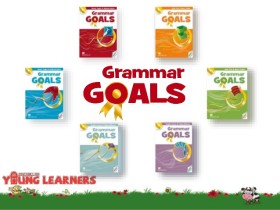
Grammar Goals – Go for Gold!

SBCOVERSrgb72DPI_2

Welcome to Grammar Goals

Grammar Goals is a new six-level grammar series for children aged 6-12 years. It presents and practises grammar in lively and meaningful age-appropriate contexts that reflect pupils’ real lives and interests. Linked to the Cambridge and Trinity external exam syllabuses, Grammar Goals offers regular exam-style practice tasks in the Pupil’s Books.

The visually appealing nature of the course ensures that grammar is presented in a child-friendly format that keeps pupils actively involved in learning the language form, function and meaning. The careful staging of the units provides three levels of challenge and success – bronze, silver and gold – helping students reflect on their progress and aim for higher goals.

Key features:

  • Clearly contextualised language makes grammar pratice meaningful.
  • Interactive grammar boxes break down form and clarify use.
  • Carefully graded activities build confidence and accuracy.
  • Cross-curricular topics link grammar to everyday life and teach pupils about the world around them.
  • Activities develop young learner competences, such as thinking and interpersonal skills.  –
  • A separate writing syllabus teaches key skills and strategies.
  • Exam-style activities practise task types from the Cambridge English: Young Learners English tests.
  • Step-by-step lesson notes with extra, mixed-ability and extension activities provide extra teacher support.

GRAMMAR GOALS

Authors:

Nicole Taylor and Michael Watts and Julie Tice and Dave Tucker and Angela Llanasand Libby Williams

Source :  www.macmillanyounglearners.com

Dramatic Results

breaking-bad-sti-news


Dramatic results

Roleplaying activities in classes can benefit students in many ways. This fact is well known among experts. In such activities, students can practice new words while using English more naturally than in grammar exercises. However, it’s usually hard to organise big roleplaying activities, like entire drama projects (mostly because of not having enough time or money), which is unfortunate, because these projects can be very good for children. They get a chance to meet new friends and improve their self-esteem.

Of course, the lack of time can really be a problem, but drama projects don’t have to be very complicated. All it takes is children that are willing to participate. Even if they’re shy, they can still work off-stage as script writers; as long as they’re working in English, they’ll benefit from the activity.

Picking the drama to stage can be tricky. You can find a huge number of scripts, especially those adapted for English learners, but it’s also possible to have the students write their own play. This is incredibly important and beneficial for their English education, since they’ll be able to express their ideas using vocabulary that they find themselves.

Everyone can get involved. Even those that are still beginners can have roles that require more movement and less speaking. The only requirement is for everyone to feel like they’re participating and having fun.

It’s also important to make the children discuss the project throughout the process. Ask them questions about their characters and the situations they find themselves in during the play. This gives the children an opportunity to become familiar with the vocabulary of their characters.

However, don’t forget that drama projects don’t just involve English. The children have to act instead of just memorizing lines, they have to be comfortable with moving on the stage, and, most importantly, they have to be confident on the stage.

Drama project preparation also gives teachers a chance to “sneak in” some pronunciation practice. Since the atmosphere is more relaxed during rehearsals, students won’t be too embarrassed to practice some parts of pronunciation that they find difficult.

Naturally, many students have trouble memorizing lines, especially in English. A good idea is to not make the students remember their whole text in one rehearsal; instead, rehearse only scene by scene.

Using drama projects in English class can give you the chance to improve students’ pronunciation, vocabulary and even intonation without boring them. Though staging a play isn’t easy, it’s worth it.

Source : Hill, Trev. “Dramatic Results.” English Teaching Professional, March 2016, 30-32.

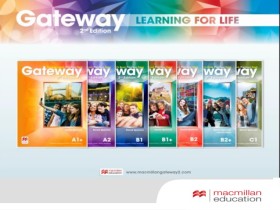
Welcome to Gateway 2nd Edition

gateway-2nd-edition-1-638


About

Learning for life

If you don’t know Gateway already, this secondary course by teacher and author David Spencer is designed to lead teenage students to success in both international and school leaving exams. Each unit offers plenty of exam style activities and preparation tasks as well as Exam success tips.  The course is designed to prepare students for further study and future employment.

Gateway 2nd Edition retains many of the features that made Gateway so popular.
The approach to grammar and vocabulary and the development of the four skills is carefully staged and are both teacher- and student-friendly.

Gateway 2nd Edition also has several exciting new features!

The Flipped classroom videos bring grammar points from the Student’s Book to life and help teachers find more time in lessons and add variety to their teaching. The videos are short grammar presentations that are linked to one of each unit’s Grammar guides. Students can watch the presentation at home and complete tasks in the Online Workbook or printable worksheets on the Resource Centre. The videos are a flexible teaching tool and can also be used for revision, when students miss a class, or with the whole class in lesson-time, for variety.

At the heart of each unit there’s a special Life skills section preparing teenagers for varied aspects of life.  Each Life skills area has its own tailor-made video featuring British teenagers, demonstrating the topic and ends with students performing a Life Task; an activity that has direct relevance to the students’ lives outside the classroom.

Gateway 2nd Edition provides material which helps to develop other areas of knowledge, as well as English language skills. It offers brand-new, up-to-date texts to motivate teachers and their students. Reading texts include Critical thinking questions to get students reflecting on what they’ve just read and personalise the topic of the text.


Find out more

Source : www.macmillangateway2.com

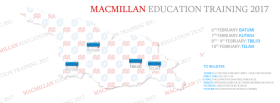
Macmillan Education Training 2017

cover photo

კომპანია „ინგლისური წიგნი საქართველოში“ და Macmillan Educationსაქართველოს განათლებისა და მეცნიერების სამინისტროსთან თანამშრომლობით მართავს ტრენინგს ინგლისური ენის მასწავლებლებისთვის, რომელიც ჩატარდება 2017 წლის 6-10 თებერვალს თბილისსა და საქართველოს სხვადასხვა რეგიონში:

  • ბათუმი-6 თებერვალი, 14:00 საათი. ბათუმის შოთა რუსთაველის  სახელმწიფო უნივერსიტეტი
  • ქუთაისი-7 თებერვალი, 12:00 საათი. ქუთაისის N1 საჯარო სკოლა,ცისფერყანწელთაქ.N6
  • თბილისი-8/9 თებერვალი, 14:00 საათი. დიდი დიღომი, მე-3 მ/რ, ნესტან-დარეჯანის N2
  • თელავი-10 თებერვალი, 12:00 საათი. თელავის იაკობ გოგებაშვილის სახელმწიფო უნივერსიტეტი

ტრენინგი შედგება ორი სესიისგან:

  • Reading, Listening and Life Skills
  • Speaking, Writing and Life Skills

სესიებს გაუძღვება Macmillan Education-ის ტრენერი და სახელმძღვანელოების –

Open Mind, Laser, Destination ავტორი, Steve Taylore-Knowles.

რეგისტრაციისთვის დაგვიკავშირდით:

ტელ: 0322001244

მობ: 599 31 32 89

Email: englishbookteam@englishbook.ge

Integrated skills – Vocabulary : Phrasal verbs

-OSE-Skills-376x23_376

Phrasal verbs: Teaching phrasal verbs using equivalents/ definitions – tips and activities

Tips and activities for teaching phrasal verbs to intermediate students and above.
Introduction | Stage one | Stage two | Stage three | Stage four | Stage five

Anchor Point:introIntroduction

Many phrasal verbs can be said or written another way. This can be a Latinate one-word equivalent (to put out a fire is to extinguish a fire) or by a series of words (to get on well with someone is to have a good relationship with someone). Whether it is one or several words, many learners of English tend to favour the non-phrasal verb equivalent. This often makes them sound formal:

“Can I remove my shoes?” and sometimes inappropriate “Just a minute, let me extinguish my cigarette”.

It is important to point out to learners that phrasal verbs are often a more informal way of saying something, and as such they are more common in spoken English than in written English. When teaching phrasal verbs according to their equivalents, it is not enough just to have a simple matching exercise. There must be some opportunity to use the language.

In the lesson at the bottom of the page the phrasal verbs and their equivalents are all personalized with a Find Someone Who activity.

Aim: To present and practise 12 phrasal verbs

Level: Intermediate and above


Anchor Point:1Stage one

Distribute the worksheets and explain the Find Someone Who activity. The learners must go around the class asking each other questions to find a person who fits one of the sentences. When they find that person, they write their name in the space. Write the first two sentences on the board and elicit the question for each (Do you recover from illnesses very quickly? Do you often begin arguments with strangers?) Tell them that they cannot have the same name written down more than two times during this exercise. Instruct everyone to stand up and begin the activity.


Anchor Point:2Stage two

After five to seven minutes, stop the activity and ask learners to sit down. Do some feedback on the activity, asking what learners found out about each other. Tell them that today they are going to learn some phrasal verbs related to the Find Someone Who activity they have just completed.


Anchor Point:3Stage three

Distribute the second worksheet. Ask learners to match the phrasal verb to its equivalent. To help them, each phrasal verb is listed with some common collocations (words that go with other words). Tell learners that they can look at their original Find Someone Who worksheet for more help.

Answers: a) 8 b) 1 c) 2 d) 7 e) 9 f) 12 g) 10 h) 3 i) 4 j) 11 k) 6 l) 5


Anchor Point:4Stage four

Write on the board the following phrasal verbs: bump into, get over, launch into, get on well with, give back, put out, talk over, bring up, put off, take off, look into, take down. Tell learners to rewrite the completed sentences from the first worksheet (Find Someone Who) using the phrasal verbs on the board. Tell them that they must try to do this without referring back to the second worksheet.

Answers

____ gets over illnesses very quickly; ______ often launches into arguments with strangers;
 ____ borrows things but sometimes doesn’t give them back; _____ has looked into changing jobs/schools recently; _____ gets on well with his/her brothers and sisters; _____ was brought up in the countryside; ____ puts everything off until the last minute; ____ likes to talk things over before making a decision; _____ never takes down notes in class; _____ bumped into an old friend last week; ______ has put out a fire; _____ doesn’t take off their socks when they go to bed.

Stage five

Ask learners to write an original sentence about themselves using each of the phrasal verbs in their notebooks. Learners could do this for homework.

Source : www.onestopenglish.com

Speakout

6a00d83452d45869e20147e14e7b73970b

Speakout – The real world in your classroom!

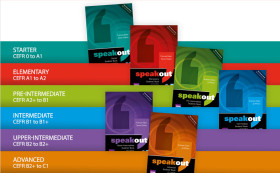
The award-winning course that invites you and your students to discover English as it is really spoken. Speakout builds up all the skills and knowledge students need to express themselves confidently in a real English-speaking environment.
Lessons cover all four skill areas as well as grammar and vocabulary. Each unit ends with a DVD lesson based around an extract from a BBC programme which provides a springboard for meaningful speaking and writing tasks.

Models of authentic English are also provided through ‘on the street’ interviews filmed by the BBC. MyEnglishLab is a flexible online tool that enriches learning, informs teaching and enhances your Speakout course ,Enriched Learning MyEnglishLab has a wide range of activities that are instantly graded and correlated to your Speakout course,Informed Teaching MyEnglishLab for Speakout gives teachers instant access to a range of invaluable diagnostic tools ,Flexible Solutions You can assign tasks to the whole class, groups of students, or individual students to help them reach their goals more effectively.

ActiveBook is the Students’ book in digital format with integrated audio and video from the course and includes: Easy navigation of the Students’ Book pages with zoom facility ,Video and audio available at the touch of a button Video Podcasts with accompanying worksheets,BBC programme clips that can be played in a DVD player or computer.

Authors : Frances Eales, JJ Wilson, Antonia Clare, Steve Oakes.

Read More http://product.pearsonelt.com/speakout1e/#speakout

Source : www.pearsonelt.com

Open Mind

Open-Mind-life-skills-discussion-wheel-poster-image

Open Mind opens doors

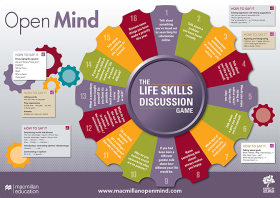
Open Mind allows teachers and students to enjoy the best combination of digital and print material. This flexible new course combines language development with the crucial skills students need to be effective and adaptable for work and study.
Open Mind is a ground-breaking adult course that provides learners with the professional, academic and personal skills they need. Not only are language skills developed in the course, but also the important 21st-century skills that students need in order to have a better awareness of self and society, to handle the demands of their study and learning and to deal with challenges in their work and career.

The course offers a flexible combination of materials to ensure that students are learning from a variety of sources: content-rich reading texts, speaking and writing workshops, high-quality video, self-study Online Workbooks, and projectable Student’s Books. The series now comes with new Digital Student’s Books, optimised for tablets, for a smart and versatile learning environment.

Authors

Mickey Rogers and Joanne Taylore-Knowles and Steve Taylore-Knowles and Ingrid Wisniewska and Dorothy Zemach

Read More
: www.macmillanopenmind.com/about

Source : www.macmillanenglish.com

Some facts you didn’t know about Shakespeare

Did you know that some people think England’s beloved Bard never existed? According to one longstanding theory the literary masterpieces attributed to Shakespeare were actually written by Edward De Vere, Earl of Oxford. Find out more about this hypothesis and explore other interesting aspects of Shakespeare’s life.

Shakespeare married an older woman who was three months pregnant at the time.

In November 1582, 18-year-old William wed Anne Hathaway, a farmer’s daughter eight years his senior. Instead of the customary three times, the couple’s intention to marry was only announced at church once—evidence that the union was hastily arranged because of Anne’s eyebrow-raising condition. Six months after the wedding, the Shakespeares welcomed a daughter, Susanna, and twins Hamnet and Judith followed in February 1585. Little is known about the relationship between William and Anne, besides that they often lived apart and he only bequeathed her his “second-best bed” in his will.

Shakespeare’s plays feature the first written instances of hundreds of familiar terms.

William Shakespeare is believed to have influenced the English language more than any other writer in history, coining—or, at the very least, popularizing—terms and phrases that still regularly crop up in everyday conversation. Examples include the words “fashionable” (“Troilus and Cressida”), “sanctimonious” (“Measure for Measure”), “eyeball” (“A Midsummer Night’s Dream”) and “lackluster” (“As You Like It”); and the expressions “foregone conclusion” (“Othello”), “in a pickle” (“The Tempest”), “wild goose chase” (“Romeo and Juliet”) and “one fell swoop” (“Macbeth”). He is also credited with inventing the given names Olivia, Miranda, Jessica and Cordelia, which have become common over the years (as well as others, such as Nerissa and Titania, which have not).

We probably don’t spell Shakespeare’s name correctly—but, then again, neither did he.

Sources from William Shakespeare’s lifetime spell his last name in more than 80 different ways, ranging from “Shappere” to “Shaxberd.” In the handful of signatures that have survived, the Bard never spelled his own name “William Shakespeare,” using variations or abbreviations such as “Willm Shakp,” “Willm Shakspere” and “William Shakspeare” instead. However it’s spelled, Shakespeare is thought to derive from the Old English words “schakken” (“to brandish”) and “speer” (“spear”), and probably referred to a confrontational or argumentative person.

Shakespeare wore a gold hoop earring—or so we think.

Our notion of William Shakespeare’s appearance comes from several 17th-century portraits that may or may not have been painted while the Bard himself sat behind the canvas. In one of the most famous depictions, known as the Chandos portrait after its onetime owner, the subject has a full beard, a receding hairline, loosened shirt-ties and a shiny gold hoop dangling from his left ear. Even back in Shakespeare’s time, earrings on men were trendy hallmarks of a bohemian lifestyle, as evidenced by images of other Elizabethan artists. The fashion may have been inspired by sailors, who sported a single gold earring to cover funeral costs in case they died at sea.

Amongst the 80 languages Shakespeare’s works have been translated into the most obscure must be the constructed language of Klingon.