Tag Archives: Earth

This Is What It Would Look Like If A Huge Asteroid Hit The Earth

stud2

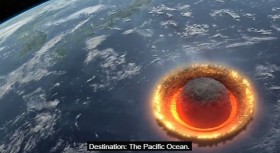
Earth has a long list of hits—and not of the musical variety, but of the rocky, celestial sort. In fact, asteroids have slammed into our planet and caused cataclysmic damage many times in its violent past. On less dramatic occassions, Earth is frequently hit with small asteroids that enter and disintegrate in its atmosphere. According to NASA’s Jet Propulsion Laboratory, Earth was hit by 556 small asteroids between 1994 and 2013. Most don’t make it through the atmosphere, but some—like the Chelyabinsk meteorite—crash-land with considerable force.

What would happen if a larger asteroid collided with Earth? A simulation by the Discovery Channel has provided a visual scenario to take us through it. According to the video’s description box, these are the details: “An asteroid with a diameter of 500 km. Destination: The Pacific Ocean. The impact peels the 10 km crust off the surface. The shockwave travels at hypersonic speeds. Debris is blasted across into low Earth orbit, and returns to destroy the surface of the Earth. The firestorm encircles the Earth, vaporizing all life in its way.”

Inspirational Quotes


Deprecated: preg_match_all(): Passing null to parameter #2 ($subject) of type string is deprecated in /home2/englita2/public_html/blogebg/wp-includes/media.php on line 1893

Deprecated: str_contains(): Passing null to parameter #1 ($haystack) of type string is deprecated in /home2/englita2/public_html/blogebg/wp-includes/shortcodes.php on line 150

Deprecated: preg_split(): Passing null to parameter #2 ($subject) of type string is deprecated in /home2/englita2/public_html/blogebg/wp-includes/formatting.php on line 3492

Did you know…

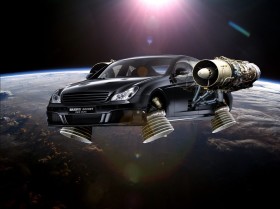
Drive to Space

If you could drive your car straight up at 95km/h (60mph), you would arrive in space in just a little over one hour.

To get to the Moon would take a little longer though, since it’s 400,000km (250,000 miles) away – driving around the Earth ten times – just under six months. Your only real problem (apart from having no oxygen for your lungs and for burning the petrol) would be finding a petrol station – and a place that has a bathroom!

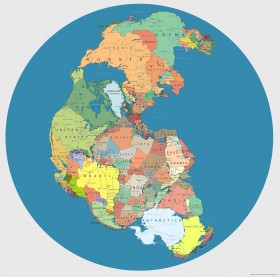
Map Showing Where Today’s Countries Would Be Located on Pangaea

Pangaea

The supercontinent, Pangaea, formed approximately 270 million years ago during the Permian Period and started breaking apart 70 million years later, creating the continents we know and live on today.

Pangaea was a peopleless mass, but if you were to put today’s countries on that supercontinent, here’s what it may look like.

The map was created by Massimo Pietrobon as an experiment. Check out more of his maps here: http://vimeo.com/86116226


[button color=”blue” size=”small” link=”http://www.openculture.com/2014/07/map-showing-where-todays-countries-would-be-located-on-pangea.html” target=”blank” ]Source[/button]

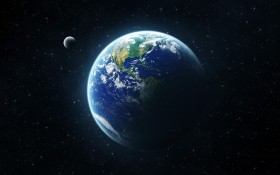
Interesting Facts about the Earth

earth-and-moon-from-space

Did you know that:

  • The Earth was formed approximately 4.54 billion years ago and is the only known planet to support life
  • The Earth was once believed to be the centre of the universe
  • Earth is the only planet not named after a god: the other seven planets in our solar system are all named after Roman gods or goddesses
  • 70% of the Earth’s surface is covered in water
  • A year on Earth isn’t 365 days -it’s actually 365.26 days. It’s this extra .26 days that creates the need for leap years
  • Only 3% water of the earth is fresh, rest 97% salted. Of that 3%, over 2% is frozen in ice sheets and glaciers?


World Environment Day: June 5th, 2014

world-environment-day-images-photos-0322134701

The entire world is celebrating World Environment Day this year on June 5th. The day was chosen by the United Nations to honor the 1972 UN Conference on the Human Environment.

Every year, a different city or region hosts the World Environment Day with a different theme. In 2010, Kigali, Rwanda hosted World Environment Day and promoted the theme “Many Species. One Planet. One Future.” In 2007, the event was hosted by Tromso, Norway with the theme “Melting Ice – A Hot Topic?”

This year, the host is the island nation of Kiribati and the theme is “Raise Your Voice, Not the Sea Level.”