Tag Archives: Interesting Fact

Gail Rebuck

Random_House_logo_bw2-1024x819

Gail Rebuck

Back in April, Penguin Random House UK Chair Gail Rebuck gave a 20-minute talk at the London Book Fair’s Quantum conference, during which she shared her views on the effect technology has on books today. According to Rebuck, books will forever remain the “DNA of our civilisation”, despite the technological changes that have already happened or will happen in the future.

That is not to say, of course, that technology hasn’t changed anything. To the contrary, Rebuck believes that publishers’ jobs are made easier by the huge amount of online research tools, since they can learn more about the world’s tastes in literature. It’s not all positive, however. Rebuck also thinks that technology has its dangers. In her speech, Rebuck noted a “concerning decline in authors’ revenues”, as only one out of ten writers live on the money they make from writing. She believes that modern problems such as price deflation and more competition from other media forms could be responsible for this situation.

That being said, Rebuck urged publishers to not think of digital and physical media as “enemies”. After all, books are books, no matter how or where they’re read. She hopes for a balanced future, one which will allow the possibility of giving young writers more options for getting published, but also one in which “the uniqueness of the author” is never put under risk.

For more than 20 years, Gail Rebuck has been the most important publisher in the UK. As the head of Random House, she’s been responsible for many literacy projects and industry promotions, achieving success in a very difficult industry. Surprisingly, no one could’ve predicted this when she was appointed back in 1991; she had a reputation as a publisher of lifestyle titles rather than “serious” books. However, in the years that followed, she has become the dominant force in UK publishing.

For Rebuck, this success has come as a result of her approach to work. Failure is not an option. She wants only the best efforts from all of her employees. However, she’s not arrogant, despite her success; she believes it’s always the authors that are responsible for a publisher’s success.


Source : Albanese, Andrew “Rebuck: technology ‘cuts two ways’.” London Show Daily, April 2016, 1

Clee, Nicholas “Gail Rebuck: making things work.” London Show Daily, April 2016, 24

Dramatic Results

breaking-bad-sti-news


Dramatic results

Roleplaying activities in classes can benefit students in many ways. This fact is well known among experts. In such activities, students can practice new words while using English more naturally than in grammar exercises. However, it’s usually hard to organise big roleplaying activities, like entire drama projects (mostly because of not having enough time or money), which is unfortunate, because these projects can be very good for children. They get a chance to meet new friends and improve their self-esteem.

Of course, the lack of time can really be a problem, but drama projects don’t have to be very complicated. All it takes is children that are willing to participate. Even if they’re shy, they can still work off-stage as script writers; as long as they’re working in English, they’ll benefit from the activity.

Picking the drama to stage can be tricky. You can find a huge number of scripts, especially those adapted for English learners, but it’s also possible to have the students write their own play. This is incredibly important and beneficial for their English education, since they’ll be able to express their ideas using vocabulary that they find themselves.

Everyone can get involved. Even those that are still beginners can have roles that require more movement and less speaking. The only requirement is for everyone to feel like they’re participating and having fun.

It’s also important to make the children discuss the project throughout the process. Ask them questions about their characters and the situations they find themselves in during the play. This gives the children an opportunity to become familiar with the vocabulary of their characters.

However, don’t forget that drama projects don’t just involve English. The children have to act instead of just memorizing lines, they have to be comfortable with moving on the stage, and, most importantly, they have to be confident on the stage.

Drama project preparation also gives teachers a chance to “sneak in” some pronunciation practice. Since the atmosphere is more relaxed during rehearsals, students won’t be too embarrassed to practice some parts of pronunciation that they find difficult.

Naturally, many students have trouble memorizing lines, especially in English. A good idea is to not make the students remember their whole text in one rehearsal; instead, rehearse only scene by scene.

Using drama projects in English class can give you the chance to improve students’ pronunciation, vocabulary and even intonation without boring them. Though staging a play isn’t easy, it’s worth it.

Source : Hill, Trev. “Dramatic Results.” English Teaching Professional, March 2016, 30-32.

Catching up with the Trail blazers

132738-let-s-catch-up


Catching up with the Trail blazers

The Trailblazer Awards, run by the Society of Young Publishers in partnership with the London Book Fair, aim to highlight young publishing professionals in their twenties who have already done great things in the industry. The first ceremony was held in February this year, and the winners have been keeping busy since.

Ella Kahn and Bryony Woods (Diamond Kahn and Woods Literary Agency):

  Kahn and Woods won a joint award for their work at the Diamond Kahn and Woods Literary Agency, launched in 2012. According to Kahn, working at the agency has given her “the chance to work in close collaboration with authors, and to be involved with them in every step of the publishing process, rather than just one particular stage of it”. Since the awards, they’ve been signing new authors and brokering deals. Some of their children’s authors have already added to the agency’s success, with David Owen’s Panther shortlisted for the Sheffield Children’s Book Award. At the same time, however, they both agree that literary agents are finding life harder in recent years due to the rising popularity of self-publishing among authors. Yet, they remain optimistic. “There will always be demand for books and authors-and for agents who can negotiate the best deals in a fast-changing market and protect those authors’ rights and interests.”

Clio Cornish (Harlequin):

 For Cornish, an editor at Harlequin, being named as a 2016 Trailblazer “really was a genuine honour and career highlight.” Like Kahn and Woods, she hopes that publishing remains relevant. “Authors have an ever-increasing number of routes to market on offer–which means that, as publishers, we need to offer the best service possible.”


Nick Coveney (Kings Road Publishing & Blink Publishing of Bonnier Publishing Group):

  As the Head of Digital and Social Media at Kings Road Publishing and Blink Publishing, Coveney has a good understanding of the digital market. “We’re definitely going to see things change again in the ebook market soon,” he claims. Though mobile and cloud-based reading is growing at a slower rate in the UK than elsewhere, Coveney believes that there will be “a second of third-wave with ebook sales spiking, but when it’ll come and exactly what it will look like is hard to predict.”

George Burgess

 George Burgess, the Co-Founder of the Edtech Founders Exchange and Founder and CEO of the UK’s most popular exam preparation app company, Gojimo, was just 17 when he created his own A Level prep app. Now, only a few years later, one out of five A Level students uses Gojimo to revise. “It’s an honour to have been named a Trailblazer”, says Burgess. “I think it’s a testament to the innovative work we’re doing at Gojimo. Since winning the Trailblazer award we’ve been working hard to prep for the exam season. This included the development of our new product, Gojimo Tutor, which goes live this month, as well as improving our existing revision app. It is now being updated every three weeks and we’re already seeing a quarter of a million users revising with it each month, and that number will only continue to increase through June.”


Source : Kirkbride, Jasmin “Catching up with the Trailblazers’.” London Show Daily, April 2016, 27

5,318 Books Toppled in a Domino

The new Guinness World Record for most books toppled in a domino fashion was set on 28 January 2015.

During a sales conference in Old Windsor, Berkshire (UK), United Biscuits employees set up a domino of well over 5,000 books, out of which 5,318 had successfully toppled and were counted for a new record.

The previous Guinness World Record of 4,988 books toppled was set in March 2014 in Częstochowa, Poland.

What Does the World Eat for Breakfast?

Countries and breakfasts discussed in the video:

United States of America (ამერიკა) – Pancakes, eggs, bacon, and juice

Japan (იაპონია) – White rice, pickled vegetables, Miso soup, and tea

India (ინდოეთში) – Dosa, smabar, chutney, and tea

Germany (გერმანია) – Sausages, hard-boiled eggs, bread roll, and coffee

Vietnam (ვიეტნამის) – Pho and coffee

Brazil (ბრაზილია) – Fruit, toast, ham, and juice

United Kingdom (გაერთიანებული სამეფო) – Sausages, grilled tomatoes, eggs, bacon, and tea

China (ჩინეთი) – Congee, pork bun, and tea

Iran (ირანი) – Naan, jam, butter, and tea

Italy (იტალია) – Bread roll, jam, and coffee

Egypt (ეგვიპტე) – Pita bread, ful medames, and tea

Kenya (კენია) – Uji, fruit, flatbread, and tea

Sweden (შვედეთი) – Bread, cold cuts, cucumber, tomatoes, hard-boiled eggs, and juice

Morocco (მაროკო) – Crepes, jam, butter, olive oil, and tea

Russia (რუსეთი) – Rye bread, porridge, sausage, and tea

Mexico (მექსიკა) – Tortillas, fried eggs, beans, salsa, and coffee

Australia (ავსტრალია) – Corn Flakes cereal, toast, vegemite, and juice

Things You Didn’t Know About William Shakespeare

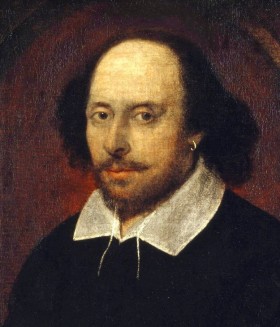
The UK National Portrait Gallery’s inaugural portrait was of William Shakespeare.
Image source: npg.org.uk

1. According to the Oxford Dictionary of Quotations, Shakespeare wrote close to a 1/10 of the most quoted lines ever written or spoken in English.What’s more, according to the Literary Encyclopaedia, Shakespeare is the second most quoted English writer after the writers of the Bible.

2. Shakespeare has been credited by the Oxford English Dictionary with introducing almost 3,000 words to the English language. Estimations of his vocabulary range from 17,000 to 29,000 words – at least double the number of words used by the average conversationalist.

3. Shakespeare never published his plays. They are known today only because two of his fellow actors – John Hemminges and Henry Condell – recorded and published 36 of them posthumously under the name The First Folio, which is the source of all Shakespeare books published.

Shakespeare never published his plays.
Image source: wikipedia.org

4. Copyright didn’t exist in Shakespeare’s time, so there was a thriving trade in copied plays. To help counter this, actors got their lines only once the play was in progress, often in the form of cue acting where someone backstage whispered them to the person shortly before he was supposed to deliver them.

5. Aside from writing 38 plays and composing 154 sonnets, Shakespeare was also an established actor. He performed in many of his own plays as well as those of his contemporaries, such as Ben Jonson.

6. “William Shakespeare” is an anagram of “I am a weakish speller”, “I’ll make a wise phrase”, “Lame Swahili speaker” and “Hear me as I will speak”.

7. The moons of Uranus are named after Shakespearean characters. The moons were originally named in 1852 after magical spirits from English literature. The International Astronomy Union subsequently developed the convention to name all further moons of Uranus (of which there are 27) after characters in Shakespeare’s plays or Alexander Pope’s The Rape of the Lock.

The moons of Uranus are named after Shakespearean characters.
Image source: daviddarling.info

8. Shakespeare had close connections with King James I. The King made the actors of Shakespeare’s company ‘Grooms of Chamber’, in response Shakespeare changed the company’s name from the ‘Lord Chamberlain’s Men’ to the ‘King’s Men’. The new title made Shakespeare a favourite with the King and in much demand for Court performances.

9. Unlike most artists of his time, Shakespeare died a very wealthy man with a large property portfolio. He was a brilliant businessman – forming a joint-stock company with his actors meaning he took a share in the company’s profits, as well as earning a fee for each play he wrote.

10. There are more than 80 variations recorded for the spelling of Shakespeare’s name. In the few original signatures that have survived, Shakespeare spelt his name “Willm Shaksp,” “William Shakespe,” “Wm Shakspe,” “William Shakspere,” ”Willm Shakspere,” and “William Shakspeare”. There are no records of him ever having spelt it “William Shakespeare”, as we know him today.

There are more than 80 variations recorded for the spelling of Shakespeare’s name.
Image source: public.wsu.edu

11. The original Globe Theatre came to a premature end in 1613 during a performance of Henry VIII, when a cannon set light to the thatched roof. Within two hours the theatre was burnt to the ground. It was rebuilt in 1614.

12. The Royal Shakespeare Company sells more than half a million tickets a year for Shakespeare productions at their theatres in Stratford-on-Avon, London and Newcastle.

13. Nobody knows Shakespeare’s true birthday. It’s celebrated on April 23 – three days before his baptism, which was recorded on April 26, 1564. However, as Shakespeare was born under the old Julian calendar, what was April 23 during Shakespeare’s life would actually be May 3 according to today’s Gregorian calendar.

Ten Amazing Literary Facts You Should Know

1. Most expensive book ever purchased:

Everyone’s favorite billionaire Bill Gates bought ‘Codex Leicester’, one of Leonardo Di Vinci’s scientific journals for $30.8 million.

2. Longest book in the world:

‘A la recherche du temps perdu’ by Marcel Proust is the longest book in the world at 9,609,000 characters. Translated into Remembers of Things Past, the book tells the story of the narrator’s experiences growing up.

Via tumblr

3. Roald Dahl’s interesting life experiences:

Dahl served in the Royal Air Force during World War II and also tested chocolates for Cadbury’s while he was at school. (I guess we know where his inspiration for Charlie and the Chocolate Factory came from).

Via Telegraph

5. Victor Hugo’s 823 word long sentence:

In Victor Hugo’s novel, Les Miserables, you can find a sentence that is 823 words long. However, there may be other sentences that surpasses this length. But this one is worth knowing.

Via yankeeskeptic.com

6. J.K. Rowling is not actually her name:

Our favorite author who goes by initials, actually doesn’t have a middle name. After a suggestion from her publisher, she chose her grandmother’s name, Kathleen.

Via The Times

7. Charles Dickens’ superstitious behaviour:

Dickens believed that sleeping facing North, would improve his writing. He also carried a compass when travelling to make sure he was facing the right direction and he always touched things 3 times for luck.

VIa Telegraph

8. Tolstoy owes War and Peace to his wife’s efforts:

The 1400 page novel was copied around 7 times by Leo Tolstoy’s wife, Sophia, by hand – that’s love.

Via phlmetropolis.com

9. The words F. Scott Fitzgerald created that you use everyday:

Oxford English Dictionary notes the earliest use of the word ‘wicked’ to mean good/cool to be from Fitzgerald’s novel ‘This Side of Paradise’. He is also thought to have used the word T-shirt for the first time.

Via Penguin

10. The children’s story that China banned:

The Governor of Hunan Province in China banned Lewis Carroll’s Alice in Wonderland because he believed that animals should not be given the power to use the language of humans and to put animals and humans on the same level would be ‘disastrous’.