Tag Archives: November 2014

5 Strategies to Ensure Student Learning through Reteach and Enrich (R&E)

reteach_enrich

Mesquite Elementary School, in Tucson, Arizona, attributes much of its turnaround in student performance — and their ongoing success — to their Reteach and Enrich program. Within the first year of implementation, even before teachers had worked out all the kinks, Mesquite went from a “performing” school (as labeled by the state of Arizona) in 2002 to an “excelling” school, the highest ranking, in 2003. The school has maintained an “excelling” status ever since.

The goal of the program is to give students the opportunity to master essential skills and knowledge before they move on to the next level. Here’s the approach:

  1. Each week has defined curricular objectives.
  2. Teachers assess students on those objectives at the end of the week.
  3. Based on assessment results, teachers assign students to either reteach or enrich sessions for the following week.
  4. Beginning the following Monday, students attend either a 30-minute reteach or enrich session every day.
    • Reteach: Teachers reteach objectives using different lessons for students who need additional time for mastery. The teacher whose students performed best on the previous week’s assessment teaches that week’s reteach students. Students stay with that teacher for the daily half-hour sessions the whole week to minimize transition.
    • Enrich: Teachers expand on objectives for students who have mastered the basics. Students in the enrich class rotate to a different teacher each day so they can experience varying teaching styles as well as learn with different peers.

Reteach and Enrich (R&E) is highly replicable; every school in the Vail School District has implemented the program, and it continues to lead to improved student performance. However, there are some essential elements that are key to making it work.

1. A Common Curriculum Calendar

R&E depends on a shared set of clearly defined curricular objectives that are scheduled out for the entire year. This means that for any given week within each grade, all the teachers are teaching the same objectives. However, they are not necessarily teaching the same way; the instructional approach is left up to each individual teacher. The calendar keeps them on track by setting the pace so that teachers know that by year’s end they will have taught — and students will have learned — all the essential standards. Says Vail superintendent Calvin Baker, “When we hold students accountable for very specific standards, and we expect all of them to know that standard, then we hold ourselves accountable for getting that job done.”

2. Dedicated Time

Everyday at Mesquite, from 12:30 p.m. to 1 p.m., the whole school is involved in R&E. In addition to this daily half hour, R&E requires time for teachers to review and assess student data as well as plan instruction to meet each child’s needs, both generally and within the program. At Mesquite, each grade has dedicated common planning time for teachers while their students are in “specials” (e.g., P.E., computer lab, library time, and so on).

To fit all that in, time management is also of the essence, right down to classroom transition time. For R&E, all the students transfer from their regular classroom to their assigned reteach or enrich room in under a minute, thanks in part to the convenient setup of their classrooms around a common area (see video below).

3. Collaboration

Collaboration is a key part of Mesquite’s culture and is essential to R&E. Students rotate to different teachers during R&E, so every teacher must know every student in his or her grade level. Teachers share information about their students’ progress so that all the teachers in a grade level share ownership of every child’s education. They plan together and share resources and lesson plans that have been successful, and they seek insight from one another on lesson plans that were less effective.

4. Formative Assessments and Data Analysis

Early on, the teachers at Mesquite created their own weekly assessments; now there is a team of teachers at the district level that writes them. The assessments are short — usually just five questions on one objective — but they provide consistent insight into students’ progress so that teachers can address any needs promptly. Diane Samorano, Mesquite’s student achievement teacher, tracks the assessment data and the data from schoolwide screenings and quarterly benchmarks. She meets with the teachers every two weeks to review the latest results, to identify students who are struggling, and to help teachers plan instruction accordingly.

5. Involved and Informed Leadership

In order to address a variety of student needs, teachers must have access to resources, and principals must know what’s going on in the classroom. Katie Dabney, principal at Mesquite, routinely visits classes, converses with students, and attends every data meeting for all grades. “As instructional leader, I have to stay on top of the data and be actively involved in searching for students who are at risk or need an extra challenge.”


Inspirational Quotes


Deprecated: preg_match_all(): Passing null to parameter #2 ($subject) of type string is deprecated in /home2/englita2/public_html/blogebg/wp-includes/media.php on line 1893

Deprecated: str_contains(): Passing null to parameter #1 ($haystack) of type string is deprecated in /home2/englita2/public_html/blogebg/wp-includes/shortcodes.php on line 150

Deprecated: preg_split(): Passing null to parameter #2 ($subject) of type string is deprecated in /home2/englita2/public_html/blogebg/wp-includes/formatting.php on line 3492

What do you know about deserts?

About 20% of the Earth is a desert. Deserts are places that get very little precipitation (rain or snow) each year, and that makes them extremely dry. Deserts cover big areas of land. The biggest desert, the Sahara, extends from North Africa to Southwest Asia and is 13 times the size of Texas. Some parts of the Sahara get as little as 2 millimeters (0.08 inches) of water a year.

Since water is scarce, animals that live in deserts have ways to find, save, and use very little of this precious liquid. Camels store fat in their humps. When they burn the fat for energy, the make water for their bodies. Cacti have wide and shallow roots so that when it does rain, they drink up as much water as possible.

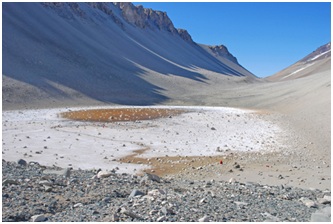
Not all deserts are dry, dusty, and hot. The Antarctic is also a desert. It may be cold, but, just like the Sahara, the Antarctic doesn’t get very much precipitation.

desertice

Did You Know That?

  • It hasn’t rained or snowed in some places in the Antarctic for hundreds of years?
  • The biggest desert in the United States, the Mojave Desert, gets about 13 centimeters (5 inches) of rain every year?
  • Kangaroo rats are desert animals that hardly ever drink water? They get all the water they need from the foods they eat.

Interesting Words and Expressions – Ailurophile

McCall Cover, Joan Caulfield

What does Ailurophile mean?

A cat-lover or a person who adores all things feline.

Where does it come from?

From Ancient Greek aílouros, (“cat”) + phile (from Ancient Greek phílos, (“dear”, “beloved”).

How do you use it?

For example: “You don’t have to be a crazy old cat lady to be an ailurophile!”

Book of the Week: Middlemarch by George Eliot

Nov 6 - Middlemarch

Often called the greatest nineteenth-century British novelist, George Eliot the pen name of Mary Ann Evans created in Middlemarch a vast panorama of life in a provincial Midlands town. At the story’s center stands the intellectual and idealistic Dorothea Brooke—a character that in many ways resembles Eliot herself. But the very qualities that set Dorothea apart from the materialistic, mean-spirited society around her also lead her into a disastrous marriage with a man she mistakes for her soul mate. In a parallel story, young doctor Tertius Lydgate, who is equally idealistic, falls in love with the pretty but vain and superficial Rosamund Vincy, whom he marries to his ruin.

Eliot surrounds her main figures with a gallery of characters drawn from every social class, from laborers and shopkeepers to the rising middle class to members of the wealthy, landed gentry. Together they form an extraordinarily rich and precisely detailed portrait of English provincial life in the 1830s. But Dorothea’s and Lydgate’s struggles to retain their moral integrity in the midst of temptation and tragedy remind us that their world is very much like our own. Strikingly modern in its painful ironies and psychological insight, Middlemarch was pivotal in the shaping of twentieth-century literary realism.

[button color=”blue” size=”small” link=”http://englishbookgeorgia.com/catalogue/shop/macmillan/middlemarch/” target=”blank” ]Buy the Book[/button]


On this day…

guyfawkes

Remember, remember, the fifth of November

Gunpowder treason and plot

We see no reason

Why Gunpowder treason

Should ever be forgot,…..

It is an annual celebration observed on November 5th for more than 400 years following the Gunpowder Plot of 1605 when 13 conspirators planned to blow up Parliament and kill King James I.

Fawkes was arrested while guarding explosives the plotters had placed beneath the House of Lords.

People in London lit bonfires to celebrate the failure of the plot, and an act of Parliament was passed to appoint the date as a day of thanksgiving for the “joyful deliverance of James I”. This act remained in force for 254 years, until 1859.

To mark the occasion, here are some facts about Guy Fawkes, gunpowder and fireworks:

[box type=”shadow” align=”aligncenter” ]• Political protesters sometimes wear Guy Fawkes masks to protect their identity. You might recognize these masks if you’ve seen the film V for Vendetta, which is very loosely based on the story of Guy Fawkes.

• The only place in the UK that does not celebrate Guy Fawkes Night is St. Peter’s School in York. Guy Fawkes went there as a boy and they refuse to burn his image in respect for their former pupil.

• Guy Fawkes wasn’t the main conspirator in the Gunpowder Plot, but he had one of the most important roles. He guarded the gunpowder underneath the Houses of Parliament, and had he not been caught, he would have been charged with lighting it.

• Physicists from the Institute of Physics have calculated that the 2,500kg of gunpowder Fawkes hid would have wreaked damage almost 500 meters from the centre of the explosion.

• Fireworks were invented when a Chinese cook accidentally discovered how to make explosive black powder – the early origin of gunpowder – during the 10th century. The cook accidentally mixed three common kitchen ingredients – potassium nitrate or saltpeter (a salt substitute used in the curing of meat), sulfur and charcoal and set light to the concoction. The result was colorful flames. The cook also noticed that if the mixture was burned when enclosed in the hollow of a bamboo shoot, there was a tremendous explosion.

• Fireworks arrived in Europe in the 14th century and were first produced by the Italians. The first recorded display was in Florence. The first recorded fireworks in England were at the wedding of King Henry VII in 1486.

• Dummies have been burned on bonfires since as long ago as the 13th century, initially to drive away evil spirits. Following the gunpowder plot of 1605, the focus of the sacrifices switched to Guy Fawkes’ treason.

• It is said that the word ‘guy’ actually comes from the name Guy Fawkes. It originally meant “an ugly, repulsive person” but, throughout the years, simply became a synonym for “man”.

• One suggested origin for the word ‘bonfire’ is that derives from ‘bone-fire’, and comes from a time when the bodies of witches, heretics and other misfits were burned instead of being buried in holy ground.

• The Houses of Parliament are still searched by the Yeomen of the Guard before the state opening which has been held in November since 1928. The idea is to ensure no modern-day Guy Fawkes is concealed in the cellars. [/box]

[button color=”blue” size=”small” link=”http://www.newsshopper.co.uk/news/10783340.10_facts_ about_Guy_Fawkes__fireworks_and_why_we_remember_ Gunpowder_Plot_on_November_5/” target=”blank” ]Source[/button]

Philip Kerr: Learning Vocabulary: It Takes Two to Tango

On Saturday the 8th of November, English Book in Georgia, in conjunction with the Ministry of Education and Macmillan Education will be holding a conference discussing “English Language and Economic Development in the Globalized World”.

One of the speakers, Philip Kerr, will be talking about “Learning Vocabulary: It Takes Two to Tango”.

During his talk, Kerr will be referencing several websites. We’d like to provide those for you today, in preperation for his talk.

We look forward to seeing you there!!

[button color=”blue” size=”medium” link=”http://adaptivelearninginelt.wordpress.com/2014/10/13/spaced-repetition-and-the-classroom-part-1/” target=”blank” ]Spaced Repitition in the Classroom, Part 1[/button][button color=”blue” size=”medium” link=”http://adaptivelearninginelt.wordpress.com/2014/10/29/spaced-repetition-and-the-classroom-part-2/” target=”blank” ]Spaced Repitition in the Classroom, Part 2[/button]

Where Does Innovation Come From?

where-does-innovation-come-from

The theme of Vanity Fair’s inaugural New Establishment Summit in San Francisco was “The Age of Innovation.” As overblown and overhyped as the word is these days, even a cynic has to admit it would be nice to know where innovation actually comes from.

Perhaps it’s even more important to understand where innovation doesn’t come from.

It doesn’t come from a blog, a book or an article. It doesn’t come from inspirational quotes and stories. It doesn’t come from LinkedIn Influencers or anyone you follow on Twitter. It doesn’t come from motivational speakers. And it most certainly doesn’t come from any kind of self-improvement or personal productivity.

Innovation comes from inside you. Ideas, inspiration and innovation only seem to come from outside you, but they don’t. They always come from inside you. The only exception is small teams…but only intimate groups in real time in the real world, never large-scale or online collaborations.

It comes from obsession. Albert Einstein believed light was special, unique. He was obsessed with light. Elon Musk is obsessed with manned space travel and electric cars, among other things. Every successful founder was inspired by obsession. If you’re obsessed, you never need to be inspired by anything else.

Innovation comes from history. Microprocessor architecture comes almost entirely from the way mainframe and minicomputers were designed decades ago. So much innovation comes from ancient history it isn’t funny. Why reinvent the wheel when you don’t have to?

It comes from perseverance. Steve Jobs said, “You’ve got to have an idea or a problem or a wrong that you want to right that you’re passionate about, otherwise you’re not going to have the perseverance to stick it through. I think that’s half the battle right there.”

Innovation comes from focus, discipline and patience. These days, everyone is obsessed with squeezing every ounce of personal productivity and self-improvement out of themselves. That only takes you further away from innovation. Innovation comes from focusing on one thing and letting everything else fade to black. It’s the big picture that drives you and that’s also what drives you to come up with unique solutions to tough problems.

It comes from the need to prove yourself. The human mind is surprisingly powerful, especially in terms of the need to prove yourself. While it usually manifests early in life, the motivation tends to stick with us and often becomes a self-fulfilling prophecy. It doesn’t even seem to matter if you know to whom you’re proving yourself – your father, yourself or teachers who said you’d never amount to anything.

Innovation comes from your subconscious. Brilliant ideas often come when you least expect them or when you’re not even paying attention. They may come to us in dreams, during meditation, in the shower, or when we’re otherwise preoccupied with some menial or repetitive task that allows our deeper emotions and thoughts to engage. And no, distracting yourself with games or social media does not qualify.

It comes from identifying problems. Granted, there has to be a solution but the problem comes first and foremost. The reason is simple. Without a pressing problem, there’s no real need of a solution. And until you correctly identify the problem, your solution is suspect and lacking innovation. Always focus on the problem. What do people need or want to do that they can’t currently do or do cost-effectively?

The most important thing to know about innovation is that it’s not the same as invention. We might even go as far as to say that, in the world of startups, invention is sort of immaterial. Just come up with problems that need to be solved and solutions that are unique and that people can actually use. More often than not, that will do the trick.


[button color=”blue” size=”small” link=”http://www.entrepreneur.com/article/238545″ target=”blank” ]Source[/button]


Interesting Words and Expressions – The squeaky wheel gets the grease

squeaky_wheel

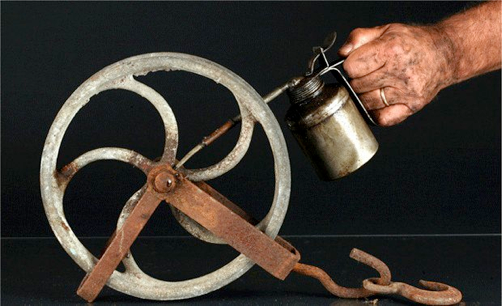
“The squeaky wheel gets the grease.”

What does it mean?

This idiom means that the most noticeable (or loudest) problems (or people) are the ones most likely to get attention. It is alternately expressed as “The squeaky wheel gets the oil”.

Where does it come from?

The origin of the squeaky wheel idiom is unknown, but its current form is attributed to American humorist Josh Billings who is said to have popularized it in his putative poem “The Kicker” written in 1870.

I hate to be a kicker,

I always long for peace,

But the wheel that does the squeaking,

Is the one that gets the grease.

However, this poem has been attributed to various authors, anonymous or otherwise, and its provenance has never been verified.