Tag Archives: For Teachers

On this day…

Frédéric Passy, Henry Dunant – The first winners of the Nobel Peace Prize in 1901

On this day in 1901, the first Nobel Prizes are awarded in Stockholm, Sweden, in the fields of physics, chemistry, medicine, literature, and peace. The ceremony came on the fifth anniversary of the death of Alfred Nobel, the Swedish inventor of dynamite and other high explosives. In his will, Nobel directed that the bulk of his vast fortune be placed in a fund in which the interest would be “annually distributed in the form of prizes to those who, during the preceding year, shall have conferred the greatest benefit on mankind.” Although Nobel offered no public reason for his creation of the prizes, it is widely believed that he did so out of moral regret over the increasingly lethal uses of his inventions in war.
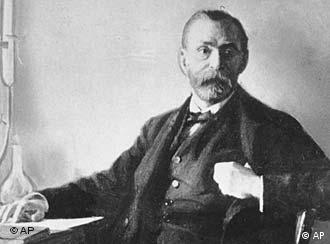
Alfred Bernhard Nobel was born in Stockholm in 1833, and four years later his family moved to Russia. His father ran a successful St. Petersburg factory that built explosive mines and other military equipment. Educated in Russia, Paris, and the United States, Alfred Nobel proved a brilliant chemist. When his father’s business faltered after the end of the Crimean War, Nobel returned to Sweden and set up a laboratory to experiment with explosives.
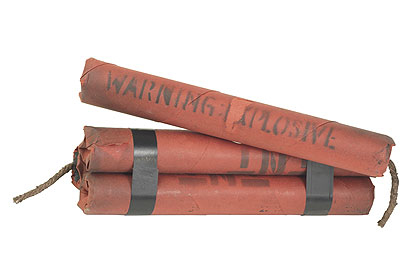
In 1875, Nobel created a more powerful form of dynamite, blasting gelatin, and in 1887 introduced ballistite, a smokeless nitroglycerin powder. Around that time, one of Nobel’s brothers died in France, and French newspapers printed obituaries in which they mistook him for Alfred. One headline read, “The merchant of death is dead.” Alfred Nobel in fact had pacifist tendencies and in his later years apparently developed strong misgivings about the impact of his inventions on the world. After he died in San Remo, Italy, on December 10, 1896, the majority of his estate went toward the creation of prizes to be given annually in the fields of physics, chemistry, medicine, literature, and peace. The portion of his will establishing the Nobel Peace Prize read, “[one award shall be given] to the person who has done the most or best work for fraternity among nations, for the abolition or reduction of standing armies, and for the holding and promotion of peace congresses.” Exactly five years after his death, the first Nobel awards were presented.

Past Nobel Prize winners

Today, the Nobel Prizes are regarded as the most prestigious awards in the world in their various fields. Notable winners have included Marie Curie, Theodore Roosevelt, Albert Einstein, George Bernard Shaw, Winston Churchill, Ernest Hemingway, Martin Luther King, Jr., the Dalai Lama, Mikhail Gorbachev, and Nelson Mandela.

The Royal Swedish Academy of Sciences

The Royal Swedish Academy of Sciences decides the prizes in physics, chemistry, and economic science; the Swedish Royal Caroline Medico-Surgical Institute determines the physiology or medicine award; the Swedish Academy chooses literature; and a committee elected by the Norwegian parliament awards the peace prize. The Nobel Prizes are still presented annually on December 10, the anniversary of Nobel’s death. In 2006, each Nobel Prize carried a cash prize of nearly $1,400,000 and recipients also received a gold medal, as is the tradition.

Did you know…

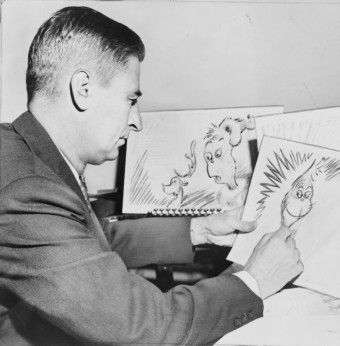
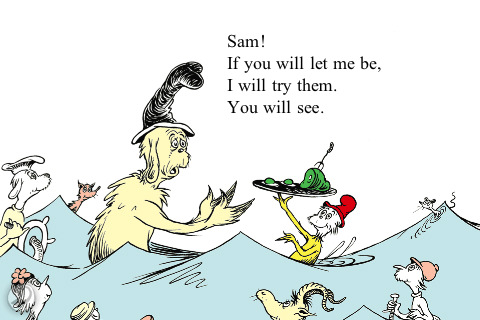
Dr. Seuss wrote “Green Eggs and Ham” on a bet that he couldn’t write a book with 50 or fewer words?

The bet was made in 1960 with Bennett Cerf, the co-founder of Random House, and was for $50 (about $382 today). Despite Dr. Seuss, a.k.a. Theodore Geisel, winning the bet by producing one of his most popular works “Green Eggs and Ham” using exactly 50 unique words, Cerf never paid him.  “Green Eggs and Ham” went on to be Geisel’s best selling work, so he made money on it anyways.

Oh, and in case you were wondering what those words are, here is the list:

a, am, and, anywhere, are, be, boat, box, car, could, dark, do, eat, eggs, fox, goat, good, green, ham, here, house, I, if, in, let, like, may, me, mouse, not, on, or, rain, Sam, say, see, so, thank, that, the, them, there, they, train, tree, try, will, with, would, and you.


[button color=”blue” size=”small” link=”http://www.omgfacts.com/lists/5055/Dr-Seuss-wrote-Green-Eggs-and-Ham-after-his-editor-bet-him-that-he-couldn-t-write-a-book-using-50-words-or-less” target=”blank” ]Source[/button]


Interesting Words And Expressions – Add insult to injury

Stress. Woman stressed

“Add insult to injury.”

What does it mean?

To further a loss with mockery or indignity; to worsen an unfavorable situation.

Where does it come from?

The phrase is an ancient one, even older than its often cited use in the Roman writer Phaedrus’s fable of the bald man and the fly. In English it was first recorded in 1748.

Small, Safe Steps for Introducing Games to the Classroom

Some educators are nervous about using games in the classroom or fully implementing all aspects of game-based learning (GBL). However, there are a few small, safe steps that all educators can and should consider to leverage the power of engagement that games can bring. Finding games isn’t as difficult as it used to be. Sites like Educade provide game ideas, links, resources, and even lesson ideas. This is a great start, but educators should take some of the following next steps to feel even more confident and safe about using games in the classroom.

Play the Games

When educators want to know if a game is appropriate for the classroom, they shouldn’t just rely on someone telling them it’s great, whether that someone is a company or even a colleague. To truly understand if the game will work with your curriculum or your intended goals for learning, you need to sit down and actually play the game. Spend the time to explore this software, app, or board game to your satisfaction. As you play, you can experience what students will experience and learn how to support them when they play. You’ll develop an understanding of what can be learned from this game, whether it’s content, thinking skills, or both. One of the best professional development experiences on games and GBL is to play a digital game like Civilization solo or a board game like Settlers of Catan with a group of friends.

A Game Is Voluntary

You want to know what makes games the most effective? They are voluntary. If you make students play the game, you are missing the entire point of games and GBL. Jane McGonigal, author of Reality is Broken, states:

When you strip away the genre differences and the technological complexities, all games share four defining traits: a goal, rules, a feedback system, and voluntary participation.

Voluntary participation means that players actively agree to the rules and procedures of the game, rather than having those forced upon them. When we are forced to do something, the work we do in games actually becomes less safe and less enjoyable. Consider offering games as a voluntary activity for true engagement.

Games as Differentiation

Not every student in your class needs to be playing the same game at the same time. In fact, games can be used as just another tool to differentiate. As teachers formatively assess their students, they may find that some students didn’t quite get either the content knowledge or 21st century skill they were focusing on. Also, educators might find that some students are ready for a greater challenge. Educators can use games as a tool to support either revisiting the material or pushing students farther on new material. Not only do games help differentiate for students, but they also free up the teacher to meet the needs of more students.

Team Games

Even though many games are played individually, playing games together can be a great way to build classroom culture. When paired with other culture-building activities, games can provide low-stakes, competitive ways to build collaboration skills. In fact, games that involve teams can help support the principles of “helping each other out” and sharing. Some games, like Pandemic, require that all players work together toward the same goal instead of working competitively. Collaboration is key in that game, so consider games like it for building classroom culture, and pair them with reflections and discussion to assess the learning.

Remember, depending on the access to technology, teachers can pick both high-tech and low-tech games, or offer both. Educators can try all or some of these steps to use games in the classroom. It’s important that we start small with implementation, and that we continually reflect on the learning and push ourselves to try new things for the sake of our students, their engagement, and their achievement.

What games have you introduced in your classroom, and how did you make it happen? Please share in the comments below.

What I Wish I’d Known as a New Teacher

new teacher tips

By Elena Aguilar, Transformational Leadership Coach from Oakland, California

This can be a difficult time for new teachers. I know this from personal experience, and also because there’s a graph out there that shows the dip that new teachers take in the fall as their energy wanes. When I first saw this graph, I felt a tremendous relief: I’m normal! This is documented! Yes, I know that we don’t always need research to validate our experiences, but I did.

Now, almost two decades later, I wish I’d known a few things about myself, about teaching, and about my students. Some of what I wish I’d known could have been shared with me — some I just had to live and learn from. So I offer this reflection both for new teachers as well as for those who support them. And so if you work with a new teacher, I’m hoping you might stop by their room in the next few days and share some insights from your own experience. And if you are a new teacher, then I’m hoping these reflections might help you feel validated, hopeful, and resourceful.


1. This will get better. The first year of teaching is so, so hard. You don’t even know why it’s so hard — you can’t wrap your head around that because you’re in survival mode. It’s so hard because you are being asked to push your heart and mind and body in ways you never have. You are making thousands of decisions each day, and there are big parts of you that know you don’t know what you’re doing. So you question the decisions you’re making each day (questioning is good, it is) but that questioning also makes you feel tired and insecure. It will get better. You’re just overloaded. You’re learning so much (I know you can’t even recognize this because you’re so tired) but it’ll sink in as the months pass. Nothing will ever be as hard as the first year.

2. Always work from the heart. If your actions and words emerge from the heart, you can’t make too many mistakes. Let yourself love your students — don’t be afraid of falling in love with them. That’s the path to take as a new teacher. Get to know them, indulge your curiosity and spend time learning about who they are as human beings; the rest will follow.

3. They will remember this about you. Your students will remember how you made them feel, whether they felt loved and cared for by you. I know this: I’m in touch with dozens of former students who were amongst the first groups of kids I taught. They remember my love for them in various ways; they don’t remember the lessons that I botched, or that I didn’t return their homework within a promised two days, or my disorganization. When I listen to what they remember, I hear: it was my love for them. And I did love them. Deeply.

4. Be open to surprises. Students will surprise you — they will learn things you didn’t think they could learn, they will grow in ways you didn’t expect. You might think that a particular student will struggle later on (after all, he’s already been retained in second grade and he can’t spell his own name and clearly has a learning disability). And then you might find yourself ten years later at his high school graduation hearing that he’s been accepted to art college and there’ll be tears ruining your makeup and you didn’t bring tissues and when he sees you he grins and gives you a huge hug and says, “Ms. Aguilar, I’m so glad you came.” And you’ll still be crying and telling him how proud you are. It will truly be one of the most joyful days of your life. Truly — because it was a surprise! And he was from that first year, when you thought you’d ruined them all. “You were really nice to me and you encouraged me to draw,” he says, and you beam.

5. Find a coach. Find someone who can support your growth, someone who has training to be a coach, someone who will observe you and give you feedback and help you fulfill the vision you have for yourself as a teacher. You won’t be able to figure this all out on your own. You can’t see what you can’t see. You don’t know what you need to know. Ask for a coach, beg, search out all possible options — and find someone to help you grow.

6. And if you can’t find a coach . . . Move. Find another school. I’m serious. Find a place where someone will support you in your growth as a teacher. Ok, if it can’t be a coach, settle for a mentor, an administrator who will commit to supporting you in a non-evaluative way, or find a partner-teacher who might be a mentor, or a professional learning community of teachers who observe each other. You won’t be able to guide your own development by yourself; the weekly (if you’re lucky) or annual professional development won’t be enough.

As a new teacher you need a lot of feedback and support. Don’t stop searching out support until you get it. If you feel like you’re learning and increasingly meeting the needs of your students, you’ll feel good. You’ll stay. And kids need teachers who stay.

The first year (like a first love) has so many highs and lows and I still get both dreamy-eyed and panicky when I remember my first school year. Capture this year, share stories with people you trust, and then in twenty years, look back and write yourself a “What I Wish I’d Known” letter.

[button color=”blue” size=”small” link=”http://www.edutopia.org/blog/what-i-wish-id-known-new-teacher-elena-aguilar” target=”blank” ]Source[/button]


Macmillan Summer Training and Conference Certrificates

teacher certificate

ATTENTION TEACHERS!!

Certrificates for Macmillan Summer Training and Conference are still available until December 2014.
To collect your certificate(s), please come to our main office at:

Tbilisi, Didi Digomi, 3 m/r, Nestan-Darejani Str.1

If you have questions, please contact:

Lali Jokhadze at 032.200.1242 ext.1006 or l.jokhadze@englishbook.ge

David Spencer: MOTIV8: Eight Key Factors in Motivating Teenage Students

On Saturday the 8th of November, English Book in Georgia, in conjunction with the Ministry of Education and Macmillan Education held a conference discussing “English Language and Economic Development in the Globalized World”.

One of the speakers, David Spencer, talked about “Motiv8: Eight Key Factors in Motivating Teenage Students ”.

During his talk, Spencer referred to the article below. We’d like to provide it for you today, so that you can review your notes and introduce these ideas to your classrom or school.

[divider]

MOTIV8: Eight Key Factors in Motivating Teenage Students

David Spencer

Tbilisi, Georgia

8th November 2014

 1.) Personalisation

For students to communicate comfortably in another language, it’s important to create an atmosphere of personal trust in the classroom, where students feel at ease talking about their lives.

Activities:

  • Talking T-shirts: Ask students to bring to class (or simply describe) one, two or three T-shirts that have some personal significance to them. They give a short presentation to the class explaining the significance. This allows the students to learn about each other in a relaxed, interesting away.
  • Selfies: After the holidays or weekend, draw two or three simple rectangles on the board. Ask students to imagine that this is the screen of their mobile phone. They should draw ‘selfies’ or photos of their holiday/weekend. Then they show their ‘photos’ to a partner. Their partner asks them Yes/No questions to find out about what they did.

2.) Challenge

 If you treat teenagers as if they know nothing, they’ll act as if know nothing. Try to challenge students in terms of grammar, vocabulary, texts, and interesting content. Think also about having open-ended activities for fast finishers to avoid bored, potentially disruptive students.

Activities for fast finishers:

  • Rose-Rise-Rice…: Students continue the list by changing one letter (any letter) at a time. E.g. Rose-rise-rice-nice-nine-fine-…
  • The Three Letter Game: Write three letters on the board. Students think of as many words as possible containing those three letters, in any order. Remind them that word formation can help them. Example answers for the letters RTN: train, north, natural, naturally, unnatural, presentation…


3.) ‘Do-ability’

Give teenage students structured activities that help to make difficult things easy, or do-able.

Activity:

  • Madlib story:

Ask students to write down:

1. a country   2. a boy’s name – famous, fictional, unusual…   3. a girl’s name– famous, fictional, unusual…   4. a city   5. a verb in the past simple (+ object if necessary)  6. an animal   7. a superhero   8. a place   9. a type of food   10. a number

Then give them a skeleton text below to put their words into. Let them compare texts. Then analyse the linkers and use those linkers as a structure for the students’ own text.

[box type=”shadow” align=”aligncenter” ]This story took place in (1) _______. It all began when (2) _______ met (3) _______. They decided to go to (4) _______. Lots of things happened there. First they (5) _______. Then they saw a big (6) _______. The (6) _______ attacked them but just at that moment (7) _______ came and rescued them. (7) _______ took them to (8) _______ and they ate (9) _______. In the end, (2) _______ married (3) _______ and they had (10) _______ children.[/box]


4.) Engagement

The main thing we need in any class is that the students are engaged and active in our activities. Enjoyment is an important factor.

  • Kim’s Game: Show the students 15 objects (on a tray/in a photo). Give students time to memorise the objects, then take them away. Students, in pairs, try to remember what they saw. Then show the same objects again, but having taken away three or four. Can they identify the missing objects?


5.) Progress / 6.) Success

Help students to see the progress they’re making. Do regular progress checks, guiding them to extra practice if they need it. Include cumulative practice and revision throughout the year.

Activity:

  • Rewriting a low-level reader: Give B1+/ B2/B2+ students a simplified reader at A1/A1+/A2 level. Ask them to ‘improve’ short sentences by adding linkers, relative pronouns, and conjunctions.


7.) Variety

Make sure there is variety of skills and language work, interaction, task types, and media. Activities that are out of the ordinary will help to keep the students’ interest.

Activities:

  • Mime the picture: Ask for a volunteer to come to the front of the class. Secretly show them a photo. The students should adopt the same position as the person in the photo. The rest of the class ask the student Yes/No questions to discover what exactly is in the photo.
  • Alphabet Cards: Distribute the cards to the class.

(a) Spell words. Students who have a letter that appears in the word come to the front of the class and position themselves to spell the word correctly.

(b) Call out a category. Students have to think of a word beginning with their letter for the category. They hold up their card and say the word. If they can’t, they lose a point.


8.) Teacher Motivation

Activity:

5 Strategies to Ensure Student Learning through Reteach and Enrich (R&E)

reteach_enrich

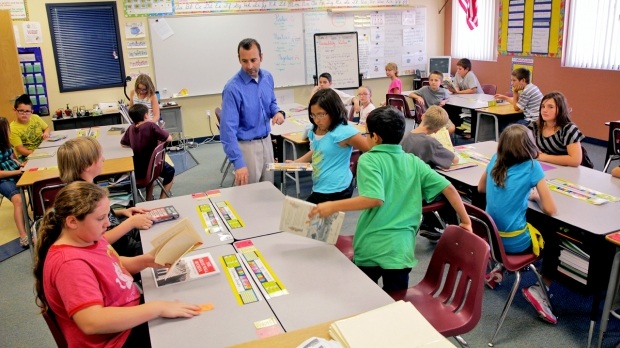
Mesquite Elementary School, in Tucson, Arizona, attributes much of its turnaround in student performance — and their ongoing success — to their Reteach and Enrich program. Within the first year of implementation, even before teachers had worked out all the kinks, Mesquite went from a “performing” school (as labeled by the state of Arizona) in 2002 to an “excelling” school, the highest ranking, in 2003. The school has maintained an “excelling” status ever since.

The goal of the program is to give students the opportunity to master essential skills and knowledge before they move on to the next level. Here’s the approach:

  1. Each week has defined curricular objectives.
  2. Teachers assess students on those objectives at the end of the week.
  3. Based on assessment results, teachers assign students to either reteach or enrich sessions for the following week.
  4. Beginning the following Monday, students attend either a 30-minute reteach or enrich session every day.
    • Reteach: Teachers reteach objectives using different lessons for students who need additional time for mastery. The teacher whose students performed best on the previous week’s assessment teaches that week’s reteach students. Students stay with that teacher for the daily half-hour sessions the whole week to minimize transition.
    • Enrich: Teachers expand on objectives for students who have mastered the basics. Students in the enrich class rotate to a different teacher each day so they can experience varying teaching styles as well as learn with different peers.

Reteach and Enrich (R&E) is highly replicable; every school in the Vail School District has implemented the program, and it continues to lead to improved student performance. However, there are some essential elements that are key to making it work.

1. A Common Curriculum Calendar

R&E depends on a shared set of clearly defined curricular objectives that are scheduled out for the entire year. This means that for any given week within each grade, all the teachers are teaching the same objectives. However, they are not necessarily teaching the same way; the instructional approach is left up to each individual teacher. The calendar keeps them on track by setting the pace so that teachers know that by year’s end they will have taught — and students will have learned — all the essential standards. Says Vail superintendent Calvin Baker, “When we hold students accountable for very specific standards, and we expect all of them to know that standard, then we hold ourselves accountable for getting that job done.”

2. Dedicated Time

Everyday at Mesquite, from 12:30 p.m. to 1 p.m., the whole school is involved in R&E. In addition to this daily half hour, R&E requires time for teachers to review and assess student data as well as plan instruction to meet each child’s needs, both generally and within the program. At Mesquite, each grade has dedicated common planning time for teachers while their students are in “specials” (e.g., P.E., computer lab, library time, and so on).

To fit all that in, time management is also of the essence, right down to classroom transition time. For R&E, all the students transfer from their regular classroom to their assigned reteach or enrich room in under a minute, thanks in part to the convenient setup of their classrooms around a common area (see video below).

3. Collaboration

Collaboration is a key part of Mesquite’s culture and is essential to R&E. Students rotate to different teachers during R&E, so every teacher must know every student in his or her grade level. Teachers share information about their students’ progress so that all the teachers in a grade level share ownership of every child’s education. They plan together and share resources and lesson plans that have been successful, and they seek insight from one another on lesson plans that were less effective.

4. Formative Assessments and Data Analysis

Early on, the teachers at Mesquite created their own weekly assessments; now there is a team of teachers at the district level that writes them. The assessments are short — usually just five questions on one objective — but they provide consistent insight into students’ progress so that teachers can address any needs promptly. Diane Samorano, Mesquite’s student achievement teacher, tracks the assessment data and the data from schoolwide screenings and quarterly benchmarks. She meets with the teachers every two weeks to review the latest results, to identify students who are struggling, and to help teachers plan instruction accordingly.

5. Involved and Informed Leadership

In order to address a variety of student needs, teachers must have access to resources, and principals must know what’s going on in the classroom. Katie Dabney, principal at Mesquite, routinely visits classes, converses with students, and attends every data meeting for all grades. “As instructional leader, I have to stay on top of the data and be actively involved in searching for students who are at risk or need an extra challenge.”

Reteach and Enrich

teacher-in-class

When English Book in Georgia’s (EBG) Chief Executive Officer, Maia Gurgenidze, was asked about EBG’s extensive work with teachers, schools and other educational institutions in Georgia, here is what she said. “We at EBG believe that education always has a positive impact on people’s lives and we are committed to making a difference ourselves by promoting English language teaching in our country. Our main goal is to create the best educational environment for students throughout Georgia.

We’re passionate about our work, because it helps people understand, achieve and discover more. Inspired by our proud history, we look for 100% commitment to the quality and integrity of what we do. It’s the passion we have for our work that gives us purpose. It helps us to think independently and stand up for what we believe.

The teacher training and conferences we offer are central to the successful development of Georgian English language teachers. New methodology is developed every day world-wide and it is very important to spread these innovations to all of our teachers.

We look forward to revolutionizing English teaching in Georgia with you…”

So with that in mind, we would like to introduce you to a new teaching strategy developed in the United States by teachers at Mesquite Elementary School in Arizona state.

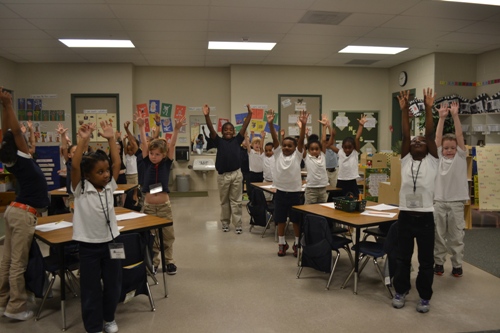
The system is called Reteach and Enrich (R&E), and it happens every day, school-wide, from 12:30 p.m. to 1 p.m. During this period, teachers give students who are struggling with a concept extra time and attention, and students who have mastered the basics receive instruction that takes their learning to the next level. The system is based on a shared curriculum map, with objectives defined for every week of the school year. At the end of each week, teachers assess students on those objectives. Depending on the results, they assign students to either a reteach or an enrich session the following week. There is no stigma attached to going to reteach; almost every student has been assigned to it at some point. Students see it simply as an opportunity to learn something better than they did the first time.

Mesquite Elementary school uses these techniques for Mathematics but this technique can easily be altered for any school subject.