Tag Archives: Interesting Fact

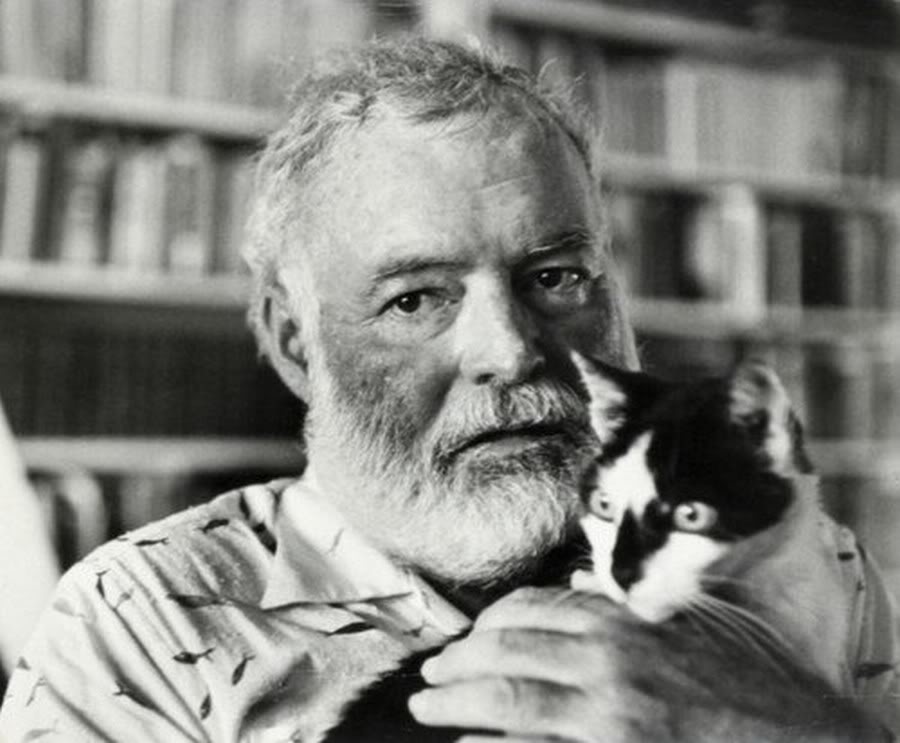
Happy Birthday, Ernest Hemingway!

Ernest Miller Hemingway was born on July 21, 1899. He was a famous American author and journalist, whose economical and understated style had a strong influence on 20th-century fiction, while his life of adventure and his public image influenced later generations.

http://i664.photobucket.com/albums/vv9/francomac123/Aalbum/ErnestHemingway2.jpg

Here are some interesting facts about him:

  • In the 1940′s, Hemingway worked closely with the Soviet KGB. He went under the cover name “Argo.” Edgar Hoover and many FBI officials spied on him for much of his later life. Some even claim this added level of pressure deepened his depression and later led him to take his own life
  • After World War II, he was accused of War Crimes by Geneva surrounding an event where Ernest lead a group of French Militia against the Nazis. He was not convicted
  • During his 62 years, he married four times and divorced three times (Hadley Richardson, Pauline Pfeiffer, Martha Gellhorn, Mar Welsh Hemingway)
  • Hemingway wrote a 6 word short story because of a bar room bet. It read, “For sale: baby shoes, never worn.”

Source

Interesting Facts about the Earth

earth-and-moon-from-space

Did you know that:

  • The Earth was formed approximately 4.54 billion years ago and is the only known planet to support life
  • The Earth was once believed to be the centre of the universe
  • Earth is the only planet not named after a god: the other seven planets in our solar system are all named after Roman gods or goddesses
  • 70% of the Earth’s surface is covered in water
  • A year on Earth isn’t 365 days -it’s actually 365.26 days. It’s this extra .26 days that creates the need for leap years
  • Only 3% water of the earth is fresh, rest 97% salted. Of that 3%, over 2% is frozen in ice sheets and glaciers?


Interesting Facts about Charles Dickens

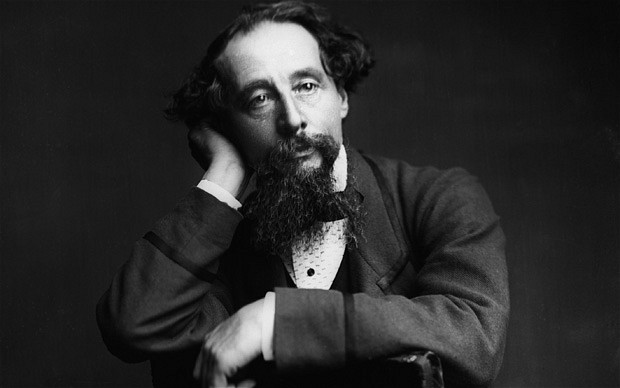
As you know, the theme of this week is Charles Dickens. Charles Dickens was an English writer and social critic. Here are several interesting facts about him:

  • His name “Dickens” was a curse, possibly invented by Shakespeare – Instead of saying, “What the devil?” as a profanity, people exclaimed, “What the dickens?” The first usage of that word, according to the Oxford English Dictionary, was William Shakespeare’s The Merry Wives of Windsor;
  • In 1846 Dickens co-founded Urania Cottage, a home for the redemption of “fallen” women where accepted candidates could learn skills, often domestic, to read and write and re-integrate into society;
  • Dickens was keenly interested in the paranormal, and has even been linked to the famous paranormal investigation group “The Ghost Club” of London;
  • In his study he had a secret door which was designed like a bookcase filled with fake books rumored to include titles like Noah’s Arkitecture and a nine-volume set titled Cat’s Lives;
  • The Oxford English Dictionary credits him with the first use of butter-fingers, crossfire, dustbin, fairy story, slow-coach, and whoosh. He also gets the credit for ‘boredom’ in the Oxford English Dictionary, coined in his novel Bleak House (1852-3), but this has since been traced back even earlier, to 1830;

PD2655229_2668291-_2072325b

Facts about Football

Football fever has taken over in our lives – at home, outside in the streets and cafes, on web, TV, radio and in everyday casual talks with friends, family members or neighbors.

Almost everyone is involved in the events of FIFA World Cup 2014. But how much do you know about football or the World Cup traditions? Below are some facts that you might find interesting.

  • USA and Canada are practically the only countries where Football is called Soccer
  • But where did the name “Soccer” come from? The game was originally called association football. “Soccer” is a corruption of “assoc” which is derived in turn from “association”
  • European Teams have reached the final of every World Cup except in 1930 and 1950
  • The highest scoring soccer game ever was 149-0!
  • Australia achieved the largest victory ever in an international soccer match when they defeated American Samoa 32-0 in 2001
  • Brazilian soccer star Ronaldinho first gained media attention after he scored every goal in a 23-0 game at age 13
  • Barbados once had to score a goal on themselves in order to win a soccer match!

Are there any other interesting facts, you would like to share with us?


Happy Birthday to Happy Birthday Song!!!

Did you know that today marks 155th anniversary of the day when this song was first sung? A song we heard thousands of times, in different languages and always on happy occasions!

Happy Birthday to you,
Happy Birthday, Dear Happy Birthday Song
Happy Birthday to you!


Here are some interesting facts about the song:

  • The song was published in 1893
  • The melody of “Happy Birthday to You” comes from the song “Good Morning to All”, which has been attributed to American siblings Patty Hill and Mildred J. Hill
  • According to the 1998 Guinness Book of World Records, “Happy Birthday to You” is the most recognized song in the English language
  • The combination of melody and lyrics in “Happy Birthday to You” first appeared in print in 1912, and probably existed even earlier
  • It has been sung in 143 movies, translated into at least 18 languages
  • Although the authors are believed to have earned very little from the song, reportedly it later generated about $1 million a year for its copyright owner
  • The Summy Company registered for copyright in 1935. There are still disputes about the copyright expiration dates.
  • Based on the 1935 copyright registration, Warner (company which owns the copyrights) claims that the United States copyright will not expire until 2030, and that unauthorized public performances of the song are technically illegal unless royalties are paid to Warner
  • One of the most famous performances of “Happy Birthday to You” was Marilyn Monroe’s rendition to U.S. President John F. Kennedy in May 1962
  • Another notable use was by comedy pianist Victor Borge, who would play the song in styles of various composers, or begin playing Claire de Lune then transition into Happy Birthday which then transitioned into the Moonlight Sonata and so on.

Theme of the Week: George Orwell

George Orwell

We would like to inform you that our main theme for this week will be the birthday of one of the world’s greatest authors of 20th century, George Orwell (25 June, 1903). Everyday we will post something that is related to him and his works. And we hope you will find it interesting!

Speaking of interesting: do you know what George Orwell’s real name is? And why he chose”George Orwell” as his pen name? The answer is quite simple: he chose his pen name, “George Orwell” because “George” was the patron saint of England and “Orwell” was the name of a river he liked.

Have you read his books? Which one is your favourite? Can you remember any interesting quotes or facts about him that you want to share with us?

Facts about The Great Gatsby

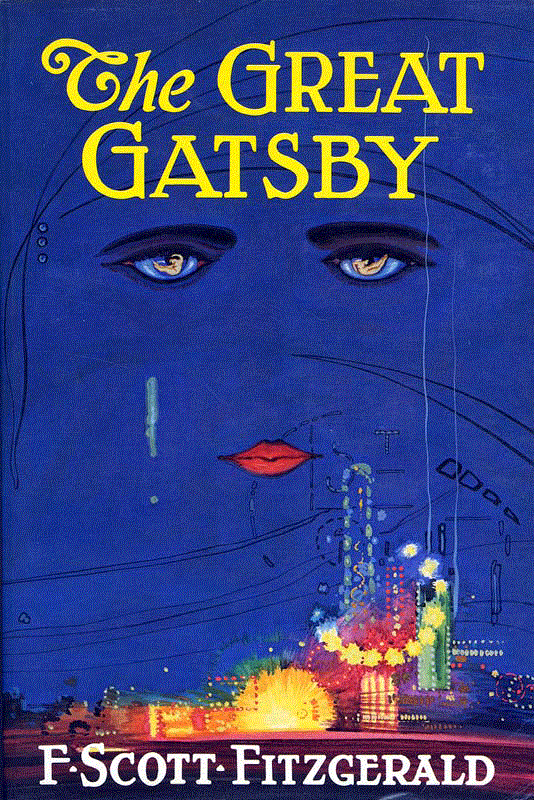
Gatsby_1925_jacket1.Would a Great American Novel by any other name be as sweet? Based on the other titles F. Scott Fitzgerald considered for Gatsby, I’d have to say no. At one time or another, all of these were in consideration: Among Ash-Heaps and Millionaires; Trimalchio; Trimalchio in West Egg; On the Road to West Egg; Under the Red, White, and Blue; Gold-Hatted Gatsby and The High-Bouncing Lover.

2. Fitzgerald was quite close to choosing one of the Trimalchio titles until someone persuaded him that the reference was too  obscure. The original Trimalchio was a character in a first century work of fiction called Satyricon. The story had other famous fans, too; you can find mentions of Trimalchio in Les MiserablesPompeii, and works by H.P. Lovecraft, Henry Miller and Octavio Paz, among others.

3. The Great Gatsby was partly inspired by a French novel called Le Grand Meaulnes, written in 1913. It has since been translated into English with the titles The Wanderer and The Lost Estate.

4. The famous cover of the book was designed by Francis Cugat, who later went on to become a designer for  actor/director/producer Douglas Fairbanks. Fitzgerald so loved Cugat’s art that he rewrote parts of the book to better  incorporate it.

5. The poet who “wrote” the novel’s epigraph never actually existed. He was a character in Fitzgerald’s previous book, This  Side of Paradise. Fitzgerald also occasionally used it as his pen name. Here’s the epigraph:

“Then wear the gold hat, if that will move her;
If you can bounce high, bounce for her too,
Till she cry, “Lover, gold-hatted, high-bouncing lover,
I must have you!”

6. At the time of its publication in 1925, the novel cost just $2.

7. Unlike Fitzgerald’s previous two novels, Gatsby was not a commercial success. It sold just 20,000 copies in its entire first  year of publication.

8.Fitzgerald was convinced that the reason the book wasn’t a rousing success was because Gatsby didn’t have a single admirable female character—and, at the time, the majority of people reading novels were women. He also thought that the title, which was only “fair,” resulted in poor sales.

9.Gatsby wasn’t a critical success with everyone, either. Here’s a few of the not-so-rave reviews:

“Why [Fitzgerald] should be called an author, or why any of us should behave as if he were, has never been satisfactorily  explained to me.” —The Brooklyn Daily Eagle


“We are quite convinced after reading The Great Gatsby that Mr. Fitzgerald is not one of the great writers of to-day.” —The New York Evening World

“Scott Fitzgerald’s new novel, The Great Gatsby, is in form no more than a glorified anecdote, and not too probable at that.” —The Baltimore Evening Sun


Interesting Facts about Arthur Conan Doyle

Sherlock Holmes’s creator Sir Arthur Conan Doyle embraced football, fairies and public feuds. Here are things that you may not know about the writer.

1. Doyle was one of the earliest motorists in Britain

He reportedly bought a car without ever having driven one before. In 1911, he took part in the Prince Henry Tour, an international road competition organized by Prince Henry of Prussia to pit British cars against German ones. Doyle paired up with his second wife, Jean, as one of the British driving teams.

2. Conan is not part of his surname

It is, in fact, only one of his two middle names. He is Sir Arthur Ignatius Conan Doyle. Shortly after he graduated from high school he began using Conan as part of his surname.

3. Doyle was on the same cricket team as ‘Peter Pan’ writer J.M. Barrie
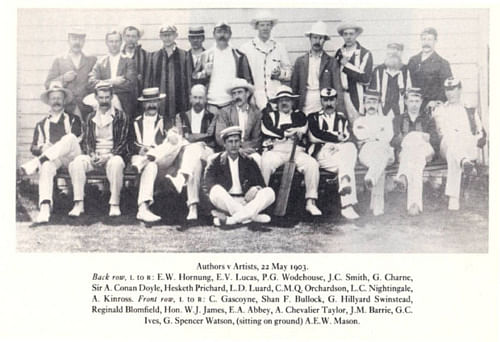
They also worked together on a comic opera, Jane Annie, which Barrie begged his friend to revise and finish for him.

4. He could have discussed Dracula and Treasure Island with their authors

Doyle was also friends with Bram Stoker, and Robert Louis Stevenson was a fellow classmate at the University of Edinburgh.

5. He helped to popularize skiing

He not only liked cricket and football, but Doyle helped to popularize the winter sport. Following a move to Davros, Switzerland in 1893 (the mountain air was prescribe to aid his wife’s health), he mastered the basics with the help of the Brangger brothers, two locals who had taken to practising the sport after dark to avoid being teased by the townsfolk. Together, they were the first people to make the 8,000ft pass through the Maienfelder Furka, which separated Davos from the neighbouring town of Arosa. Doyle was also the first Englishman to document the thrill of skiing: “You let yourself go,” he said. “Getting as near to flying as any earthbound man can. In that glorious air it is a delightful experience.” Doyle correctly predicted that in the future hundreds of Englishmen would come to Switzerland for the “skiing season”.
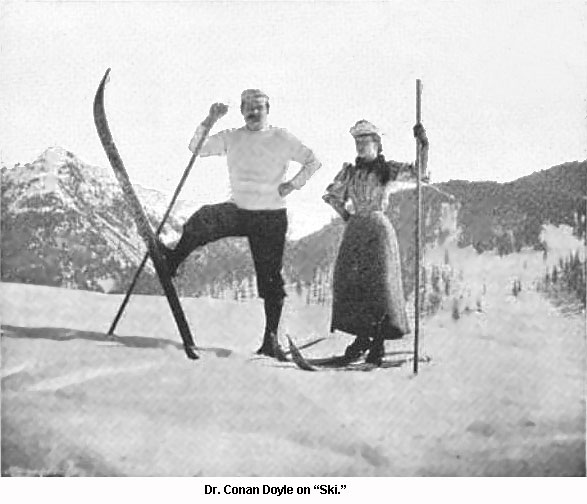
Conan Doyle was the first to bring skiing from Scandinavia to Switzerland.

 6. He was a goalie

Under the pseudonym AC Smith, the writer played as a goalkeeper for amateur side Portsmouth Association Football Club, a precursor of the modern Portsmouth FC.

7. Doyle ran for parliament… twice!

Doyle ran for parliament (representing the Unionist Party) once in Edinburgh (in 1900) and once in the Border Burghs (in 1906). Although he received a respectable vote both times he was not elected. In the 1900 general election, Doyle was defeated by CM Brown of the Liberal Party, who received 3,028 votes against 2,459 cast for Doyle.

8. Ophthalmology’s loss was literature’s gain

Arthur Conan Doyle set up an ophthalmology practice in London. Doyle wrote in his autobiography that not a single patient ever crossed his door. Although, the silver lining was that he could dedicate his time to writing.

9. He believed in fairies

Sherlock might have been a skeptic but Arthur Conan Doyle believed in fairies. Well, he was convinced by the Cuttingly Fairy photographs, the famous 1917 hoax. He even spent a million dollars promoting them and wrote a book, The Coming of the Fairies (1921), on their authenticity.

One of the Cottingley Fairies photographs, taken by Elsie Wright (15) and her cousin Frances Griffiths, which caused a storm in 1917.

10. And also believed in a number of mediums

But this came at the cost of his friendship with Harry Houdini, who at the same time was trying to disprove the claims of the Spiritualist movement.

11. Why he killed off his most famous creation?

Sherlock Holmes was far from being Doyle’s own favorite character and was killed off in 1893, only to be resurrected 10 years later after public demand and monetary persuasion. He had earlier told a friend: “I couldn’t revive him if I would, at least not for years, for I have had such an overdose of him that I feel towards him as I do towards pâté de foie gras, of which I once ate too much, so that the name of it gives me a sickly feeling to this day.” However, there may have been other reasons for the writer killing off his famous creation, as it happened in the same year that Doyle’s alcoholic father died in an asylum.

12. Doyle and George Bernard Shaw had a spat about the Titanic
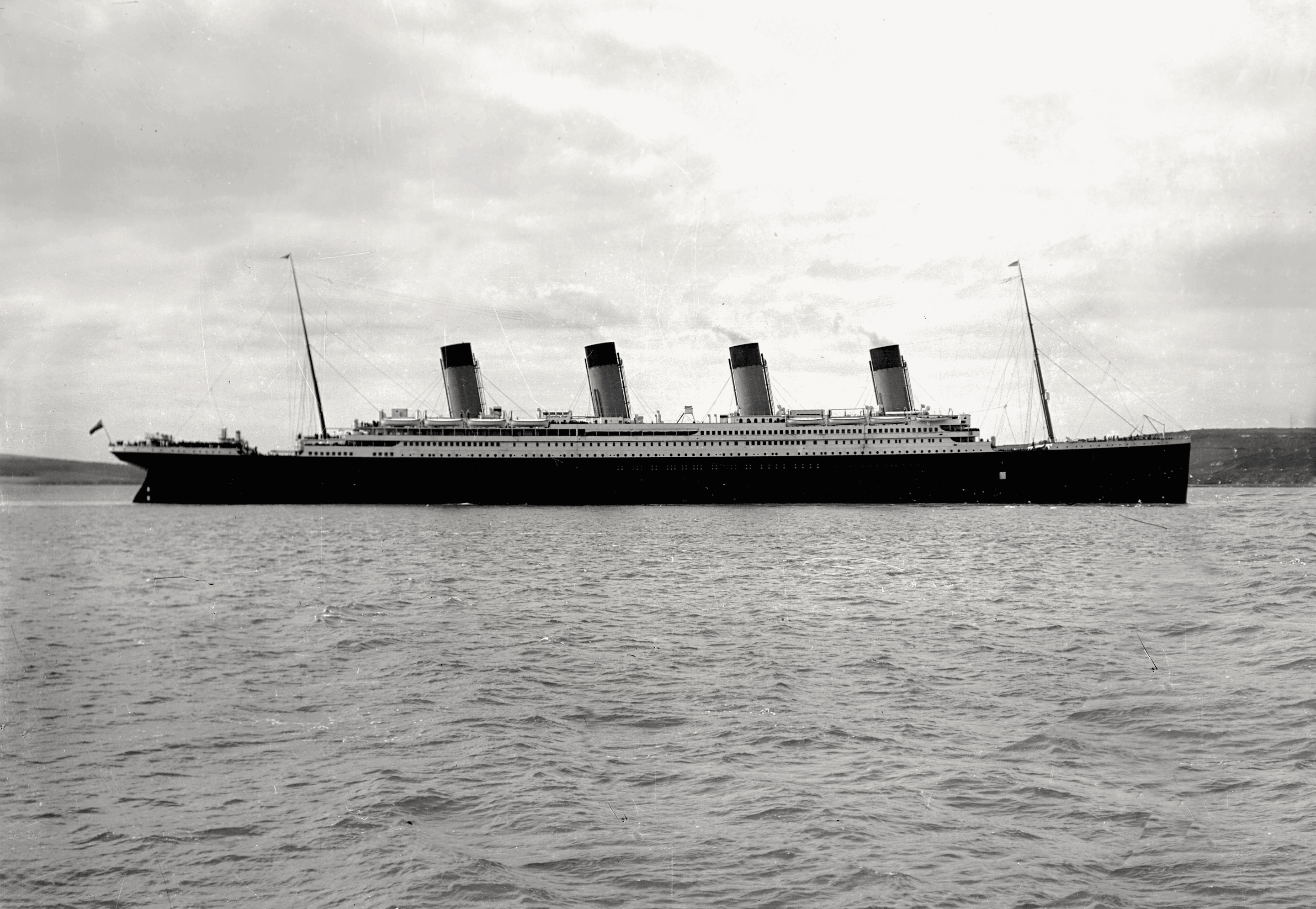
After the Titanic sank in 1912, Doyle and George Bernard Shaw had a very public disagreement about the disaster. Doyle was outraged by the dismissive and bitter comments made by the playwright regarding the many acts of heroics that took place aboard the ship as it went down.

13. There’s a square in Switzerland named after him

The town of Meiringen in Switzerland was the location of The Adventure of the Final Problem, the novel in which the author killed the detective off. In 1988, a statue of Sherlock Holmes was placed in the village square, now named Conan Doyle Place.

14. Sir Arthur Conan Doyle didn’t just write mysteries, he actually solved a few

One of particular interest to him was The Curious Case of Oscar Slater – for the murder of Marion Gilchrist, a wealthy 82-year-old woman from Glasgow. Doyle applied the “Holmes method”, in which he uncovered new evidence, recalled witnesses and questioned the prosecution’s evidence. His findings were published as a plea for Slater’s pardon. It caused a sensation and there were calls for a retrial, but all this was promptly ignored by the Scottish authorities. The desperate and incarcerated Slater later smuggled messages out of prison and Doyle’s interest in the case was reignited. He wrote to politicians and used his own money to fund Slater’s legal fees. One politician, Ramsay McDonald – Britain’s first Labour prime minister – informed the Scottish Secretary that the police and the legal authorities had colluded to withhold evidence and influence witnesses. Slater was subsequently released from prison with £6,000 compensation but never shared it with Doyle.

15. Doyle died holding a flower

Doyle died on July 7, 1930. He collapsed in his garden, clutching his heart with one hand and holding a flower in the other. His last words were to his wife. He whispered to her: “You are wonderful.”

16. A séance was organized for him to make an appearance from beyond the grave
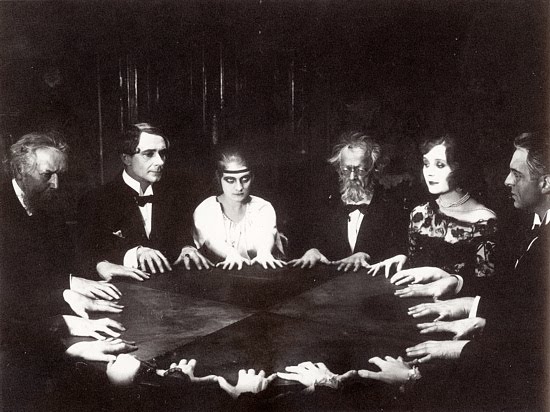
Following his death, a séance was conducted at the Royal Albert Hall. Thousands attended, including his wife and children. A row of chairs were arranged on the stage for the family, with one left empty for Sir Arthur. Even though he did not appear, there were many people in the audience who claimed they had felt his presence among them.