Tag Archives: Interesting Date

On this day…

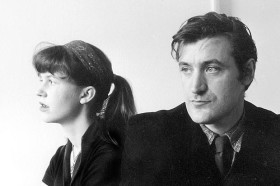
Poets, Ted Hughes and Sylvia Plath

On this day in 1956, Sylvia Plath meets her future husband, Ted Hughes, at a party in Cambridge, UK. The two poets fell in love at first sight and married four months later.

Plath and Hughes with their child

Her first poetry collection, Colossus, was published in 1960 to favorable reviews. After that, she moved to London and wrote dozens of her best poems in the winter of 1962. Her only novel, The Bell Jar, a semi-autobiographical account of a college girl who works at a magazine in New York and suffers a breakdown, was published in early 1963, but received mediocre reviews.

The Bell Jar by Sylvia Plath

Did you know…

Today is Alessandro Volta’s 270th birthday.

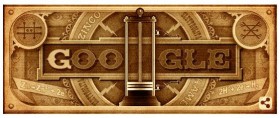
Alessandro Volta is the inventor of one of the most important inventions to date. Google celebrates the battery inventor’s birthday today.

If you click on Google’s doodle, it shows battery charging and Google lighting up at the same time.

He was born in Como, Italy, and grew to become a professor of physics at the Royal School. His interest in electricity paved the way to the invention of electrophorus, a device used to generate static electricity.

He also was the first person to isolate methane which further led to the discovery that methane mixed with air could be exploded with an electric spark.


In honor of Volta’s contribution to electrical science, the unit of electrical potential came to be known as the Volt also known as Voltage.

Alessandro Volta was also a master in many languages. He was proficient in Latin, French, German, and English helped him while travelling across Europe.

On this day…

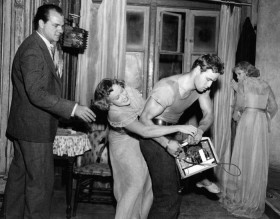
On this day in 1947, Marlon Brando’s famous cry of “STELLA!” first booms across a Broadway stage, electrifying the audience at the Ethel Barrymore Theatre during the first-ever performance of Tennessee Williams’ play A Streetcar Named Desire.

The 23-year-old Brando played the rough, working-class Polish-American Stanley Kowalski, whose violent clash with Blanche DuBois (played on Broadway by Jessica Tandy), a Southern woman with a dark past, is at the center of Williams’ famous drama. Blanche comes to stay with her sister Stella (Kim Hunter), Stanley’s wife, at their home in the French Quarter of New Orleans; she and Stanley immediately hate each other. In the climactic scene, Stanley rapes Blanche, causing her to lose her fragile grip on sanity; the play ends with her being led away in a straitjacket.

Jessica Tandy and Marlon Brando in the Broadway version of A Street Car Named Desire

Streetcar, produced by Irene Mayer Selznick and directed by Elia Kazan, shocked mid-century audiences with its frank depiction of sexuality and brutality onstage. When the curtain went down on opening night, there was a moment of stunned silence before the crowd erupted into a round of applause that lasted 30 minutes.

On December 17, the cast left New York to go on the road. The show would run for more than 800 performances, turning the charismatic Brando into an overnight star. Tandy won a Tony Award for her performance, and Williams was awarded the Pulitzer Prize for Drama.

In 1951, Kazan made Streetcar into a movie. Brando, Hunter and Karl Malden (as Stanley’s friend and Blanche’s love interest) reprised their roles. The role of Blanche went to Vivien Leigh, the scenery-chewing star of Gone with the Wind.

Vivien Leigh and Marlon Brando in the film version of A Street Car Named Desire

A Streetcar Named Desire earned 12 Oscar nominations, including acting nods for each of its four leads. The movie won for Best Art Direction, and Leigh, Hunter and Malden all took home awards; Brando lost to Humphrey Bogart in The African Queen.

On this day…

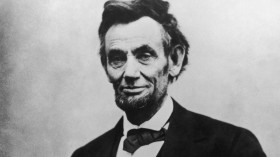
LincolnGivingGettysburgAddress

On November 19, 1863, Abraham Lincoln delivered the Gettysburg Address at the dedication of a military cemetery at Gettysburg, Pennsylvania, during the American Civil War. In just 272 words, Lincoln brilliantly and movingly delivered one of the most memorable speeches in American history, reminding a war-weary public why the Union had to fight, and win, the Civil War.

The Battle of Gettysburg, fought some four months earlier, was the single bloodiest battle of the Civil War. Over the course of three days, more than 45,000 men were killed, injured, captured or went missing.  The battle also proved to be the turning point of the war: General Robert E. Lee’s defeat and retreat from Gettysburg marked the last Confederate invasion of Northern territory and the beginning of the Southern army’s ultimate decline.

Reception of Lincoln’s Gettysburg Address was initially mixed, divided strictly along partisan lines. Nevertheless, the “little speech,” as he later called it, is thought by many today to be the most eloquent articulation of the democratic vision ever written.

Four score and seven years ago our fathers brought forth on this continent a new nation, conceived in liberty, and dedicated to the proposition that all men are created equal.

Now we are engaged in a great civil war, testing whether that nation, or any nation so conceived and so dedicated, can long endure. We are met on a great battlefield of that war. We have come to dedicate a portion of that field, as a final resting place for those who here gave their lives that that nation might live. It is altogether fitting and proper that we should do this.

But, in a larger sense, we can not dedicate, we can not consecrate, we can not hallow this ground. The brave men, living and dead, who struggled here, have consecrated it, far above our poor power to add or detract. The world will little note, nor long remember what we say here, but it can never forget what they did here. It is for us the living, rather, to be dedicated here to the unfinished work which they who fought here have thus far so nobly advanced. It is rather for us to be here dedicated to the great task remaining before us—that from these honored dead we take increased devotion to that cause for which they gave the last full measure of devotion—that we here highly resolve that these dead shall not have died in vain—that this nation, under God, shall have a new birth of freedom—and that government of the people, by the people, for the people, shall not perish from the earth.”


[button color=”blue” size=”small” link=”http://www.history.com/topics/american-civil-war/gettysburg-address” target=”blank” ]Source[/button]

Interesting Dates – Uncommon Instrument Awareness Day

20130226-030104

Did you know that today is Uncommon Instrument Awareness Day?
Here is a list of some interesting uncommon instruments: http://southbanklondon.com/our-top-20-uncommon-instruments

There is also a very interesting and very uncommon orchestra. Yes, not just one strange instrument, but an entire ORCHESTRA! The Vegetable Orchestra performs on instruments made of fresh vegetables. The utilization of various ever refined vegetable instruments creates a musically and aesthetically unique sound universe.

Can you think of any other uncommon instruments?


Happy Birthday, Ernest Hemingway!

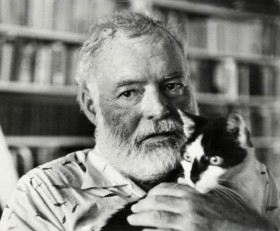
Ernest Miller Hemingway was born on July 21, 1899. He was a famous American author and journalist, whose economical and understated style had a strong influence on 20th-century fiction, while his life of adventure and his public image influenced later generations.

http://i664.photobucket.com/albums/vv9/francomac123/Aalbum/ErnestHemingway2.jpg

Here are some interesting facts about him:

  • In the 1940′s, Hemingway worked closely with the Soviet KGB. He went under the cover name “Argo.” Edgar Hoover and many FBI officials spied on him for much of his later life. Some even claim this added level of pressure deepened his depression and later led him to take his own life
  • After World War II, he was accused of War Crimes by Geneva surrounding an event where Ernest lead a group of French Militia against the Nazis. He was not convicted
  • During his 62 years, he married four times and divorced three times (Hadley Richardson, Pauline Pfeiffer, Martha Gellhorn, Mar Welsh Hemingway)
  • Hemingway wrote a 6 word short story because of a bar room bet. It read, “For sale: baby shoes, never worn.”

Source

July 11 – Cheer Up The Lonely Day

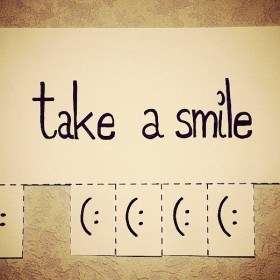
Did you know that July 11 marks a Cheer Up the Lonely Day in the USA?

Cheer Up the Lonely Day is an opportunity to make a lonely person happy. Any time you can make someone happy, you’ve done a good thing, and should be proud of yourself. Spend some time today cheering up lonely people. It’s easy to do…..just spend some time with them. When you visit, bring happy things to talk about. Keep the conversation upbeat, and lively. When you leave, give a big hug and let them know you enjoyed the stay. Sending cards or making a phone call is okay, only if they live too far away to visit. What a lonely person really needs, is face to face time with other people.

take-a-smile-5640

The Origin of Cheer Up the Lonely Day:
According to L.J. Pesek, Cheer Up the Lonely Day was created by her father, Francis Pesek from Detriot, Michigan. She told us that he “was a quiet, kind, wonderful man who had a heart of gold. He got the idea as a way of promoting kindness toward others who were lonely or forgotten as shut-ins or in nursing homes with no relatives or friends to look in on them.” Francis Pesek chose this day, because it was his birthday.

Facts about US Independence Day

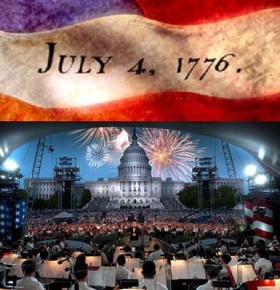
4th of July is the day when Americans celebrate their country’s independence.

independence-day-usa-for-kids-2

Here are some fun and interesting facts about this date:

  • The Declaration of Independence began as a letter to King George to explain why the Continental Congress voted to declare independence from Great Britain
  • 56 people signed the Declaration of Independence. Thomas Jefferson wrote the majority of it
  • The Declaration of Independence has five parts. They are: the Preamble, the Statement of Human Rights, Charges Against Human Rights, Charges Against the King and Parliament, and the Statement of Separation and Signatures
  • The Declaration of Independence was started on July 2, 1776 and the Continental Congress approved the final wording on July 4. The American colonies were declared free and independent states
  • July 4 was officially declared a holiday in 1870, nearly one hundred years after the Declaration of Independence was written
  • Both Thomas Jefferson and John Adams, two of its founders of the Declaration of Independence died on July 4, 1826
  • July 4 marks a day of liberation in both the Philippines and Rwanda. In the Southeast Asian nation, July 4, known as “Republic Day,” marks the date when the United States officially recognized the Philippines as an independent state in 1946

Happy Independence Day to everyone who celebrate it today!

National Tom Sawyer Days – 3-5 July, 2014

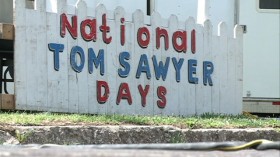
22759805_BG1The celebrations of National Tom Sawyer Days have started on July 3rd and will last until July 5th in Hannibal, Missouri. National Tom Sawyer Days has had a long and proud history of honoring Hannibal’s most beloved son.

Events inspired by Mark Twain’s works are some delightful highlights of this entertaining festival. From the National Fence Painting Contest to a Frog Jumping Contest to Live Entertainment at Tanyard Gardens, National Tom Sawyer Days is for the young and the young at heart. Visitors from all over the world come to experience the history of Hannibal, through the eyes of Mark Twain.

Here are some interesting facts about Mark Twain:

  • His real name was Samuel Clemens
  • Mark Twain was a pen name he picked up while writing for the Virginia City newspaper, which he first wrote under in 1863
  • He also wrote under Thomas Jefferson Snodgrass, W. Epaminondas Adrastus Blab, Sergeant Fathom, and Rambler during his career
  • Before 13, he nearly drowned 9 documented times

“Twenty years from now, you will be more disappointed by the things that you didn’t do than by the ones you did do. So throw off the bowlines. Sail away from the safe harbor. Catch the trade winds in your sails. Explore. Dream. Discover.”

TwainLarge

World Camera Day – June 29th

Yesterday was the World Camera Day!!!

Cameras and photography have developed substantially over the years, from its early roots with the French inventor Joseph Niépce right up to modern day digital photography.

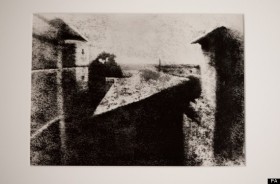
Joseph Niépce was a French inventor; he is most noted as one of the inventors of photography and was a pioneer in the field. He developed the heliograph; a technique used to produce the world’s first known photograph in 1825, the view from the window at Le Gras the families estate.

View from

You can make a camera from the materials you have a home. It’s called the “Pinhole Camera”:

Take a shoebox and poke a pinhole in the middle of one end. Cover the pinhole with a piece of black tape. In a completely dark room, place a large piece of unexposed film on the inside of the end opposite the pinhole. Re-close the cover of the shoebox. Now, take a picture in a snap!

Source: HolidayInsights