Tag Archives: Interesting Fact

Did you know…

Shorter In The Morning

We are taller in the morning than in the evening because during normal activities during the day the cartilage in our knees and other areas slowly compress, but when you go to sleep and rest the cartilage goes back to normal. On average we are about 1cm taller in the morning than in the evening.

20 Fun and Interesting Facts You May Not Have Known About LEGO

LEGO has been around almost 100 years. It began as small wooden playthings in the early 20th century and grew into a large market of plastic building bricks that controlled the world markets for decades.

It is one of the oldest plastic toys in the world. Its manufacturing was started in Denmark, but was eventually replaced by factories throughout the world. Today it is one of the most successful toys and has remained an iconic brand with a loyal and continuing following.

The traditional date for the first Lego blocks was 1947, and the toys have continued to be produced with little interruption since around that time. Continue reading for more fun and interesting facts.

lego facts


10 Little Known Facts About Virginia Woolf

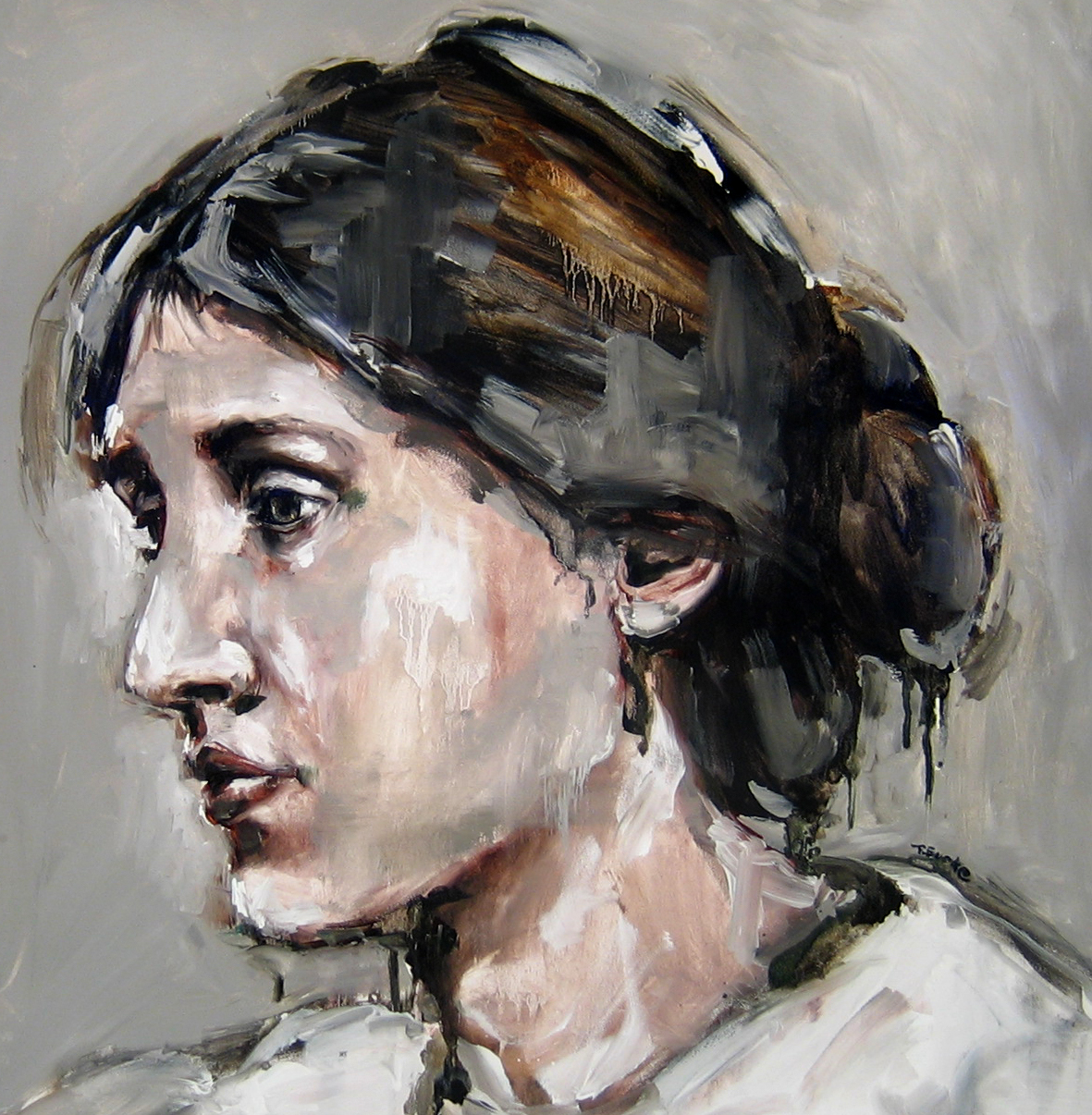
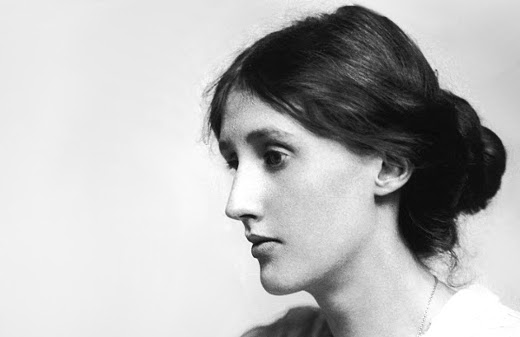
virginia woolf

Virginia Woolf — most know the name, but few know the obscure biographical facts behind the name. Below are 10 little known facts about the troubled writer.


    •  Woolf once said that her death would be the “one experience I shall never describe.”


    • When Woolf taught at Morley College, she made her students write essays about themselves.
Virginia Woolf in her garden at Monk House
    • For a summer, she went mad believing that the birds were chirping in Greek and King Edward VII was saying curses from behind a nearby bush.


    • Woolf was a difficult shopper, often arguing with shopkeepers over what products they had for sale and what products she imagined they should have for sale.
Leonard and Virginia Woolf
    • After getting married, Woolf thought she should learn some domestic skills, so she enrolled in a school of cookery. Shortly after, she accidentally baked her wedding ring in a pudding.


    • Before Woolf was even 7 years old, her mother, Julia, was teaching her Latin, French, and History.
(L-R) Virginia Woolf, Duncan Grant, Adrian Stephen, Anthony Buxton, Guy Ridley, Horace Cole
    • Woolf and five of her male friends once received a 40-minute tour of the British battleship H.M.S. Dreadnought with the ship’s commander after painting their faces black, dressing in robes, and presenting themselves as the Prince of Abyssinia (now Ethiopia) and his entourage.


    • Woolf first tried to kill herself at the age of 22 by jumping out of a window. The window she jumped from, however, was not high enough to cause serious harm.
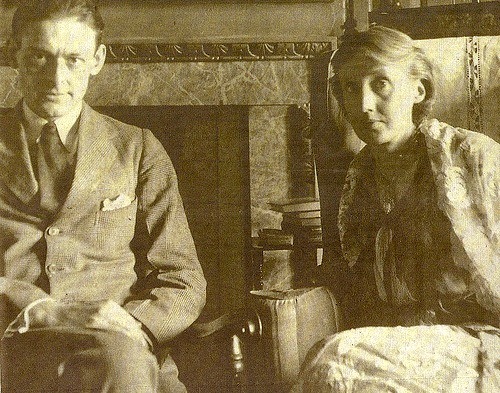
T.S. Eliot and Virginia Woolf in 1924
    • When Woolf asked T.S. Eliot at a particular dinner party to define his belief in God, Eliot did not answer.


    • When Virginia and Leonard Woolf, who together ran the Hogarth Press, received the manuscript of the first chapters of James Joyce’s Ulysses, they turned it down for publication because it was impossible to print the entire book on their handpress.


Interested in learning more about Virginia Woolf through her writing?


Orlando: A Biography

Author: Virginia Woolf

ISBN: 9780141184272

Price: 24,5 GEL

[button color=”blue” size=”small” link=”http://englishbookgeorgia.com/catalogue/shop/bestsellers/orlando-a-biography/#/” target=”blank” ]Buy the Book[/button]


Between the Acts

Author: Virginia Woolf

ISBN: 9780141184524

Price: 24,5 GEL

[button color=”blue” size=”small” link=”http://englishbookgeorgia.com/catalogue/shop/bestsellers/between-the-acts/#/” target=”blank” ]Buy the Book[/button]


The Common Reader

Author: Virginia Woolf

ISBN: 9780141389899

Price: 14,9 GEL

[button color=”blue” size=”small” link=”http://englishbookgeorgia.com/catalogue/shop/penguin-books/the-common-reader/#/” target=”blank” ]Buy the Book[/button]


A Room of One’s Own

Author: Virginia Woolf

ISBN: 9780141018980

Price: 14,9 GEL

[button color=”blue” size=”small” link=”http://englishbookgeorgia.com/catalogue/shop/penguin-books/a-room-of-ones-own/#/” target=”blank” ]Buy the Book[/button]

Did you know…

Jellyfish Are 95 Percent Water

Did you know …

… some jellyfish are bigger than a human and others are as small as a pinhead?
… people in some countries eat jellyfish?
… that jellyfish have been on Earth for millions of years, even before dinosaurs?
… jellyfish have no brain but some kinds have eyes?
… that jellyfish are mainly made up of water and protein?
… a group of jellyfish is called a smack?

On this day…

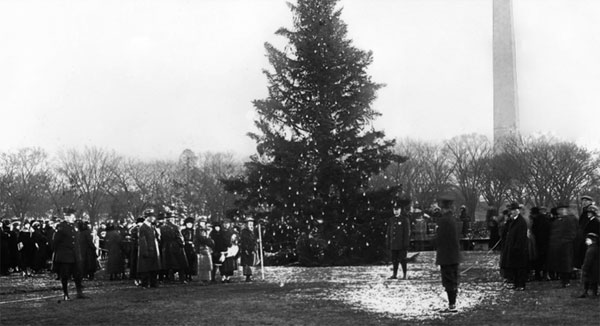
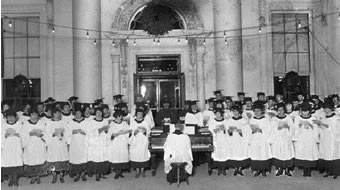
On this day in 1923, President Calvin Coolidge touches a button and lights up the first national Christmas tree to grace the White House grounds in the USA.

Not only was this the first White House “community” Christmas tree, but it was the first to be decorated with electric lights–a strand of 2,500 red, white and green bulbs. The balsam fir came from Coolidge’s home state of Vermont and stood 14.6 meters (48 feet) tall. Several musical groups performed at the tree-lighting ceremony, including the Epiphany Church Choir and the U.S. Marine Band.

At 17:00 on Christmas Eve, President Coolidge touched a button at the foot of the tree which lit the ornaments. Later that evening, President Coolidge and First Lady Grace were treated to carols sung by members of Washington D.C.’s First Congregational Church.

On this day…

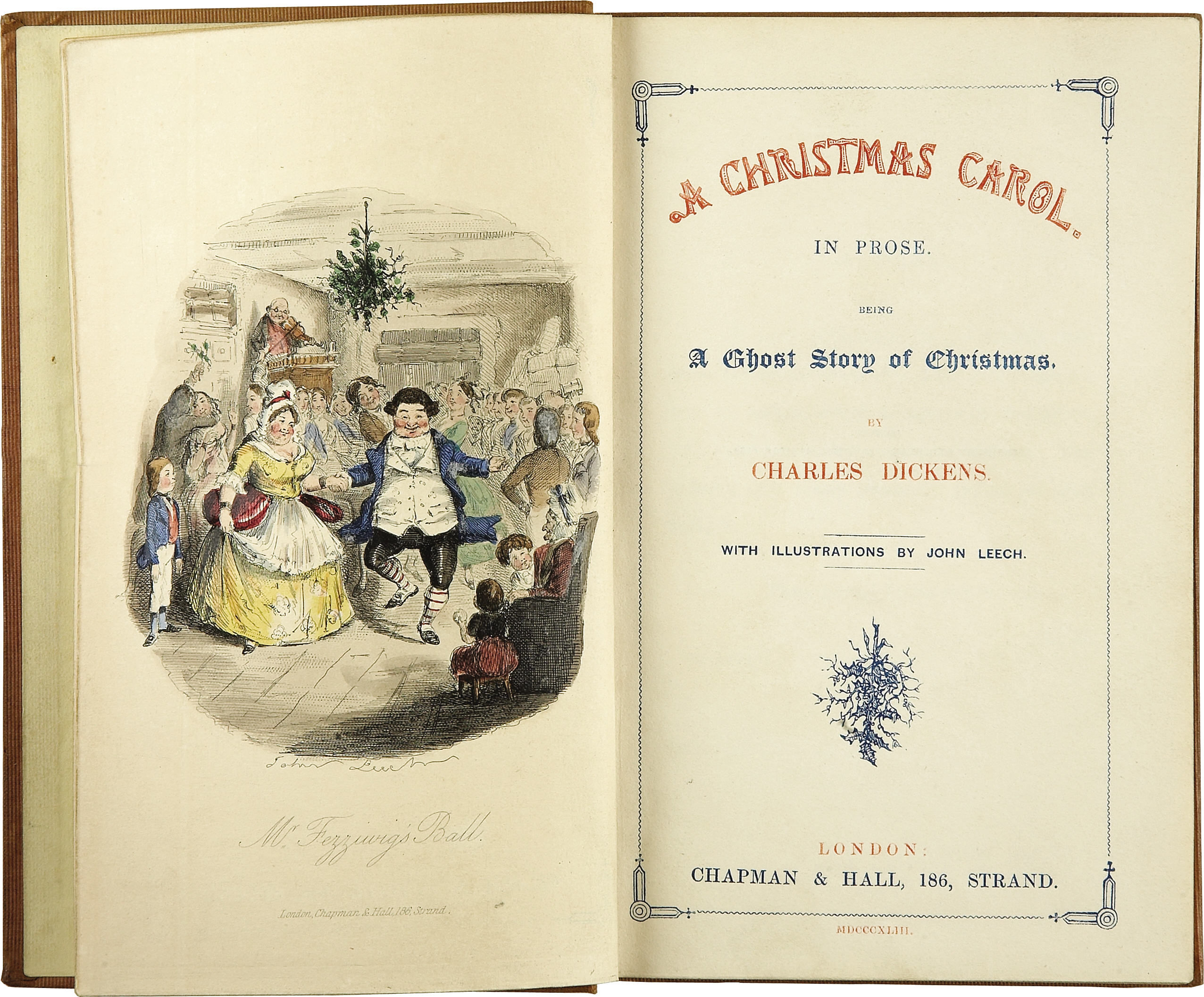
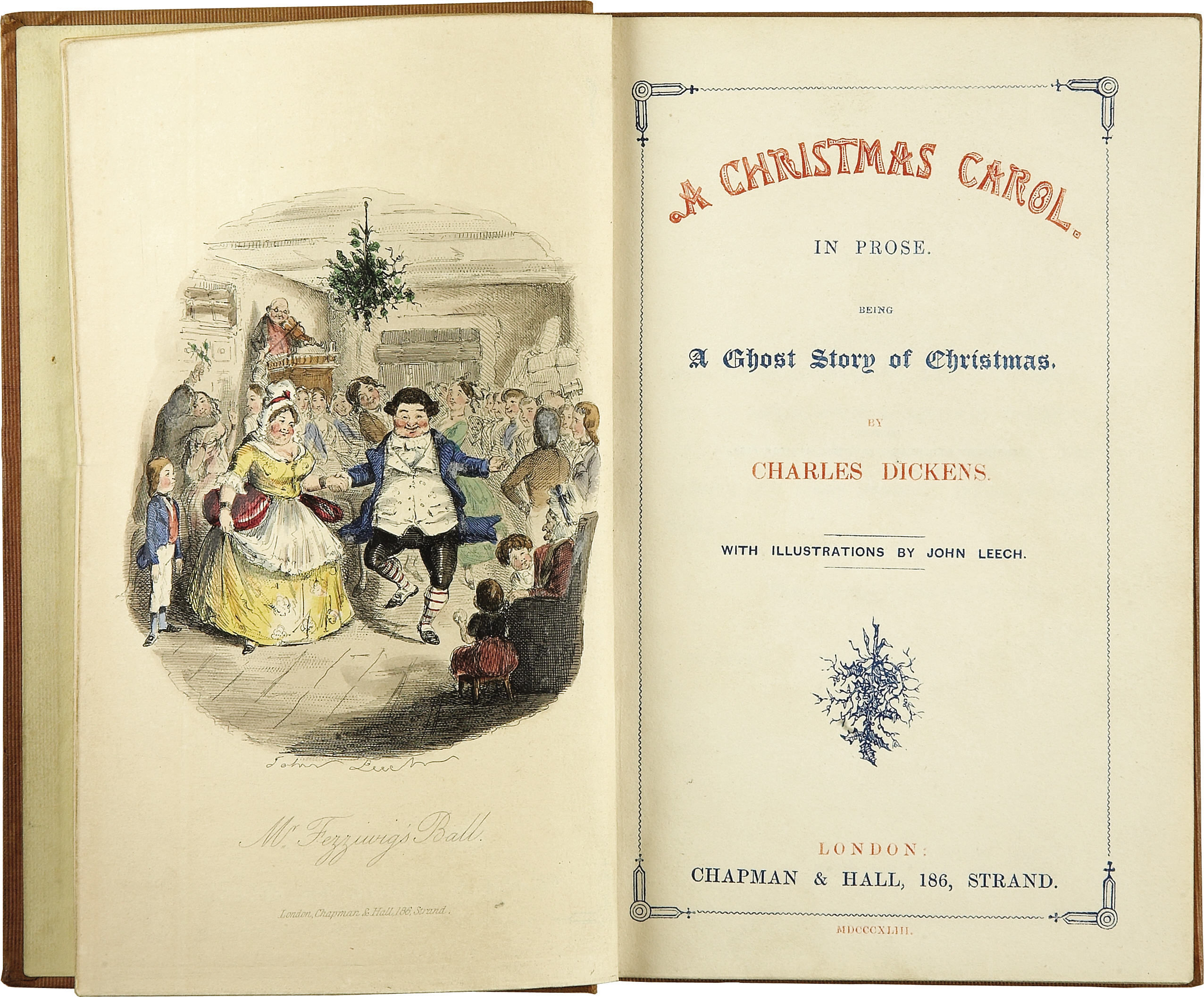
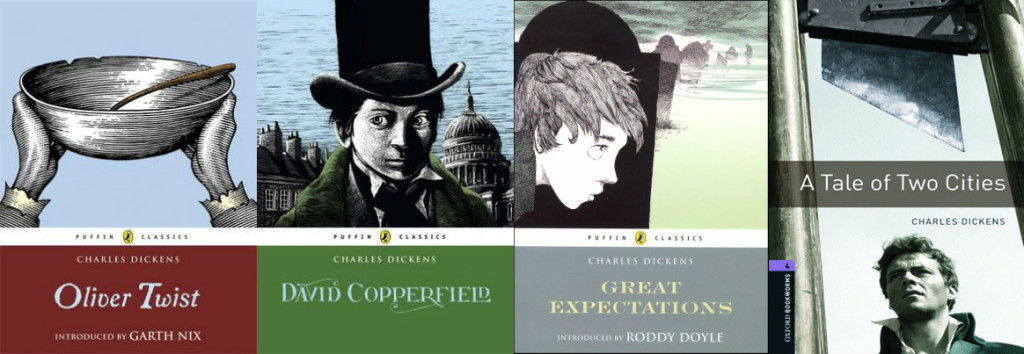
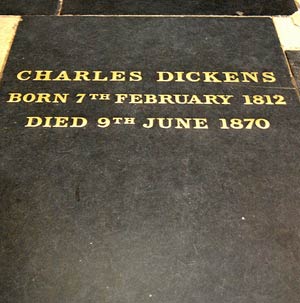
On this day in 1843, Charles Dickens’ classic story A Christmas Carol is published.

Dickens was born in 1812 and attended school in Portsmouth. His father, a clerk in the navy pay office, was thrown into debtors’ prison in 1824, and 12-year-old Charles was sent to work in a factory. The miserable treatment of children and the institution of the debtors’ jail became topics of several of Dickens’ novels.

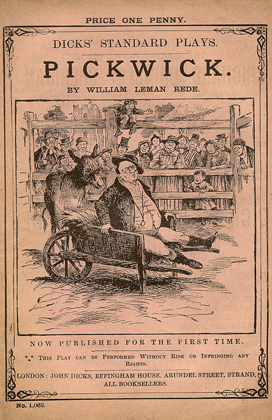
In his late teens, Dickens became a reporter and started publishing humorous short stories when he was 21. In 1836, a collection of his stories, Sketches by Boz, later known as The Posthumous Papers of the Pickwick Club, was published. The same year, he married Catherine Hogarth, with whom he would have nine children. The short sketches in his collection were originally commissioned as captions for humorous drawings by caricature artist Robert Seymour, but Dickens’ whimsical stories about the kindly Samuel Pickwick and his fellow club members soon became popular in their own right. Only 400 copies were printed of the first installment, but by the 15th episode 40,000 copies were printed. When the stories were published in book form in 1837, Dickens quickly became the most popular author of the day.

The success of the Pickwick Papers was soon reproduced with Oliver Twist (1838) and Nicholas Nickleby (1839). In 1841, Dickens published two more novels, then spent five months in the United States, where he was welcomed as a literary hero. Dickens never lost momentum as a writer, churning out major novels every year or two, often in serial form. Among his most important works are David Copperfield (1850), Great Expectations (1861), and A Tale of Two Cities (1859).

dickens books

Beginning in 1850, he published his own weekly circular of fiction, poetry, and essays called Household Words. In 1858, Dickens separated from his wife and began a long affair with a young actress. He gave frequent readings, which became immensely popular. He died in 1870 at the age of 58, with his last novel, The Mystery of Edwin Drood, still unfinished.

5 Ways Albert Einstein Was a Regular Guy

What do you know about the famous theoretical physicist and philosopher of science, Albert Einstein? Here are 5 facts that prove he was a regular person-like the rest of us.

1. He was passed over for his dream job.

In 1902, Einstein was appointed to the Swiss Patent Office as an examiner with some help from a friend, after he was disappointed in his hopes for a gig as a university professor.

“Largely that was his own fault-he wasn’t a great student,” says historian Matt Stanley of New York University. “He was disrespectful to his professors and skipped classes because he knew he could pass anyway. So, when he asked for recommendations, he didn’t get them.”

Sound familiar? Take heart from this: A backwater job didn’t stop Einstein from pursuing his dreams.

“Einstein’s family was involved in electronics, and the patent office was a world very familiar to him,” says Massachusetts Institute of Technology historian David Kaiser.

Tasked with determining the soundness of principles behind new inventions, Einstein played to his talents and translated those skills to the scientific work that culminated in his 1905 “Miracle Year,” when he produced papers on light’s speed, atomic behavior, and the famous E = mc² equation that led to his Nobel Prize.


2. He liked to relax.

“Both of us, alas, dead drunk under the table,” Einstein wrote, referring to himself and his wife MilevaMaric, in a 1915 postcard sent to his pal Conrad Habicht.

Habicht was a co-founder of the Olympia Academy in Bern, Switzerland, a drinking club where friends debated philosophy and science.

“The young Einstein was a Bohemian, not the sage we think of now,” Stanley says. Much like a dorm-room bull session, “that’s what young people did then; they hung out in beer halls and argued about the nature of space and time.”

Einstein later said the club had a great effect on his career.

 3. He had romantic troubles and a messy divorce.

Einstein married Maric, a fellow physicist, in 1903. She had already borne him a daughter named Lieserl the year before. Historians are unclear whether the couple gave up the child for adoption or if she died in infancy.

The couple was estranged starting around 1912 and divorced, finally, in 1919. As part of the divorce decree, which you can read in the archive, Einstein agreed that he would give his ex-wife most of the proceeds from a still un-awarded Nobel Prize, to care for the children and live off the interest.

“Young Einstein was a lot like the later one, uninterested in convention and set on having his own way, a bit of a rebel, irresistible to women,” Stanley says. “He dove into a few relationships that turned sour, although I think he learned some lessons later in life.”

Don’t we all.

Einstein married his cousin, Elsa, in 1919, the same year as his divorce.


4. His kids were rascals.

That’s what he calls them in a 1922 letter to his two sons, Hans Albert and Eduard, asking them to write him in Spain when he was on the way back from a trip to Japan.

Einstein was obviously fond of his sons, writing to them from his travels and throughout their lives, inquiring about their schoolwork. Eduard’s life famously took a tragic turn when he was diagnosed with schizophrenia at age 20.

The scientist also enlisted his older son, Hans Albert, in looking after his finances, asking him in 1922 to inquire at a Zurich bank about an unexpected sum of money in his account there.

Kids and money-some problems never change.

5. Road trip!

Einstein skipped the Nobel Prize ceremonies to take a trip to the Far East.

“I have decided definitely not to ride around the world so much anymore; but am I going to be able to pull that off, too?” he wrote his sons after his 1922 trip to Japan.

Unlike most of us, for Einstein travel was more than an escape from the mundane: The physicist acknowledges that the assassination that year of Germany’s foreign minister Walther Rathenau by right-wing extremists helped persuade him to leave Germany for a while.

Those same dark forces led to his eventual emigration to the United States from Europe, to escape Hitler’s spreading destruction of Germany’s Jews.


On this day…

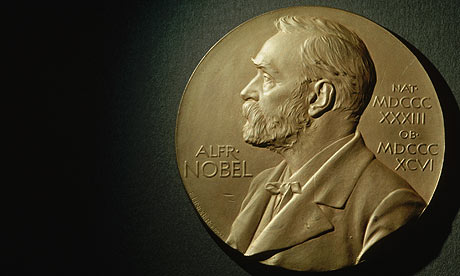
Frédéric Passy, Henry Dunant – The first winners of the Nobel Peace Prize in 1901

On this day in 1901, the first Nobel Prizes are awarded in Stockholm, Sweden, in the fields of physics, chemistry, medicine, literature, and peace. The ceremony came on the fifth anniversary of the death of Alfred Nobel, the Swedish inventor of dynamite and other high explosives. In his will, Nobel directed that the bulk of his vast fortune be placed in a fund in which the interest would be “annually distributed in the form of prizes to those who, during the preceding year, shall have conferred the greatest benefit on mankind.” Although Nobel offered no public reason for his creation of the prizes, it is widely believed that he did so out of moral regret over the increasingly lethal uses of his inventions in war.

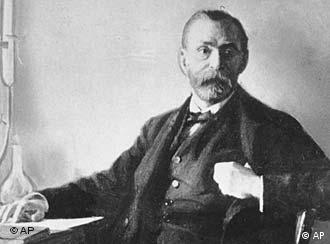
Alfred Bernhard Nobel was born in Stockholm in 1833, and four years later his family moved to Russia. His father ran a successful St. Petersburg factory that built explosive mines and other military equipment. Educated in Russia, Paris, and the United States, Alfred Nobel proved a brilliant chemist. When his father’s business faltered after the end of the Crimean War, Nobel returned to Sweden and set up a laboratory to experiment with explosives.

In 1875, Nobel created a more powerful form of dynamite, blasting gelatin, and in 1887 introduced ballistite, a smokeless nitroglycerin powder. Around that time, one of Nobel’s brothers died in France, and French newspapers printed obituaries in which they mistook him for Alfred. One headline read, “The merchant of death is dead.” Alfred Nobel in fact had pacifist tendencies and in his later years apparently developed strong misgivings about the impact of his inventions on the world. After he died in San Remo, Italy, on December 10, 1896, the majority of his estate went toward the creation of prizes to be given annually in the fields of physics, chemistry, medicine, literature, and peace. The portion of his will establishing the Nobel Peace Prize read, “[one award shall be given] to the person who has done the most or best work for fraternity among nations, for the abolition or reduction of standing armies, and for the holding and promotion of peace congresses.” Exactly five years after his death, the first Nobel awards were presented.

Past Nobel Prize winners

Today, the Nobel Prizes are regarded as the most prestigious awards in the world in their various fields. Notable winners have included Marie Curie, Theodore Roosevelt, Albert Einstein, George Bernard Shaw, Winston Churchill, Ernest Hemingway, Martin Luther King, Jr., the Dalai Lama, Mikhail Gorbachev, and Nelson Mandela.

The Royal Swedish Academy of Sciences

The Royal Swedish Academy of Sciences decides the prizes in physics, chemistry, and economic science; the Swedish Royal Caroline Medico-Surgical Institute determines the physiology or medicine award; the Swedish Academy chooses literature; and a committee elected by the Norwegian parliament awards the peace prize. The Nobel Prizes are still presented annually on December 10, the anniversary of Nobel’s death. In 2006, each Nobel Prize carried a cash prize of nearly $1,400,000 and recipients also received a gold medal, as is the tradition.

Super Snakes and the Truth Behind Them

snake

Snakes are masters of disguise, skilled hunters, and champion eaters. Here are eight awesome things you may not have known about these carnivorous reptiles.

1. They can smell with their tongues

A snake uses its tongue to help it smell. It flicks its long, forked tongue to pick up chemical molecules from the air, ground, or water. The tongue carries the smelly molecules back to two small openings in the roof of the snake’s mouth where they’re analyzed. Mmmm, lunch!

2. They can “see” heat

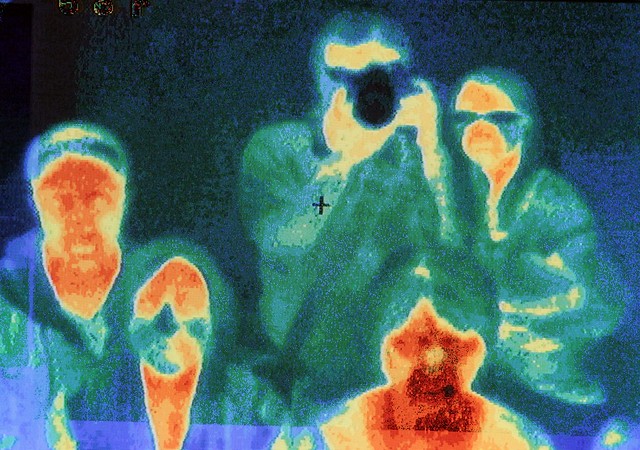
Some snakes—such as pythons, rattlesnakes, and copperheads—can’t see well and use other senses to find prey. These creatures have openings called pit holes in front of their eyes. These pits sense the heat given off by warm-blooded prey. The snakes’ heat vision allows the vipers to track prey day or night.

3. Their venom can kill and cure

By sinking two hollow, pointy fangs into their prey, many snakes inject venom to paralyze or kill victims before devouring them. But scientists have also discovered that the same poison that causes awful symptoms—and even death—in people who have been bitten by a venomous snake can be turned into medicines.

4. Some species can fly

Flying snakes flatten their ribs into a concave C shape to trap air under their bodies as they fall. By undulating back and forth in an S-shape, they can actually glide through the air.

5. They can change their skin

Snakes literally grow out of their skin. Every few months, most start rubbing against the ground or tree branches. Starting at the mouth, a snake slithers out of its too-tight skin. Like a sock, the skin comes off inside out.  Voilà—the snake has a fresh, shiny look. Nice makeover.

6. They “hear” with their jaw

Snakes don’t have external ears to hear sound waves in the air. Instead, bones in their lower jaw pick up vibrations in the ground or water. The vibes trigger signals in the snakes’ brains, which are received as messages. “Juicy mouse coming closer!

7. There a lot to love

More than 2,500 species of snakes slither around the world.

8. They are speedy

The black mamba snake slithers up to 11 kilometers per hour (7 miles per hour)!