Notice: Function _load_textdomain_just_in_time was called incorrectly. Translation loading for the content-views-query-and-display-post-page domain was triggered too early. This is usually an indicator for some code in the plugin or theme running too early. Translations should be loaded at the init action or later. Please see Debugging in WordPress for more information. (This message was added in version 6.7.0.) in /home2/englita2/public_html/blogebg/wp-includes/functions.php on line 6170
Notice: Function _load_textdomain_just_in_time was called incorrectly. Translation loading for the js_composer domain was triggered too early. This is usually an indicator for some code in the plugin or theme running too early. Translations should be loaded at the init action or later. Please see Debugging in WordPress for more information. (This message was added in version 6.7.0.) in /home2/englita2/public_html/blogebg/wp-includes/functions.php on line 6170
Notice: Function _load_textdomain_just_in_time was called incorrectly. Translation loading for the gravity-forms-pdf-extended domain was triggered too early. This is usually an indicator for some code in the plugin or theme running too early. Translations should be loaded at the init action or later. Please see Debugging in WordPress for more information. (This message was added in version 6.7.0.) in /home2/englita2/public_html/blogebg/wp-includes/functions.php on line 6170 Interesting Fact | Blog EBE | Page 2
Skip to content
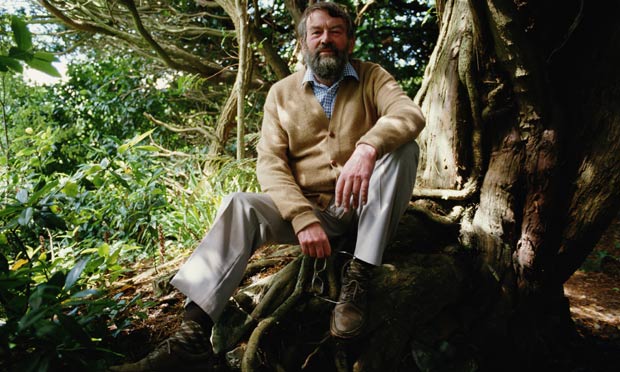
Our theme of the week is John Fowles. Below are some interesting facts about him.
1. He served as a lieutenant in the Royal Marines for two years, but World War II ended before he could go into combat.
2. He taught English at the University of Poiters and then to Spetsai, a Greek island, where he taught at Anorgyrios College.
Fowles with his family
3. His first published work allowed him to retire with his wife and her daughter to Lyme Regis in Dorset, England.
4. Fowles had a keen interest in natural history, art, gardening, and local history.
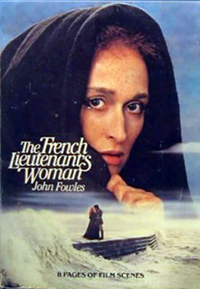
Adapted into a film in 1981.
5. In 1966, he envisioned a woman in black Victorian garb standing on a quay and staring out at the sea. The vision recurred, became an obsession, and led eventually to The French Lieutenant’s Woman, a Victorian novel in manner and mores, but contemporary and existential in viewpoint.
6. Not only was he an acclaimed fiction writer but he demonstrated expertise in his nonfiction writing, as well.
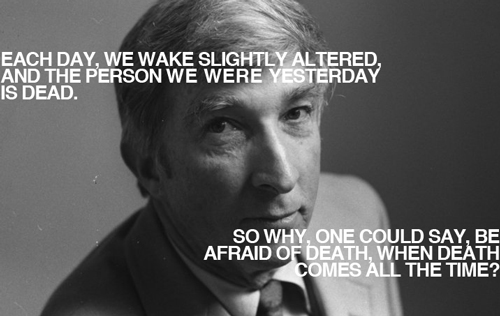
1. He was only the third American to win a second Pulitzer Prize in the fiction category.
2. His first story was published in the New Yorker at the age of 22.
3. He wrote The Witches of Eastwick (1984), which was turned into a movie in 1987 starring Cher, Jack Nicholson, Michelle Pfeiffer and Susan Sarandon. In 2009, it was turned into a television show starring Rebecca Romijn.
4. He won a Knox fellowship for study at the Ruskin School of Drawing and Fine Art in Oxford University.
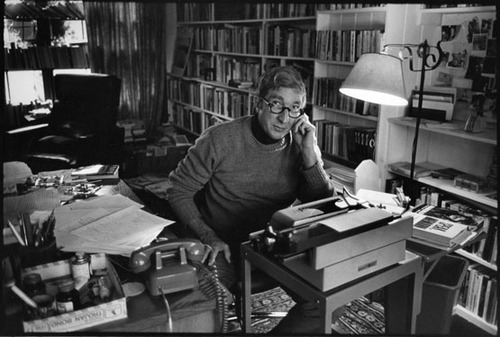
5. He began his career as a poet in 1958 by publishing his first volume, a collection of poems titled The Carpentered Hen.
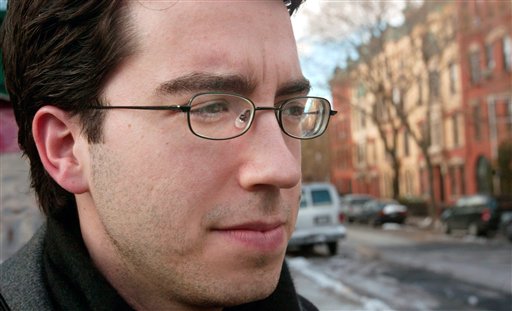
Foer started writing his first novel, the critically acclaimed Everything is Illuminated, as part of his senior thesis at Princeton University, New Jersey.
The New Yorker magazine included Foer on its list of “20 Under 40,” young writers who were world-changers.
Foer became a vegetarian activist and wrote a satiric piece about cooking and eating dogs.
It’s impossible not to notice the similarities between the characters Oskar Schell (Extremely Loud and Incredibly Close) and Oskar Matzerath, the protagonist of Gunter Grass’s The Tin Drum. They’re both intelligent kids of German descent coping with trauma (Oskar M. never leaves home without his drum) who conjure up fantasies to deal with the horrible events they’ve witnessed. Foer was hugely influenced by this novel.
Jonathan Safran Foer gave the 2013 commencement address at Middlebury College in Vermont. NPR included it on its list of “The Best Commencement Speeches, Ever.” Below, is the video of that speech:
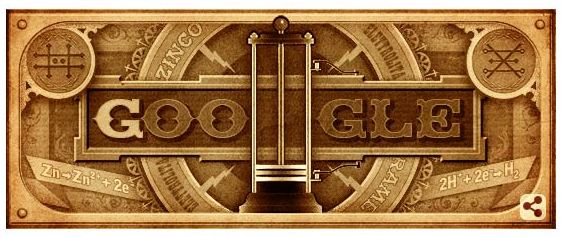
Alessandro Volta is the inventor of one of the most important inventions to date. Google celebrates the battery inventor’s birthday today.
If you click on Google’s doodle, it shows battery charging and Google lighting up at the same time.
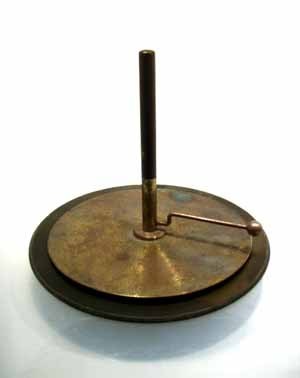
He was born in Como, Italy, and grew to become a professor of physics at the Royal School. His interest in electricity paved the way to the invention of electrophorus, a device used to generate static electricity.
He also was the first person to isolate methane which further led to the discovery that methane mixed with air could be exploded with an electric spark.
In honor of Volta’s contribution to electrical science, the unit of electrical potential came to be known as the Volt also known as Voltage.
Alessandro Volta was also a master in many languages. He was proficient in Latin, French, German, and English helped him while travelling across Europe.
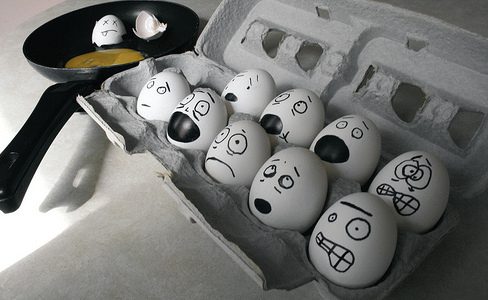
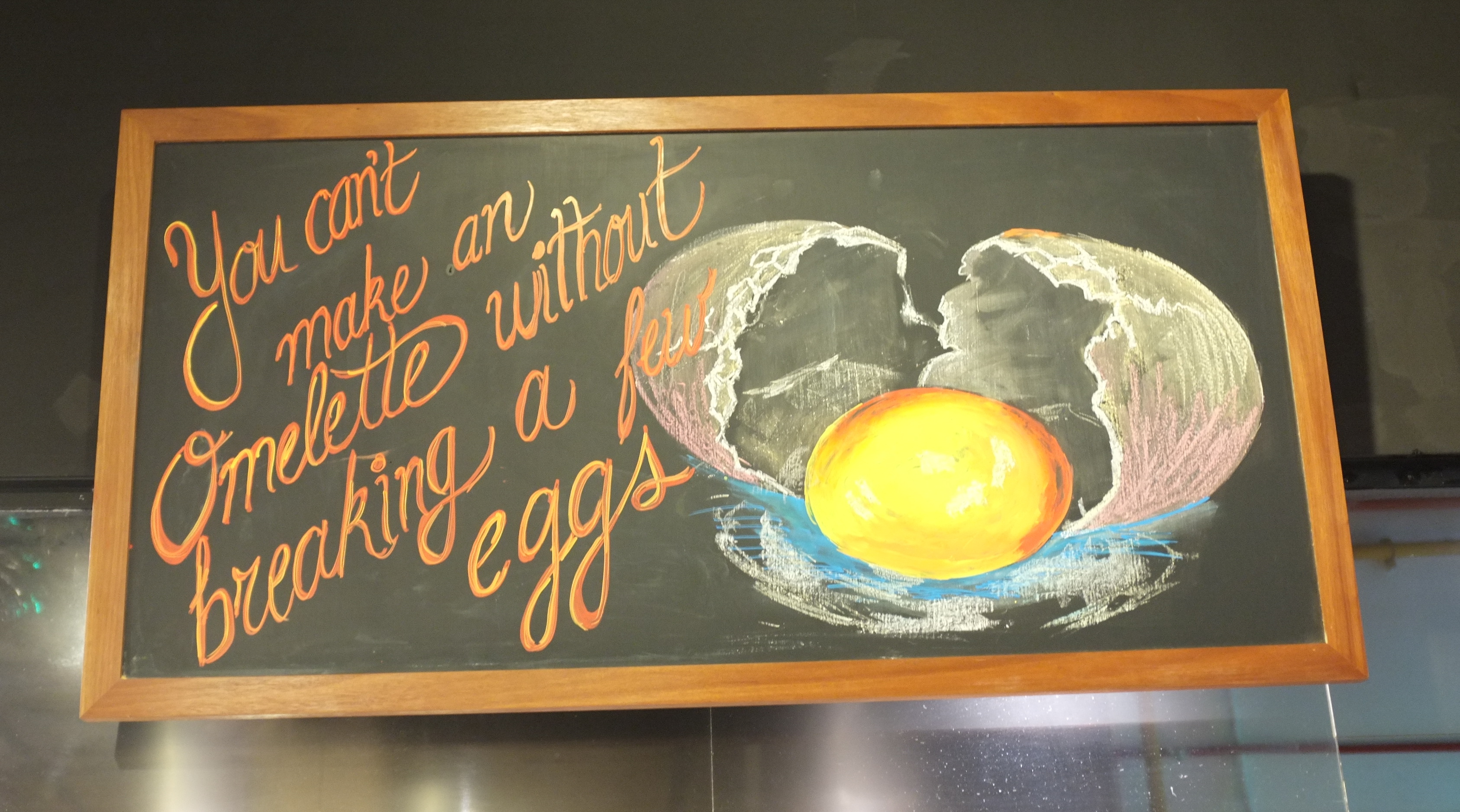
“You can’t make an omelet without breaking a few eggs.”
What does it mean?
When you try to do something great, you’ll probably make a few people annoyed or angry. Don’t worry about those people; just focus on the good results.
Where does it come from?
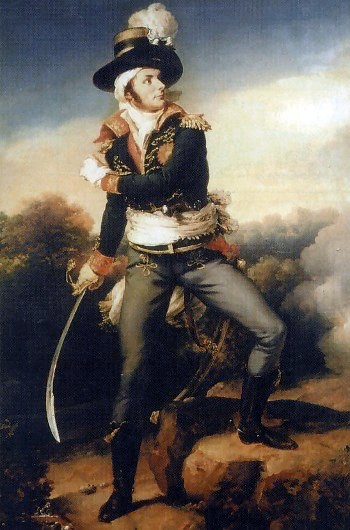
This saying was said by François de Charette. He was one of the leaders of a Royalist counter-revolt in the Vendée region of France during the French Revolution. The War in the Vendée, as it’s now known, lasted several years and resulted in the deaths of hundreds of thousands. In March of 1796, Charette was captured by republican forces and put on trial, during which, according to Walker’s account:
It was remarked to him that he had caused the death of a great many persons. Yes, he replied, omelets are not made without breaking eggs.”
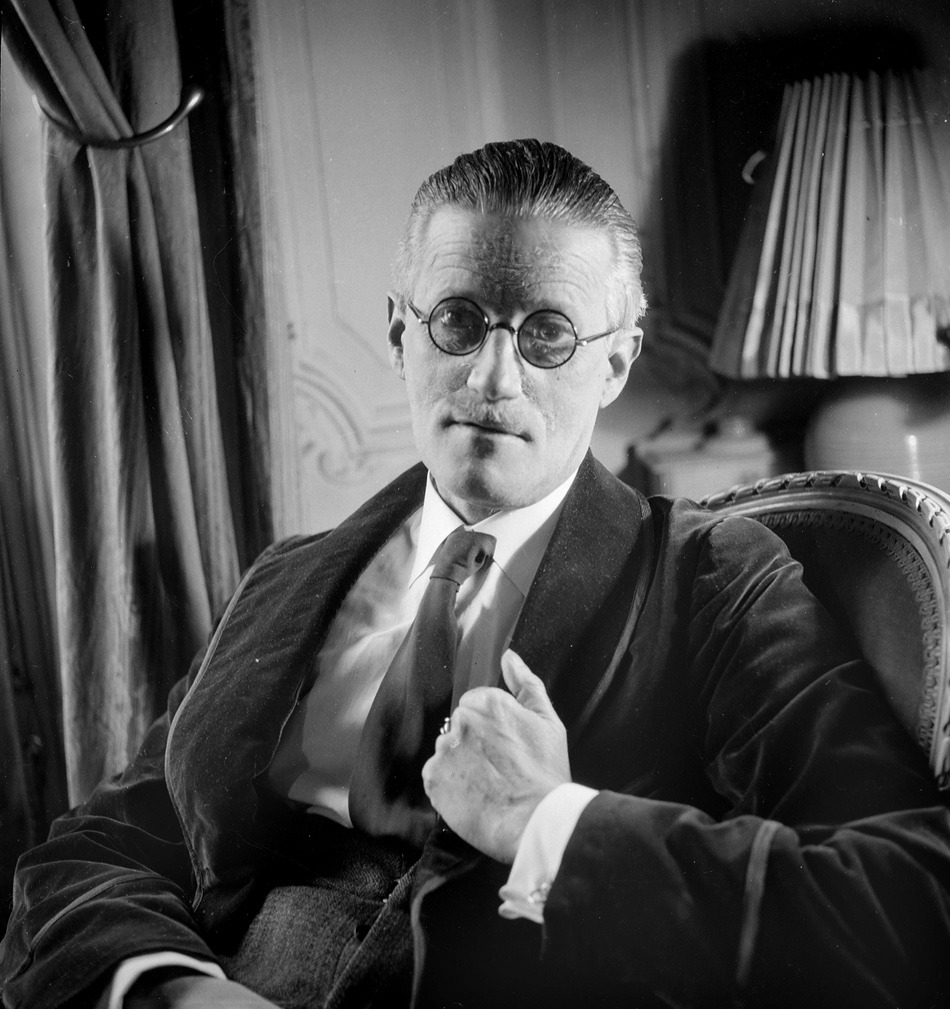
1. June 16 is the day all of the events in Joyce’s Ulysses take place. Why June 16? Of all the days in the year, you have to wonder why Joyce chose that exact date for Ulysses to take place. Well, the answer is actually pretty simple: it’s that day in 1904 when he had his first date with his future wife, Nora Barnacle.
2. Joyce may have had the gift of writing, but he certainly didn’t have the gift of conversation. When he met Marcel Proust in 1922 at a dinner party, the rest of the party-goers listened anxiously to what the two literary geniuses would chat about. The eavesdroppers were likely disappointed, as Proust and Joyce spent the entire conversation talking about their ailments—Joyce had constant headaches and eye trouble; Proust’s stomach was giving him troubles. Then they both admitted neither of them had read the other’s works. As the story goes, they shared a cab on the way home and Proust scampered out of the cab without paying his half of the fare.
3. James Joyce was born in the same year as another notable modernist writer, Virginia Woolf. But the similarities don’t end there. Both were born in 1882, but both writers also died in the same year, 1941. Both wrote landmark modernist novels, published in the 1920s, whose principal action takes place over just one day in mid-June (the novels in question are Ulysses and Mrs. Dalloway). Both pioneered the stream of consciousness technique associated with modernist writing.
4. James Joyce was scared of thunder and lightning. Joyce’s fear of thunder and lightning – the technical name for which is astraphobia – stems from his childhood, when his fervently Catholic governess told him that thunderstorms were God manifesting his anger. This fear stayed with Joyce into adulthood. It even probably helped to inspire a 100-letter word which Joyce coined in his final novel, Finnegans Wake (1939), Bababadalgharaghtakamminapronnkonnbronntonnepronntuonnthunntrovarrhounawnskawntoohoohoordeenenthurnuk, which appears on the first page and is meant to designate the symbolic thunderclap that accompanied the Fall of Adam and Eve.
5. He gave us the word ‘quark’. This word for a subatomic particle was taken from Finnegans Wake, where three seabirds give the cheer to King Mark: ‘Three quarks for Muster Mark!’ Physicist Murray Gell-Mann liked the word, and so proposed it for the particle in the 1960s.
Below you can listen to James Joyce read a passage from his book, Ulysses.
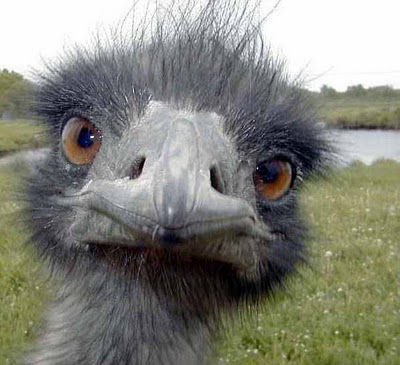
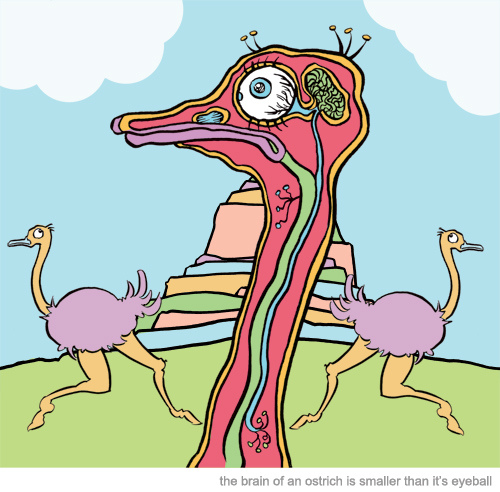
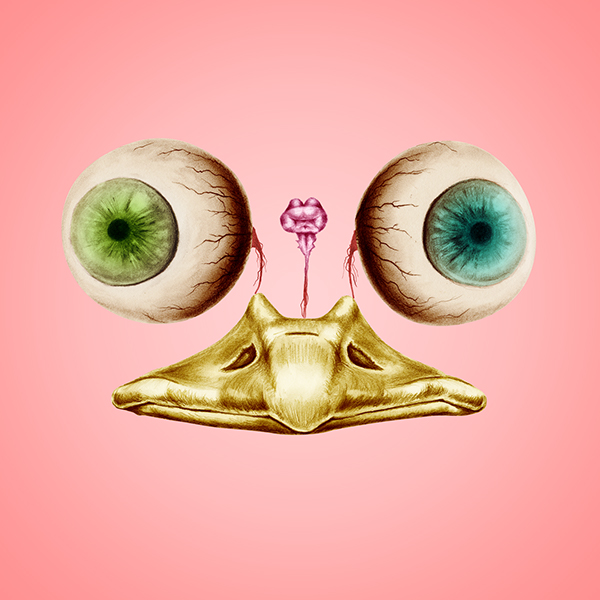
Ostrich eyes are indeed large (it is the biggest bird eye and even larger than that of many large mammals), and bigger than their brains but this does not make them stupid, however. it is not a case of an undersized brain but rather of over-sized eyes.
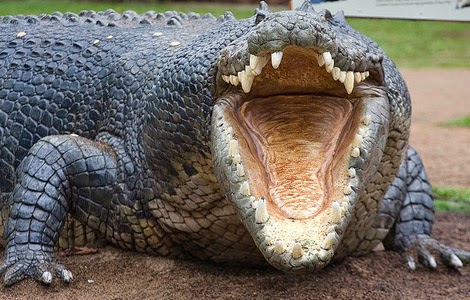
Some sources say that crocodiles don’t have tongues at all, while others say that the tongue is attached to the rest of the mouth. But either way, they can’t stick their tongue out at you if you do this: