Tag Archives: December 2014

Theme of the Week: Rudyard Kipling

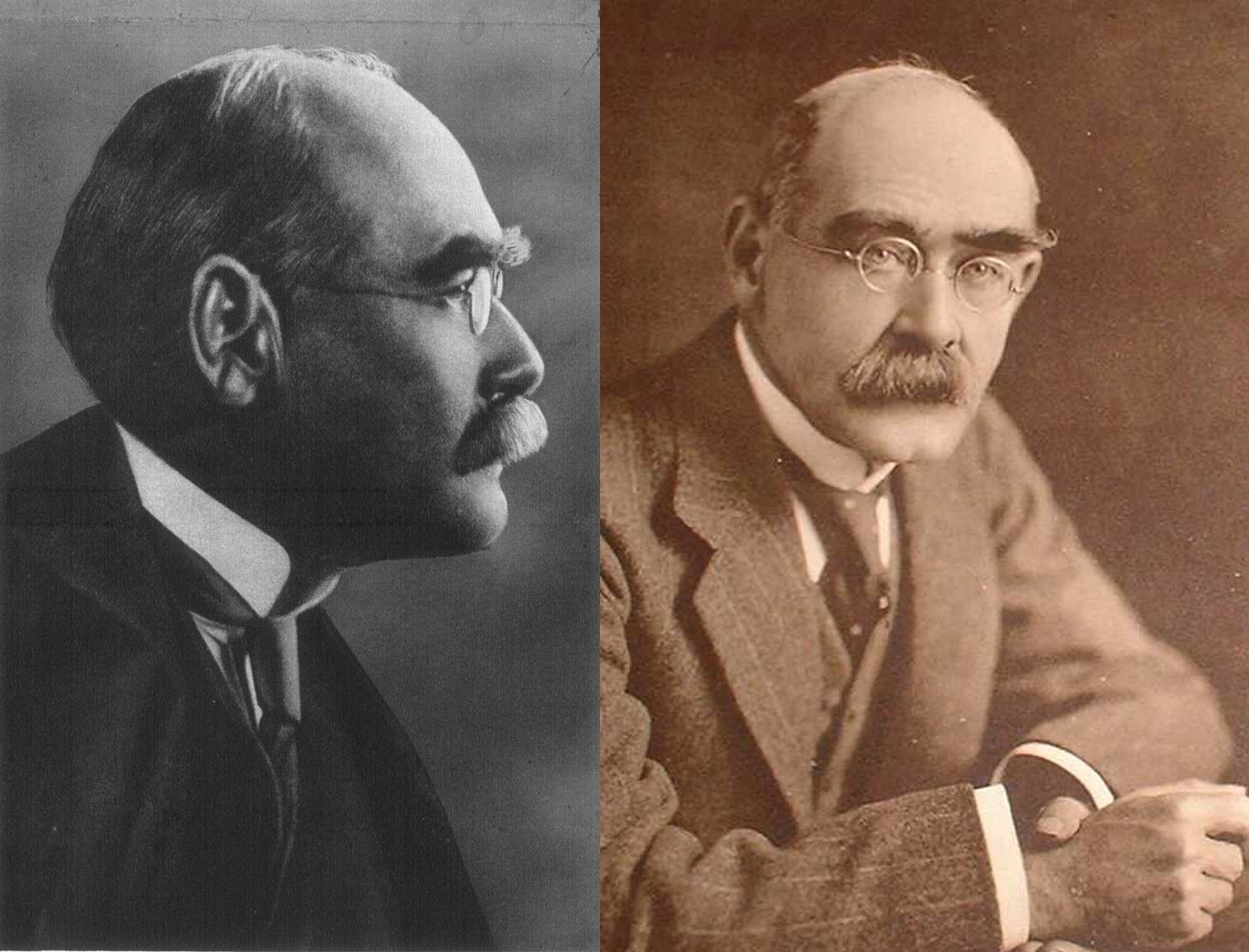
rudyard-kipling1

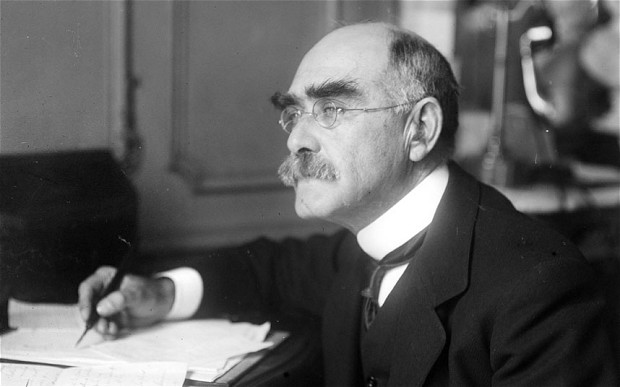
The theme for this week is Rudyard Kipling, an English author, famous for his works,  Just So Stories and The Jungle Book which earned him the Nobel Prize for Literature in 1907.

Just So Stories, was a in part a tribute to his late daughter, for whom Kipling had originally crafted the stories as he put her to bed. The book’s name had in fact come from Josephine, who told her father he had to repeat each tale as he always had, or “just so,” as Josephine often said.

Below is a link to Rudyard Kipling’s famous poem “If-” spoken by the famous British actor Sir Michael Caine. It is a tribute to Leander Starr Jameson and is written in the form of paternal advice to the poet’s son. As poetry, “If—” is a literary example of Victorian-era stoicism.

https://www.youtube.com/watch?v=JWvcwVWCcnY

4 Eclectic Book Recommendations for Winter Break

One of our favorite things to do at this time of year at EBG is to select the books we’ll read over our winter break. As we collect them, some of us will stack them on our bedside table where every morning, we see them upon waking and are reminded of our imminent vacation OR we put our books on the shelf in our living room with a note that says, “READ!”

This year, we compiled a rather eclectic collection because that’s the mood we’re in. So here’s what we’re reading, offered to you in the hopes that you might find something in this list that sparks your curiosity.


London, You’re Beautiful: An Artist’s Year by David Gentleman

David Gentleman has been drawing London all his adult life. But can you look afresh at the place where you live? Over the past year he has immersed himself in his home city to try and find out. “London, You’re Beautiful”, the resulting book of sketches, drawings and watercolours, arranged month by month, shows a year in the life of London, and reveals the city that is hidden in plain view. David’s notes on his work offer us a privileged insight into how an artist sees and captures the ever-shifting light and colours, movement and figures of a teeming city as it moves through the seasons. He describes how he chooses techniques and materials to render the spellbound children at his grandchildren’s Camden primary school; the spectacular transformation of Hendon’s streets from brown to pink to green with April’s cherry blossom; the strange world evoked by the city under snow. Through David’s eyes we see London anew as he shows us how the sun turns rubbish-strewn ditches into enchanting waterside glades, or how just twenty-two lines on paper can deliver the dazzling complexity of Canary Wharf’s windows. This book is for everyone who would like to understand how an artist works, for lovers of the Olympic city that will be celebrated in London 2012, and for those who long to see a familiar world, transformed. David Gentleman, born in London in 1930, is a watercolourist and printmaker, working in many media and scales. He has designed British stamps and coins and the platform-length mural at Charing Cross tube station, well-known to Londoners, that is blown up from his wood engravings. His studio is at the top of an early Victorian house in Camden Town between the crowded, rackety Camden Lock and the green spaces of Regent’s Park and Primrose Hill.

[button color=”blue” size=”small” link=”http://englishbookgeorgia.com/catalogue/shop/penguin-books/london-youre-beautiful-an-artists-year/” target=”blank” ]Buy the Book[/button]


Will Grayson, Will Grayson by John Green and David Levithan

One cold night, in a most unlikely corner of Chicago, Will Grayson crosses paths with… Will Grayson. Two guys with the same name, running in two very different circles, suddenly find their lives going in new and unexpected directions, and culminating in epic turns-of-heart and the most fabulous musical ever to grace the high-school stage.

[button color=”blue” size=”small” link=”http://englishbookgeorgia.com/catalogue/shop/penguin-books/will-grayson-will-grayson/” target=”blank” ]Buy the Book[/button]


A Long Way Down (film tie-in) by Nick Hornby

New York Times-bestselling author Nick Hornby mines the hearts and psyches of four lost souls who connect just when they’ve reached the end of the line. A Long Way Down is now a major motion picture from Magnolia Pictures starring Pierce Brosnan, Toni Collette, Aaron Paul, and Imogen Poots.

Meet Martin, JJ, Jess, and Maureen. Four people who come together on New Year’s Eve: a former TV talk show host, a musician, a teenage girl, and a mother. Three are British, one is American. They encounter one another on the roof of Topper’s House, a London destination famous as the last stop for those ready to end their lives.

In four distinct and riveting first-person voices, Nick Hornby tells a story of four individuals confronting the limits of choice, circumstance, and their own mortality. This is a tale of connections made and missed, punishing regrets, and the grace of second chances.


[button color=”blue” size=”small” link=”http://englishbookgeorgia.com/catalogue/shop/bestsellers/a-long-way-down-film-tie-in/” target=”blank” ]Buy the Book[/button]


Chinese Cinderella: The True Story of an Unwanted Daughter by Adeline Yen Mah

A riveting memoir of a girl’s painful coming-of-age in a wealthy Chinese family during the 1940s.

A Chinese proverb says, “Falling leaves return to their roots.” In Chinese Cinderella, Adeline Yen Mah returns to her roots to tell the story of her painful childhood and her ultimate triumph and courage in the face of despair. Adeline’s affluent, powerful family considers her bad luck after her mother dies giving birth to her. Life does not get any easier when her father remarries. She and her siblings are subjected to the disdain of her stepmother, while her stepbrother and stepsister are spoiled. Although Adeline wins prizes at school, they are not enough to compensate for what she really yearns for — the love and understanding of her family.

Following the success of the critically acclaimed adult bestseller Falling Leaves, this memoir is a moving telling of the classic Cinderella story, with Adeline Yen Mah providing her own courageous voice. Includes 6-page photo insert.

[button color=”blue” size=”small” link=”http://englishbookgeorgia.com/catalogue/shop/christmasgifts/chinese-cinderella/” target=”blank” ]Buy the Book[/button]
 

Super Snakes and the Truth Behind Them

snake

Snakes are masters of disguise, skilled hunters, and champion eaters. Here are eight awesome things you may not have known about these carnivorous reptiles.

1. They can smell with their tongues

A snake uses its tongue to help it smell. It flicks its long, forked tongue to pick up chemical molecules from the air, ground, or water. The tongue carries the smelly molecules back to two small openings in the roof of the snake’s mouth where they’re analyzed. Mmmm, lunch!

2. They can “see” heat

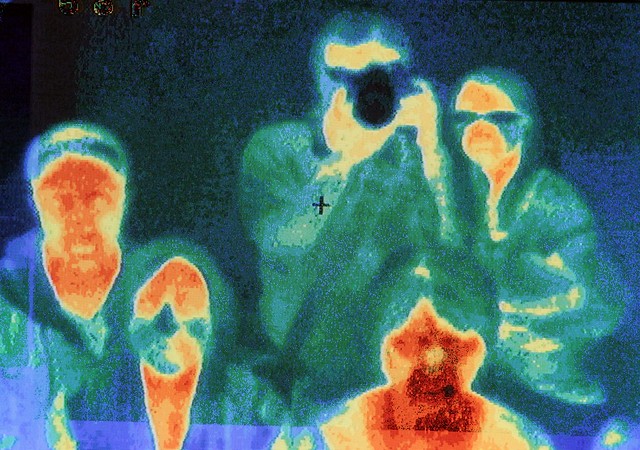
Some snakes—such as pythons, rattlesnakes, and copperheads—can’t see well and use other senses to find prey. These creatures have openings called pit holes in front of their eyes. These pits sense the heat given off by warm-blooded prey. The snakes’ heat vision allows the vipers to track prey day or night.

3. Their venom can kill and cure

By sinking two hollow, pointy fangs into their prey, many snakes inject venom to paralyze or kill victims before devouring them. But scientists have also discovered that the same poison that causes awful symptoms—and even death—in people who have been bitten by a venomous snake can be turned into medicines.

4. Some species can fly

Flying snakes flatten their ribs into a concave C shape to trap air under their bodies as they fall. By undulating back and forth in an S-shape, they can actually glide through the air.

5. They can change their skin

Snakes literally grow out of their skin. Every few months, most start rubbing against the ground or tree branches. Starting at the mouth, a snake slithers out of its too-tight skin. Like a sock, the skin comes off inside out.  Voilà—the snake has a fresh, shiny look. Nice makeover.

6. They “hear” with their jaw

Snakes don’t have external ears to hear sound waves in the air. Instead, bones in their lower jaw pick up vibrations in the ground or water. The vibes trigger signals in the snakes’ brains, which are received as messages. “Juicy mouse coming closer!

7. There a lot to love

More than 2,500 species of snakes slither around the world.

8. They are speedy

The black mamba snake slithers up to 11 kilometers per hour (7 miles per hour)!

Interesting Words And Expressions – Faux Pas

Faux-Pas

What does faux pas mean?

It’s a slip or blunder in etiquette, manners, or conduct; an embarrassing social blunder or indiscretion.

How do you pronounce it?

\ˈfō-ˌpä, fō-ˈ\

or

[foh pah]

Where does it come from?

The expression faux pas comes from France, where it means “false step”, “misstep” (in a physical as well as a figurative sense). It has been used in English for over 300 years. Synonyms in English include gaffe and (social) blunder.

How do you use it?

Arriving too early would be a serious faux pas.

According to an oft-told story, the queen set a guest at ease about a faux pas by politely imitating it.


On this day…

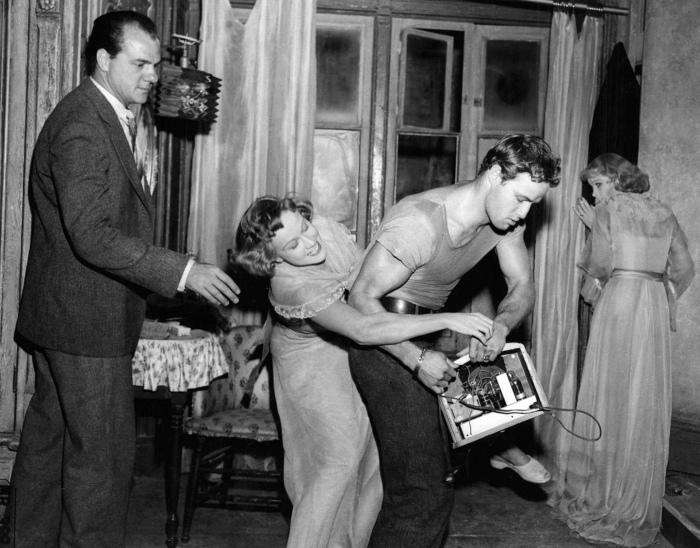
On this day in 1947, Marlon Brando’s famous cry of “STELLA!” first booms across a Broadway stage, electrifying the audience at the Ethel Barrymore Theatre during the first-ever performance of Tennessee Williams’ play A Streetcar Named Desire.

The 23-year-old Brando played the rough, working-class Polish-American Stanley Kowalski, whose violent clash with Blanche DuBois (played on Broadway by Jessica Tandy), a Southern woman with a dark past, is at the center of Williams’ famous drama. Blanche comes to stay with her sister Stella (Kim Hunter), Stanley’s wife, at their home in the French Quarter of New Orleans; she and Stanley immediately hate each other. In the climactic scene, Stanley rapes Blanche, causing her to lose her fragile grip on sanity; the play ends with her being led away in a straitjacket.

Jessica Tandy and Marlon Brando in the Broadway version of A Street Car Named Desire

Streetcar, produced by Irene Mayer Selznick and directed by Elia Kazan, shocked mid-century audiences with its frank depiction of sexuality and brutality onstage. When the curtain went down on opening night, there was a moment of stunned silence before the crowd erupted into a round of applause that lasted 30 minutes.

On December 17, the cast left New York to go on the road. The show would run for more than 800 performances, turning the charismatic Brando into an overnight star. Tandy won a Tony Award for her performance, and Williams was awarded the Pulitzer Prize for Drama.

In 1951, Kazan made Streetcar into a movie. Brando, Hunter and Karl Malden (as Stanley’s friend and Blanche’s love interest) reprised their roles. The role of Blanche went to Vivien Leigh, the scenery-chewing star of Gone with the Wind.

Vivien Leigh and Marlon Brando in the film version of A Street Car Named Desire

A Streetcar Named Desire earned 12 Oscar nominations, including acting nods for each of its four leads. The movie won for Best Art Direction, and Leigh, Hunter and Malden all took home awards; Brando lost to Humphrey Bogart in The African Queen.

Theme of the Week: Jane Austen

jane-austen

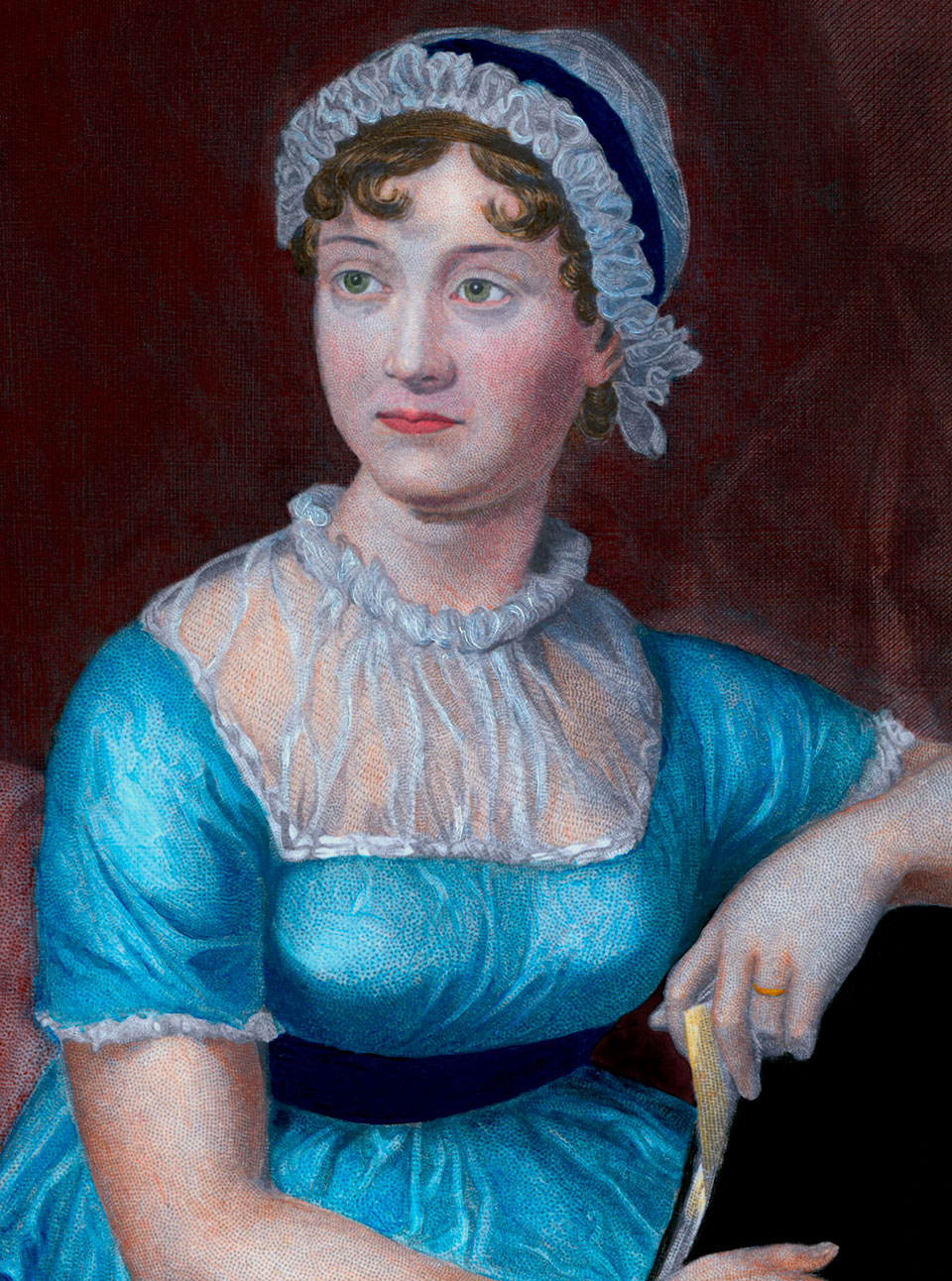
The theme for this week is about Jane Austen, an English novelist whose works of romantic fiction, set among the privileged British social class who lived entirely off rental income (landed gentry), earned her a place as one of the most widely read writers in English literature. Her realism, biting irony and social commentary as well as her acclaimed plots have gained her historical importance among scholars and critics.

Austen lived her entire life as part of a close-knit family located on the lower fringes of the English landed gentry. She was educated primarily by her father and older brothers as well as through her own reading. The steadfast support of her family was critical to her development as a professional writer.

Enjoy two film trailers adapted from Austen’s most popular novels, Sense and Sensibility and Pride and Prejudice.

Sense and Sensibility:

http://www.youtube.com/watch?v=Ns17RQr1yK8


Pride and Prejudice: