Tag Archives: December 2014

The Perfect Classroom Gift: A Gift of Words

giftofwords

“A Gift of Words” is a very simple lesson.

Tell your class:

“Okay, class, here’s what I want you to bring to class with you on the last day of school before winter break. I want you to find a poem, a saying, a paragraph you like — something that speaks to you because of its message, its beauty, its format. I want you to copy it onto a piece of paper, put it into a box, wrap it, and bring it to class. Be sure to include, before you wrap it, the name of the author and your name as the giver.”

When the day comes, students will place their packages on the teacher’s desk. They should vary from huge to tiny, from carefully wrapped to hurriedly tossed together. And yes, there will be those who forget, who scribbled “Just do it” on a piece of notebook paper, folded it like a paper football, and added it to the pile. You should provide a few extras, just in case.

How to start:

“Whose birthday is closest to Christmas? Okay, you’re first. Pick any present you want.”

Suspense:

What would she/he get? You won’t be disappointed. The contents will vary — favorites from “Where the Sidewalk Ends” by Shel Silverstein to Bible verses, song lyrics, and short sayings like “Just do it.” The experiment will be a success. Everyone in the class will have a gift and you will have the greatest gift of all-happiness.

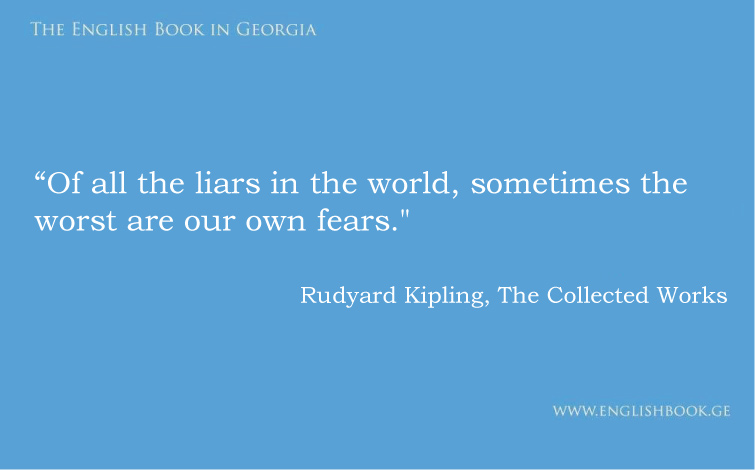
Inspirational Quotes


Deprecated: preg_match_all(): Passing null to parameter #2 ($subject) of type string is deprecated in /home2/englita2/public_html/blogebg/wp-includes/media.php on line 1893

Deprecated: str_contains(): Passing null to parameter #1 ($haystack) of type string is deprecated in /home2/englita2/public_html/blogebg/wp-includes/shortcodes.php on line 150

Deprecated: preg_split(): Passing null to parameter #2 ($subject) of type string is deprecated in /home2/englita2/public_html/blogebg/wp-includes/formatting.php on line 3492

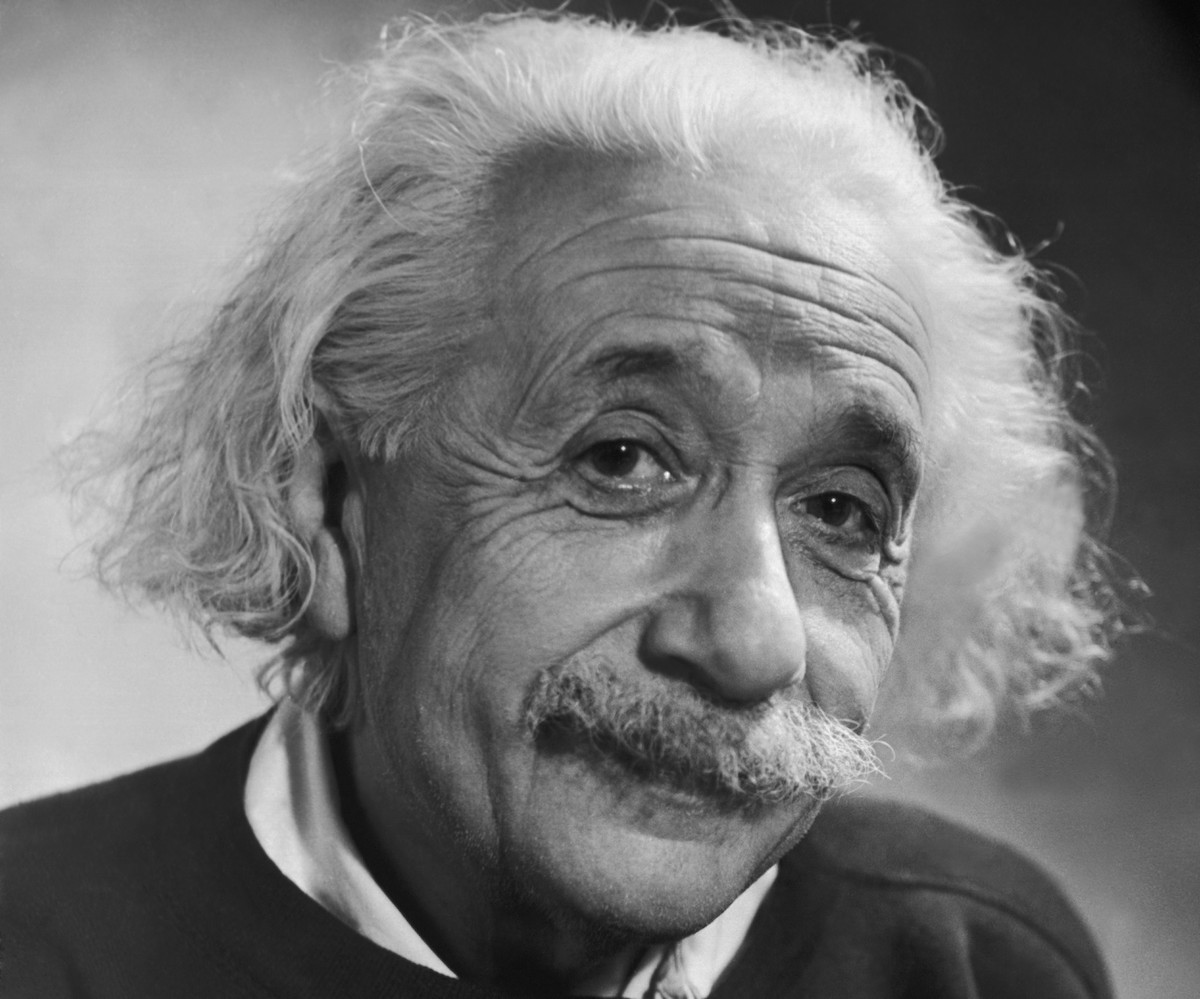
5 Ways Albert Einstein Was a Regular Guy

What do you know about the famous theoretical physicist and philosopher of science, Albert Einstein? Here are 5 facts that prove he was a regular person-like the rest of us.

1. He was passed over for his dream job.

In 1902, Einstein was appointed to the Swiss Patent Office as an examiner with some help from a friend, after he was disappointed in his hopes for a gig as a university professor.

“Largely that was his own fault-he wasn’t a great student,” says historian Matt Stanley of New York University. “He was disrespectful to his professors and skipped classes because he knew he could pass anyway. So, when he asked for recommendations, he didn’t get them.”

Sound familiar? Take heart from this: A backwater job didn’t stop Einstein from pursuing his dreams.

“Einstein’s family was involved in electronics, and the patent office was a world very familiar to him,” says Massachusetts Institute of Technology historian David Kaiser.

Tasked with determining the soundness of principles behind new inventions, Einstein played to his talents and translated those skills to the scientific work that culminated in his 1905 “Miracle Year,” when he produced papers on light’s speed, atomic behavior, and the famous E = mc² equation that led to his Nobel Prize.


2. He liked to relax.

“Both of us, alas, dead drunk under the table,” Einstein wrote, referring to himself and his wife MilevaMaric, in a 1915 postcard sent to his pal Conrad Habicht.

Habicht was a co-founder of the Olympia Academy in Bern, Switzerland, a drinking club where friends debated philosophy and science.

“The young Einstein was a Bohemian, not the sage we think of now,” Stanley says. Much like a dorm-room bull session, “that’s what young people did then; they hung out in beer halls and argued about the nature of space and time.”

Einstein later said the club had a great effect on his career.

 3. He had romantic troubles and a messy divorce.

Einstein married Maric, a fellow physicist, in 1903. She had already borne him a daughter named Lieserl the year before. Historians are unclear whether the couple gave up the child for adoption or if she died in infancy.

The couple was estranged starting around 1912 and divorced, finally, in 1919. As part of the divorce decree, which you can read in the archive, Einstein agreed that he would give his ex-wife most of the proceeds from a still un-awarded Nobel Prize, to care for the children and live off the interest.

“Young Einstein was a lot like the later one, uninterested in convention and set on having his own way, a bit of a rebel, irresistible to women,” Stanley says. “He dove into a few relationships that turned sour, although I think he learned some lessons later in life.”

Don’t we all.

Einstein married his cousin, Elsa, in 1919, the same year as his divorce.


4. His kids were rascals.

That’s what he calls them in a 1922 letter to his two sons, Hans Albert and Eduard, asking them to write him in Spain when he was on the way back from a trip to Japan.

Einstein was obviously fond of his sons, writing to them from his travels and throughout their lives, inquiring about their schoolwork. Eduard’s life famously took a tragic turn when he was diagnosed with schizophrenia at age 20.

The scientist also enlisted his older son, Hans Albert, in looking after his finances, asking him in 1922 to inquire at a Zurich bank about an unexpected sum of money in his account there.

Kids and money-some problems never change.

5. Road trip!

Einstein skipped the Nobel Prize ceremonies to take a trip to the Far East.

“I have decided definitely not to ride around the world so much anymore; but am I going to be able to pull that off, too?” he wrote his sons after his 1922 trip to Japan.

Unlike most of us, for Einstein travel was more than an escape from the mundane: The physicist acknowledges that the assassination that year of Germany’s foreign minister Walther Rathenau by right-wing extremists helped persuade him to leave Germany for a while.

Those same dark forces led to his eventual emigration to the United States from Europe, to escape Hitler’s spreading destruction of Germany’s Jews.
Interesting Words And Expressions – Eclectic

Eclectic art

What does eclectic mean?

It is an adjective and a noun and is deriving ideas, style, or taste from a broad and diverse range of sources.

How do you pronounce it?

ɪˈklɛktɪk/

or

[ih-klek-tik]

Eclectic fashion

Where does it come from?

The term comes from the Greek ἐκλεκτικός (eklektikos), literally “choosing the best”, and that from ἐκλεκτός (eklektos), “picked out, select”. Well known eclectics in Greek philosophy were the Stoics Panaetius and Posidonius, and the New Academics Carneades and Philo of Larissa. Among the Romans, Cicero was thoroughly eclectic, as he united the Peripatetic, Stoic, and New Academic doctrines. Other eclectics included Varro and Seneca.

How do you use it?

I want to go to a university that offers an eclectic mix of classes.

I like her eclectic taste in clothes. She’s a mix of hip-hop, bohemian and hipster.


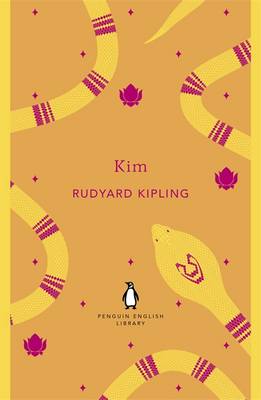
Book of the Week: Kim by Rudyard Kipling

Nobel Prize-winning author Rudyard Kipling set his final and most famous novel in the complex, mystery-shrouded India of the mid-19th century where an exotic landscape teems with natives living under British colonial rule.

Kimball O’Hara, the poor orphaned son of an Irish soldier stationed in Lahore, straddles both worlds. Neither wholly British nor completely Indian, the young boy searches for his identity in the country where he was born; but at the same time, he struggles to create an identity for himself. Cunning and street wise, Kim is mature beyond his thirteen years and learns to move chameleon-like between the two cultures, becoming the disciple of a Tibetan monk while training as a spy for the British secret service.

Far above the average adventure story, Kim will captivate Kipling devotees as well as fans of tales brimming with foreign intrigue and treachery. Charged with action and suspense, yet profoundly spiritual, Kim vividly expresses the sounds and smells, colors and characters, opulence and squalor of complex, contradictory India under British rule.

[button color=”blue” size=”small” link=”http://englishbookgeorgia.com/catalogue/shop/englishlibrary/kim/” target=”blank” ]Buy the Book[/button]


On this day…

Frédéric Passy, Henry Dunant – The first winners of the Nobel Peace Prize in 1901

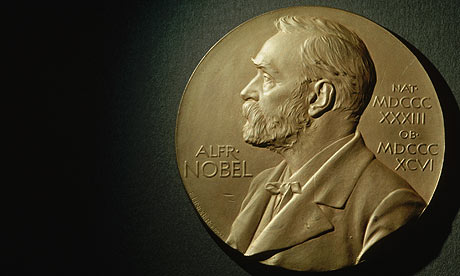
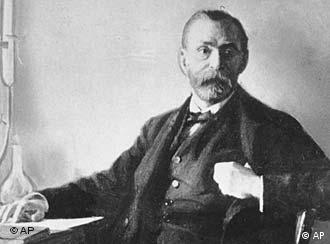
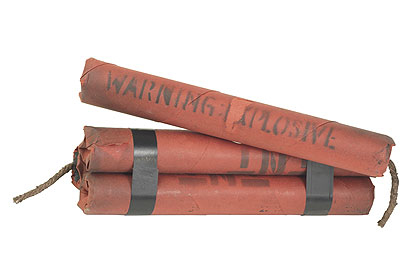
On this day in 1901, the first Nobel Prizes are awarded in Stockholm, Sweden, in the fields of physics, chemistry, medicine, literature, and peace. The ceremony came on the fifth anniversary of the death of Alfred Nobel, the Swedish inventor of dynamite and other high explosives. In his will, Nobel directed that the bulk of his vast fortune be placed in a fund in which the interest would be “annually distributed in the form of prizes to those who, during the preceding year, shall have conferred the greatest benefit on mankind.” Although Nobel offered no public reason for his creation of the prizes, it is widely believed that he did so out of moral regret over the increasingly lethal uses of his inventions in war.

Alfred Bernhard Nobel was born in Stockholm in 1833, and four years later his family moved to Russia. His father ran a successful St. Petersburg factory that built explosive mines and other military equipment. Educated in Russia, Paris, and the United States, Alfred Nobel proved a brilliant chemist. When his father’s business faltered after the end of the Crimean War, Nobel returned to Sweden and set up a laboratory to experiment with explosives.

In 1875, Nobel created a more powerful form of dynamite, blasting gelatin, and in 1887 introduced ballistite, a smokeless nitroglycerin powder. Around that time, one of Nobel’s brothers died in France, and French newspapers printed obituaries in which they mistook him for Alfred. One headline read, “The merchant of death is dead.” Alfred Nobel in fact had pacifist tendencies and in his later years apparently developed strong misgivings about the impact of his inventions on the world. After he died in San Remo, Italy, on December 10, 1896, the majority of his estate went toward the creation of prizes to be given annually in the fields of physics, chemistry, medicine, literature, and peace. The portion of his will establishing the Nobel Peace Prize read, “[one award shall be given] to the person who has done the most or best work for fraternity among nations, for the abolition or reduction of standing armies, and for the holding and promotion of peace congresses.” Exactly five years after his death, the first Nobel awards were presented.

Past Nobel Prize winners

Today, the Nobel Prizes are regarded as the most prestigious awards in the world in their various fields. Notable winners have included Marie Curie, Theodore Roosevelt, Albert Einstein, George Bernard Shaw, Winston Churchill, Ernest Hemingway, Martin Luther King, Jr., the Dalai Lama, Mikhail Gorbachev, and Nelson Mandela.

The Royal Swedish Academy of Sciences

The Royal Swedish Academy of Sciences decides the prizes in physics, chemistry, and economic science; the Swedish Royal Caroline Medico-Surgical Institute determines the physiology or medicine award; the Swedish Academy chooses literature; and a committee elected by the Norwegian parliament awards the peace prize. The Nobel Prizes are still presented annually on December 10, the anniversary of Nobel’s death. In 2006, each Nobel Prize carried a cash prize of nearly $1,400,000 and recipients also received a gold medal, as is the tradition.

Did you know…

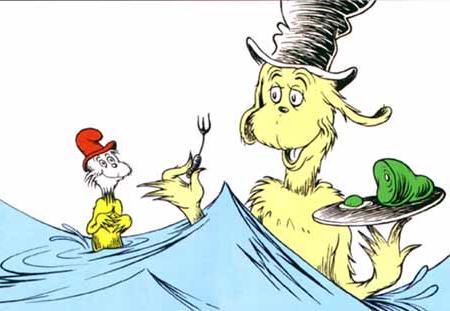
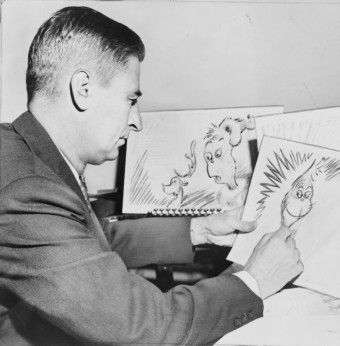
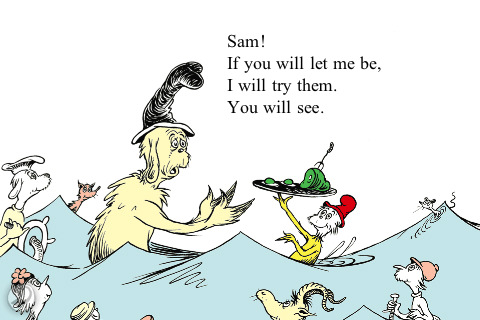
Dr. Seuss wrote “Green Eggs and Ham” on a bet that he couldn’t write a book with 50 or fewer words?

The bet was made in 1960 with Bennett Cerf, the co-founder of Random House, and was for $50 (about $382 today). Despite Dr. Seuss, a.k.a. Theodore Geisel, winning the bet by producing one of his most popular works “Green Eggs and Ham” using exactly 50 unique words, Cerf never paid him.  “Green Eggs and Ham” went on to be Geisel’s best selling work, so he made money on it anyways.

Oh, and in case you were wondering what those words are, here is the list:

a, am, and, anywhere, are, be, boat, box, car, could, dark, do, eat, eggs, fox, goat, good, green, ham, here, house, I, if, in, let, like, may, me, mouse, not, on, or, rain, Sam, say, see, so, thank, that, the, them, there, they, train, tree, try, will, with, would, and you.


[button color=”blue” size=”small” link=”http://www.omgfacts.com/lists/5055/Dr-Seuss-wrote-Green-Eggs-and-Ham-after-his-editor-bet-him-that-he-couldn-t-write-a-book-using-50-words-or-less” target=”blank” ]Source[/button]


The People Growing Rich In Sales Share These 5 Entrepreneurial Qualities


Seems that sales has gotten a bad rap over the past few years, and today it seems young people want nothing to do with it. Salespeople are characterized as overly zealous and manipulative middle-aged men, the used-car salesman if you will.

It’s time this stereotype is reinvented. There comes a time when salespeople need to take a step outside of their employee mindset, and begin thinking differently with a more entrepreneurial approach. Just because salespeople don’t own the business, doesn’t mean they can’t posses the qualities of those entrepreneurs. Here are the top characteristics that all of these “entrepreneurial” salespeople have in common, to help you to reinvent yourself as a salesperson as well.

1: Do-or-die attitude

Entrepreneurs have a do-or-die ethos. They will do whatever it takes to get the job done. If you can extend this into your work in sales you’ll put in that extra commitment and effort to close the sale. You must possess a high level of persistence to obtain this attitude. Entrepreneurial salespeople don’t take “no” for an answer. They will press on, even in the face of failure. They have the attitude and the confidence that they will succeed and make the sale. In the end, they always do.

2: Mindset of a scientist

This unique type of salesperson has a willingness and love for experimenting with new selling tactics, and dipping into new markets. One of the many new, great things about the web is that every interaction can be measured. We can gather tons of data about human behavior. Entrepreneurial salespeople use this data to test their hypotheses and predictions. They constantly try new things, to see what works best for them.

They know there’s not an exact universal science that will get them the sale 100 percent of the time. That’s why it’s good to experiment and play around with different methods. A good scientist never gets stuck in the past, because the world of science is constantly changing. The same goes for in the sales world. If you’ve been trying the same, mundane tactics for a long time, chances are they’re outdated. You will gain from tapping into the scientist mindset for some new tactics.

3: Efficient work, not a hard-worker

Most people working in sales are familiar with the Pareto Principle, or the 80/20 Rule. Which says precisely that 80 percent of your sales will come from just 20 percent of your customers. Entrepreneurial salespeople have not only understood this concept from the get-go, but they live by it. They work smart, which allows them to work less. By focusing on just the top 20 percent of your clients you can really hone in on their needs and watch your business prosper.

It’s difficult for average salespeople to obtain this mindset because, as part of our nature, we want to treat all our clients equally. That’s why entrepreneurial salespeople will soon take over. They’re effortlessly getting a lot more sales than the salesman who’s slaving away to please everybody.

Efficiency is also obtained by entrepreneurial salespeople embracing new technology in the field. Sales-order apps make it easier and more efficient for salespeople to obtain data about the top 20 percent, so you can spend more effort on impressing them and less with the nitty-gritty details. This isn’t just in theory.

4: Attentive listener

Think about the people you value most in your life. Often, these are the people who listen to you most, who show an active caring for your situation and want to hear about it. Active and attentive listening is not only fundamental to building strong positive relationships, but it will also help you to assess better if a prospect really has the need for your product or service.

Once again, the old stereotypical salesperson is one who blabs on for 40 minutes straight and doesn’t even answer your original question. The entrepreneurial salesperson is a master listener, pulling information about the customers thoughts and feelings rather than always pushing.

5: Risk taker

Great entrepreneurs and salespeople are willing to innovate and try risky things. Today, this is more important than ever. New products and services call for new modes of selling. Once you fall into a routine and get into your comfort zone, it’s difficult to challenge yourself.

“I just broke my personal record by staying right here in my comfort zone!” said no entrepreneurial salesperson ever. In order to move to the top of the field and get the most sales, you have to think differently and take big risks. The exciting thing about risks is you can’t know or anticipate exactly what the outcome will bring you. You have to take risks to see future gains.

Anyone in sales can develop these characteristics of a successful entrepreneurial salesperson. With a change in thinking and a new attitude, we can shift the persona of the old salesman into the modern entrepreneurial salesperson everyone wants to be.


[button color=”blue” size=”small” link=”http://www.entrepreneur.com/article/240131″ target=”blank” ]Source[/button]


Interesting Words And Expressions – Add insult to injury

Stress. Woman stressed

“Add insult to injury.”

What does it mean?

To further a loss with mockery or indignity; to worsen an unfavorable situation.

Where does it come from?

The phrase is an ancient one, even older than its often cited use in the Roman writer Phaedrus’s fable of the bald man and the fly. In English it was first recorded in 1748.

Which Book Would You Read?

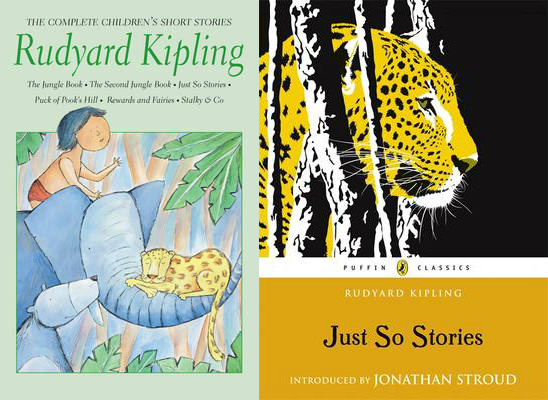
To celebrate Rudyard Kipling, we’d like to ask, which book would you read?

Just So Stories

Author: Rudyard Kipling

ISBN: 9780141321622

How did the camel get his hump? Why won’t cats do as they are told? Who invented reading and writing? How did an inquisitive little elephant change the lives of elephants everywhere? Kipling’s imagined answers to such questions draw on the beast fables he heard as a child in India, as well as on folk games with language, exploring the relationships between thought, speech, and the written word. He also celebrates his own joy in fatherhood. The tales were told to his own and his friends’ children over many years before he wrote them down, adding poems and his own illustrations. They invite older and younger readers to share a magical experience, each contributing to the other’s pleasure, but each can also enjoy them alone, as more jokes, subtexts, and exotic references emerge with every reading.

Published in 1902, these charming and whimsical fantasies for children—and adults who retain a love of the fantastic—are enduring classics.  Focusing on the explanation of origin, the book includes How the Leopard Got His SpotsHow the Camel Got His Hump and The Cat That Walked by Himself.

15,9 GEL

[button color=”blue” size=”small” link=”http://englishbookgeorgia.com/catalogue/shop/penguin/just-so-stories/” target=”blank” ]Buy the Book[/button]


The Complete Children’s Short Stories

Author: Rudyard Kipling

ISBN: 9781840220575

The Jungle Book introduces Mowgli, the boy foundling adopted by a family of wolves, Shere Khan the tiger, Bagheera the black panther and Baloo the sleepy brown bear.
How did the Leopard get his spots? How did the Elephant get his trunk? In Just So Stories, Kipling wittily supplies the answers to these and other questions.
Puck of Pook’s Hill relates how Dan and Una’s magical meeting with Puck, the last of the People of the Hills, leads to their adventures with Romans and Crusaders, Saxons and Vikings…
And later, in Rewards and Fairies, the three meet an array of characters ranging from Iron Age warriors to ‘Good Queen Bess’ and Sir Francis Drake.
In Kipling’s rattling school yarn Stalky & Co, Stalky, M’Turk and the Beetle are a trio of scallywags with a keen desire to break the rules, their unruly activities give the stories an enduring appeal to all children – especially those who have ever wilted beneath the stern glance of a peevish schoolmaster.
Kipling’s wry, sometimes tongue-in-cheek style will delight and entertain young readers while adults throughout the world will remember his stories with affection.

16,5 GEL

[button color=”blue” size=”small” link=”http://englishbookgeorgia.com/catalogue/shop/others/the-complete-childrens-short-stories/” target=”blank” ]Buy the Book[/button]