This is a time lapse of a model, Nina, on the left compared to another model, Marshay, on the right. They are both getting their hair and makeup done to match every decade in the United States of America (USA) from 1910 to 2010.
Tag Archives: world
What Does the World Eat for Breakfast?
Countries and breakfasts discussed in the video:
United States of America (ამერიკა) – Pancakes, eggs, bacon, and juice
Japan (იაპონია) – White rice, pickled vegetables, Miso soup, and tea
India (ინდოეთში) – Dosa, smabar, chutney, and tea
Germany (გერმანია) – Sausages, hard-boiled eggs, bread roll, and coffee
Vietnam (ვიეტნამის) – Pho and coffee
Brazil (ბრაზილია) – Fruit, toast, ham, and juice
United Kingdom (გაერთიანებული სამეფო) – Sausages, grilled tomatoes, eggs, bacon, and tea
China (ჩინეთი) – Congee, pork bun, and tea
Iran (ირანი) – Naan, jam, butter, and tea
Italy (იტალია) – Bread roll, jam, and coffee
Egypt (ეგვიპტე) – Pita bread, ful medames, and tea
Kenya (კენია) – Uji, fruit, flatbread, and tea
Sweden (შვედეთი) – Bread, cold cuts, cucumber, tomatoes, hard-boiled eggs, and juice
Morocco (მაროკო) – Crepes, jam, butter, olive oil, and tea
Russia (რუსეთი) – Rye bread, porridge, sausage, and tea
Mexico (მექსიკა) – Tortillas, fried eggs, beans, salsa, and coffee
Australia (ავსტრალია) – Corn Flakes cereal, toast, vegemite, and juice
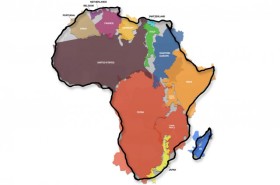
This is the True Size of Africa
How large is Africa compared to the United States, or Western Europe? Most inhabitants of the latter places might guess it is a little larger, but few would have any idea of the scale of the difference. This has led German graphics designer Kai Krause to produce this map to shake people’s ideas a little.
Any attempt to map a round planet onto a flat map will involve distortions of size, shape or both. There is a passionate debate among cartographers about the best way to hang the world on a wall, but most agree that the most common maps we get our sense of the world from are very bad ways to do it. The problem is that these maps exaggerate the size of the countries at high latitudes, and shrink places near the equator – leading to a perception that Europe is larger than South America, to pick just one example among many.

Africa, which spans the equator, fares particularly badly on these sorts of projections: Krause says, “Africa is so mind-numbingly huge, that it exceeds the common assumptions by just about anyone I ever met: it contains the entirety of the USA, all of China, India, as well as Japan and pretty much all of Europe as well – all combined!”
Some have argued that since people associate size with importance this encourages the already strong tendency of the world’s wealthiest nations to disregard those who live in the tropics.
Below is a video from the American television political-drama, ‘The West Wing’. It has many factual pieces of information in it like the one below.
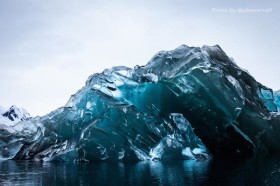
This is What the Underside of an Iceberg Looks Like
A rare sighting of an upside-down iceberg has been captured on camera, revealing a striking deep blue underbelly that once resided beneath Antarctica’s frigid waters.

Usually icebergs are white because they are made of compressed snow, which reflects all frequencies of visible light. However, if high pressures squeeze the flakes together, or sea water freezes, the gaps between the snowflakes disappear.
Now and then, an iceberg flips over, allowing us to see what has happened to its lower reaches. Most often this occurs when the iceberg has just calved, but occasionally it transpires later, for example in a storm.
When visiting Antarctica at the end of last year, filmmaker Alex Cornell came across the aftermath of one such event.

Cornell has also provided this comparison of an ordinary iceberg set against an upturned one.

Inspirational Quotes
Deprecated: preg_match_all(): Passing null to parameter #2 ($subject) of type string is deprecated in /home2/englita2/public_html/blogebg/wp-includes/media.php on line 1893
Deprecated: str_contains(): Passing null to parameter #1 ($haystack) of type string is deprecated in /home2/englita2/public_html/blogebg/wp-includes/shortcodes.php on line 150
Deprecated: preg_split(): Passing null to parameter #2 ($subject) of type string is deprecated in /home2/englita2/public_html/blogebg/wp-includes/formatting.php on line 3492
New Year Webquest
This New Year webquest by Gabrielle Jones includes activities designed to inform students about the history of New Year celebrations and the traditions which are practised today in a variety of cultures.
Note: The teacher’s notes for this webquest can be found at the bottom of the page by clicking the button marked “Teacher’s Notes”. We have also included a link to a student-facing page which does not have any links to the answers. You’ll find it by clicking the button marked “Student’s Page” at the bottom of this page. We suggest that you send students the link to the student page to prevent them from finding the answers too easily!
Warmer
New Year is an exciting time and many cultures celebrate it in a special way. This may include special foods and drinks, parties, religious festivals and other traditions. Answer these questions in pairs or small groups:
- How is New Year celebrated in your country?
- Do you know of any similarities or differences in New Year celebrations in other countries?
- How do you and your family celebrate New Year?
Activity 1: The history of New Year celebrations
Visit http://www.history.com/topics/new-years and read the sections titled ‘Early New Year’s Celebrations’ and ‘January 1 becomes New Year’s day’. Look for the answers to these questions:
- When were the earliest New Year celebrations and where did they take place?
- What name was given to the religious festivity, and where did the name come from?
- How long did the original celebration last?
- When people began to develop their own calendars, to what events did they tie the beginning of a new year?
- What event marked the beginning of the New Year in Egypt?
- When was the city of Rome established?
- Who included the first two months of the year to the calendar, and what were the names of the first two months?
- Who introduced January 1 as the start of the New Year?
- What changes did Christian leaders make in the middle ages?
- When was January 1 reintroduced as the beginning of the calendar year?
When you’ve finished, discuss what you found out with your partner.
Discussion:
Discuss one other significant festival in your country – do you know how long it has been celebrated, and why it became important?
Activity 2: New Year’s Traditions
Now go to http://www.history.com/topics/new-years and read the final section of the page titled ‘New Year’s Traditions’. Answer the following questions and then compare your answers with your partner.
- What do Spanish people eat 12 of at midnight on New Year’s Eve and what do they symbolize?
- Which countries eat legumes and what do they represent?
- What do pigs represent in some cultures and where is pork eaten?
- Which countries eat ring-shaped cakes and why?
- What is hidden inside the rice pudding eaten in Sweden and Norway at New Year? What will happen to the person who finds it?
- Which people first made New Year’s resolutions?
- What did they promise to do?
- What’s the most famous symbol of the beginning of the New Year in America?
- How long has the event taken place?
- What alternative objects are dropped in other American cities?
Activity 3: New Year celebrations around the world
New Year is celebrated on different dates in different places, and often involves very different traditions. In this activity you and a partner will find out all about two countries and their New Year celebrations.
Student 1 – Scottish New Year
Before you look at the weblink, decide whether the following statements are true or false:
- ‘Hogmanay’ means the first day of the year.
- Scottish people used to celebrate Hogmanay more than Christmas.
- Strangers are not allowed inside people’s houses during Hogmanay.
- It is considered very unlucky to enter a household without any gifts.
- A lump of coal is a traditional gift.
Now visit http://www.scotland.org/features/hogmanay-top-facts/ to check your answers.
Student 2 – Jewish New Year
Before you look at the weblink, decide whether the following statements are true or false:
- Jewish New Year is a celebration of the creation of the world.
- The celebration lasts a whole week.
- Jews believe that God will decide what the next year will be like for someone.
- A special song called the ‘Shofar’ is sung in the synagogue.
- A round loaf is eaten to symbolize the circle of life.
Now visit http://www.bbc.co.uk/schools/religion/judaism/rosh_hashanah.shtml to check your answers.
Compare your answers with your partner. Then together, copy the table below and fill it in using the information on the websites:
|
|
Scottish New Year |
Jewish New Year |
| Name of celebration | ||
| Customs | ||
| Food eaten |
Activity 4: Quiz: International New Year’s Eve customs
Use the following website to access this quiz based on New Year’s Eve customs around the world. In pairs, discuss each question and decide which option you think is correct. When you have finished, you can check your answers on the screen.
http://www.topics-mag.com/internatl/holidays/new-year/quiz/new-years.htm
Post-quiz discussion:
How many of the customs are also practised in your own country?
Activity 5: Round-up task
Imagine that you have friends from another country coming to celebrate New Year with you and your family. In pairs, plan the evening, considering the following points:
- What kind of food are you going to serve?
- Which local traditions are you going to show them?
- Will you visit any special people or places?
- What are you going to do at midnight?
- Will you make any resolutions?
When you have finished, compare the plans you have made with another pair.
Optional activity
Make your own list of New Year’s resolutions. Compare your list to your classmates to see if any are similar.
We wish you a happy New Year!
[button color=”red” size=”small” link=”http://www.onestopenglish.com/webquest-new-year-teachers-notes/553260.article” target=”blank” ]Teacher’s Notes[/button] [button color=”green” size=”small” link=”http://www.onestopenglish.com/webquest-new-year-student-page/553450.article” target=”blank” ]Student’s Page[/button]
[button color=”blue” size=”small” link=”http://www.onestopenglish.com/teenagers/topic-based-materials/webquests/webquest-new-year/553259.article” target=”blank” ]Source[/button]
Inspirational Quotes
Deprecated: preg_match_all(): Passing null to parameter #2 ($subject) of type string is deprecated in /home2/englita2/public_html/blogebg/wp-includes/media.php on line 1893
Deprecated: str_contains(): Passing null to parameter #1 ($haystack) of type string is deprecated in /home2/englita2/public_html/blogebg/wp-includes/shortcodes.php on line 150
Deprecated: preg_split(): Passing null to parameter #2 ($subject) of type string is deprecated in /home2/englita2/public_html/blogebg/wp-includes/formatting.php on line 3492
Inspirational Quotes
Deprecated: preg_match_all(): Passing null to parameter #2 ($subject) of type string is deprecated in /home2/englita2/public_html/blogebg/wp-includes/media.php on line 1893
Deprecated: str_contains(): Passing null to parameter #1 ($haystack) of type string is deprecated in /home2/englita2/public_html/blogebg/wp-includes/shortcodes.php on line 150
Deprecated: preg_split(): Passing null to parameter #2 ($subject) of type string is deprecated in /home2/englita2/public_html/blogebg/wp-includes/formatting.php on line 3492
Inspirational Quotes
Deprecated: preg_match_all(): Passing null to parameter #2 ($subject) of type string is deprecated in /home2/englita2/public_html/blogebg/wp-includes/media.php on line 1893
Deprecated: str_contains(): Passing null to parameter #1 ($haystack) of type string is deprecated in /home2/englita2/public_html/blogebg/wp-includes/shortcodes.php on line 150
Deprecated: preg_split(): Passing null to parameter #2 ($subject) of type string is deprecated in /home2/englita2/public_html/blogebg/wp-includes/formatting.php on line 3492
World Environment Day: June 5th, 2014
The entire world is celebrating World Environment Day this year on June 5th. The day was chosen by the United Nations to honor the 1972 UN Conference on the Human Environment.
Every year, a different city or region hosts the World Environment Day with a different theme. In 2010, Kigali, Rwanda hosted World Environment Day and promoted the theme “Many Species. One Planet. One Future.” In 2007, the event was hosted by Tromso, Norway with the theme “Melting Ice – A Hot Topic?”
This year, the host is the island nation of Kiribati and the theme is “Raise Your Voice, Not the Sea Level.”