Category Archives: Adults

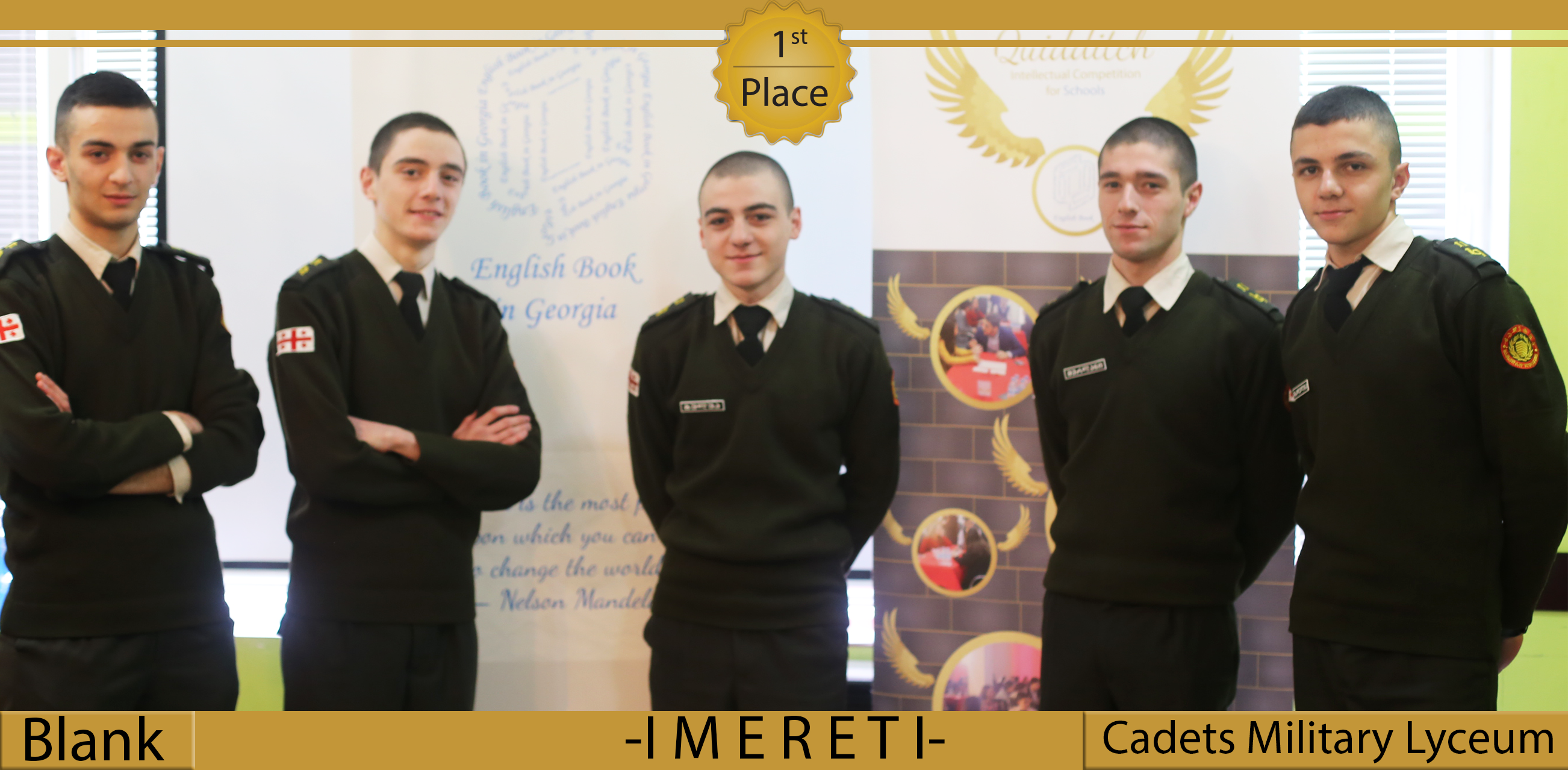
Quidditch – Kutaisi Winner 2017/2018

IMG_1502

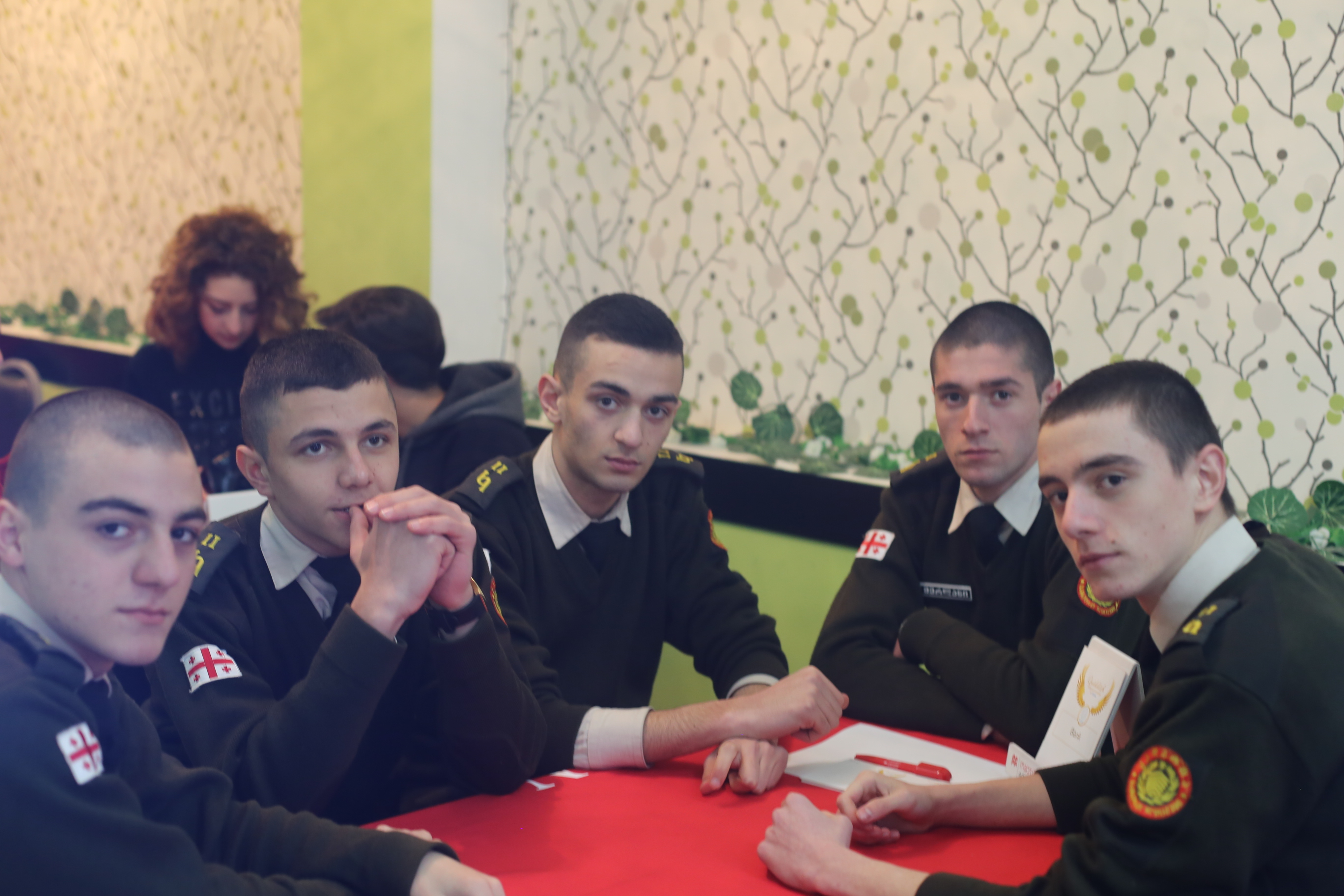
2018 წლის 10-11 თებერვალს გაიმართა იმერეთის რეგიონში, Quidditch: Intellectual Competition for Schools 2018. იმერეთის რეგიონის ტურის გამარჯვებული გახდა კადეტთა ლიცეუმის მიერ წარმოდგენილი გუნდი BLANK-ი და მისი მასწავლებელი ქალბატონი იზაბელა კილასონია, რომლებმაც ნამდვილად კარგი თამაში აჩვენეს და შესარჩევი ტურიდან დანარჩენ 9 გუნდთან ერთად ითამაშეს ნახევარ ფინალში, სადაც მათ დააგროვეს 8 ქულა და გადავიდნენ ფინალში.

IMG_1624

ფინალში ითამაშა 5-მა გუნდმა, სადაც BLANK – მა დააგროვა 11 ქულა, გახდა იმერეთის გამარჯვებული და მოიპოვა სუპერ ფინალში თამაშის უფლება, სადაც ისინი დაუპირისპირდებიან თბილისის ტურის გამარჯვებულს და ასევე აჭარის რეგიონის გამარჯვებულს.


5 Things You Might Not Know About Harry Potter

5 Things You Might Not Know About Harry Potter

scooby-gang

1. ROWLING AND HARRY SHARE A BIRTHDAY.

They both blow out candles on July 31 (happy birthday, JKR!). And that’s not the only influence Rowling had on her characters: She’s said that Hermione is a bit like her when she was younger, and her favorite animal is an otter—which is, of course, Hermione’s patronus. Plus, both Dumbledore and Rowling like sherbet lemons (Rowling said that the wizard’s “got good taste”).

2. EARLY ON, ROWLING WROTE A SKETCH OF THE FINAL CHAPTER OF THE FINAL BOOK.

hagrid

Rowling calls the idea that she had the first chapter of Deathly Hallowswritten and locked away in the safe “rubbish.” But there was a small element of truth to it: “I had, very early on—but not the first day or anything, probably within the first year of writing—I wrote a sketch for what I thought the final chapter would be,” she told Harry Potter’s big screen portrayer, Daniel Radcliffe, in an interview for the Deathly Hallows Part 2 DVD extra features. “I always knew—and this was from really early on—that I was working toward the point where Hagrid carried Harry, alive but supposedly dead, out of the forest, always. I knew we were always working towards a final battle at Hogwarts, I knew that Harry would walk to his death, I planned the ghosts—for want of a better word—coming back, that they would walk with him into the forest,  we would all believe he was walking to his death, and he would emerge in Hagrid’s arms.”

And that mental image is what kept Hagrid alive, despite the fact that he “would have been a natural to kill in some ways,” Rowling said. “But because I always cleaved to this mental image of Hagrid being the one carrying Harry out … That was so perfect for me, because it was Hagrid who and took him into the world, and Hagrid who would bring him back … That’s where we were always going. Hagrid was never in danger.”

3. THE WIZARDING WORLD’S PLANTS COME FROM A REAL BOOK.

5j6lkj3lk

“I used to collect names of plants that sounded witchy,” she told 60 Minutes, “and then I found this, Culpeper’s Complete Herbal, and it was the answer to my every prayer: flax weed, toadflax, fleawort, Gout-wort, grommel, knotgrass, Mugwort.” The book was penned in the 17th century by English botanist and herbalist Nicholas Culpeper; you can read it here.

4. A PROPOSED TITLE FOR THE AMERICAN VERSION OF PHILOSOPHER’S STONE WAS HARRY POTTER AND THE SCHOOL OF MAGIC.

k5jhkj63h6

Rowling turned that down, saying,

according to American publisher Arthur Levine, “No—that doesn’t feel right to me … What if we called it the Sorcerer’s Stone?” (The French edition, Levine points out in J.K. Rowling: A Bibliography, is called Harry Potter a L’ecole Des Sorciers.)

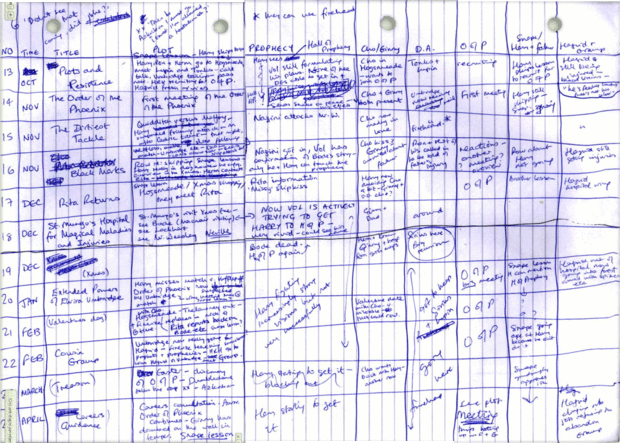
5. ROWLING MADE COMPLICATED OUTLINES FOR THE BOOKS.

rowling_spreadsheet

You can see a partial outline for Order of the Phoenix above. The outline has chapter titles, a general outline of the plot, and then more specific plot points for certain characters. (Based on this outline, it looks like Rowling thought about calling Dolores Umbridge Elvira Umbridge instead!)


Harry Potter book series are available at: https://goo.gl/YrhmVU

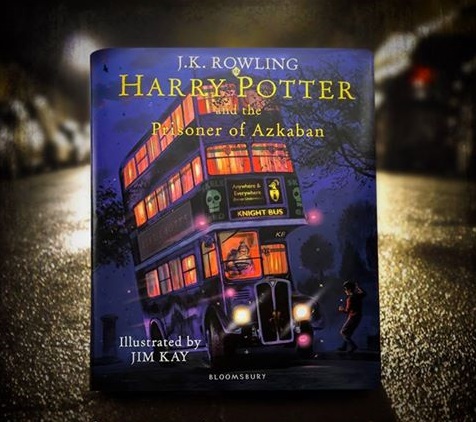
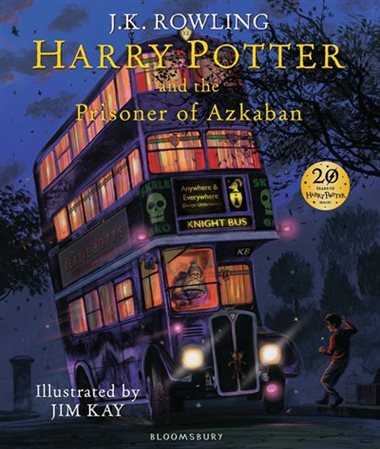
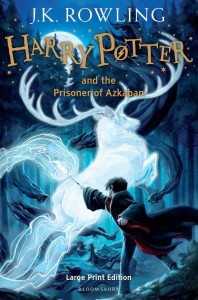
Harry Potter and the Prisoner of Azkaban illustrated edition

1408845660

The third book in the bestselling Harry Potter series, now illustrated in glorious full color by award-winning artist Jim Kay!

For twelve long years, the dread fortress of Azkaban held an infamous prisoner named Sirius Black. Convicted of killing thirteen people with a single curse, he was said to be the heir apparent to the Dark Lord, Voldemort.
Now he has escaped, leaving only two clues as to where he might be headed: Harry Potter’s defeat of You-Know-Who was Black’s downfall as well. And the Azkaban guards heard Black muttering in his sleep, “He’s at Hogwarts . . . he’s at Hogwarts.”
Harry Potter isn’t safe, not even within the walls of his magical school, surrounded by his friends. Because on top of it all, there may well be a traitor in their midst.


Praise for Jim Kay’s illustrations:

“I love seeing Jim Kay’s interpretation of Harry Potter’s world, and I feel honored and grateful that he continues to lend his talent to it.” — J.K. Rowling

“It’s all that an old-fashioned book aficionado could wish for . . . Is this, one wonders, the sort of book found at Diagon Alley’s Flourish and Blotts or in the Hogwarts library? Kay’s illustrations, freshly re-envisioning the story, range from spot images to dramatic double page spreads, all pulsating with color and vitality. This gorgeous volume is sure to please all, from Harry Potter neophytes to longtime fans.” — New York Times Book Review

Book available at: https://goo.gl/ckzhai 

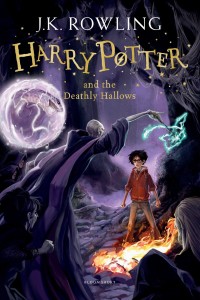
Harry Potter and the Deathly Hellows

Deathly_Hallows_New_Cover

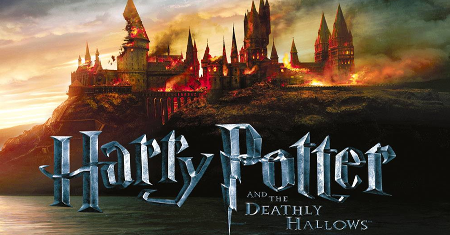
Harry Potter and the Deathly Hallows

is a fantasy novel written by British author J. K. Rowling and the seventh and final novel of the Harry Potter series. The book was released on 21 July 2007, ending the series that began in 1997 with the publication of Harry Potter and the Philosopher’s Stone. It was published by Bloomsbury Publishing in the United Kingdom, in the United States by Scholastic, and in Canada by Raincoast Books. The novel chronicles the events directly following Harry Potter and the Half-Blood Prince (2005), and the final confrontation between the wizards Harry Potter and Lord Voldemort.


Throughout the six previous novels in the series, the titular character Harry Potter has struggled with the difficulties of adolescence along with being famous as the only wizard to survive the Killing Curse. The curse was cast by the evil Tom Riddle, better known as Lord Voldemort, a powerful dark wizard, who had murdered Harry’s parents and attempted to kill Harry as a baby, in the belief this would frustrate a prophecy that Harry would become his equal. As an orphan, Harry was placed in the care of his Muggle (non-magical) relatives Petunia Dursley and Vernon Dursley.

In Philosopher’s Stone, Harry re-enters the wizarding world at age 11 and enrolls in Hogwarts School of Witchcraft and Wizardry. He makes friends with fellow students Ron Weasley and Hermione Granger, and is mentored by the school’s headmaster, Albus Dumbledore. He also meets Professor Severus Snape, who intensely dislikes and bullies him. Harry fights Voldemort several times while at school, as the wizard tries to regain a physical form. In Goblet of Fire, Harry is mysteriously entered in a dangerous magical competition called the Triwizard Tournament, which he discovers is a trap designed to allow the return of Lord Voldemort to full strength. During Order of the Phoenix, Harry and several of his friends face off against Voldemort’s Death Eaters, a group of Dark witches and wizards, and narrowly defeat them. In Half-Blood Prince, Harry learns that Voldemort has divided his soul into several parts, creating “horcruxes” from various unknown objects to contain them; in this way he has ensured his immortality as long as at least one of the horcruxes still exists. Two of these had already been destroyed, one a diary destroyed by Harry in the events of Chamber of Secrets and one a ring destroyed by Dumbledore shortly before the events of Half-Blood Prince. Dumbledore takes Harry along in the attempt to destroy a third horcrux contained in a locket. However, the horcrux had been taken by an unknown wizard, and upon their return Dumbledore is ambushed and disarmed by Draco Malfoy who cannot bring himself to kill him. Dumbledore is subsequently killed by Snape, who finishes what Malfoy started.


To buy the book online please follow the link below :  https://goo.gl/9jbZc1

Reveiled: How Harry Potter has shaped the way we speak?

Calling all muggles and mudbloods, dementors and squibs,

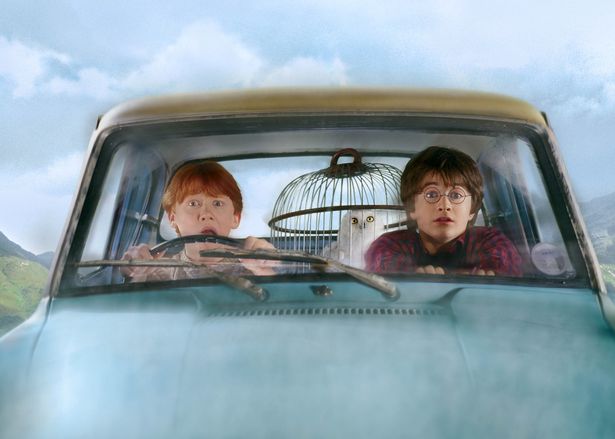
The boy wizard’s first adventure hit our bookshelves in 1997, and has had a huge influence on all aspects of popular culture.

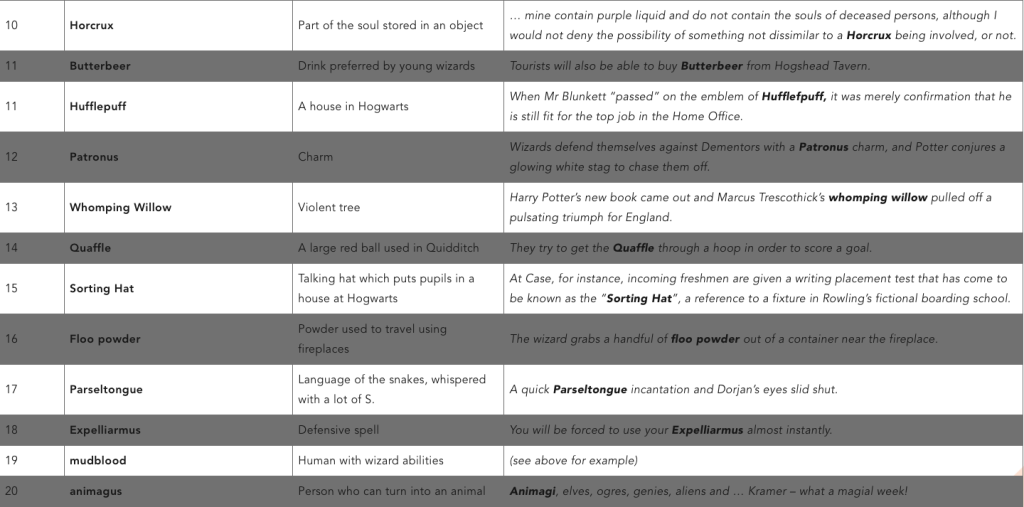
But what about the way we speak? To mark the anniversary the Cambridge University Press has looked into the many words invented by JK Rowling, to find out how deep an effect her Wizarding World has had.
260838-H3_tvr0163577

Matt Norton, CUP’s resident language researcher, donned his cloak to analyse data from the Cambridge English Corpus, a multi-billion word collection of contemporary spoken and written English, to find out the ‘Potterverse’ words that have made their way into everyday dialogue.

In a blog on the CUP website, he says: “I use corpus linguistics to examine how the world of Harry Potter – or the ‘Potterverse’ – has influenced English with new words invented by Rowling (“coinings”); her reusing of rare or obscure words; and changes to existing word usage.”

Many of the terms created by Rowling are examples of ‘blend’ words, made from fusing two existing words together.

Terms like ‘animagus’, a blend of animal and magus (a kind of wizard, plural magi), and ‘merpeople’, blending from mer(maid) and people, are such examples.

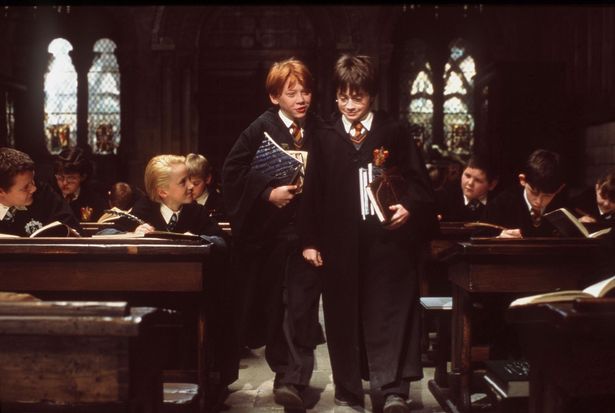
Matt said: “Some of the words sound like parodies of English words, like ‘Hogwarts’, the name of Harry’s ‘School of Witchcraft and Wizardry ‘, ‘Hufflepuff’ house or the game ‘Quidditch’.

“Although ‘Hogwarts’ sounds like a combination of hog and wart, there is also a plant called hogwort, which is a genuine English word, which may have also influenced this creation.
032059-SL_cit0013415

So it seems that the English language may have already contained Potterisms before Potter, but they were obscure or “hidden”, a bit like how the magical world is hidden from humans in the Harry Potter series!”

Another trope of Rowling’s he identifies is her use of ‘dog Latin’ imitation Latin terms, particularly in the names of spells.

He suggest words “such as ‘Expelliarmus’, the defense spell; ‘Expecto Patronum, to protect against dementors; and ‘Finite Incantatem’

“The magical object ‘Horcrux’ has a dark, occult-like tone and appears to be a blend of horror (or similar Latin word) and Latin crux meaning cross.”

He also addresses the numerous invented words used across the books and films, many of which have now taken on a life of their own.

Examples include ‘Hogwarts’, which can be used to refer to old dramatic buildings “such as some of the older Cambridge University colleges”, or just university in general.
2-1024x507

Please click here to view the books
Harry Potter and the Prisoner of Azkaban


9780747560777

Harry Potter and the Prisoner of Azkaban

Harry Potter is lucky to reach the age of thirteen, since he has already survived the murderous attacks of the feared Dark Lord on more than one occasion. But his hopes for a quiet term concentrating on Quidditch are dashed when a maniacal mass-murderer escapes from Azkaban, pursued by the soul-sucking Dementors who guard the prison. It’s assumed that Hogwarts is the safest place for Harry to be. But is it a coincidence that he can feel eyes watching him in the dark, and should he be taking Professor Trelawney’s ghoulish predictions seriously?


Do you know when Harry used his firs “Patronus charm”?

Chapter 1: Owl Post

Harry scanned the moving photograph, and a grin spread across his face as he saw all nine of the Weasleys waving furiously at him…Right in the middle of the picture was Ron, tall and gangling, with his pet rat, Scabbers, on his shoulder…
—Harry seeing the photography of the Weasleys in Egypt.

Harry Potter spends another summer holiday with the Dursleys in mid-1993, and things haven’t been that easy for him. Over the summer, the Dursleys have forbidden him to talk to any of the neighbours out of fear of him exposing his magical abilities. The separation from his magical supplies (e.g. his wand, his broomstick, spellbooks, etc.) have become a real problem for Harry, too, because his teachers at Hogwarts School of Witchcraft and Wizardry have given him a lot of summer homework.

for more please click HERE


Tips For Learning New Language


Image result for tips for learning new language

Jonathan “Jony Wilkinson”, the English rugby national team captain who drove his teams to victory in the 2003 and 2007 Rugby World Cup finals, shared some tips for learning a new language with Lauren Ward, a journalist at The Cambridge University Press. His own experience comes from transferring to Toulon in 2009, where he started learning French.

He says that his motivation for learning a new language was that “not knowing a language is an enormous limitation when expressing and sharing experiences”. He suggests to “get in amongst it and throw your best efforts” if you want to do the same. “For me, learning is not about remembering but about investing, experiencing and committing way beyond any type of fear or making mistakes. Keep hold of your excitement and passion. Don’t make it about right and wrong. It’s your energy and internal state that will create momentum”, he adds.

“From Toulon with love…”, Lauren Ward. Cambridge University Press, 5 April, 2017, P8

Commercial Success VS Artistic Value


sales-1960x500

Increasingly, celebrities and YouTube stars are getting lucrative book deals across the world. Think of any famous teenager and, more likely than not, they have a book out or in the works. Zoe Sugg, a YouTube celebrity, had the fastest-selling book of 2014 with Girl Online, which also spent some time on the New York Times bestsellers list.

Some see this as a threat to “great literature” and sophisticated art in general. How are booksellers meant to react to this trend? Are they to pay more attention to skilled debut novelists, or the latest’s works by famous YouTubers? The opinions across the book publishing world are divided.

According to Jon Riley, the editor-in-chief at Quercus imprint riverrun (in an interview with Publishing Perspectives), “the market is so competitive that literary titles have to compensate for the attention of sales, marketing, publicity people-and a pre-publication response from a limited number of retailers-with the most obviously commercial fiction and nonfiction titles”. In other words, it’s almost like classical music making way to pop. Yet, not everyone sees it this way.

Simon Prosser, editorial director of Penguin Random House’s Hamish Hamilton (in an interview with Publishing Perspectives), thinks that it’s “a great time for literary fiction”, as “publishing and bookselling together form a highly mixed ecosystem”. He dismisses worries about celebrities, as he believes that “they have been given book deals pretty much since the dawn of commercial publishing”, without negative repercussions on the quality of books across the publishing world.

There’s a third side to the debate as well: the pragmatic side. Suzie Dooré, publishing director at HarperCollins’s literary imprint, Borough Press (in an interview with Publishing Perspectives), says that she thinks “there’s room for everyone. I feel quite ‘live and let live’ about it. If enough people want to read a novel by a celebrity, then it’s a good business decision to publish it. I don’t believe it takes shelf space away from literary fiction. They are different areas of the market.”

This approach seems to make a lot of sense. There has always been demand for books by celebrities, and some have even been positively received by critics at large (like Girl Online, for that matter). Their existence doesn’t really threaten traditional books by “serious” authors, as readers aren’t likely to abandon them altogether.

Source: “Literary Debate: Commercial Success vs. Artistic Value”, Roger Tagholm, Publishing Perspective, Spring 2017, p.15

Frankfurt Calls on Publishing Community to Go Global

Go-Global-Image

Publishers worldwide are promoting the benefits of globalism, despite the recent rise in popularity of nationalist politics. The “Go Global” campaign, launched by the Frankfurter Buchmesse, aims to unite publishers from all across the world to defend the “freedom to publish”, and the “freedom of speech”, according to Juergen Boos, a representative.

With this campaign, the Frankfurter Buchmesse offers a number of one-year programs that help publishers exchange ideas internationally. They also help support the publishers’ global rights and their licensing platforms with the help of IPR Licence.

“Go Global” will have its final event in Frankfurt, where, alongside French guests, a number of international authors, politicians and artists will share their cultural and political experiences. Additionally, the Frankfurter Buchmesse will organize German stands at 17 international book fairs (including the London Book Fair).

With the world seemingly becoming more and more isolated by the month, it’s refreshing to still see a celebration of international bonds that hold Europe together.

Source: “Frankfurt Calls on Publishing Community to ‘Go Global’”, Juergen Boos, Publishing Perspective, Spring 2017, p.5

How Should Publishers Adjust Modernity


528662_9fda_2

Provide alternatives to current printed learning materials.

For centuries, printed materials have served us well. They have been a great way to get information out to everyone. By now, the content development cycles have almost been perfected. However we’re still unable to adapt the content to the requirements of different learners. There are some who require a faster or a slower pace.

One possibility is to focus on work books, which enabled Finland’s success in Pisa rankings. These books encouraged the students to learn more by engaging them and providing their teachers with an efficient way of assessing their skills. The same general idea can be applied to digital learning as well. Though short, fun videos are useful, there need to be alternatives.

Recognize the role of teachers in the digital world

Though machines are great at providing real time feedback to users as well as showing them possible learning paths, teachers are still necessary. They should support learners, giving them personal advice to motivate them in their learning journey.

Retrain teachers

Teachers need to be shown new ways of using digital content and data to make their classes more effective. Yet we shouldn’t get carried away by new trends. Technology should support teachers, not replace them.

Become relevant again

Publishers need to be in the middle of the learning process. They should make content as easily accessible as possible instead of hiding it away behind clunky online interfaces. That requires rethinking the field.

Source: “Learning: We will do better”, Teuvo Sankila, London Show Daily, P.16