Category Archives: Adults

Copyright Under Attack

copyrightallrightsreserved

With an increasing number of universities trying to go around copyright laws by copying textbooks, many in the publishing industry feel that their profits are under attack. William Bowes, the general counsel and company secretary at Cambridge University Press, is certain that the rights of publishers to charge for educational content are currently threatened by governments across the world. He believes that attempts by countries like the US, Canada and India to expand educational exemptions set a dangerous precedent for the future.

“I understand the emotional anger about locking up the information, but I don’t understand why, on a public policy and legal level, the content industry should be singled out in this way”, he claims in an interview with Publishing Perspective. Though there have been many legal cases brought by publishers and copyright collectives against universities that copy textbooks, governments appear inclined to protect Fair Use models rather than defend the rights of publishers to earn money from their content.

If this tendency continues, Bowes is pessimistic about the future. “If you’re an education and academic publisher and your only revenue comes from licensing and selling work in an education context, then you won’t be able to monetize your work at all”, he claims.

Yet he understands why the world has come to the current situation. Most governments see education as a vital tool for making sure that their citizens are successful in the future. Very often, copyright ends up getting in the way of the things schools and universities want to do, so governments agree to increase the size of the public domain so that such institutions get the content they want for free.

Naturally, Bowe’s view isn’t the only one out there. Some, like Emily Hudson, senior lecturer in law at Australia’s University of Queensland and lecturer at King’s College London, thinks that the opposite is true. “My perception,” she says, “is that for many years, there has been a strengthening of rights for authors and publishers. For instance, there have been statements from the European Court of Justice that exceptions should be interpreted strictly, as well as things like term extension and the expansion of rights to cover digital content and online use.”

And our video about how bad it is to steal:

Source: “Balancing Copyright and Access in Education”, Mark Piesing, Publishing Perspective, Spring 2017, p.24
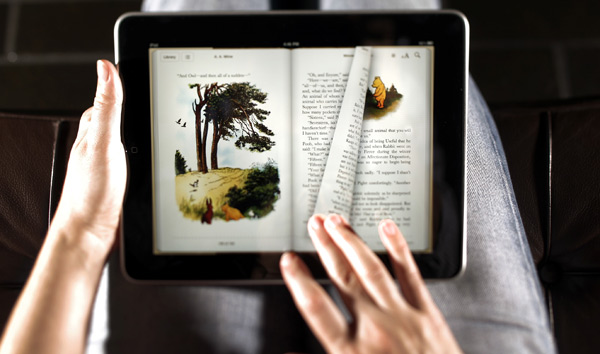
eBook Sales Still Rising


2436448_orig

Though many reports show a decline in eBook sales over the past two years, self-publishing doesn’t seem to have met the same fate. “Successful self-published authors aren’t rare at all”, says Mark Dawson. That said, with only a 2% market share in print, self-publishing is almost wholly dependent on digital sales, which are in an apparent decline. The Publishers Association (PA) reported that between 2014 and 2015 there was a 2% decline in digital sales. So how is self-publishing faring today?

The first thing to bear in mind while looking at the data is that the PA’s numbers do not take into account Amazon imprints or self-published sales. Their market share has actually continued to grow even with the decline in digital sales, so the overall figures are misleading. Early figures from 2016 show that the growth of self-and amazon-published sales might be in proportion to the market’s overall shrinkage.

The self-publishing sector also has access to a diverse selection of routes to readers. Mark Dawson, an expert online marketer, uses multiple sales platforms: Amazon makes 60% of his sales, Apple 20%, and 10% is via other outlets. “I’m agnostic on how books are delivered”, he says.

Source: “Self-publishing in digital still on the rise”, Mark Dawson, London Show Daily, P.30

Latin American Writers in Demand


latinamericanauthors


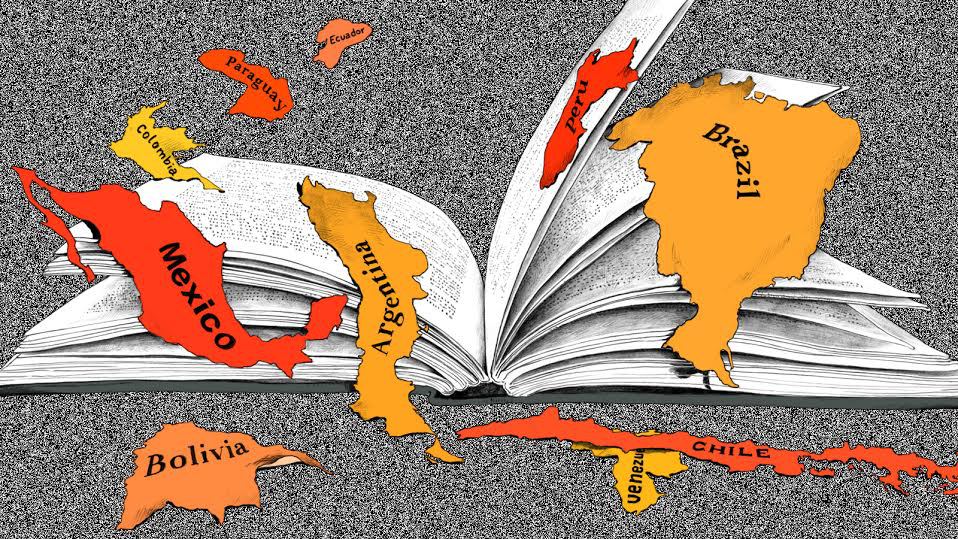
According to Bernat Fiol, a representative of SalmaiaLit, American and European publishers have been showing a lot of interest in Latin American authors lately. “I think special attention is being paid to young writers of a marked literary character who offer their vision of reality but also contribute new perspectives on Latin America’s literary tradition”, he claims.

As evidence of this interest, SalmaiaLit has revealed that it has sold the rights to a number of Latin American writers’ works, notably F.G. Haghenbeck’s novel The Secret Book of Frida Kahlo, which was translated into 15 languages and sold well in a number of countries. Another translation that’s in the works is of “El desierto y su semilla”, a modern classic.

Laurence Laluyaux, an agent at Rogers Coleridge and White in London, has also seen a “distinct interest” in Latin American writers lately, especially in Scandinavia and Eastern Europe, markets that were usually seen as far too difficult for such books. She says that this new development can be explained by the “international fatigue when it comes to English-language literature”. It seems that readers across the world are willing to break out of their comfort zone and explore new and original novels. According to Laluyaux, there’s now a “definite strong interest in form as well as content” of Latin American books.

Source: “Is Latin America The Next Literary Hot Spot?”, Adam Critchley, Publishing Perspective, Spring 2017, p.8

Polish Writing Finds Popularity In The West


CroppedImage1396770-CroppedImage1404795-Website-Header-Vignette


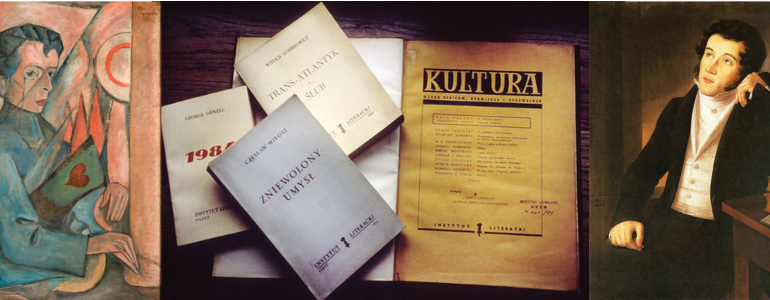
In a recent interview with Publishing Perspective, Dariusz Jaworski, the director of the Polish Book Institute, shared his views on the emergence of Polish writing in the West.

“Political changes in our country and Poland’s accession to the European Union have resulted in an increased influx of Poles to the UK, allowing them to contribute to the local culture”, he claims. “Polish literature has a grand tradition, emblemized by four Noble prize winners: Sienkiewicz, Reymont, Miłosz and Szymborska…We also have interesting contemporary literature, authors who have won some of the most prestigious literary prizes for fiction, such as Olga Tokarczuk”, he adds.

As for the most exportable genres of Polish literature, Jaroslaw thinks that “nonfiction, science fiction and fantasy, and crime novels have been the most popular.”

Source: “Poland’s Sci-Fi, Nonfiction, and Crime Find Readers in the West”, Jaroslaw Adamowski, Publishing Perspective, Spring 2017, p.7

The Juggernaut Called English


2cf73142307890885c937975c8a3b5de

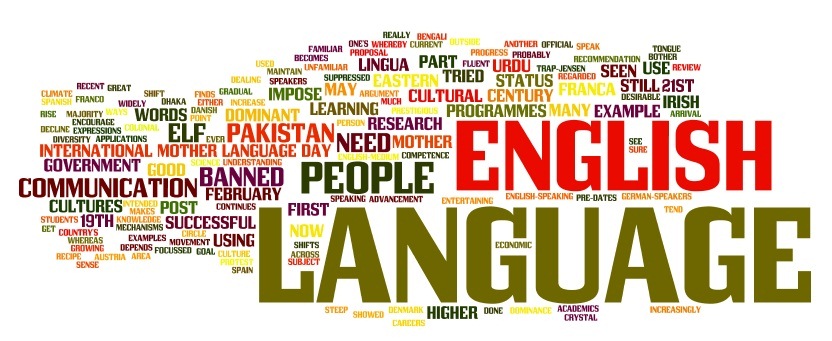
Today, English is the primary language for international communication. At this point in time, more people speak English than have ever spoken a single language in the history of the world. It’s the dominant language in business, banking, industry, commerce, transportation, tourism, sports, diplomacy, advertising, music and so on. We even measure the relative development of a nation in terms of its access to science through English.

Today, English doesn’t belong to any one culture, but instead carries the cultural heritage of all the people and communities who use English every day. But, despite all that, the demand for English is far above the supply. Though governments pour resources into giving its citizens better access to English, there is still more work to be done. There are probably not enough native speaking teachers to help satisfy this demand, and that’s where non-native speaking teachers must step in.

Source: Peter Medgyes, “’The juggernaut called English”, The Non-Native Teacher

Using Video In Class

21st_century_classroom


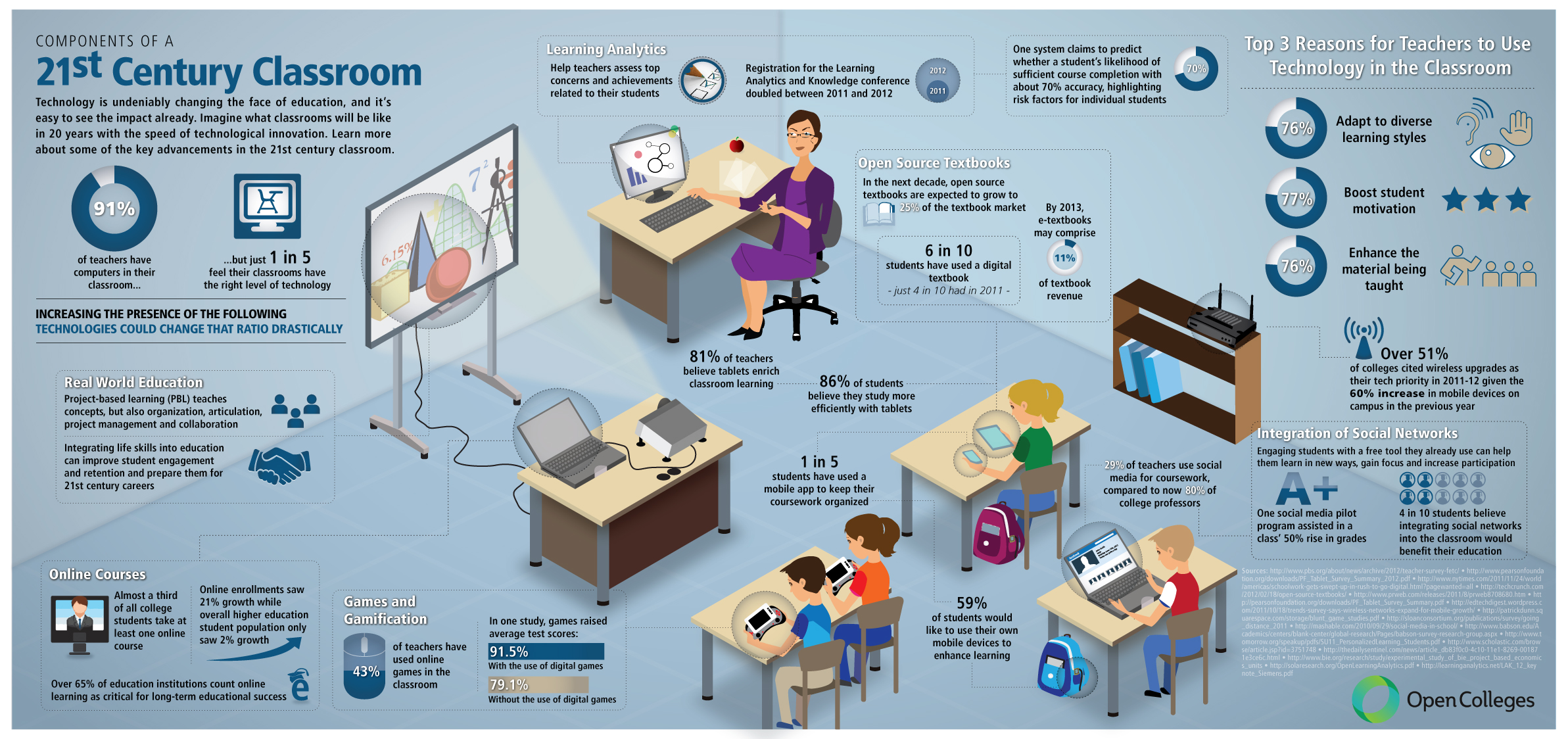
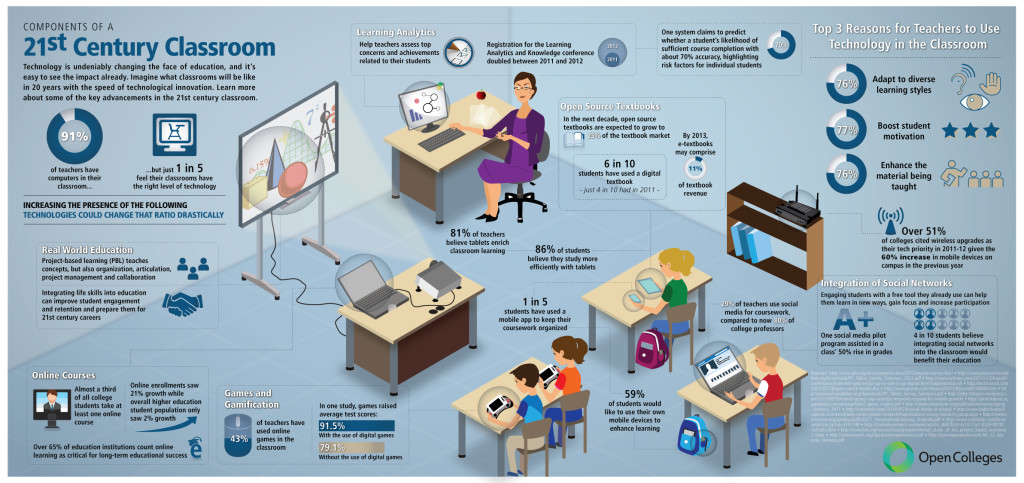
Many teachers agree that images, still or moving, are very important to teenagers today. It’s how they access the wider world and learn more about it, it is how they share funny gags and stories with friends, and also it is an integral part of their lives. So, what better way to get students to be more active in class than to incorporate some video material?

The videos do not have to be long, either. Many teachers think that screening long and meaningful videos in class are a great idea, but most teenagers today are used to far shorter videos, on the order of 3-5 minutes. Showing more amateurish, relatable clips in class will get the students involved a lot more, especially if they can easily make their own versions of them.

You could even organize a couple of mini-projects, get your students to grab their smartphones and take a few pictures and videos! Set them out to document examples of English being used around them. They will quickly realize just how widespread the language is. For a lot of learners, English is removed from their everyday lives, so this is a good opportunity of breaking them out of their bubble. It will be even better, to ask them to record videos of their own. They don’t have to be well thought out, just relevant and interesting. Good luck!

Source: Goldstein, Ben; Jones, Ceri “Bringing the World into your Classroom” Cambridge University Press, 4 April, 2017, P2

Online Work


20141031174145-15-free-online-learning-sites


Many teachers think that just because their students are always on the internet, they’ll be happy to do any online work. This is not quite true. Teachers still need to take into account the level of challenge and the content itself. Students have high expectations of what they access online, because they’re used to incredibly engaging and interactive content. Therefore, teachers have to take a number of steps to make sure that online language learning environment motivates their students.

First of all, the content needs to be personalized and contain topics relevant to the students. Next, the environment needs to be stimulating by being challenging. The teachers also have to assess their online work on time, giving their students incentive to complete it. Finally, learners need to be trained to appreciate the value of particular online to achieve their goals.

Source: Thirau, Caroline “Blended Learning myths: busted!” Cambridge University Press, 4 April, 2017, P4

Speakout

6a00d83452d45869e20147e14e7b73970b

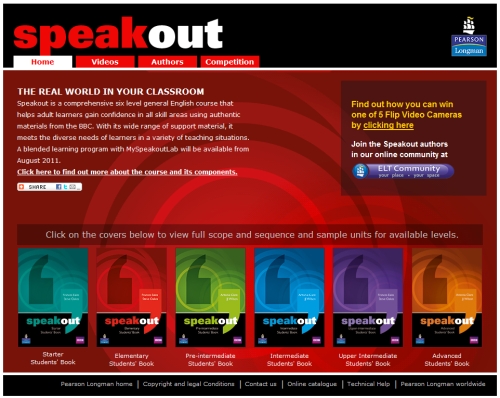
Speakout – The real world in your classroom!

The award-winning course that invites you and your students to discover English as it is really spoken. Speakout builds up all the skills and knowledge students need to express themselves confidently in a real English-speaking environment.
Lessons cover all four skill areas as well as grammar and vocabulary. Each unit ends with a DVD lesson based around an extract from a BBC programme which provides a springboard for meaningful speaking and writing tasks.

Models of authentic English are also provided through ‘on the street’ interviews filmed by the BBC. MyEnglishLab is a flexible online tool that enriches learning, informs teaching and enhances your Speakout course ,Enriched Learning MyEnglishLab has a wide range of activities that are instantly graded and correlated to your Speakout course,Informed Teaching MyEnglishLab for Speakout gives teachers instant access to a range of invaluable diagnostic tools ,Flexible Solutions You can assign tasks to the whole class, groups of students, or individual students to help them reach their goals more effectively.

ActiveBook is the Students’ book in digital format with integrated audio and video from the course and includes: Easy navigation of the Students’ Book pages with zoom facility ,Video and audio available at the touch of a button Video Podcasts with accompanying worksheets,BBC programme clips that can be played in a DVD player or computer.

Authors : Frances Eales, JJ Wilson, Antonia Clare, Steve Oakes.

Read More http://product.pearsonelt.com/speakout1e/#speakout

Source : www.pearsonelt.com

Open Mind

Open-Mind-life-skills-discussion-wheel-poster-image

Open Mind opens doors

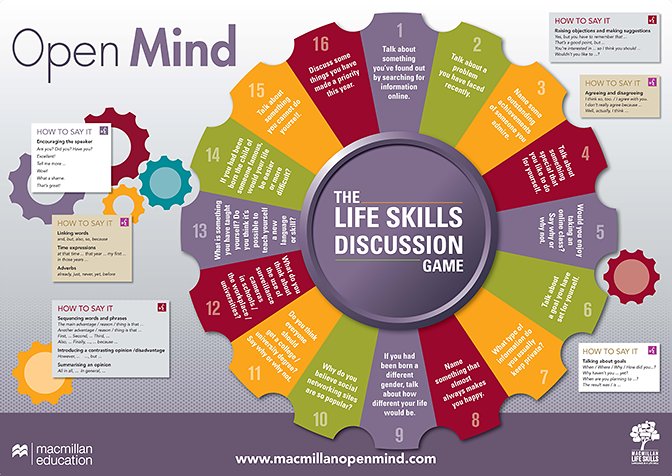
Open Mind allows teachers and students to enjoy the best combination of digital and print material. This flexible new course combines language development with the crucial skills students need to be effective and adaptable for work and study.
Open Mind is a ground-breaking adult course that provides learners with the professional, academic and personal skills they need. Not only are language skills developed in the course, but also the important 21st-century skills that students need in order to have a better awareness of self and society, to handle the demands of their study and learning and to deal with challenges in their work and career.

The course offers a flexible combination of materials to ensure that students are learning from a variety of sources: content-rich reading texts, speaking and writing workshops, high-quality video, self-study Online Workbooks, and projectable Student’s Books. The series now comes with new Digital Student’s Books, optimised for tablets, for a smart and versatile learning environment.

Authors

Mickey Rogers and Joanne Taylore-Knowles and Steve Taylore-Knowles and Ingrid Wisniewska and Dorothy Zemach

Read More
: www.macmillanopenmind.com/about

Source : www.macmillanenglish.com