
Tag Archives: October 2014

Map Showing Where Today’s Countries Would Be Located on Pangaea

Pangaea

The supercontinent, Pangaea, formed approximately 270 million years ago during the Permian Period and started breaking apart 70 million years later, creating the continents we know and live on today.

Pangaea was a peopleless mass, but if you were to put today’s countries on that supercontinent, here’s what it may look like.

The map was created by Massimo Pietrobon as an experiment. Check out more of his maps here: http://vimeo.com/86116226


[button color=”blue” size=”small” link=”http://www.openculture.com/2014/07/map-showing-where-todays-countries-would-be-located-on-pangea.html” target=”blank” ]Source[/button]
Harper Lee’s ‘To Kill a Mockingbird’ – A Synopsis

To Kill a Mockingbird

The novel To Kill Mockingbird mainly revolves around a small family of three — Atticus Finch, an attorney, and his two children, Scout and Jem. As the novel proceeds certain characters are linked with the three main characters to form a dramatic story of events, attitudes, prejudices and values.

The novel is set is the quiet town of Maycomb; but the serenity is only superficial. The town is comprised of three communities: the white folk, the black community, and the ‘white trash’. Outwardly there is peace among the three, but underneath prevails a combination of hostility, racial prejudices, and friendlessness.

Jem and Scout go to school together. On their way to school, they pass the Radley house; it is a terrifying place to them, for it houses Boo Radley, who has been labeled a lunatic. At the same time, their curiosity pushes them to try out ways to make Boo come out of the house. Their overtures are, however, suppressed by Atticus who does not want them to torment Boo.

The main plot of the novel revolves around the trial in which Atticus defends Tom Robinson, a black man, who has been accused of having molested a white girl, Mayella Ewell. She is part of the ‘white-trash’ community. The children follow the case proceedings avidly and are inconsolable when their father loses the case.

The case is lost simply because it was still impossible (despite statutory laws protecting them) for a black man to attain victory over a white in the South. This amply reveals the deeply ingrained racial prejudices still prevalent among the white society which cannot give an equal status to a black.

The relation between the children and Boo Radley resurfaces at the end, when it is Boo who saves them from imminent death at the hands of the vicious Bob Ewell. It is ultimately revealed that Boo is not a lunatic, but a simple-minded person with failing health and a childish attachment for Scout Finch and Tom Robinson.

The story of the mockingbird recited by Atticus is linked to the theme of the novel. It is considered a sin to kill a mockingbird, since it is a harmless bird which only sings to please others. Boo Radley and Tom Robinson are also harmless people. By letting Tom die, the sin of killing a mockingbird has been committed. But by not revealing the facts of Boo’s heroism in rescuing the children, the sin is avoided, and Boo is left to his seclusion. Tom’s death is a defeat of justice and an insult to humanity, and the readers can judge for themselves how much of a sin it is.

The maturing of Scout and Jem is portrayed as well as the exemplary character of Atticus, who is without any racial prejudices or biased views. He is a highly ethical character, who chooses to fight against the ‘old traditions’ of his own community.

[button color=”blue” size=”small” link=”http://englishbookgeorgia.com/catalogue/shop/penguin/to-kill-a-mockingbird/” target=”blank” ]Buy the Book[/button]

Interesting Words And Expressions – Abibliophobia

What exactly is Abibliophobia? It is the fear of running out of reading material.

empty bookshelf

Origin: Phobia is used both independently and as a suffix to describe an irrational fear of something, and has had increasingly productive use as a suffix in recent years – it seems possible to create an English term for being frightened of almost anything. For instance, many of us have heard of claustrophobia (fear of confined spaces) and agoraphobia(fear of open spaces) but what about e.g. nostophobia (a fear of returning home), or even coulrophobia (fear of clowns)? We also have bibliophobia (an irrational fear of books). Abibliophobia is most likely a made-up form of the latter, using morpheme ‘a’ from the Greek meaning not.

a- “not” + bibli-(on) “book” + o + phob(os) “fear” + ia, a nominal suffix.


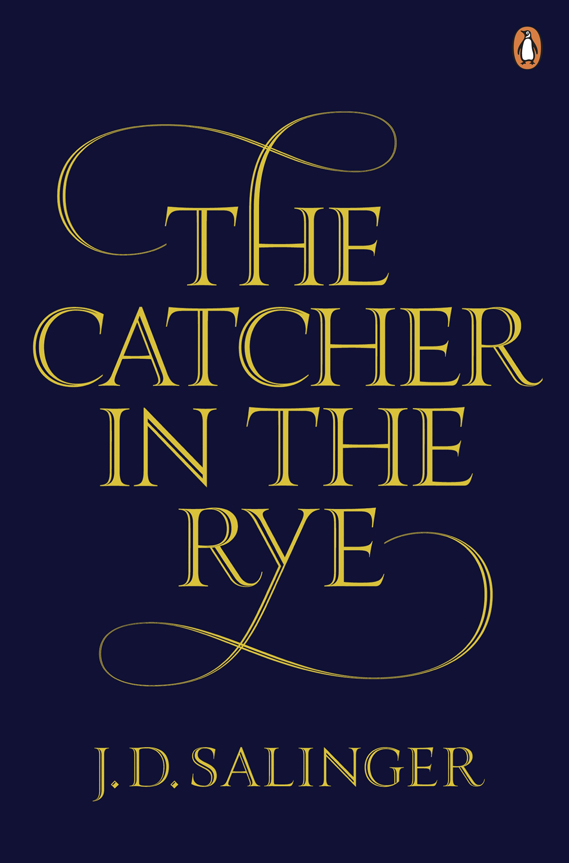
Book of the Week: The Catcher in the Rye by J.D. Salinger

The Catcher in the Rye

It is the story of sixteen-year-old Holden Caulfield, who wants to desperately find himself, but who goes underground for forty-eight hours, when he is overwhelmed by perplexing circumstances of his life.

Read the first page-and you will not be able to stop until you have completed this wild and magic adventure with him.

J.D. Salinger was born in New York City in 1919, attending public schools, military academy and three colleges. From 1942 to 1946 he served in the Army. This was his first novel.

[button color=”blue” size=”small” link=”http://englishbookgeorgia.com/catalogue/shop/modernclassics/the-catcher-in-the-rye/” target=”blank” ]Buy the Book[/button]

6 Tips for Young Professionals Flustered by Small Talk

success

1.    Don’t Go It Alone

No question, it can be intimidating to go solo in a professional setting. You’re putting yourself out there with potentially serious ramifications for your career. Instead, it can be helpful to have a friend to watch your back and advocate on your behalf.

At networking events or professional conferences, the ice between making new contacts can be too thick to break on your own. Working as a team doubles your chances of being seen and heard.

2.    Keep Your Eyes Open

When in a group conversation, a lot of seasoned professionals will maintain a conversation but as they’re talking, they’re also scanning the room for people who might want to join the group, but aren’t sure how. There’s no reason why you can’t do the same when you see someone you know struggling to join the conversation.

3.    Protect Your Credibility

It’s important to be an advocate for others, especially when they’ll return the favor for you, but be cautious about putting your credibility on the line.  As a young professional, you don’t have the stock to vouch for just anybody if they truly aren’t a good fit.

Whoever you bring into the group conversation is a reflection on you and your credibility. If you bring in someone who fits in perfectly, you’ve just established yourself even more. But bring in someone who appears incompetent and the group is going to think you’re no better.

4.    Start Positive

When you have an “in” with a group, start off by making a good impression. Chime in to the conversation when somebody says something you agree with so you can engage on a positive note.

You can play contrarian later, after you’ve developed some rapport, but a simple affirmation helps set the right tone for the conversation and ensures the group you’re not out to second guess them on every topic.

5.    Watch the Group’s Dynamics

In most circumstances, it’ll be easy to tell whether the group wants you in or wants you to move along. If you stumble upon a group that is close-knit, they might not want to include you right away. Don’t force yourself on them if they’re not welcoming.

If the members don’t step back to include you in the circle after several minutes of standing nearby and a few attempts to join the conversation, look elsewhere.

6.    Start Now

Networking and personal interaction in a professional setting doesn’t come easily to most people. But the data shows it’s still expected of you. Failing to practice can hurt your chances at landing a job or moving up the corporate ladder.

It’s best to start early. People expect young professionals to come off a little awkward and unpolished, at first, because it’s a new experience. Most people will be empathetic to nerves when you first start out. However, if you’re 45-55 years old and still learning the ropes, people might question your interpersonal skills.

Take advantage of the leniency while it’s granted, or your friend might soon outrank you.

[button color=”blue” size=”small” link=”http://www.entrepreneur.com/article/236190” target=”blank” ]Source[/button]