Tag Archives: For Teachers

Theme of the Week: Celebrating Short Stories by Sibling Authors: Charles & Mary Lamb and the Brothers Grimm

Charles and Mary Lamb


Tales from Shakespeare

The book reduced the archaic English and complicated storyline of Shakespeare to a simple level that children and adults could read and comprehend. However, as noted in the author’s Preface, “his words are used whenever it seemed possible to bring them in; and in whatever has been added to give them the regular form of a connected story, diligent care has been taken to select such words as might least interrupt the effect of the beautiful English tongue in which he wrote: therefore, words introduced into our language since his time have been as far as possible avoided.”

Mary Lamb was responsible for the comedies, while Charles wrote the tragedies; they wrote the preface between them. Next to his essays, this book is his best-known work; yet its success is attributable more to Mary, whose name did not appear on the title page of the first few editions, than to Charles.


 Jacob and Wilhelm Grimm


The Brothers Grimm: The Complete Fairy Tales

For almost two centuries, the stories of magic and myth gathered by the Brothers Grimm have been part of the way children — and adults — learn about the vagaries of the real world.

The work of the Brothers Grimm influenced other collectors, both inspiring them to collect tales and leading them to similarly believe, in a spirit of romantic nationalism, that the fairy tales of a country were particularly representative of it, to the neglect of cross-cultural influence. Among those influenced were the Russian Alexander Afanasyev, the Norwegians Peter Christen Asbjørnsen and Jørgen Moe, the English Joseph Jacobs, and Jeremiah Curtin, an American who collected Irish tales.

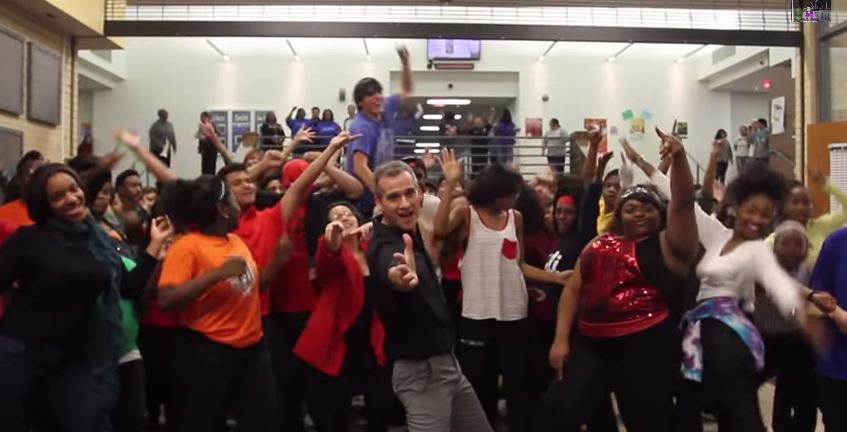
A Cool Teacher Organized A School-Wide Dance Party To “Uptown Funk”

This crazy “Uptown Funk” dance party was filmed in the halls of A. Maceo Smith New Tech High School in Dallas, Texas, USA.

It stars Theatre Arts Teacher Scot Pankey and his students and they totally did an amazing job!

Jonathan Vega, the video’s editor and producer, wrote on YouTube that Pankey was the real mastermind behind the now-viral video.

“This is a great example of how a bunch of technology students let go of their fears, trusted their teacher and got down to Uptown Funk,” Vega wrote.

A. Maceo Smith New Tech High School is a magnet school with a focus on project-based learning and as far as projects go this is a pretty good one.

საინტერესო სიტყვები და გამონათქვამები – Diphthong

What does diphthong mean?

It is a noun that is used in linguistics and means two vowel sounds joined in one syllable to form one speech sound.

How do you pronounce it?

/ˈdɪfθɔŋ/

or

[diph·thawng]

Where does it come from?

Middle English diptonge, from Middle French diptongue, from Late Latindipthongus, from Greek diphthongos, from di- + phthongos voice, sound

How do you use it?

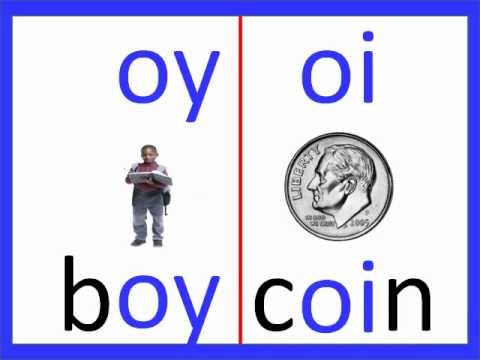
The sounds of “ou” in “out” and of “oy” in “boy” are diphthongs.

The Heart of Teaching: What It Means to be a Great Teacher

What does it mean to be a great teacher? Of course credentials, knowledge, critical thinking, and all other faculties of intelligence are important. However, a great teacher should be much more than credentials, experience and intelligence.

What lies in the heart of a great teacher?

You are kind: a great teacher shows kindness to students, colleagues, parents and those around her/him. My favorite saying is “kindness makes the world go around”. It truly changes the environment in the classroom and school. Being a kind teacher helps students feel welcomed, cared for and loved.

You are compassionate: Teaching is a very humanistic profession, and compassion is the utmost feeling of understanding, and showing others you are concerned about them. A compassionate teacher models that characteristic to the students with her/his actions, and as a result students will be more open to understanding the world around them.

You are empathetic: Empathy is such an important trait to have and to try to develop in ourselves and our students. Being able to put yourself in someone’s shoes and see things from their perspective can have such a powerful impact on our decisions and actions.

You are positive: Being a positive person, is not an easy task. Being a positive teacher is even harder when we’re always met with problems with very limited solutions. However, staying positive when it’s tough can have such a tremendous positive impact on the students and everyone around us. Looking on the bright side always seems to help make things better.

You are a builder: A great teacher bridges gaps and builds relationships, friendships, and a community. Teachers always look to make things better and improve things in and outside of the classroom. Building a community is something a great teacher seeks to do in the classroom and extends that to the entire school and its community.

You inspire: Everyone looks at a great teacher and they want to be a better teacher, they want to be a better student, even better, they want to be a better person. A great teacher uncovers hidden treasures, possibilities and magic right before everyone’s eyes.

Interesting Words And Expressions – Brouhaha

What does brouhaha mean?

It is a noun and means a noisy and overexcited reaction or response to something.

How do you pronounce it?

ˈ/bro͞o′hä-hä′/

or

[brou·ha·ha]

Where does it come from?

Some etymologists think the word is onomatopoeic (imitating a sound) in origin, but others believe it comes from the Hebrew phrase “bārūkh habbā’,” meaning “blessed be he who enters”.

Although we borrowed our spelling and meaning of “brouhaha” directly from French in the late 19th century, etymologists have connected the French derivation to that frequently recited Hebrew phrase, distorted to something like “brouhaha” by worshipers whose knowledge of Hebrew was limited. Thus, once out of the synagogue, the word first meant “a noisy confusion of sound” — a sense that was later extended to refer to any tumultuous and confused situation.

How do you use it?

  1. brouhaha erupted over her statements about the president.
  2. There’s been a lot of brouhaha in the city about the prime minister’s decision to raise taxes.

On this day…

On this day in 1985, American recording artists gather to record “We Are the World”.

The special instruction Quincy Jones sent out to the several dozen pop stars invited to participate in the recording of “We Are the World” was this: “Check your egos at the door.” Jones was the producer of a record that would eventually go on to sell more than 7 million copies and raise more than $60 million for African famine relief. But before “We Are the World” could achieve those feats, it had to be captured on tape—no simple feat considering the number of major recording artists slated to participate. With only one chance to get the recording the way he and songwriters Michael Jackson and Lionel Ritchie wanted it, Jones convened the marathon recording session of “We Are the World” at around 10 p.m. on the evening of January 28, 1985, immediately following the conclusion of the American Music Awards ceremony held just a few miles away.

Among the 45 stars who sang on “We Are the World” that night were huge-in-the-80s figures like Cyndi Lauper and Huey Lewis; Country stars like Kenny Rogers and Willie Nelson; pop icons like Smokey Robinson, Tina Turner and Paul Simon; and musical giants like Stevie Wonder, Ray Charles and Bob Dylan. Also in the studio that night were half of the Jackson family, one  Irishman (Bob Geldof, co-organizer of Band Aid) and one party-crashing Canadian, comedian Dan Aykroyd. Egos fully in check, the group laid down the chorus and solos before sunrise on the 29th, and “We Are the World” was in the stores and on the airwaves just five weeks later.

https://www.youtube.com/watch?v=rZ26DMkMFks

Professional Development: Collaborative Teaching in EFL/ ESL

By Lindsay Clandfield and Jo Budden

Level: Starter/beginner, Elementary, Pre-intermediate, Intermediate, Upper intermediate, Advanced


“I love my new job. I can be creative in my class preparation, I get along really well with my students and I really appreciate the responsibility. There’s nobody looking over my shoulder all the time when I’m at work. It’s me and my class.”

“I feel bored and a bit depressed with my job. I feel like I am doing the same thing over and over again. I have no new ideas and I hate my course book. I don’t know if I can do this for the rest of my life. One of the problems is that I feel so lonely, even with a class full of students. I think I’m becoming disconnected from it all.”

The first quote is from a new English teacher in their first few months of teaching (after the “fear” of the first classes has worn off) and the second is from an English teacher who has been working for some years. Do either of these sound familiar? Why does the second teacher feel that way? What has happened?

The second teacher may be close to suffering from teacher burnout. Burnout is a response to chronic, everyday stress, rather than to occasional crises. As Dr. Susan Barduhn, President of IATEFL, notes, “People who go into teaching (or nursing, social work, fire-fighting or any kind of helping profession) often have a high need for approval and high expectations of themselves. The burnout-prone individual is one who simply takes on too much.” One of the best ways to avoid burnout is to start supporting and cooperating with fellow teachers and professionals. According to many studies, burnout and teacher turnover is drastically reduced when successful peer support exists.

This article is about Collaborative Teaching. I take Collaborative Teaching to mean more than teaching or planning a class between more than one teacher (although it can take that form). For me, collaborative teaching is about developing different mechanisms of peer support. It is also about developing professionally, but not in isolation. What follows is a series of tips and activities for teachers to do to start collaborative teaching and stop burnout before it occurs.


Share ideas

One of the easiest and cheapest ways to start collaborative teaching is to swap ideas. Teachers often do this anyway. You can formalize this process at your school in two ways:

Organize a folder entitled Ideas and Tips. Divide it into sections (either by level, or by theme) and ask other teachers to contribute. For a project like this to work you really have to have someone in charge of keeping the folder or folders in order. Why not rotate that duty among teachers? You could also have a “Tip or Activity of the Week” that you can post on the staff room wall.

Offer to organize a meeting to exchange ideas at your work. All you need is a time and a place where teachers can meet. At a school where I worked we called it the Materials Circus Maximus(Gladiator had just come out in the theatres!) We all met on a Friday afternoon and shared activity ideas. This became even more popular when teachers would “teach” the others using their material. It made the activity more memorable when teachers actually played the part of learners.

Sharing ideas in your school can be beneficial for all involved. But why stop at your school when you can share tips and classes with English teachers all around the world! One way of doing this is through the onestopenglish Lesson Share competition. See section G below for other ideas.


Start a teacher discussion group

This aspect of collaborative teaching means going further than just swapping tips and materials. Get together with a group of other teachers (or even just one other teacher!) to exchange ideas and methods and reflect on your teaching. This could be to discuss problems you have had with a certain class or course book, to share good and bad moments in class or to reflect on a particular aspect of your teaching. It could be a formalized meeting with other teachers at the school, or a more informal meeting at a cafe.
Here are some directions that a teacher discussion group could take:

  • The group meets to discuss discipline problems in their classes and ways of dealing with them.
  • The group meets to offer advice and suggestions to one member who is having trouble motivating a class.
  • Each member of the group researches an aspect of methodology which they haven’t tried (examples include Total Physical Response, Using Literature in the Classroom, Task Based Learning) and then presents their findings at the meeting. A good starting point for research like this is the Methodology section of onestopenglish.
  • Each member of the group writes some reflections on two different classes – one which went well and one which didn’t go so well. Teachers come together and exchange reflections. They then discuss the classes.

Observe a colleague

Peer observation is a great way to get new ideas and see how others deal with everyday classroom occurrences. Have you ever wondered what was going on in the classroom next door? Why was it so quiet or why was there so much laughter? Here’s your chance to find out.

Choose a colleague who you respect and ask them if they would mind you observing them. With any luck they’ll jump at the chance of having an extra pair of eyes in the class. You could use the observation to steal some new ideas for your own classes. There are many forms available to use as a guide for the observation. Click in the box below for some samples from Jim Scrivener’s Learning Teaching. Alternatively, make a form yourself for your exact needs.


Ask a colleague to observe you

Choose a colleague you admire and trust and invite them to observe one of your classes. Choose a focus that you’d like them to concentrate on, such as your instructions, interaction with students or use of L1 in the class and ask for feedback on that specific point.

Always remember that giving feedback is a skill in itself and you should aim to be mainly positive, by giving constructive advice and ideas. Think about what you would like to tell the observee before you begin the feedback and consider how best to tell them.


Set up a mentor program

In English language teaching, the idea of having mentors in a school is relatively new. The mentor is an experienced teacher in the school who knows where things are and is familiar with school procedures. A new teacher is assigned a mentor when they start. The mentor is responsible for this new member of staff. The mentor has different “roles”:

  • that of model (to inspire the mentee)
  • that of acculturator (to show the mentee around and get them used to the school culture)
  • that of sponsor and support (to “open doors” for the mentee, to introduce mentee to the “right people”; to “be there” for the mentee)
  • that of educator (to listen and coach the mentee so that the mentee can achieve professional learning objectives)

A more informal mentor program could be a simple buddy system by which new teachers are assigned a “buddy” on the staff who they can turn to if they have any problems or questions.


Inter-class communicating and swaps

If you teach in a school at the same time as another English teacher with a similar level, there are many interesting possibilities for collaboration. Here are some ideas.

For oral tests, swap classes with the other teacher. This can be beneficial for getting an outside view of your learners’ oral competence. It will almost certainly mean that your learners will take the test a lot more seriously. For learners who are preparing for an external exam like the Cambridge First Certificate or Advanced, both of which have an interview component this could be a good practice run for them.

Run friendly competitions between classes. This could involve trivia quizzes for example. Post the results of each group in the classrooms.

Have learners write letters to each other. You can even set up written role plays. For example, have one class write a series of job adverts for the other class. The students in the other class decide on which job they would like to apply for and write letters of application, which go back to the first class. This could even be followed up by a face-to-face interview.

Have individual learners come and visit the other class from time to time. They could be interviewed by their new classmates, or make short presentations.


Collaborate locally

The above ideas all more or less take place inside one school. You can expand your horizons and link up with other English teachers in your area. For example:

Go to a conference, seminar or product presentation. Many countries have an English teaching association and run a yearly conference. Conferences are great places to meet other teachers, network and get new ideas. Sometimes a local school or organization will set up a seminar on an aspect of language teaching. Finally, publishers will often have special teacher development days or product presentations (these often include free books or a free breakfast!). Get in touch with the publisher’s local representative.

Start a teachers’ newsletter. You could start this in the school where you work, or organize it between two or three schools. Include lesson ideas and tips and news about teaching in your local area.


Collaborate world-wide

Do some of the above projects seem too difficult to set up in your school? Maybe you work in many different schools and therefore are not in a position to implement or participate in such programs. Does that mean you can’t do any collaborative teaching? Not at all! There is a whole community of English language teachers helping each other around the world.

[button color=”blue” size=”small” link=”http://www.onestopenglish.com/support/methodology/professional-development/professional-development-collaborative-teaching-in-efl/-esl/146471.article” target=”blank” ]Source[/button]


Did you know…

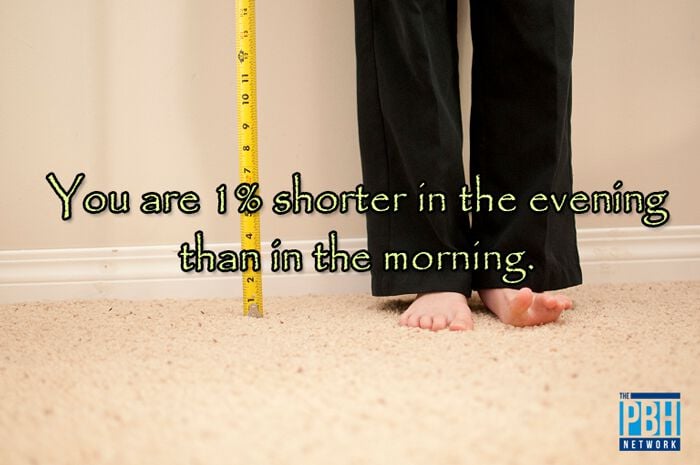
Shorter In The Morning

We are taller in the morning than in the evening because during normal activities during the day the cartilage in our knees and other areas slowly compress, but when you go to sleep and rest the cartilage goes back to normal. On average we are about 1cm taller in the morning than in the evening.

Interesting Words And Expressions – Cattywampus

What does cattywampus mean?

It is an adjective and an adverb and means askew or awry; positioned diagonally or cater-cornered.

How do you pronounce it?

kat′ə wämpəs

or

[kat-ee-wom-puh s]

Where does it come from?

Long ago English gamblers called the four-dotted side of a die cater (from the French quatre, “four”). The placement of those four dots suggested two diagonal lines, which is likely how cater came to mean (dialectally, anyway) “to place, move, or cut across diagonally.”

Catercorner (later kitty-corner) and caterwampus –and eventually cattywampus –followed.

How do you use it?

Measure carefully before cutting, or the entire building will be cattywampus.

City hall is cattywampus to the post office.


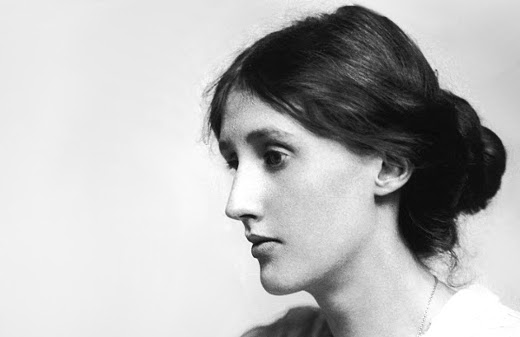
Theme of the Week: Virginia Woolf

Adeline Virginia Woolf was an English writer and one of the foremost modernists of the twentieth century.

During the interwar period, Woolf was a significant figure in London literary society and a central figure in the influential Bloomsbury Group of intellectuals. Her most famous works include the novels Orlando (1928), Between the Acts (1941), the short essay The Common Reader (1925) and the book-length essay A Room of One’s Own (1929), with its famous dictum, “A woman must have money and a room of her own if she is to write fiction.”

Woolf suffered from severe bouts of mental illness throughout her life, thought to have been the result of what is now termed bipolar disorder and committed suicide by drowning in 1941 at the age of 59.

Please enjoy the clip below of Nicole Kidman’s portrayal of Virginia Woolf from the film The Hours.

https://www.youtube.com/watch?v=tP-Ih1ENGn4