Tag Archives: English

Saba Abesadze – Phileas Fogg’s New Year

My favorite character is Phileas Fogg, from the book “Around the world in eighty days”. He traveled around the world. He saved the women to death in India. Her name was Aouda. Phileas Fogg and Aouda arrived in London and they got married. They were very happy. Now Phileas Fogg and Aouda have got two children, a boy and a girl. Their names are: John and Molly. John is eight years old and Molly is five years old. Phileas Fogg was a rich man. He had a big house and also a big Yard. Children like holidays especially the New Year and Christmas. Phileas Fogg, Aouda and children went to Covent Garden for shopping. They bought a Christmas tree, Christmas socks, toys for Christmas tree and presents. Phileas Fogg, Aouda and children went home and started preparing for the holiday. They decorated home, yard and Christmas tree with shining decorations, toys and to hung stockings for presents. Phileas Fogg, Aouda and children put traditional dishes, cake, champagne, Coca-Cola on the table. Its 12 hours they congratulated each other on the New Year. Children saw presents under the Christmas tree in the morning. They were happy.  My New Year was very good. My presents from Santa was Drone and Board game.


The Juggernaut Called English


2cf73142307890885c937975c8a3b5de

Today, English is the primary language for international communication. At this point in time, more people speak English than have ever spoken a single language in the history of the world. It’s the dominant language in business, banking, industry, commerce, transportation, tourism, sports, diplomacy, advertising, music and so on. We even measure the relative development of a nation in terms of its access to science through English.

Today, English doesn’t belong to any one culture, but instead carries the cultural heritage of all the people and communities who use English every day. But, despite all that, the demand for English is far above the supply. Though governments pour resources into giving its citizens better access to English, there is still more work to be done. There are probably not enough native speaking teachers to help satisfy this demand, and that’s where non-native speaking teachers must step in.

Source: Peter Medgyes, “’The juggernaut called English”, The Non-Native Teacher

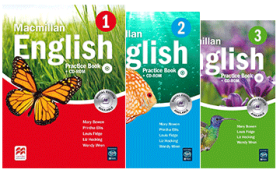
Macmillan English

MacmillanEnglish-hompage_1

Six-level course combining L1 and L2 language learning methodology

Macmillan English is the first International English coursebook to be informed by English lessons in native-speaker classrooms. It is designed for second-language learners of English but uses many of the approaches to reading, writing and speaking that underpin the teaching of English to first-language children.

Designed for students who have a high number of contact hours in English, this six-level course recognizes that proficiency in English is an essential part of modern life, and that early exposure to rich and genuine language allows young learners to move confidently towards native-speaker fluency in both oral and written English.

In the early levels, the course does not assume a first-language child’s experience of spoken English or culture. Language structures are introduced and practised to give a firm grounding in grammar, but from the start, the exposure to new language is more extensive than in traditional second-language courses.

As children move up through the course, they experience more first-language teaching methods. At the upper levels children cover the same aspects of English as do first-language learners, though the needs of second-language learners are always taken into account.

Each level of Macmillan English is delivered through eighteen units. Each unit has six lessons requiring a minimum of seven teaching sessions.

Components 

For parents

  • Resource page with wordlists and ideas for learning at home

MACMILLAN ENGLISH

Authors

Mary Bowen and Printha Ellis and Louis Fidge and Liz Hocking and Wendy Wren

Source : http://www.macmillanenglish.com/courses/macmillan-english/

Interesting Words And Expressions – Cattywampus

What does cattywampus mean?

It is an adjective and an adverb and means askew or awry; positioned diagonally or cater-cornered.

How do you pronounce it?

kat′ə wämpəs

or

[kat-ee-wom-puh s]

Where does it come from?

Long ago English gamblers called the four-dotted side of a die cater (from the French quatre, “four”). The placement of those four dots suggested two diagonal lines, which is likely how cater came to mean (dialectally, anyway) “to place, move, or cut across diagonally.”

Catercorner (later kitty-corner) and caterwampus –and eventually cattywampus –followed.

How do you use it?

Measure carefully before cutting, or the entire building will be cattywampus.

City hall is cattywampus to the post office.