Tag Archives: February 2015

Inspirational Quotes


Deprecated: preg_match_all(): Passing null to parameter #2 ($subject) of type string is deprecated in /home2/englita2/public_html/blogebg/wp-includes/media.php on line 1893

Deprecated: str_contains(): Passing null to parameter #1 ($haystack) of type string is deprecated in /home2/englita2/public_html/blogebg/wp-includes/shortcodes.php on line 150

Deprecated: preg_split(): Passing null to parameter #2 ($subject) of type string is deprecated in /home2/englita2/public_html/blogebg/wp-includes/formatting.php on line 3492

Three Steps to Positive Classroom Leadership

The American Psychological Association cites classroom management as the most sought after subject for teacher professional development. This article, first of a three-part series, explores the fundamental pillars to creating a positive classroom environment and avoiding common discipline problems.

Teachers commonly aim to have a “toolkit” of discipline strategies to use in their classrooms. While it can be helpful to maintain a rich repertoire of strategies, in order to be a truly effective classroom leader, it is pertinent for the teacher to develop an effective belief system.

The Importance of Beliefs

You may be wondering why beliefs matter, if you have solid skills and strategies. Positive leadership in the classroom is built upon authentic, caring relationships between teachers and students. In order to cultivate that relationship, it is essential that the teacher maintain a positive outlook about teaching and about her students.

Longstanding research proves that when teachers believe in the capability of their students and expect results, students actually perform better. Recent studies point out the crucial role of a “growth mindset.” Rather than seeing students’ intelligence as static or fixed, the growth mindset focuses on the potential for development and change. On the same note, reframing “bad” behaviors can help teachers avoid discipline issues and promote achievement.

The first step in cultivating productive beliefs about students is taking a personal inventory of your current beliefs. Do you see your students as capable of achieving? Interested in learning or unmotivated? Attentive or unable to concentrate? Willing to follow directions, or purposely defiant? When you think about your students’ generation, do you see the value in their interests, or do you view their hobbies as sub-par?

Reframing the way we see students can literally transform our teaching. Negative thinking traps a teacher into thinking that students cannot succeed or cannot behave. This literally squelches motivation to think creatively, and a teacher can easily find several factors to blame for student failure including their home life, peer influences or lack of resources. Have you ever accepted student misbehavior or failure and simply placed blame upon circumstances out of your control? Looking for the positive opens up possibilities to recognize the good in our students and help them move forward.

Creating a positive classroom climate requires you to hold yourself and your students accountable for progress. Blaming and complaining stop here; rather than wasting time venting and being negative, your new outlook will allow you to use your time to seek out the positive progress that you see, acknowledge it and teach accordingly.

In articles two and three, we will explore specific bodies of knowledge and practice that are essential to your practice. Before that, let’s look at how to reframe three common student misbehaviors in order to view them more productively.

[box type=”shadow” align=”aligncenter” ]Common Behavior Issues and How to Reframe Them

Tardiness and absences: Teachers may believe that tardiness to class is the outcome of lazy, unmotivated or apathetic students and parents. In reality, there may be a host of factors contributing to your students’ tardiness or absences.

Some students are dealing with unstable situations at home and it is important that we begin to understand what obstacles our students face in making it to school each day. Rather than reacting with disciplinary measures, try opening up an honest and sensitive dialogue with your students to see what’s really going on and how you may be able to help.

Calling out of turn: It can be irritating to try to maintain order in the classroom when students are calling out of turn. Rather than viewing these behaviors as defiant, you can think about your students’ behavior as an extension of that in their home and social lives. When a student feels comfortable, he may feel that he is participating in a conversation.

Rather than punishing this behavior, try to promote more in-class opportunities for student participation and engagement. Instead of seeing the outbursts as disrespectful, realize that your students may be in need of some attention or may be enthusiastic to participate and join the conversation.

Homework non-compliance: Over the years, teachers continue to air their frustrations about students not coming to class prepared. Whether they are missing pencils, textbooks or assignments, these students may impress a serious degree of apathy upon their teachers.

Rather than accepting this behavior as a sign of apathy, consider what children may have going on outside of school, including family obligations and even long hours working for older students.[/box]

What other behaviors do you see in your classroom, and how can you reframe them in order to view your students in a positive light? Thinking outside of the box is essential, and can really open up the possibility for positive relationships and a caring climate in your classroom.


Inspirational Quotes


Deprecated: preg_match_all(): Passing null to parameter #2 ($subject) of type string is deprecated in /home2/englita2/public_html/blogebg/wp-includes/media.php on line 1893

Deprecated: str_contains(): Passing null to parameter #1 ($haystack) of type string is deprecated in /home2/englita2/public_html/blogebg/wp-includes/shortcodes.php on line 150

Deprecated: preg_split(): Passing null to parameter #2 ($subject) of type string is deprecated in /home2/englita2/public_html/blogebg/wp-includes/formatting.php on line 3492

The Military Tests Amphibious Robot Guard Balls

student1

Though it looks more like a stability ball that you’d see at the gym, Guardbot is actually a round, land/water robot with many potential uses for broadcasting, spying, or security.

Though it began as a potential bot for missions to Mars, it is now being tested by the United States military to possibly assist in future patrolling duties.

The ball is about 60 centimeters (2 feet) in diameter, though it can be scaled up as large as 3 meters (9 feet) or as small as 10 centimeters (4 inches). The smaller version is perfect for searching underneath cars at security checkpoints. It is powered by a battery that lasts up to 8 hours.

The amphibious robot is capable of moving across a many landscapes, including sand, grass, mud, or even snow with a top speed of 9.7 kilometers per hour (6 mph). It is a bit slower in the water, maxing out at 6.4 kilometers per hour (4 mph). This might not be particularly fast, but it’s definitely enough to perform its necessary guard duties. The robot is also capable of climbing up hills with a 30 degree slope, making it able to guard a wide variety of locations.

https://www.youtube.com/watch?v=boDnZlkEn0w

საინტერესო სიტყვები და გამონათქვამები – Chortle

What does chortle mean?

It is a noun that means to laugh because you are amused or pleased by something.

How do you pronounce it?

[chawr-tl]

or

[chor·tle]

Where does it come from?

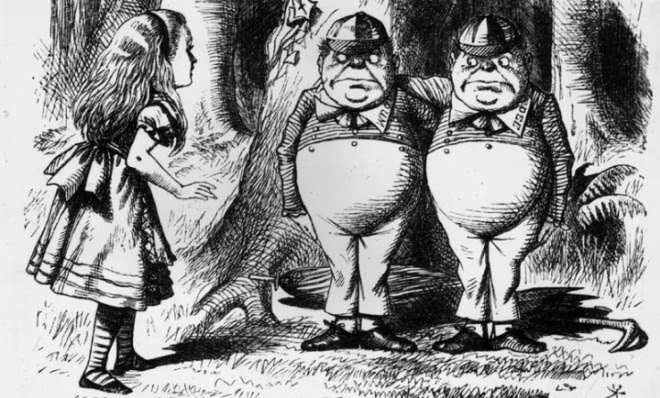
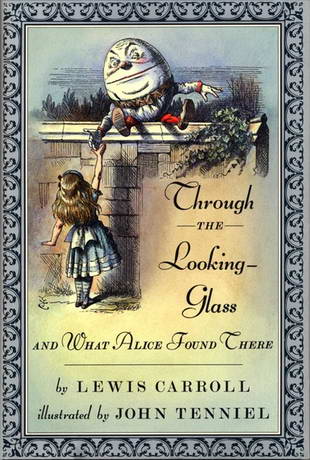
We can thank Lewis Carroll for this delightful word. It is a combination of two words: chuckle and snort. Lewis Carroll used the term chortle in his book, Through the Looking-Glass (1871).

How do you use it?

Whenever the girl told a joke, her uncle let out a huge chortle.

Book of the Week: Extremely Loud and Incredibly Close by Jonathan Safran Foer

“Jonathan Safran Foer confronts the traumas of our recent history. What he discovers is solace in that most human quality, imagination.”

Meet Oskar Schell, an inventor, Francophile, tambourine player, Shakespearean actor, jeweler, and pacifist. He is nine years old. And he is on an urgent, secret search through the five boroughs of New York. His mission is to find the lock that fits a mysterious key belonging to his father, who died in the World Trade Center on 9/11.

An inspired innocent, Oskar is alternately endearing, exasperating, and hilarious as he careens from Central Park to Coney Island to Harlem on his search. Along the way he is always dreaming up inventions to keep those he loves safe from harm. What about a birdseed shirt to let you fly away? What if you could actually hear everyone’s heartbeat? His goal is hopeful, but the past speaks a loud warning in stories of those who’ve lost loved ones before.

As Oskar roams New York, he encounters a motley assortment of humanity who are all survivors in their own way. He befriends a 103-year-old war reporter, a tour guide who never leaves the Empire State Building, and lovers enraptured or scorned. Ultimately, Oskar ends his journey where it began, at his father’s grave. But now he is accompanied by the silent stranger who has been renting the spare room of his grandmother’s apartment. They are there to dig up his father’s empty coffin.

[button color=”blue” size=”small” link=”http://englishbookgeorgia.com/catalogue/shop/bestsellers/extremely-loud-and-incredibly-close-film-tie-in/” target=”blank” ]Buy the Book[/button]

Enjoy the movie made in 2011 based on the book:

https://www.youtube.com/watch?v=Z_quK9SEGYE

5 Interesting Things You May Not Have Known About Jonathan Safran Foer

  • Foer started writing his first novel, the critically acclaimed Everything is Illuminated, as part of his senior thesis at Princeton University, New Jersey.
  • The New Yorker magazine included Foer on its list of “20 Under 40,” young writers who were world-changers.
  • Foer became a vegetarian activist and wrote a satiric piece about cooking and eating dogs.

  • It’s impossible not to notice the similarities between the characters Oskar Schell (Extremely Loud and Incredibly Close) and Oskar Matzerath, the protagonist of Gunter Grass’s The Tin Drum. They’re both intelligent kids of German descent coping with trauma (Oskar M. never leaves home without his drum) who conjure up fantasies to deal with the horrible events they’ve witnessed. Foer was hugely influenced by this novel.
  • Jonathan Safran Foer gave the 2013 commencement address at Middlebury College in Vermont. NPR included it on its list of “The Best Commencement Speeches, Ever.”  Below, is the video of that speech:

Did you know…

Today is Alessandro Volta’s 270th birthday.

Alessandro Volta is the inventor of one of the most important inventions to date. Google celebrates the battery inventor’s birthday today.

If you click on Google’s doodle, it shows battery charging and Google lighting up at the same time.

He was born in Como, Italy, and grew to become a professor of physics at the Royal School. His interest in electricity paved the way to the invention of electrophorus, a device used to generate static electricity.

He also was the first person to isolate methane which further led to the discovery that methane mixed with air could be exploded with an electric spark.


In honor of Volta’s contribution to electrical science, the unit of electrical potential came to be known as the Volt also known as Voltage.

Alessandro Volta was also a master in many languages. He was proficient in Latin, French, German, and English helped him while travelling across Europe.

10 Behaviors You Never See in Successful People

When you spend decades working with executives and business leaders, you really can’t help but observe what works and doesn’t work over the long haul. One thing that’s been noticed it that it’s not intrinsic characteristics or personal habits that determine whether you’re successful or not. It’s your behavior.

What is meant by “behavior?” It’s how you react under long-term stress. Whether you meet your commitments or not. How you interact with others. Your attitude toward customers. How hard you’re willing to work to do the job right. Whether you’re focused and disciplined or scattered and distracted. That sort of thing.

Now, there have been some pretty dysfunctional founders and CEOs who did well for themselves for a time. But sooner or later, usually when the pressure is on and things aren’t going so well, they exhibit self-destructive behavior that bites them where it hurts most. Sadly, they often take their businesses down with them.

If you want to make it big over the long-term, you might want to take a good, hard look in the mirror and see if any of these career-limiting behaviors describe you.

[box type=”shadow” align=”aligncenter” ]

Naivety

Granted, we all start out sort of wide-eyed and gullible, but the sooner you convert that to savvy and skeptical, the better your chances of coming out on top. The reason is simple: suckers and fools don’t win. Learn to question everything you read and hear and always consider the source.

Panic

High-pressure situations are common in the business world. Things almost never go according to plan and oftentimes they go terribly wrong. It comes with the territory. If you can’t override your adrenaline response and remain calm in a crisis, you’re sort of screwed.

Fanaticism

Passion is a big success driver, but when you cross that line and become over-the-top fanatical, that works against you. I’ve seen it time and again. It leads to a skewed perception of reality, flawed reasoning, and bad decision-making.

Laziness

Those who are driven to achieve great things also know one fundamental truth: It takes hard work over the long haul. That’s why they’re always so focused and disciplined. Most people are slackers. That’s why most people don’t achieve great things. Simple as that.

Quick-fix mentality

Steve Jobs said, “Half of what separates the successful entrepreneurs from the non-successful ones is pure perseverance” and if you’re not passionate about what you do, you won’t stick with it. Too many people want instant gratification these days. That’s not going to cut it.

Acting out

Whatever feelings you have trouble dealing with – jealousy, shame, inferiority, entitlement – transferring them to people you work with and acting out in anger won’t just make you and everyone around you miserable, it’ll kill your career, too.

Selfishness

If you act like the world revolves around you, you’d better have the talent to back it up. Even so, being overly self-centered will diminish your effectiveness. Business isn’t about you; it’s about business. It’s about your customers’ experience with your products. Remember who serves whom in the relationship.

Living in the past or future

Granted, we can learn from the past, but dwelling on it is self-destructive. Likewise, you can plan for and dream about the future, but if your actions aren’t focused on the present, you’ll never achieve your plans or your dreams.

Lighthearted indifference

You hear phrases like “whatever works,” “it’s all good,” and “no worries” a lot lately but you’ll rarely hear them from highly accomplished people. They may be a lot of things but apathetic is not one of them.

Oversensitivity

If you’re so thin-skinned that any criticism makes you crazy and every little thing offends you, you’re going to have a rough go of it in the real business world. There’s a good reason why business leaders usually have a good sense of humor and humility. It’s sort of a requirement. Don’t take yourself so seriously.[/box]

საინტერესო სიტყვები და გამონათქვამები – You can’t make an omelet without breaking a few eggs

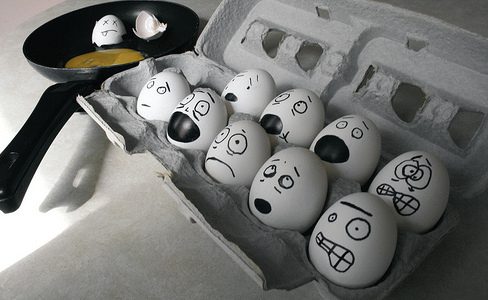
“You can’t make an omelet without breaking a few eggs.”

What does it mean?

When you try to do something great, you’ll probably make a few people annoyed or angry. Don’t worry about those people; just focus on the good results.

Where does it come from?

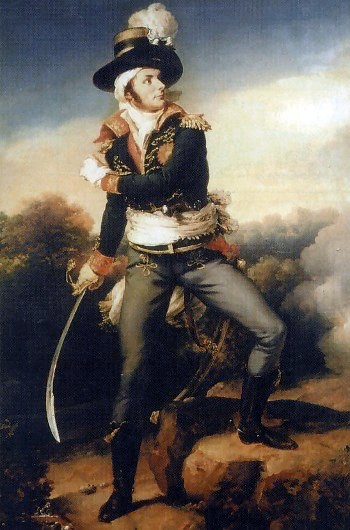
This saying was said by François de Charette. He was one of the leaders of a Royalist counter-revolt in the Vendée region of France during the French Revolution. The War in the Vendée, as it’s now known, lasted several years and resulted in the deaths of hundreds of thousands. In March of 1796, Charette was captured by republican forces and put on trial, during which, according to Walker’s account:

It was remarked to him that he had caused the death of a great many persons. Yes, he replied, omelets are not made without breaking eggs.”