Tag Archives: February 2015

Which Book Would You Read?

Around the World in Eighty Days

Jules Verne, Pepita Subira, Maria Jose Lobo

ISBN: 9780230026742

‘To go around the world…in such a short time and with the means of transport currently available, was not only impossible, it was madness’

One ill-fated evening at the Reform Club, Phileas Fogg rashly bets his companions £20,000 that he can travel around the entire globe in just eighty days – and he is determined not to lose. Breaking the well-established routine of his daily life, the reserved Englishman immediately sets off for Dover, accompanied by his hot-blooded French manservant, Passepartout. Travelling by train, steamship, sailing boat, sledge and even elephant, they must overcome storms, kidnappings, natural disasters, Sioux attacks and the dogged Inspector Fix of Scotland Yard – who believes that Fogg has robbed the Bank of England – to win the extraordinary wager. Around the World in Eighty Days gripped audiences on its publication and remains hugely popular, combining exploration, adventure and a thrilling race against time.


Price: 5 GEL


[button color=”blue” size=”small” link=”http://englishbookgeorgia.com/catalogue/shop/books-fiction-nonfiction-publishers/around-the-world-in-eighty-days/” target=”blank” ]Buy the Book[/button]

The Mark of Zorro

Johnston McCulley, Anne Collins

ISBN: 9780230029217

Old California, in a bygone era of sprawling haciendas and haughty caballeros, suffers beneath the whip-lash of oppression. Missions are pillaged, native peasants are abused, and innocent men and women are persecuted by the corrupt governor and his army.

But a champion of freedom rides the highways. His identity hidden behind a mask, the laughing outlaw Zorro defies the tyrant’s might. A deadly marksman and a demon swordsman, his flashing blade leaves behind . . .

First published in 1919, The Mark of Zorro has inspired countless films and television adventures. Now read how the legend began . . .


Price: 6,5 GEL


[iphorm_popup id=”1″ name=”მოითხოვე სასურველი წიგნი”]Order the Book[/iphorm_popup]


Theme of the Week: Jonathan Safran Foer

Safran Foer is an American writer. He is best known for his novel Extremely Loud and Incredibly Close (2005) which was adapted into a film in 2011. He currently teaches creative writing at New York University.

Enjoy the interview below where Safran Foer talks about the power of literature in general and poetry in particular.

Inspirational Quotes


Deprecated: preg_match_all(): Passing null to parameter #2 ($subject) of type string is deprecated in /home2/englita2/public_html/blogebg/wp-includes/media.php on line 1893

Deprecated: str_contains(): Passing null to parameter #1 ($haystack) of type string is deprecated in /home2/englita2/public_html/blogebg/wp-includes/shortcodes.php on line 150

Deprecated: preg_split(): Passing null to parameter #2 ($subject) of type string is deprecated in /home2/englita2/public_html/blogebg/wp-includes/formatting.php on line 3492

Put Working Memory to Work in Learning

Working memory involves the conscious processing and managing of information required to carry out complex cognitive tasks such as learning, reasoning, and comprehension. It has been described as the brain’s conductor. Memory has long been viewed as a key aspect of learning, but as the emphasis in educational standards has shifted away from rote memorization and toward the knowledge and skills needed to process new information, working memory is increasingly taking center stage.

There is an explosion of research today with the aim of understanding how this important function works and how to enhance it. However, the term working memory was first used more than 50 years ago to describe the role of recall in planning and carrying out behavior. In the 1970s and ’80s, British psychologist Alan Baddeley and colleagues developed a model of working memory that brings together how the brain accepts sensory input, processes both visual-spatial and verbal data, and accesses long-term memory; and how all of that input is processed by a function they referred to as central executive.

Working Memory in the Brain

Central executive monitors and coordinates input and decides which information we will focus our attention on. As with other cognitive processes that power executive function, the home base of working memory is in the prefrontal cortex. Researchers have detected increased activation in this area at the front of the brain when people are involved in thinking and problem solving that engages working memory.

Other areas of the brain that support working memory are the hippocampus, which is involved in long-term memory storage and spatial orientation, and Broca’s area, located on the left side of the frontal lobes and involved in language processing and verbal fluency.

Working memory is involved in a variety of learning and daily living tasks, such as reading, problem solving, and navigation. As such, it is sometimes referred to as the “brain’s workhorse.” In fact, brin-training authors, Tracy and Ross Alloway, contend that working memory is a better predictor than IQ of how well students will perform academically: “IQ is what you know. Working memory is what you can do with what you know”.

Thus, working memory is a key cognitive skill for students and their teachers. As an educator, you know well how you must to be able to maintain the mental skillfulness and agility to process many variables in everyday teaching practice, such as students’ prior knowledge, the primary purpose and goal of a lesson, sequence of learning activities, time constraints, interruptions throughout the school day, and on and on.

Students activate their working memory as they figure out the meaning of new words they encounter while reading, and as they decide which mathematical functions they will need to apply to a problem that their teacher has just jotted on the whiteboard.

[box type=”shadow” align=”aligncenter” ]

Workouts for Working Memory

The good news for teachers and students is that it is possible to improve our working memory. These strategies can help activate and, over time, enhance the central executive function of working memory:

  • Repeat after me.

Asking students to repeat what you have said or to paraphrase it in their own words is a simple way to both assess and increase their working memory. The acts of listening and speaking what they have heard focus their attention on the lesson content and activate several components of the working memory model.

  • Make a game of it.

Children and youth love to play games, and card games like Concentration, Crazy Eights, and Uno can help to build working memory. Better yet, design learning activities based on memory games to help reinforce key content.

  • Emphasize relevance.

Lead a class discussion on the importance of identifying and focusing on relevant data in learning. Life is full of irrelevant information and distractions. When researching a topic online, for example, it’s easy to get sidetracked by entries that are interesting but not relevant to the task at hand. A key aspect of improving working memory is developing your ability to attend to what’s important now.

  • Hone short-term recall through practice.

Provide plenty of learning activities that involve working with bits of information. Word problems in math require students to identify, remember, and process data.

  • Visualize it.

Learning to picture the components of a math reading problem (as just one example) in their minds is another strategy that engages and enhances multiple components of working memory.

  • Teach it to learn it.

The act of teaching also engages working memory. Through activities that involve peer teaching or learning in pairs and small groups, students can enhance learning by applying their working memory to the task of explaining and teaching new content to others.

Finally, as you teach students about working memory and how they can improve it, pair these lessons with explicit instruction on another cognitive skill — attention. Attention helps us focus on information so that we can work with it in working memory.[/box]

Inspirational Quotes


Deprecated: preg_match_all(): Passing null to parameter #2 ($subject) of type string is deprecated in /home2/englita2/public_html/blogebg/wp-includes/media.php on line 1893

Deprecated: str_contains(): Passing null to parameter #1 ($haystack) of type string is deprecated in /home2/englita2/public_html/blogebg/wp-includes/shortcodes.php on line 150

Deprecated: preg_split(): Passing null to parameter #2 ($subject) of type string is deprecated in /home2/englita2/public_html/blogebg/wp-includes/formatting.php on line 3492

Incredible Time-Lapse Of The Northern Lights

There are many incredible and enthralling things that happen right above our heads, every day. Unfortunately, due to weather conditions and light pollution, we’re not always able to see them. Fortunately, National Geographic has been kind enough to put together some breath taking footage so we can see it for ourselves.

The Northern Lights (or ‘Aurora Borealis’ in the north and ‘Aurora Australis’ in the south) occur a result of collisions between gaseous particles in the Earth’s atmosphere, and charged particles released from the Sun’s atmosphere.

Check this time lapse video they’ve created so you can see the full scope of the incredible scenes above the North Pole.

საინტერესო სიტყვები და გამონათქვამები – Pizzazz

What does pizzazz mean?

It is an adjective that means having a lot of energy, vigor, flair, or style.

How do you pronounce it?

/pɪˈzaz/

or

[piz·zazz]

Where does it come from?

It is said to have been invented by Diana Vreeland, a fashion editor of Harper’s Bazaar in the 1930s.

How do you use it?

I could tell that my neighbor had a lot of pizzazz when she would wear big sun hats and black cat-eye sunglasses.

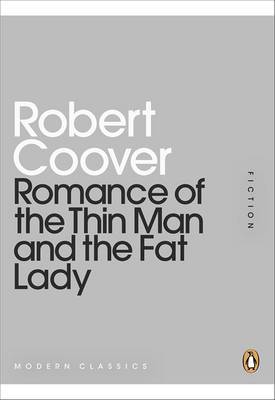
Book of the Week: Romance of the Thin Man and the Fat Lady by Robert Coover

Romance of the Thin Man and the Fat Lady

The male narrator opens by acknowledging “many stories have been told, songs sung, about the Thin Man and the Fat Lady,” suggesting in addition that they are a metaphor for male and female relations. Despite the conventional nature of the duo, they stand for something larger. “We are all Thin Men. You are all Fat Ladies.”

In this telling, the Thin Man and the Fat Lady are circus freaks, each driven to try to change his or her condition to please the other. The Thin Man wants to put on muscle while the Fat Lady wants to lose weight. Yet their boss, the Ringmaster, demands they maintain their extremes. When the Thin Man starts gaining weight and the Fat Lady starts losing it, the Ringmaster threatens to take action against them.

This book contains some of Coover’s best short stories:

  • Romance of the Thin Man and the Fat Lady
  • The Babysitter
  • A Pedestrian Accident

[button color=”blue” size=”small” link=”http://englishbookgeorgia.com/catalogue/shop/books-fiction-nonfiction-publishers/romance-of-the-thin-man-and-the-fat-lady/” target=”blank” ]Buy the Book[/button]

Success Will Never Come to Entrepreneurs Who Do These 10 Things

https://www.youtube.com/watch?v=tnopS4KuHoY

Whether we are talking about a football game, an election or an entrepreneurial journey, one thing is certain — there are going to be winners and there are going to be losers.

Want to stack the odds of being a successful entrepreneur in your favor? You can start by taking note of the following 10 things that you should never do.

1. Be jealous or envious

Seeing other people around you succeed should motivate you, even if they are your competitors. You should understand that every single person has the ability to become successful, and wasting time focusing on other people’s success or achievements will just sidetrack your own progress.

2. Look back

You are going to face hard times, difficult decisions and possibly even failure at some point. Don’t let small bumps in the road stop your forward progress. Find ways to maneuver around obstacles and continue to push forward, never looking back.

3. Make excuses

If you make a bad decision and screw up, own it. If something doesn’t work out as planned, don’t look for excuses. Search for the cause of the problem and chalk it up to a valuable business lesson. If you identify and own the problem you will not make the same mistake again. If you are constantly making excuses for your mistakes, you will continue to make them because you haven’t properly identified the root of the problem.

4. Stop learning

Your age, years of experience or level of success should never prevent you from learning. There isn’t a single person on this planet who knows everything. We can all continue to learn and be inspired from other entrepreneurs, whether they are billionaire household names or those just starting his or her entrepreneurial journey.

5. Associate with negative individuals

People who constantly make excuses, complain and have a negative outlook should be avoided like the plague. We all know people like this. No matter what you say or what the situation is, they always chime in with negativity. People like this are a cancer and their negative aura can rub off on you. Surround yourself with like-minded individuals that are as focused and determined as you are.

6. Wake up without a plan

Time management is a crucial part of being an entrepreneur. There are only so many hours in a day, so to be efficient you need to know what your goals are and what tasks you need to get done prior to starting your day. If you are scrambling to create a plan of attack every day you are going to be in trouble. End each day by mapping out the following day’s to-do list.

7. Be scared to make changes and adapt

You need to be willing and able to adjust your plan and overall strategy, because there is a very good chance that you will need to adapt to maintain success in the future. Imagine if Apple never adapted and just stuck to making computers? After releasing the iPod it started manufacturing smartphones, tablets and now are releasing its first wearable technology, the Apple Watch. Once just a computer company, it is now a consumer-electronics powerhouse.

8. Let your bark be bigger than your bite

Successful entrepreneurs don’t sit back and talk about what they are going to do. They plan, follow through and conquer. Nothing is going to get accomplished just by talking about it, and nobody is going to be impressed with words alone.

9. Focus solely on dollar signs and decimal points

Instead of chasing the money, focus on creating products and services that make a difference and provide value. If you do this, the money will come. I would be lying if I said the goal of my company wasn’t to make money, but focusing on providing a great service paves the path for the money to follow.

10. Let failure stop you

Most statistics state that eight out of every 10 new businesses fail. Successful entrepreneurs go into everything knowing that there is a chance of failure. If in fact they fail it is viewed as part of their growth and they keep plugging along.

James Dyson is a perfect example, as his first 5,126 prototypes were failures, but the 5,127th one worked and went on to become the top-selling vacuum in the U.S.A. He is now worth $4.5 billion because he never once let failure stop him.

საინტერესო სიტყვები და გამონათქვამები – The early bird catches the worm

“The early bird catches the worm.”

What does it mean?

Whoever arrives first has the best chance of success; some opportunities are only available to the first competitors.

Where does it come from?

This is first recorded in John Ray’s A Collection of English Proverbs 1670, 1678:

The early bird catcheth the worm.”

Clearly, the title of the work indicates that this was considered proverbial even in the 17th century.