Tag Archives: English Book in Georgia

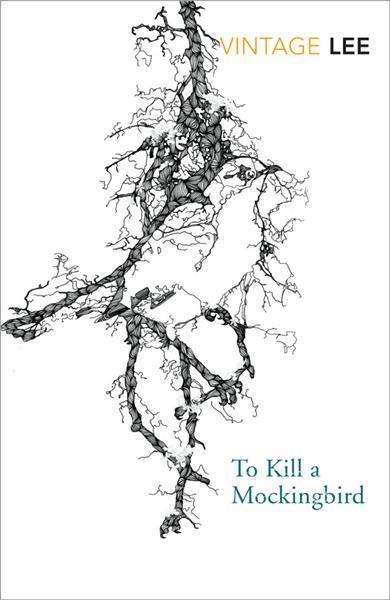
Harper Lee’s ‘To Kill a Mockingbird’ – A Synopsis

To Kill a Mockingbird

The novel To Kill Mockingbird mainly revolves around a small family of three — Atticus Finch, an attorney, and his two children, Scout and Jem. As the novel proceeds certain characters are linked with the three main characters to form a dramatic story of events, attitudes, prejudices and values.

The novel is set is the quiet town of Maycomb; but the serenity is only superficial. The town is comprised of three communities: the white folk, the black community, and the ‘white trash’. Outwardly there is peace among the three, but underneath prevails a combination of hostility, racial prejudices, and friendlessness.

Jem and Scout go to school together. On their way to school, they pass the Radley house; it is a terrifying place to them, for it houses Boo Radley, who has been labeled a lunatic. At the same time, their curiosity pushes them to try out ways to make Boo come out of the house. Their overtures are, however, suppressed by Atticus who does not want them to torment Boo.

The main plot of the novel revolves around the trial in which Atticus defends Tom Robinson, a black man, who has been accused of having molested a white girl, Mayella Ewell. She is part of the ‘white-trash’ community. The children follow the case proceedings avidly and are inconsolable when their father loses the case.

The case is lost simply because it was still impossible (despite statutory laws protecting them) for a black man to attain victory over a white in the South. This amply reveals the deeply ingrained racial prejudices still prevalent among the white society which cannot give an equal status to a black.

The relation between the children and Boo Radley resurfaces at the end, when it is Boo who saves them from imminent death at the hands of the vicious Bob Ewell. It is ultimately revealed that Boo is not a lunatic, but a simple-minded person with failing health and a childish attachment for Scout Finch and Tom Robinson.

The story of the mockingbird recited by Atticus is linked to the theme of the novel. It is considered a sin to kill a mockingbird, since it is a harmless bird which only sings to please others. Boo Radley and Tom Robinson are also harmless people. By letting Tom die, the sin of killing a mockingbird has been committed. But by not revealing the facts of Boo’s heroism in rescuing the children, the sin is avoided, and Boo is left to his seclusion. Tom’s death is a defeat of justice and an insult to humanity, and the readers can judge for themselves how much of a sin it is.

The maturing of Scout and Jem is portrayed as well as the exemplary character of Atticus, who is without any racial prejudices or biased views. He is a highly ethical character, who chooses to fight against the ‘old traditions’ of his own community.

[button color=”blue” size=”small” link=”http://englishbookgeorgia.com/catalogue/shop/penguin/to-kill-a-mockingbird/” target=”blank” ]Buy the Book[/button]

Interesting Words And Expressions – Abibliophobia

What exactly is Abibliophobia? It is the fear of running out of reading material.

empty bookshelf

Origin: Phobia is used both independently and as a suffix to describe an irrational fear of something, and has had increasingly productive use as a suffix in recent years – it seems possible to create an English term for being frightened of almost anything. For instance, many of us have heard of claustrophobia (fear of confined spaces) and agoraphobia(fear of open spaces) but what about e.g. nostophobia (a fear of returning home), or even coulrophobia (fear of clowns)? We also have bibliophobia (an irrational fear of books). Abibliophobia is most likely a made-up form of the latter, using morpheme ‘a’ from the Greek meaning not.

a- “not” + bibli-(on) “book” + o + phob(os) “fear” + ia, a nominal suffix.


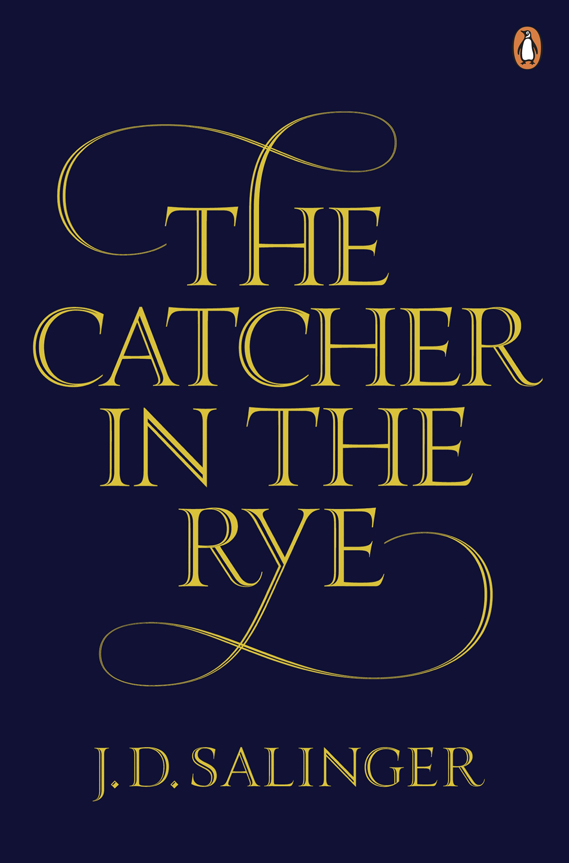
Book of the Week: The Catcher in the Rye by J.D. Salinger

The Catcher in the Rye

It is the story of sixteen-year-old Holden Caulfield, who wants to desperately find himself, but who goes underground for forty-eight hours, when he is overwhelmed by perplexing circumstances of his life.

Read the first page-and you will not be able to stop until you have completed this wild and magic adventure with him.

J.D. Salinger was born in New York City in 1919, attending public schools, military academy and three colleges. From 1942 to 1946 he served in the Army. This was his first novel.

[button color=”blue” size=”small” link=”http://englishbookgeorgia.com/catalogue/shop/modernclassics/the-catcher-in-the-rye/” target=”blank” ]Buy the Book[/button]
6 Tips for Young Professionals Flustered by Small Talk

success

1.    Don’t Go It Alone

No question, it can be intimidating to go solo in a professional setting. You’re putting yourself out there with potentially serious ramifications for your career. Instead, it can be helpful to have a friend to watch your back and advocate on your behalf.

At networking events or professional conferences, the ice between making new contacts can be too thick to break on your own. Working as a team doubles your chances of being seen and heard.

2.    Keep Your Eyes Open

When in a group conversation, a lot of seasoned professionals will maintain a conversation but as they’re talking, they’re also scanning the room for people who might want to join the group, but aren’t sure how. There’s no reason why you can’t do the same when you see someone you know struggling to join the conversation.

3.    Protect Your Credibility

It’s important to be an advocate for others, especially when they’ll return the favor for you, but be cautious about putting your credibility on the line.  As a young professional, you don’t have the stock to vouch for just anybody if they truly aren’t a good fit.

Whoever you bring into the group conversation is a reflection on you and your credibility. If you bring in someone who fits in perfectly, you’ve just established yourself even more. But bring in someone who appears incompetent and the group is going to think you’re no better.

4.    Start Positive

When you have an “in” with a group, start off by making a good impression. Chime in to the conversation when somebody says something you agree with so you can engage on a positive note.

You can play contrarian later, after you’ve developed some rapport, but a simple affirmation helps set the right tone for the conversation and ensures the group you’re not out to second guess them on every topic.

5.    Watch the Group’s Dynamics

In most circumstances, it’ll be easy to tell whether the group wants you in or wants you to move along. If you stumble upon a group that is close-knit, they might not want to include you right away. Don’t force yourself on them if they’re not welcoming.

If the members don’t step back to include you in the circle after several minutes of standing nearby and a few attempts to join the conversation, look elsewhere.

6.    Start Now

Networking and personal interaction in a professional setting doesn’t come easily to most people. But the data shows it’s still expected of you. Failing to practice can hurt your chances at landing a job or moving up the corporate ladder.

It’s best to start early. People expect young professionals to come off a little awkward and unpolished, at first, because it’s a new experience. Most people will be empathetic to nerves when you first start out. However, if you’re 45-55 years old and still learning the ropes, people might question your interpersonal skills.

Take advantage of the leniency while it’s granted, or your friend might soon outrank you.

[button color=”blue” size=”small” link=”http://www.entrepreneur.com/article/236190” target=”blank” ]Source[/button]

Interesting Words And Expressions – Whistleblower

what is a whistleblower


The term ‘whistleblower’ is used to describe a person who tries to raise the alarm about a problem and publicizes it inside and/or outside of his/her organization.

Origin: ‘Whistle blower’ was used literally well before it gained its current figurative meaning. Lots of people blew whistles; hunters, sailors, police officers and sports referees.

In the 19th century we had ‘whistle blowers’, in the 20th we had ‘whistle-blowers’ and now we have ‘whistleblowers’. This changing of an expression into a word, with the intervening hyphenated phase, is one of the most common ways we form new words.

Which Book Would You Read?

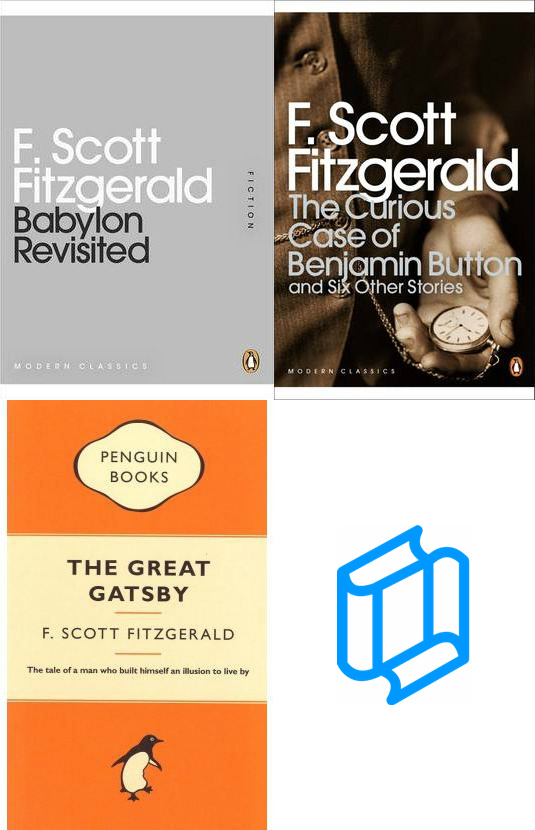
Babylon Revisited

Author: F. Scott Fitzgerald

ISBN: 9780141195964

F. Scott Fitzgerald’s stories defined the 1920s ‘Jazz Age’ generation, with their glittering dreams and tarnished hopes. This book features three tales of a fragile recovery, a cut-glass bowl and a life lost. It portrays the idealism of youth and the ravages of success.

The stories within are:

Babylon Revisited
The Cut-Glass Bowl
The Lost Decade

14,9 GEL

[button color=”gray” size=”small” link=”http://englishbookgeorgia.com/catalogue/shop/modernclassics/babylon-revisited/” ]Buy Babylon Revisited[/button]


The Great Gatsby

Author: F. Scott Fitzgerald

ISBN: 9780141389936

Gatsby’s mansion on Long Island blazes with light, and the beautiful, the wealthy, and the famous drive out from New York to drink Gatsby’s champagne and to party all night long. But Jay Gatsby, the owner of all this wealth, wants only one thing – to find again the woman of his dreams, the woman he has held in his heart and his memory for five long years.

The Great Gatsby, F. Scott Fitzgerald’s masterpiece, is one of the great American novels of the twentieth century. It captures perfectly the Jazz Age of the 1920s, and goes deep into the hollow heart of the American Dream.

18,5 GEL

[button color=”orange” size=”small” link=”http://englishbookgeorgia.com/catalogue/shop/penguin-books/the-great-gatsby-2/” target=”blank” ]Buy The Great Gatsby[/button]


The Curious Case of Benjamin Button and Six Other Stories

Author: F. Scott Fitzgerald

ISBN: 9780141190198

Full grown with a long, smoke-colored beard, requiring the services of a cane and fonder of cigars than warm milk, Benjamin Button is a very curious baby indeed. And, as Benjamin becomes increasingly youthful with the passing years, his family wonders why he persists in the embarrassing folly of living in reverse. In this imaginative fable of ageing and the other stories collected here – including The Cut-Glass Bowl in which an ill-meant gift haunts a family’s misfortunes, The Four Fists where a man’s life is shaped by a series of punches to his face, and the revelry, mobs and anguish of May Day – F. Scott Fitzgerald displays his unmatched gift as a writer of short stories.


Also included:

Head and Shoulders
“O Russet Witch!”
Crazy Sunday

24,9 GEL

[button color=”green” size=”small” link=”http://englishbookgeorgia.com/catalogue/shop/bestsellers/the-curious-case-of-benjamin-button-and-six-other-stories/” target=”blank” ]Buy The Curious Case…[/button]


5 Ways to Help Your Students Become Better Questioners

berger-students-better-questioners

Asking questions are important tools in our lives. It helps us learn, adapt and explore. Questions are the most valuable aspects of our lives in a world that’s ever-changing. But many of us don’t seem to utilize or value asking questions as much as we should. We live in a world where the answers are the greatest reward but the question-the key to getting us to the answer-is almost intolerable.

Working in a system that only wants the answer and not the query is difficult especially when our culture might see questions as weakness. So teachers, you must strive to create a productive environment towards queries. Here are some suggestions from teachers, schools and organizations that work and promote a question based environment.

[tabs type=”vertical”][tabs_head][tab_title]Make It Safe[/tab_title][tab_title]Make It “Cool”[/tab_title][tab_title]Make It Fun[/tab_title][tab_title]Make It Rewarding[/tab_title][tab_title]Make It Stick[/tab_title][/tabs_head][tab]Asking a question can be a scary step into the void. It’s also an admission to the world (and more terrifyingly, to classmates) that one doesn’t know the answer. So teachers must somehow “flip the script” by creating an environment where questioning becomes a strength; where it is welcomed and desired. The Right Question Institute, a nonprofit group that teaches inquiry skills in low-income schools, encourages teachers to run group exercises dedicated entirely to formulating questions (no answers allowed!) — with clear rules and guidelines to ensure that students’ questions aren’t judged or edited, and that all questions are written down and respected. There are many variations on this type of exercise. The second-grade teacher Julie Grimm uses a “10 by 10” exercise, in which kids are encouraged to come up with 10 great questions about a topic during a 10-minute span. But the bottom line is, designate some kind of safe haven in the classroom where all students can freely exercise the “questioning muscle.”[/tab][tab]This is a tough one. Among many kids, it’s cool to already know — or to not care. But what if we could help students understand that the people who ask questions happen to be some of the coolest people on the planet? As I discovered in the research for my book on inquiry, questioners thought of many of those whiz-bang gadgets we now love. They’re the ones breaking new ground in music, movies, the arts. They’re the explorers, the mavericks, the rebels, making the world a more interesting place — and having a heck of a time themselves. How cool is that? [/tab][tab]Part of the appeal of “questions-only” exercises is that there’s an element of play involved, as in: Can you turn that answer/statement into a question? Can you open your closed questions, and close your open ones? There are countless ways to inject a “game” element into questioning, but here’s an example borrowed from the business world: Some companies use a practice called “the 5 whys,” which involves formulating a series of “why” questions to try to get to the root of a problem. Kids were practically born asking “why” questions, so why not allow them to use that innate talent within a structured challenge? Or, show them how to use the “Why/What if/How” sequence of questioning as a fun way to tackle just about any problem. Whatever the approach, let kids tap into their imaginations and innate question-asking skills in ways that make inquiry an engaging part of a larger challenge.[/tab][tab]Obviously, we must praise and celebrate the questions that are asked — and not only the on-target, penetrating ones, but also the more expansive, sometimes-offbeat ones (I found that seemingly “crazy questions” sometimes result in the biggest breakthroughs). Help create a path for students to get from a question to a meaningful result. A great question can be the basis of an ongoing project, a report, an original creation of some kind. The point is to show that if one is willing to spend time on a question — to not just Google it but grapple with it, share it with others, and build on it — that question can ultimately lead to something rewarding and worthwhile.[/tab][tab]If the long-term goal is to create lifelong questioners, then the challenge is to make questioning a habit — a part of the way one thinks. RQI’s Dan Rothstein says it’s important to include a metacognitive stage in question-training exercises wherein kids can reflect on how they’ve used questioning and articulate what they’ve learned about it, so they can “pave a new neural pathway” for lifelong inquiry. As for the behavioral habits associated with good questioning, here are a few: Questioners train themselves to observe everyday surroundings with “vuja de” eyes that see the familiar in fresh ways; they’re always on the lookout for assumptions (including their own) that should be questioned; and they’re willing to ask questions that might be considered “naïve” by others.[/tab][/tabs]

[button color=”blue” size=”small” link=”http://www.edutopia.org/blog/help-students-become-better-questioners-warren-berger” target=”blank” ]Source[/button]

Vacancy Announcment at EBG: Marketing Executive

We’re looking for the best talent to lead our marketing strategies. With a remit to drive EBG’s influence, profile and reputation, the post-holder will work closely with the Internet Marketing Executive, in house designer and others to devise innovative, consumer facing campaigns which drive awareness of EBG and successfully market our products and services. They will lead and inspire a team that delivers first class integrated marketing activity. A key part of the role will be to act as the brand guardian for EBG and lead the development and roll-out of the brand within and beyond the organization.

Personal qualities – A must have:

  • A strong desire to work for English Book in Georgia;
  • Minimum 2 years in Marketing area;
  • Minimum 1 year experience in Educational Industry;
  • Advance Level Certificate in English Language;
  • Good knowledge of using Microsoft programs;
  • Positive and friendly outlook;
  • Able to work under pressure, prioritising to meet deadlines, juggling busy workload and multi-tasking;
  • Strong relationship building skills;
  • Self-motivated, managing own time and working alone where necessary as well as part of a team;
  • Forward thinking and creative;
  • Demonstrate flexibility;
  • Maintain confidentiality;
  • Provide good standard of personal presentation;
  • Commitment and enthusiasm for EBG’s aims;

Circumstances: Ability to work occasional weekends/evenings/early mornings.

Please send your CV to: englishbookteam@englishbook.ge
Deadline: August 28, 2014.

Inspirational Quotes


Deprecated: preg_match_all(): Passing null to parameter #2 ($subject) of type string is deprecated in /home2/englita2/public_html/blogebg/wp-includes/media.php on line 1893

Deprecated: str_contains(): Passing null to parameter #1 ($haystack) of type string is deprecated in /home2/englita2/public_html/blogebg/wp-includes/shortcodes.php on line 150

Deprecated: preg_split(): Passing null to parameter #2 ($subject) of type string is deprecated in /home2/englita2/public_html/blogebg/wp-includes/formatting.php on line 3492

Which Book Would You Like to Read?

Books-1[button color=”gray” size=”small” link=”http://englishbookgeorgia.com/catalogue/shop/penguin/great-expectations-2/” target=”blank” ]Buy Great Expectations[/button]                            [button color=”red” size=”small” link=”http://englishbookgeorgia.com/catalogue/shop/penguin/oliver-twist-2/” target=”blank” ]Buy Oliver Twist[/button]                  [button color=”orange” size=”small” link=”http://englishbookgeorgia.com/catalogue/shop/penguin/david-copperfield-3/” target=”blank” ]Buy David Copperfield[/button]