Tag Archives: English Book in Georgia

Interesting Words and Expressions – Childlike

childlike-awe


childlike

adjective \ˈchī(-ə)l(d)-ˌlīk\

“ resembling or suggesting a child : like that of a child; especially : having or showing the pleasing qualities (such as innocence) that children often have”

Examples:

  1. We gazed at it in childlike wonder.
  2. She took a childlike glee in describing every detail.
  3. a grown woman with a childlike face

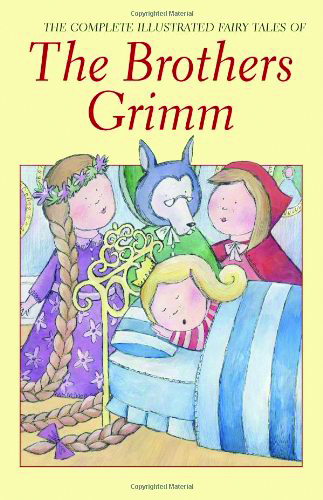
Book of the Week: The Complete Illustrated Fairy Tales of The Brothers Grimm

Oct 9-Brothers grimm

From the land of fantastical castles, vast lakes and deep forests, Jacob and Wilhelm Grimm collected a treasury of fairy tales, full of giants and dwarfs, witches and princesses, magical beasts and cunning children.

From classics such as ‘The Frog Prince’ and ‘Hansel and Grettel’ to the delights of ‘Ashputtel’ or ‘Old Sultan’, all hold a timeless magic that has intrigued children for centuries.

[button color=”blue” size=”small” link=”http://englishbookgeorgia.com/catalogue/shop/others/the-brothers-grimm-the-complete-fairy-tales/”  target=”blank” ]Buy the Book[/button]


Interesting Facts About Roald Dahl

roald dahl2

A world without Roald Dahl would be a world without Oompa Loompas, Snozzcumbers, or Muggle-Wumps. And who would ever want to live in a world like that?

Below are interesting facts about the famous children’s author.

  • Dahl was a fighter pilot with the Royal Air Force during World War II. And it was a plane crash near Alexandria, Egypt that actually inspired him to begin writing.
  • Alongside fellow officers Ian Fleming and David Ogilvy, Dahl provided intelligence to an MI6 organization known as the British Security Coordination.
  • Roald Dahl wrote many of his books in a shed in his garden, sitting upon an old battered armchair. He wrote everyday from 10 am to 12 noon and then from 4 pm to 6pm. No one else was allowed inside.
  • He was friends with the American author, Ernest Hemingway.
  • Roald Dahl wrote seventeen children’s stories, and he also produced many works for adults, as well as children’s poetry and film scripts.
  • He wrote the screenplays for the movies You Only Live Twice (the James Bond film) and Chitty Chitty Bang Bang.
  • He always wrote in pencil on yellow paper.

For more facts about Roald Dahl, watch the video below:

Establish and Maintain A Successful Working Relationship

working_relationship

Building a trusting relationship is critical for the start and continuation of any business relationship.

A “true partnership” – takes some hard work – and time. Laying the foundation for a solid working relationship from the very beginning should make everyone feel comfortable that a working business partnership will be worthwhile in the long run. Both the investor and investee should consider these strategies for getting to know each other before signing any contract:

1. Be Available and Responsive

Spending time to get to know the other party is important. Whether it’s in person, by phone or in an online meeting, plan a regular meeting as often as is comfortable. And do meet in person, which is still the easiest way to communicate. Meet for lunch, take a hike, play golf, go running or just be available to really get to know the other party’s strengths and weaknesses – on a business and personal level. In addition, get back to them in a timely manner when they call or email. While surprising, many a relationship has failed because one party did not respond promptly enough to a message.

2. Be Open

Be transparent about how you conduct business, including how you resolve problems as they arise. Share what has worked well in the past and what you might need to improve upon. Give examples. The more open communication there is between parties, the easier it will be to keep everyone satisfied and any issues resolved. Keep each other informed about new services or any news pertaining to your businesses that might help either party decide to go ahead with the investment.

3. Be Prepared

Whether you are the investor or investee, come to each formal meeting armed with the information you need to demonstrate why you should work together. Discuss the success of past investments by bringing along a case study or two. Highlight a recent client relationship that went especially well – and why – or one that didn’t go so well but disclose the steps you took to resolve it. Or if you’re at the right point in an investment-type relationship, bring in your company’s revenue data showing the projected growth to further demonstrate why you’re an attractive investment.

4. Be Quiet

As in any successful relationship, you need to really listen to fully understand what the other is looking to accomplish. So make sure that when it’s your turn to listen, you do.

5. Be Flexible

As you’re listening, be open to suggestions on running your business or providing your services. As you grow, needs change, and as your competitive environment shifts, how you provide the services may not work as well as it previously did. Know that when both parties learn to work together, both will bring ideas to the table and learn from each other.


[button color=”blue” size=”small” link=”http://www.ceo.com/leadership_and_management/establish-and-maintain-a-successful-working-relationship/” target=”blank” ]Source[/button]

Which Book Would You Like To Read?

To celebrate Roald Dahl this week, we are asking you which book would you like to read?

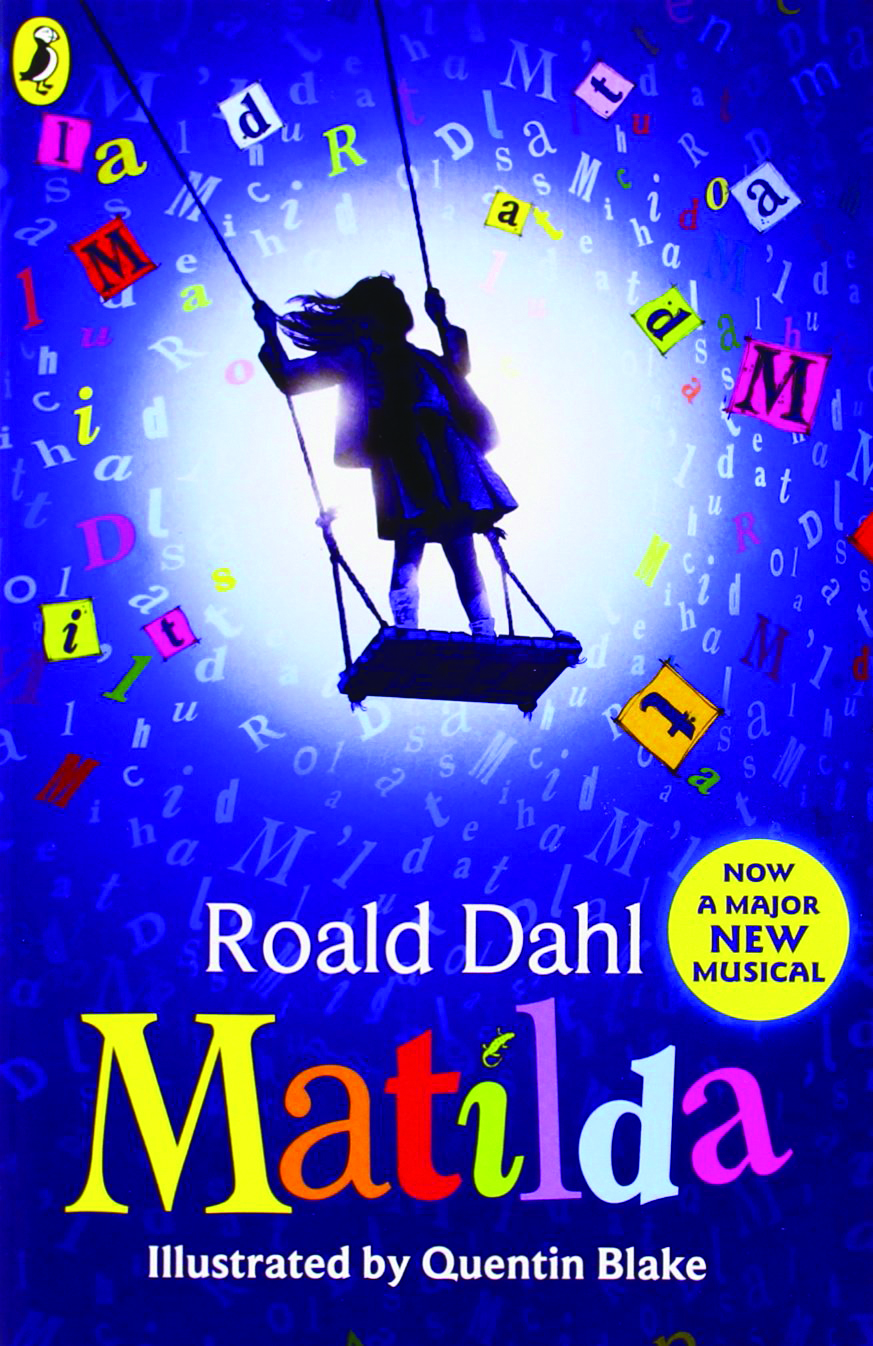
Matilda

MATILDA
Author:Roald Dahl
ISBN:9780141341248

“The Trunchbull” is no match for Matilda!

Matilda is a sweet, exceptional young girl, but her parents think she’s just a nuisance. She expects school to be different but there she has to face Miss Trunchbull, a kid-hating terror of a headmistress. When Matilda is attacked by the Trunchbull she suddenly discovers she has a remarkable power with which to fight back. It’ll take a superhuman genius to give Miss Trunchbull what she deserves and Matilda may be just the one to do it!

Price: 16,9 GEL

[button color=”blue” size=”small” link=”http://englishbookgeorgia.com/catalogue/shop/penguin/matilda/” target=”blank” ]Buy the Book[/button]


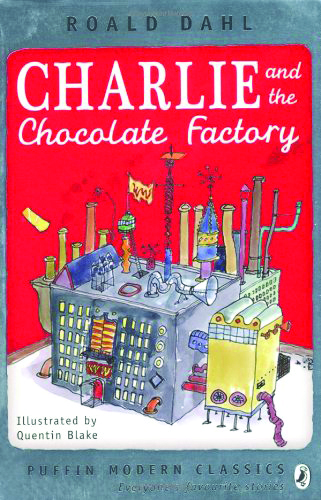
Charlie and the chocolate


CHARLIE AND THE CHOCOLATE FACTORY
Author: Roald Dahl
ISBN: 9780141329857

Willy Wonka’s Famous Chocolate Factory is opening at last! But only five lucky children will be allowed inside … and what Augustus Gloop, Veruca Salt, Violet Beauregarde, Mike Teavee, and Charlie Bucket find is even wilder than any of the wild rumors they’ve heard!

Price: 15,9 GEL

[button color=”blue” size=”small” link=”http://englishbookgeorgia.com/catalogue/shop/penguin/charlie-and-the-chocolate-factory/” target=”blank” ]Buy the Book[/button]


Theme of the Week: Roald Dahl

roald_dahl1

The theme for this week is about Roald Dahl, a British novelist, short story writer, poet, fighter pilot, and screenwriter.

He has been referred to as “one of the greatest storytellers for children of the 20th century”. Dahl’s short stories are known for their unexpected endings and his children’s books for their unsentimental, often very dark humor.

Dahl went on to create some of the best-loved children’s stories of the 20th century, such as Charlie and the Chocolate Factory and Matilda. Many of his titles have become successful, blockbuster movies.

Meanwhile enjoy a scene from Matilda, a movie adapted from his award-winning book of the same name.

Inspirational Quote


Deprecated: preg_match_all(): Passing null to parameter #2 ($subject) of type string is deprecated in /home2/englita2/public_html/blogebg/wp-includes/media.php on line 1893

Deprecated: str_contains(): Passing null to parameter #1 ($haystack) of type string is deprecated in /home2/englita2/public_html/blogebg/wp-includes/shortcodes.php on line 150

Deprecated: preg_split(): Passing null to parameter #2 ($subject) of type string is deprecated in /home2/englita2/public_html/blogebg/wp-includes/formatting.php on line 3492

4 Big Things Transformational Teachers Do

ask questions

Transformational teachers don’t react, instead, they anticipate and prepare. Expert teachers should be able to have cognitive understanding of how students learn, emotional preparation to relate to many students whose needs aren’t always noticeable, content knowledge so that you can have different ways to introduce an idea; and, lastly, the ability to act on your teaching decisions quickly.

So how can you do that? Check out how below.

1. Transformational Teachers Create Constructivist Experiences

Instructors tend to use one of two instructional orientations:

  1. Transmission: Where “the teacher’s role is to prepare and transmit information to learners” and “the learners’ role is to receive, store, and act upon this information.”
  2. Transformational: Where students’ active engagement in developing knowledge and skills, critical thinking, higher order skills, and communication are facilitated by the instructor.

It is difficult to accomplish transformational teaching without understanding and implementing constructivist pedagogy — facilitating hands-on experiences — where students construct meaning through active learning. However, the checklist below suggests some tactics:

What Does Transformational Teaching Look Like?

1. Have students ask questions and solve real-world problems.

2. Questions should require students to:

  • Analyze
  • Synthesize
  • Create
  • Empathize
  • Interpret
  • Reference background knowledge
  • Defend alternative perspectives
  • Determine what they know and don’t know

3. Organize students into learning groups.

4. Make learning segments manageable through modeling and mastery.

5. Guide, facilitate, challenge, and support.

6. Let learning transform you.

2. Transformational Instructors Teach Like Scientists, Artists, and Essayists

Transformational teachers know that artful teaching without science lacks efficacy, and scientific teaching without aesthetics lacks vision. Says child psychologist Dr. David Elkind, “The art comes from the teacher’s personality, experience, and talents. The science comes from knowledge of child development and the structure of the curriculum.” The art and science of teaching work in harmony. Writes Richard Bankert, an eighth grade science teacher, “The best teachers are artists who know the science of teaching.”

In contrast to immature teachers who fill a 90-minute class with activities (and ignore targeted objectives), a transformational teacher treats those 90 minutes like a carefully crafted persuasive essay — with a clear purpose and unique sense of style, a memorable beginning and end, a logical sequence, important content, nimble transitions, and contagious passion. These characteristics persuade students to believe that learning the content and skills really matters.

3. Transformational Teachers Model Symphonic Thinking

To be effective in advancing human potential, teachers need to manifest what Daniel Pink calls “symphonic thinking” — critically appraising and synthesizing new ideas. Someone with symphony thinking skills is able to do the following:

  • Understand the logical connections between ideas.
  • Identify, construct, and evaluate arguments.
  • Detect inconsistencies and common mistakes in reasoning.
  • Combine different ideas to form a new concept.
  • Identify the relevance and importance of ideas.
  • Reflect on the justification of one’s own beliefs and values.

Such thinking is necessary in order for students to thrive in the new economy, according to Pink. It’s also necessary for teachers to model.

4. Transformational Teachers Facilitate Productive Struggle

It’s hard not to rescue kids when they beg for help. But that altruistic instinct can get in the way of learning. In a Wired Magazine piece, “Telling You the Answer Isn’t the Answer,” Rhett Allain explains why letting students engage in productive struggle is the unpopular and necessary approach to instruction:

What if a person was having trouble doing a pull up for exercise? Instead of giving them some other exercise, I could help them by doing the pull up for that person. Right? No, that wouldn’t actually be useful. However, if I push on the person’s feet a little bit, they can still struggle and still exercise.

Warning: allowing productive struggle to occur will consume more class time. However, when the learning process is frictionless, retention is less likely. Struggle actually saves re-teaching time in the long run and is the best way for new dendrites to grow.

Allowing productive struggle to occur, using artistic and scientific instruction, modeling symphonic thinking, and encouraging students to lean into constructivist problem solving can lead to the holy grail of transformational teaching: epiphany. We hope you’ll tell us about your transformational teaching in the comment area below.


[button color=”blue” size=”small” link=”http://www.edutopia.org/blog/big-things-transformational-teachers-do-todd-finley” target=”blank” ]Source[/button]

Inspirational Quotes


Deprecated: preg_match_all(): Passing null to parameter #2 ($subject) of type string is deprecated in /home2/englita2/public_html/blogebg/wp-includes/media.php on line 1893

Deprecated: str_contains(): Passing null to parameter #1 ($haystack) of type string is deprecated in /home2/englita2/public_html/blogebg/wp-includes/shortcodes.php on line 150

Deprecated: preg_split(): Passing null to parameter #2 ($subject) of type string is deprecated in /home2/englita2/public_html/blogebg/wp-includes/formatting.php on line 3492