Tag Archives: education

Small, Safe Steps for Introducing Games to the Classroom

Some educators are nervous about using games in the classroom or fully implementing all aspects of game-based learning (GBL). However, there are a few small, safe steps that all educators can and should consider to leverage the power of engagement that games can bring. Finding games isn’t as difficult as it used to be. Sites like Educade provide game ideas, links, resources, and even lesson ideas. This is a great start, but educators should take some of the following next steps to feel even more confident and safe about using games in the classroom.

Play the Games

When educators want to know if a game is appropriate for the classroom, they shouldn’t just rely on someone telling them it’s great, whether that someone is a company or even a colleague. To truly understand if the game will work with your curriculum or your intended goals for learning, you need to sit down and actually play the game. Spend the time to explore this software, app, or board game to your satisfaction. As you play, you can experience what students will experience and learn how to support them when they play. You’ll develop an understanding of what can be learned from this game, whether it’s content, thinking skills, or both. One of the best professional development experiences on games and GBL is to play a digital game like Civilization solo or a board game like Settlers of Catan with a group of friends.

A Game Is Voluntary

You want to know what makes games the most effective? They are voluntary. If you make students play the game, you are missing the entire point of games and GBL. Jane McGonigal, author of Reality is Broken, states:

When you strip away the genre differences and the technological complexities, all games share four defining traits: a goal, rules, a feedback system, and voluntary participation.

Voluntary participation means that players actively agree to the rules and procedures of the game, rather than having those forced upon them. When we are forced to do something, the work we do in games actually becomes less safe and less enjoyable. Consider offering games as a voluntary activity for true engagement.

Games as Differentiation

Not every student in your class needs to be playing the same game at the same time. In fact, games can be used as just another tool to differentiate. As teachers formatively assess their students, they may find that some students didn’t quite get either the content knowledge or 21st century skill they were focusing on. Also, educators might find that some students are ready for a greater challenge. Educators can use games as a tool to support either revisiting the material or pushing students farther on new material. Not only do games help differentiate for students, but they also free up the teacher to meet the needs of more students.

Team Games

Even though many games are played individually, playing games together can be a great way to build classroom culture. When paired with other culture-building activities, games can provide low-stakes, competitive ways to build collaboration skills. In fact, games that involve teams can help support the principles of “helping each other out” and sharing. Some games, like Pandemic, require that all players work together toward the same goal instead of working competitively. Collaboration is key in that game, so consider games like it for building classroom culture, and pair them with reflections and discussion to assess the learning.

Remember, depending on the access to technology, teachers can pick both high-tech and low-tech games, or offer both. Educators can try all or some of these steps to use games in the classroom. It’s important that we start small with implementation, and that we continually reflect on the learning and push ourselves to try new things for the sake of our students, their engagement, and their achievement.

What games have you introduced in your classroom, and how did you make it happen? Please share in the comments below.

Reteach and Enrich

teacher-in-class

When English Book in Georgia’s (EBG) Chief Executive Officer, Maia Gurgenidze, was asked about EBG’s extensive work with teachers, schools and other educational institutions in Georgia, here is what she said. “We at EBG believe that education always has a positive impact on people’s lives and we are committed to making a difference ourselves by promoting English language teaching in our country. Our main goal is to create the best educational environment for students throughout Georgia.

We’re passionate about our work, because it helps people understand, achieve and discover more. Inspired by our proud history, we look for 100% commitment to the quality and integrity of what we do. It’s the passion we have for our work that gives us purpose. It helps us to think independently and stand up for what we believe.

The teacher training and conferences we offer are central to the successful development of Georgian English language teachers. New methodology is developed every day world-wide and it is very important to spread these innovations to all of our teachers.

We look forward to revolutionizing English teaching in Georgia with you…”

So with that in mind, we would like to introduce you to a new teaching strategy developed in the United States by teachers at Mesquite Elementary School in Arizona state.

The system is called Reteach and Enrich (R&E), and it happens every day, school-wide, from 12:30 p.m. to 1 p.m. During this period, teachers give students who are struggling with a concept extra time and attention, and students who have mastered the basics receive instruction that takes their learning to the next level. The system is based on a shared curriculum map, with objectives defined for every week of the school year. At the end of each week, teachers assess students on those objectives. Depending on the results, they assign students to either a reteach or an enrich session the following week. There is no stigma attached to going to reteach; almost every student has been assigned to it at some point. Students see it simply as an opportunity to learn something better than they did the first time.

Mesquite Elementary school uses these techniques for Mathematics but this technique can easily be altered for any school subject.

Educator’s Methodology: Part 3: 5 Quick Classroom-Management Tips for Novice Teachers

classroom-management

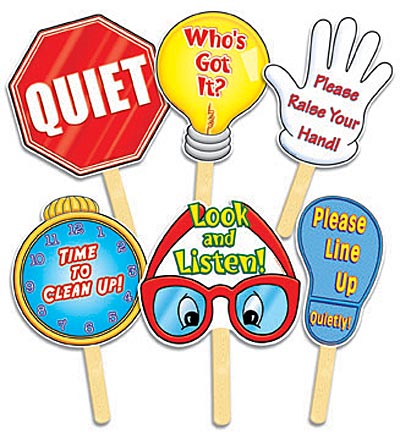
When it comes to managing a classroom, most of what new teachers learn is trial by fire. It’s also smart to heed the advice of those who have walked — and stumbled — before you. If you are struggling with discipline, here are five tips that you can start using right away:

1.            Use a normal, natural voice

Are you teaching in your normal voice? Every teacher can remember this from the first year in the classroom: spending those first months talking at an above-normal range until one day, you lose your voice.

Raising our voice to get students’ attention is not the best approach, and the stress it causes and the vibe it puts in the room just isn’t worth it. The students will mirror your voice level, so avoid using that semi-shouting voice. If we want kids to talk at a normal, pleasant volume, we must do the same.

You want to also differentiate your tone. If you are asking students to put away their notebooks and get into their groups, be sure to use a declarative, matter-of-fact tone. If you are asking a question about a character in a short story, or about contributions made by the Roman Empire, use an inviting, conversational tone.


2.            Speak only when students are quiet and ready

A 20-year teaching veteran advises that you should just wait and then wait some more until all students were quiet.

So try it! Fight the temptation to talk. Sometimes you may have wait much longer than you think could hold out for. Slowly but surely, the students would cue each other: “Sshh, she’s trying to tell us something,” “Come on, stop talking,” and “Hey guys, be quiet.” (They’ll do all the work for you!)

Your patience will pay off. And you’ll get to keep your voice.


3.            Use hand signals and other non-verbal communication

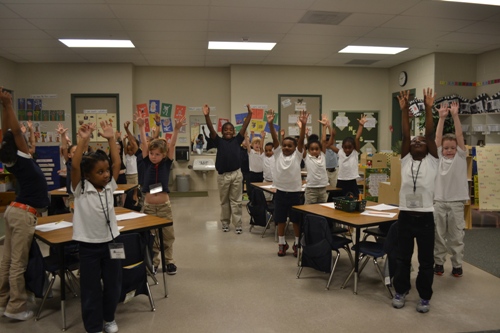
Holding one hand in the air and making eye contact with students is a great way to quiet the class and get their attention on you. It takes awhile for students to get used to this as a routine, but it works wonderfully. Have them raise their hand along with you until all are up. Then lower yours and talk.

Flicking the lights off and on once to get the attention is an oldie but goodie. It could also be something you do routinely to let them know they have three minutes to finish an assignment or clean up, etc.

With younger students, try clapping your hands three times and teaching the children to quickly clap back twice. This is a fun and active way to get their attention and all eyes on you.


4.            Address behavior issues quickly and wisely

Be sure to address an issue between you and a student or between two students as quickly as possible. Bad feelings — on your part or the students — can so quickly grow from molehills into mountains.

Now, for handling those conflicts wisely, you and the student should step away from the other students, just in the doorway of the classroom perhaps. Wait until after instruction if possible, avoiding interruption of the lesson. Ask naive questions such as, “How might I help you?” Don’t accuse the child of anything. Act as if you do care, even if you have the opposite feeling at that moment. The student will usually become disarmed because she might be expecting you to be angry and confrontational.

And, if you must address bad behavior during your instruction, always take a positive approach. Say, “It looks like you have a question” rather than, “Why are you off task and talking?”

When students have conflicts with each other, arrange for the students to meet with you at lunch, after or before school. Use neutral language as you act as a mediator, helping them resolve the problem peacefully or at least reach an agreeable truce.


5.            Always have a well-designed, engaging lesson

This tip is most important of all. Perhaps you’ve heard the saying, if you don’t have a plan for them, they’ll have one for you. Always over plan. It’s better to run out of time than to run short on a lesson.

Bored students equal trouble! If the lesson is poorly planned, there is often way too much talking and telling from the teacher and not enough hands-on learning and discovery by the students. We all know engaging lessons take both serious mind and time to plan. And they are certainly worth it — for many reasons.

Share with us your classroom management experiences: What specific challenges are you having? What strategies have worked well for you and your students? Please share in the comment section.

[button color=”blue” size=”small” link=”http://www.edutopia.org/blog/classroom-management-tips-novice-teachers-rebecca-alber” target=”blank” ]Source[/button]


Educator’s Methodology: Part 1: Developing Students’ Trust: The Key to a Learning Partnership

We’d like to introduce you to a 3 part series we call Educator’s Methodology. It serves to inform and educate people working in the education field. We hope you enjoy this series and look forward to hearing your comments. Stay tuned and check out part 2 next week!

Educator’s Methodology

Part 1: Developing Students’ Trust: The Key to a Learning Partnership

Trust

By Ben Johnson (Administrator, author and educator)

I am a pragmatist, and I believe in simple, systemic solutions. I firmly believe that the true art/skill/magic/science of teaching is to perfectly match your style with the individual student’s needs. Conceptually, many teachers know this is the right way to teach. However, it flies in the face of what most teaching professionals practice. In many classrooms still, students must either adapt to the teacher’s way of teaching or fail.

I often reflect on what we call “teaching” and have come to the brilliant conclusion that it is less about what the teacher does and all about what students learn. How you approach teaching all comes down to what you believe about students and what methods you believe are the best ways to get them to learn. Here is one example of what I believe:

A shaggy but beautiful stray dog came to our house in the country one day. Our hearts went out to it, and we decided to help it. My wife and I put out some food, which it ate, but it refused to let us approach. Every time we tried, it would shy away and stay out of reach. The bottom line is that, for one reason or another, it did not trust us. Who knows what its history was? It trusted us enough to eat our food, but that was as far as it went.

I am sure that, given a few weeks, we could have built a relationship of trust with that dog — but, unfortunately, it moved on and we haven’t seen it since.

Students who come to our classrooms are much like that dog: Unless they trust us, they are unapproachable.

We earn our students’ trust by showing them respect in the form of meaningful, challenging, and rewarding learning activities that are worthy of their time and best efforts.

Students in their early years of school are naturally trusting, and — please don’t take this the wrong way — we abuse that trust in the name of socialization and classroom management. In essence, we teach them to obey rather than to build confidence to explore. As students get older, they often trust less and start behaving much like our shaggy and suspicious visitor. Most students will take what we offer but will not allow a learning partnership because they do not trust us.

Trust works the other way, too. As teachers, we have learned to distrust our students. All it takes is one disruptive young person to ruin it for the rest of the students that follow. We don’t want to get burned again, so we tighten the rules and narrow the focus. We develop an attitude that we can’t trust our students to learn independently. Especially in the early grades, we feel it is our responsibility to control every aspect of their learning activities so things don’t get out of hand, or so they don’t make a mess.

We could call this way of thinking the color-between-the-lines syndrome: We like everything neat and orderly. So, by the time the students get to high school, some know how to color between the lines, while others drop out because they don’t want to.

There is a solution to this: student-directed learning. As the name suggests, student independence and choice is a central part of it. Teaching is just as much about taking risks as learning is. A teacher has to take a chance on students and trust them enough to be independent learners. That can’t happen if the teacher is uncomfortable about tailoring the curriculum to multiple levels of student performance. (Does this sound familiar?) This lofty goal of differentiated instruction is achievable on many levels, but it is much easier to reach when teachers work together to help individual students.

Unfortunately, many teachers have tried cooperative groups, inquiry, project (process/product/performance)-based learning and had a terrible experience. Perhaps the students did not behave appropriately, or they did not learn, or it was a waste of time. Too often teachers with this first experience are hesitant to try again. Instead, they fall back on what they know works — students in straight rows, individual worksheets, slide show lectures, and direct instruction. If this applies to you, I would urge you to try again (trust again). I guarantee that each time you try again, it will get better. Students will learn what to do, they will behave better, and they will appreciate your trust.

As I said earlier, teaching flows from what an educator believes is the best way to teach a student. That belief is not demonstrated in mission statements and platitudes, but it is clearly visible in the way teachers set up and run their classrooms and in how they treat their students. Once a teacher understands the mechanics of the teaching (learning) cycle, discipline and classroom management take a secondary role and the teacher can begin to focus on what he or she can do to help each individual student to learn best — whatever it takes. We have to get beyond socialization and control, and teach students how to trust themselves to learn in the early grades. Otherwise, we will continue to be frustrated as we end up trying to teach a bunch of skittish stray dogs for students.

How do you feel about this approach? Please share your thoughts.

Spinosaurus Takes Over NAT GEO

spinosaurus-exhibit.jpg.adapt.590.1

Move over Tyrannosaurus rex! National Geographic Explorer Nizar Ibrahim worked with colleagues to digitally reconstruct the Spinosaurus and confirmed that it grew up to 15 meters in length and was 3 meters larger than T. rex.

The first partial skeletons of the Spinosaurus were found by Bavarian paleontologist, Ernst Stromer von Reichenbach in the Egyptian Sahara on an expedition. The fossils were displayed in Munich Germany but were destroyed during WWII.

Ibrahim was inspired by children’s books that featured the Spinosaurus and later learned about Stromer’s discovery while studying in the United Kingdom.

While traveling in Morocco for his studies, Ibrahim bought some fossils not realizing their actual value. The next year, he was shown a partial Spinosaurus skeleton and realized the fossils he owned matched this skeleton.

Using all known information he had collected over the years, he and his colleagues were able to create a computer model and 3D-printed life-size Spinosaurus skeleton. With this information they verified it was not only larger than T. rex but also the only carnivore to walk on four legs.

[button color=”blue” size=”small” link=”http://kids.nationalgeographic.com/explore/science/spinosaurus-at-nat-geo/” target=”blank” ]Source[/button]

5 Ways to Help Your Students Become Better Questioners

berger-students-better-questioners

Asking questions are important tools in our lives. It helps us learn, adapt and explore. Questions are the most valuable aspects of our lives in a world that’s ever-changing. But many of us don’t seem to utilize or value asking questions as much as we should. We live in a world where the answers are the greatest reward but the question-the key to getting us to the answer-is almost intolerable.

Working in a system that only wants the answer and not the query is difficult especially when our culture might see questions as weakness. So teachers, you must strive to create a productive environment towards queries. Here are some suggestions from teachers, schools and organizations that work and promote a question based environment.

[tabs type=”vertical”][tabs_head][tab_title]Make It Safe[/tab_title][tab_title]Make It “Cool”[/tab_title][tab_title]Make It Fun[/tab_title][tab_title]Make It Rewarding[/tab_title][tab_title]Make It Stick[/tab_title][/tabs_head][tab]Asking a question can be a scary step into the void. It’s also an admission to the world (and more terrifyingly, to classmates) that one doesn’t know the answer. So teachers must somehow “flip the script” by creating an environment where questioning becomes a strength; where it is welcomed and desired. The Right Question Institute, a nonprofit group that teaches inquiry skills in low-income schools, encourages teachers to run group exercises dedicated entirely to formulating questions (no answers allowed!) — with clear rules and guidelines to ensure that students’ questions aren’t judged or edited, and that all questions are written down and respected. There are many variations on this type of exercise. The second-grade teacher Julie Grimm uses a “10 by 10” exercise, in which kids are encouraged to come up with 10 great questions about a topic during a 10-minute span. But the bottom line is, designate some kind of safe haven in the classroom where all students can freely exercise the “questioning muscle.”[/tab][tab]This is a tough one. Among many kids, it’s cool to already know — or to not care. But what if we could help students understand that the people who ask questions happen to be some of the coolest people on the planet? As I discovered in the research for my book on inquiry, questioners thought of many of those whiz-bang gadgets we now love. They’re the ones breaking new ground in music, movies, the arts. They’re the explorers, the mavericks, the rebels, making the world a more interesting place — and having a heck of a time themselves. How cool is that? [/tab][tab]Part of the appeal of “questions-only” exercises is that there’s an element of play involved, as in: Can you turn that answer/statement into a question? Can you open your closed questions, and close your open ones? There are countless ways to inject a “game” element into questioning, but here’s an example borrowed from the business world: Some companies use a practice called “the 5 whys,” which involves formulating a series of “why” questions to try to get to the root of a problem. Kids were practically born asking “why” questions, so why not allow them to use that innate talent within a structured challenge? Or, show them how to use the “Why/What if/How” sequence of questioning as a fun way to tackle just about any problem. Whatever the approach, let kids tap into their imaginations and innate question-asking skills in ways that make inquiry an engaging part of a larger challenge.[/tab][tab]Obviously, we must praise and celebrate the questions that are asked — and not only the on-target, penetrating ones, but also the more expansive, sometimes-offbeat ones (I found that seemingly “crazy questions” sometimes result in the biggest breakthroughs). Help create a path for students to get from a question to a meaningful result. A great question can be the basis of an ongoing project, a report, an original creation of some kind. The point is to show that if one is willing to spend time on a question — to not just Google it but grapple with it, share it with others, and build on it — that question can ultimately lead to something rewarding and worthwhile.[/tab][tab]If the long-term goal is to create lifelong questioners, then the challenge is to make questioning a habit — a part of the way one thinks. RQI’s Dan Rothstein says it’s important to include a metacognitive stage in question-training exercises wherein kids can reflect on how they’ve used questioning and articulate what they’ve learned about it, so they can “pave a new neural pathway” for lifelong inquiry. As for the behavioral habits associated with good questioning, here are a few: Questioners train themselves to observe everyday surroundings with “vuja de” eyes that see the familiar in fresh ways; they’re always on the lookout for assumptions (including their own) that should be questioned; and they’re willing to ask questions that might be considered “naïve” by others.[/tab][/tabs]

[button color=”blue” size=”small” link=”http://www.edutopia.org/blog/help-students-become-better-questioners-warren-berger” target=”blank” ]Source[/button]

Inspirational Quotes


Deprecated: preg_match_all(): Passing null to parameter #2 ($subject) of type string is deprecated in /home2/englita2/public_html/blogebg/wp-includes/media.php on line 1893

Deprecated: str_contains(): Passing null to parameter #1 ($haystack) of type string is deprecated in /home2/englita2/public_html/blogebg/wp-includes/shortcodes.php on line 150

Deprecated: preg_split(): Passing null to parameter #2 ($subject) of type string is deprecated in /home2/englita2/public_html/blogebg/wp-includes/formatting.php on line 3492

English Language Teachers 3 Day Summer Conference – 2014

English Language Teachers Conference
25-28 June, Georgia

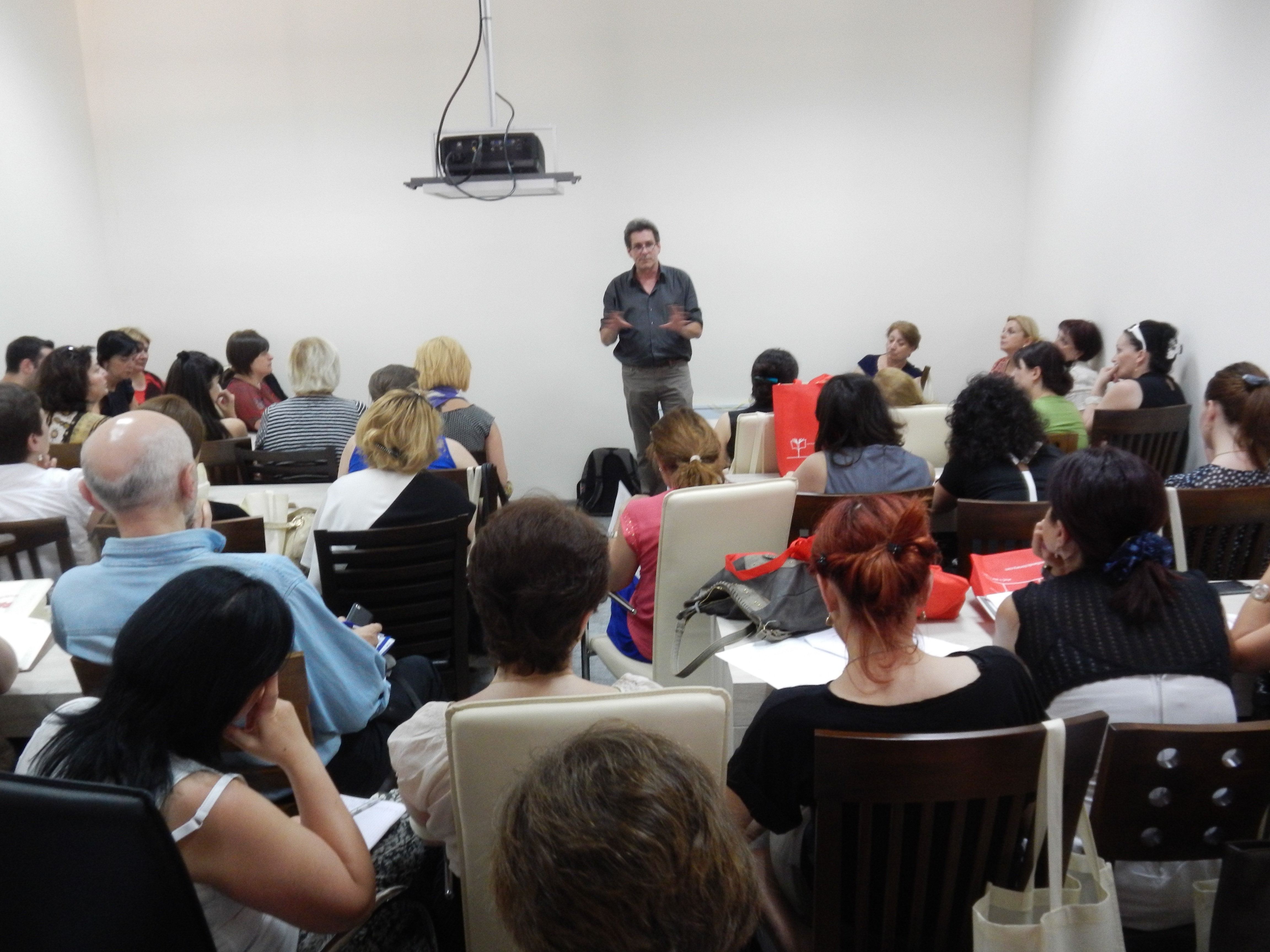
Last week, over 1000 Georgian English language teachers have gathered on a conference held in four cities (Batumi, Kutais, Telavi and Tbilisi) to discuss different topics and share English language teaching practices.DSCN3422

The conference was organized by The English Book in Georgia with the great support of Macmillan. We were honored to have Jim Scrivener (a freelance writer, consultant, teacher, trainer and conference speaker), Maura O’Brien (teacher trainer), Philip Kerr (lecturer, teacher trainer and materials writer), Teresa Doğuelli (teacher trainer) and Nick Goode (Regional Manager, Central Europe for Macmillan Education) as the guest-speakers of the conference.

“It is my honor to attend this conference. We learned about many new methods and activities, very helpful to reach our goals, the goals of National Curriculum. We will bring these methods to our students and will involve them in the activities. This all will help the students learn to speak English more freely”, says one of the participants Ms.MakaBerishvili, Rustavi PS N14.

NatiaJokhEnglish Book in Georgia is amazed by the motivation, interest, commitment and dedication the participants have showed during those four days. The representative of the Ministry of Education and Science of Georgia, Ms. Natia Jokhadze has also mentioned this during her speech, saying that the number of attendants in Tbilisi was significantly bigger than any other similar events organized before. She thanked the participants, in the name of Ministry of Education and Science of Georgia, for their commitment and dedication.

The participants were engaged and actively involved in the discussions. As one of the teachers, Ms. Ana Panchulidze, IB Mtiebi, mentioned, “what we can learn from this conference, is the new approach to teaching processes and this is why, it is essential that this kind of events are organized often. On this conference we have the chance to meet world’s leading experts in the field”

??????????

The conference consisted of two parts – each speaker lead one plenary session and there were several workshops offered, running simultaneously in two sessions for smaller groups. This way each participant had a chance to attend two different workshops of their choice. The workshops covered different interesting topics, such as Classroom Management, Vocabulary Practices, Emotional Intelligence, Teamwork as well as Student Engagement.

“As a company, MacMillan Education what we try and do is to focus on the learners and focus on the teachers. And one way of increasing thelevel of English in any given situation, whether it is a particular classroom or if you think about a country like Georgia, isthat to educate the teachers as much as possible. Because by educating teachers it means that they can spread the techniques through to their students and therefore, students can have a better understanding of English and increase their level of English. And conferences like this are a great way to gather as many teachers together at one place as possible and that has many different benefits.”, says Nick Goode, Regional Manager (Central Europe for Macmillan Education). 

DSCN3608

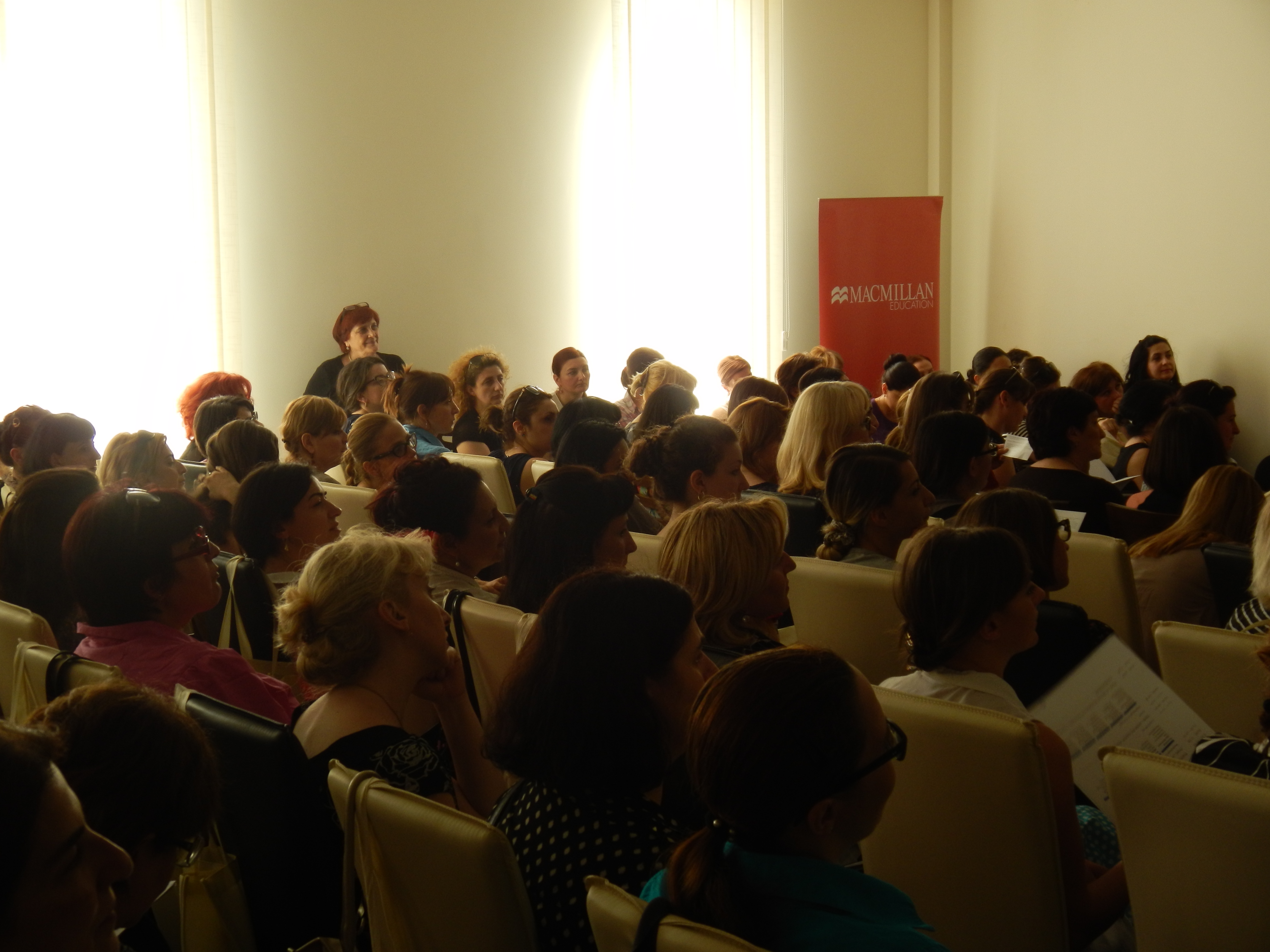
This was one of the biggest English Language Teachers Conferences organized in Georgia having over 1, 000 participants, both public and partner private school teachers.

1The conference in Tbilisi took place in the new office of English Book in Georgia. Right now, the room used for the conference is empty and ready for other interesting events. Our new office andour staff members are all set and ready for newchallenges, new events and new ways to stand by the teachers and overall, stand by the Education System in Georgia. We can only show our admiration to the teachers and again thank them for their interest, motivation and dedication and look forward to future opportunities of cooperation!

bolos

Getting Ready for the Conference

Dear all,

We are happy to inform you that the preparations for the conference are almost finalized!

Starting from tomorrow, the conference will gather hundreds of Georgian English language teachers in four different cities: Batumi (25 June), Kutaisi (26 June), Telavi (27 June) and Tbilisi (28 June).

The event is organized by English Book in Georgia with the great support of Macmillan and we are honored to have Jim Scivener (a freelance writer, consultant, teacher, trainer and conference speaker), Maura O’Brien (teacher trainer), Philip Kerr (lecturer, teacher trainer and materials writer), Teresa Doğuelli (teacher trainer) and Nick Goode(Regional Manager, Central Europe for Macmillan Education) as the guest-speakers of the conference.

მოგესალმებით,

კონფერენციის მზადება თითქმის დასრულებულია! ხვალიდან საქართველოს ოთხ ქალაქში: ბათუმი(25 ივნისი), ქუთაისი(26 ივნისი), თელავი(27 ივნისი), თბილისი(28 ივნისი) ინგლისური ენის პედაგოგებისთვის ჩატარდება კონფერენცია, რომელიც გაიმართება „ინგლისური წიგნი საქართველოში“-ს ინიციატივითა და Macmillan-ის მხარდაჭერით.

კონფერენციის მომხსენებლები არიან Jim Scivener (a freelance writer, consultant, teacher, trainer and conference speaker), Maura O’Brien (teacher trainer), Philip Kerr (lecturer, teacher trainer and materials writer), Teresa Doğuelli (teacher trainer), Nick Goode(Regional Manager, Central Europe for Macmillan Education), რომლებიც Macmillan-ის და English Book in Georgia-ს მოწვევით ესტუმრებიან საქართველოს.


Inspirational Quotes


Deprecated: preg_match_all(): Passing null to parameter #2 ($subject) of type string is deprecated in /home2/englita2/public_html/blogebg/wp-includes/media.php on line 1893

Deprecated: str_contains(): Passing null to parameter #1 ($haystack) of type string is deprecated in /home2/englita2/public_html/blogebg/wp-includes/shortcodes.php on line 150

Deprecated: preg_split(): Passing null to parameter #2 ($subject) of type string is deprecated in /home2/englita2/public_html/blogebg/wp-includes/formatting.php on line 3492