Tag Archives: education

5 Strategies for Recovering After Your Worst Day Teaching

shutterstock.com
Image source: shutterstock.com

by Johanna Rauhala (Peer Coach, Teacher, Writer, Parent)

Ice crystallized on the windshield, then a tire burst on the way to school, making you late. By the time you arrived, the computer (with the video clip and presentation cued up) froze. Minutes later, Jason pulled the fire alarm while you tried to catch up on parent emails. During lunch duty, an honor student was punched in the nose. Your nose is stuffy while you explain to the principal right before an IEP meeting why your plans haven’t been submitted yet. The day trudges along. . . At last, the final bell rings, and in your first quiet moment of the day, thoughts of leaving the teaching profession suddenly seem, well, right.

It’s that moment when you want to say, “I quit!”

We don’t talk about those feelings because we’re supposed to be like those heroic teacher-as-savior figures that permeate popular narratives about our work. And yet. . .

Here’s a secret. Most teachers, at some point, feel like giving up. Most feel the weight of not having done enough, feel the frustrations of negative media attention, and feel challenged by apathetic or disruptive students. Sometimes, the limits and loneliness of the lighthouse keeper are overwhelming. That’s when the enormity of our task feels insurmountable and we despair.

Driving home from such a day, we can be tempted to call in sick and plan for a sub. Sometimes that’s the right call. But there is another opportunity, too. You can take that empathy and understanding normally reserved for students and focus it on yourself. You can consider some strategies for gently accepting your circumstances, reflecting on what is needed, and preparing to return tomorrow. Consider these strategies:

1. Find a Friendly Shoulder

Call a trusted colleague, preferably one who’s been teaching a long time. Vent. Cry. Laugh hysterically and have a glass of beer or wine. Tell them about your struggles and frustrations. All teachers can recount a story of a crazed student or parent. Just ask them. Take this time to break the isolation of our work. No one escapes from teaching — or for that matter, any profession — without wondering if he or she made the right choice. Not even Teachers of the Year. In other words, dear colleague, you are not alone.

2. Breathe

This sounds simple, and it is. Sit with the discomfort and notice it. Acknowledge frustrations of the day and then let them go. Listen to your self-talk and try to be kind to yourself. Practice slow breathing. If possible, carry this habit into your workday. It will create space for less reactivity and a more grounded emotional stance.

3. Plan for Community

Consider pausing the scheduled lesson, and instead, take time to engage in team-building activities with your students. An English teacher that I read about, after weeks of essays and test prep, surprised his 12th grade class with a game of kickball out on the blacktop. The sun shone, the kids ran like mad, and everyone came back laughing. It was crazy, unanticipated, and utterly glorious.

4. Prioritize

Do stacks of papers line your desk? Are parents waiting for your email? Are there field trip permission slips to process? Is the lab set up for tomorrow? Here’s what to do when the onslaught of tasks overwhelms you — write a list of everything that needs to get done in the next two days. (Yes. Write it down. The physical act of writing provides a sense of control.) Look at this list and choose the top three tasks. These three are the must-dos, urgent actions that will help you survive until the next day. After completing the must-dos, cross them off your list and go to sleep early.

5. Get Perspective

Teaching need not consume you. Devoting all of our waking hours to teaching primes us for burnout. And burnout is real. It happens when the demands and expectations of our work drown out our joy. Your other roles are important, too: friend, spouse, sibling, hiker, reader, dancer, joke-teller, or baker — a million other energizing possibilities. These other facets to your personality might need attention. So forget work over the weekend. Go to the forest or to a ball game. Get a massage. Try not to let happiness slip away. We can be good, caring, rigorous teachers, but sacrificing our personal lives is a costly and unsustainable price.

“There are stirrings of life in discontent,” wrote E.M. Forster, meaning that even in frustration and despair, a small flame wants to warm us. Life — ours and those of our students — nudges us. It is not wild or stormy, and chances are that it’s barely a flicker. And on the worst school day, it may not be felt at all. But trust that life is there. And when you open your classroom door tomorrow morning, you will find it.

[button color=”blue” size=”small” link=”http://www.edutopia.org/blog/strategies-recovering-worst-day-teaching-johanna-rauhala” target=”blank” ]Source[/button]

 

Newly Discovered Planet Has Four Parent Stars

photo credit: Artist interpretation of 30 Ari. Credit: Karen Teramura, UH IfA

Earth only has one parent star, but other planets exist in systems much different than our own. Binary star systems are more common than single stars, and though planets in triple star systems are more rare, they are not unheard of. However, researchers have now identified a planet that is only the second one to ever be discovered in a quadruple star system. The existence of the planet was confirmed through observations from the Palomar Observatory in California. The research has been described in the Astronomical Journal.

The planet, which is considered a “hot Jupiter,” has been named 30 Ari and exists in the constellation Aries, 136 light-years from Earth. It is not habitable, as it is incredibly close to its primary star. It only takes three Earth days for the planet to complete one orbit.

“About four percent of solar-type stars are in quadruple systems, which is up from previous estimates because observational techniques are steadily improving,” co-author Andrei Tokovinin from the Cerro Tololo Inter-American Observatory said.

Despite the number of quadruple star systems out in the galaxy, 30 Ari is only the second exoplanet in such a system to be confirmed. It follows the 2013 discovery of KIC 4862625, which is about 5,000 light-years away. The planet was discovered via observations from NASA’s Kepler Space Telescope. It is hoped that more planets in unconventional systems will be discovered in order to increase the body of knowledge on how planets form under a variety of conditions.

“Star systems come in myriad forms. There can be single stars, binary stars, triple stars, even quintuple star systems,” added lead author Lewis Roberts of Jet Propulsion Laboratory. “It’s amazing the way nature puts these things together.”

This system is fairly odd, however, because the stars in the system are a long distance away from one another. The primary and secondary star are 44,000 astronomical units (AU) away from one another. One AU is the average distance from the Earth to the sun. The third star in the system is closer to the primary, as it is 28 AU away. The fourth star discovered is the most proximal, at 23 AU.

This is the True Size of Africa

How large is Africa compared to the United States, or Western Europe? Most inhabitants of the latter places might guess it is a little larger, but few would have any idea of the scale of the difference. This has led German graphics designer Kai Krause to produce this map to shake people’s ideas a little.

Any attempt to map a round planet onto a flat map will involve distortions of size, shape or both. There is a passionate debate among cartographers about the best way to hang the world on a wall, but most agree that the most common maps we get our sense of the world from are very bad ways to do it. The problem is that these maps exaggerate the size of the countries at high latitudes, and shrink places near the equator – leading to a perception that Europe is larger than South America, to pick just one example among many.

Africa, which spans the equator, fares particularly badly on these sorts of projections: Krause says, “Africa is so mind-numbingly huge, that it exceeds the common assumptions by just about anyone I ever met: it contains the entirety of the USA, all of China, India, as well as Japan and pretty much all of Europe as well – all combined!”

Some have argued that since people associate size with importance this encourages the already strong tendency of the world’s wealthiest nations to disregard those who live in the tropics.

Below is a video from the American television political-drama, ‘The West Wing’. It has many factual pieces of information in it like the one below.

The Heart of Teaching: What It Means to be a Great Teacher

What does it mean to be a great teacher? Of course credentials, knowledge, critical thinking, and all other faculties of intelligence are important. However, a great teacher should be much more than credentials, experience and intelligence.

What lies in the heart of a great teacher?

You are kind: a great teacher shows kindness to students, colleagues, parents and those around her/him. My favorite saying is “kindness makes the world go around”. It truly changes the environment in the classroom and school. Being a kind teacher helps students feel welcomed, cared for and loved.

You are compassionate: Teaching is a very humanistic profession, and compassion is the utmost feeling of understanding, and showing others you are concerned about them. A compassionate teacher models that characteristic to the students with her/his actions, and as a result students will be more open to understanding the world around them.

You are empathetic: Empathy is such an important trait to have and to try to develop in ourselves and our students. Being able to put yourself in someone’s shoes and see things from their perspective can have such a powerful impact on our decisions and actions.

You are positive: Being a positive person, is not an easy task. Being a positive teacher is even harder when we’re always met with problems with very limited solutions. However, staying positive when it’s tough can have such a tremendous positive impact on the students and everyone around us. Looking on the bright side always seems to help make things better.

You are a builder: A great teacher bridges gaps and builds relationships, friendships, and a community. Teachers always look to make things better and improve things in and outside of the classroom. Building a community is something a great teacher seeks to do in the classroom and extends that to the entire school and its community.

You inspire: Everyone looks at a great teacher and they want to be a better teacher, they want to be a better student, even better, they want to be a better person. A great teacher uncovers hidden treasures, possibilities and magic right before everyone’s eyes.

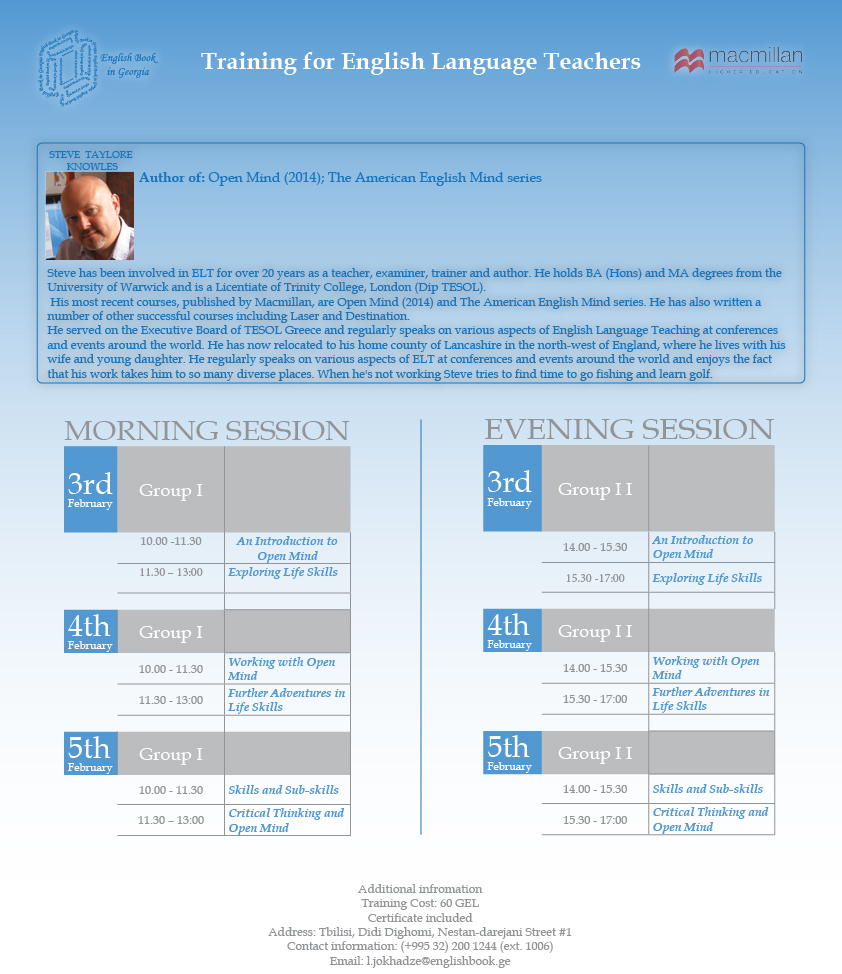
February Teacher’s Training

In conjunction with Macmillan Education, English Book in Georgia is pleased to offer a teacher training opportunity on the 3rd, 4th and 5th of February with Steve Taylore Knowles, author of Open Mind: The American English Mind series.

To register for this event, please email Lali Jokhadze: l.jokhadze@englishbook.ge OR call: 032 200 1244.

Training Newsletter

Did you know…

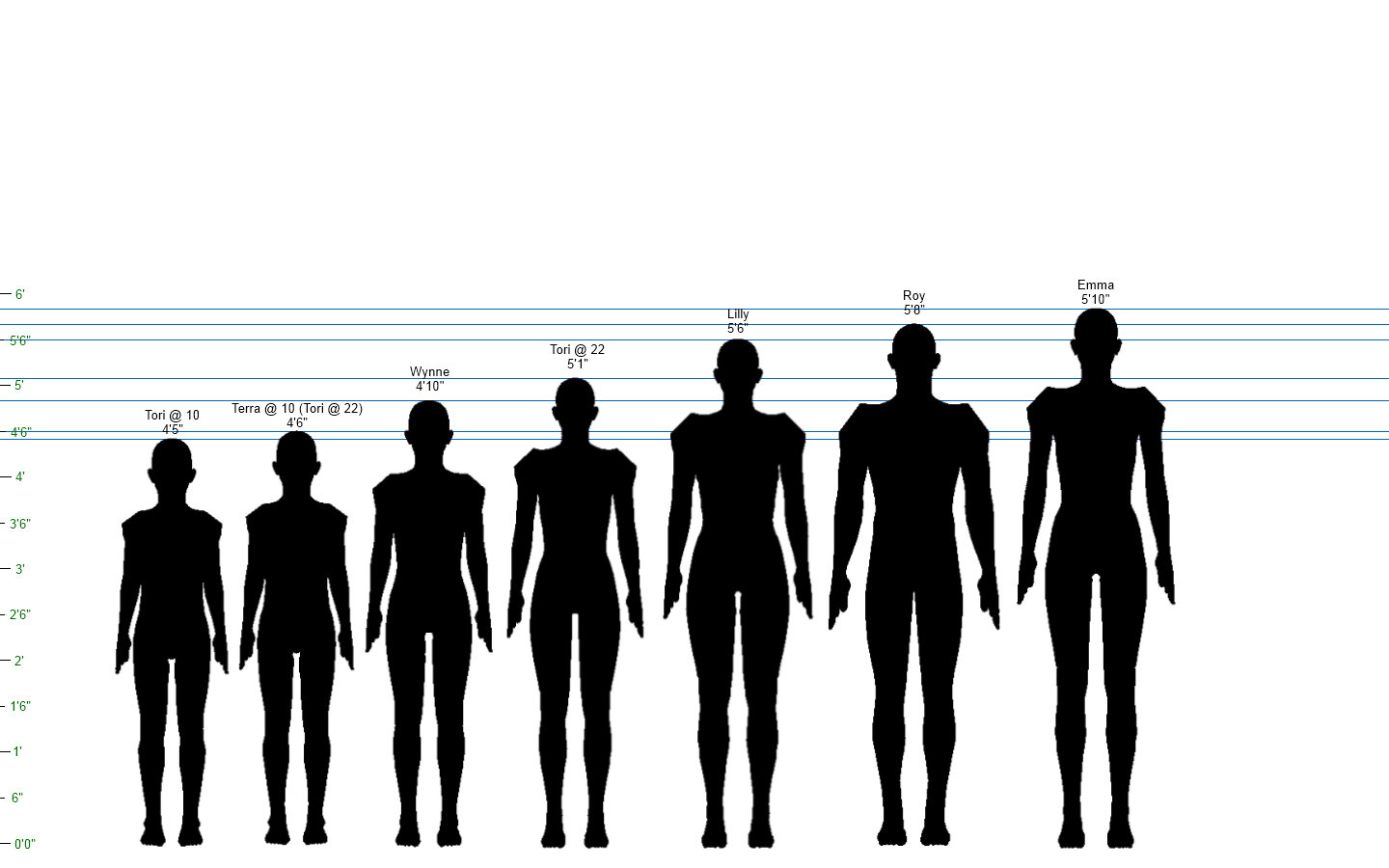
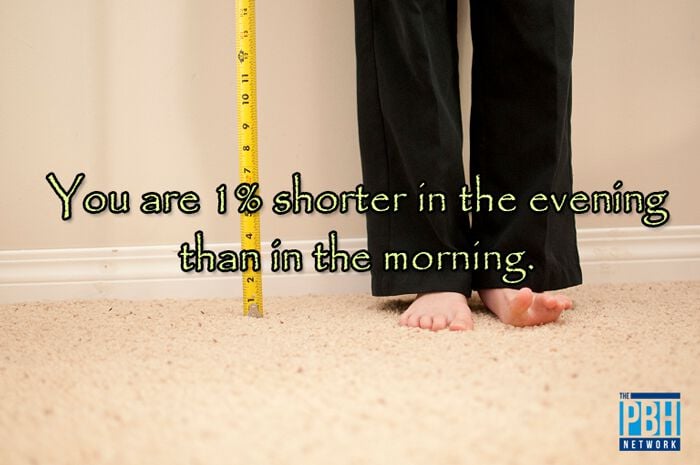
Shorter In The Morning

We are taller in the morning than in the evening because during normal activities during the day the cartilage in our knees and other areas slowly compress, but when you go to sleep and rest the cartilage goes back to normal. On average we are about 1cm taller in the morning than in the evening.

New Year Webquest

This New Year webquest by Gabrielle Jones includes activities designed to inform students about the history of New Year celebrations and the traditions which are practised today in a variety of cultures.

teacher-webquest


Note: The teacher’s notes for this webquest can be found at the bottom of the page by clicking the button marked “Teacher’s Notes”. We have also included a link to a student-facing page which does not have any links to the answers. You’ll find it by clicking the button marked “Student’s Page” at the bottom of this page. We suggest that you send students the link to the student page to prevent them from finding the answers too easily!


Warmer

New Year is an exciting time and many cultures celebrate it in a special way. This may include special foods and drinks, parties, religious festivals and other traditions. Answer these questions in pairs or small groups:

  1. How is New Year celebrated in your country?
  2. Do you know of any similarities or differences in New Year celebrations in other countries?
  3. How do you and your family celebrate New Year?


Activity 1: The history of New Year celebrations

Visit http://www.history.com/topics/new-years and read the sections titled ‘Early New Year’s Celebrations’ and ‘January 1 becomes New Year’s day’. Look for the answers to these questions:

  1. When were the earliest New Year celebrations and where did they take place?
  2. What name was given to the religious festivity, and where did the name come from?
  3. How long did the original celebration last?
  4. When people began to develop their own calendars, to what events did they tie the beginning of a new year?
  5. What event marked the beginning of the New Year in Egypt?
  6. When was the city of Rome established?
  7. Who included the first two months of the year to the calendar, and what were the names of the first two months?
  8. Who introduced January 1 as the start of the New Year?
  9. What changes did Christian leaders make in the middle ages?
  10. When was January 1 reintroduced as the beginning of the calendar year?

When you’ve finished, discuss what you found out with your partner.

Discussion:

Discuss one other significant festival in your country – do you know how long it has been celebrated, and why it became important?

Activity 2: New Year’s Traditions

Now go to http://www.history.com/topics/new-years and read the final section of the page titled ‘New Year’s Traditions’. Answer the following questions and then compare your answers with your partner.

  1. What do Spanish people eat 12 of at midnight on New Year’s Eve and what do they symbolize?
  2. Which countries eat legumes and what do they represent?
  3. What do pigs represent in some cultures and where is pork eaten?
  4. Which countries eat ring-shaped cakes and why?
  5. What is hidden inside the rice pudding eaten in Sweden and Norway at New Year? What will happen to the person who finds it?
  6. Which people first made New Year’s resolutions?
  7. What did they promise to do?
  8. What’s the most famous symbol of the beginning of the New Year in America?
  9. How long has the event taken place?
  10. What alternative objects are dropped in other American cities?


Activity 3: New Year celebrations around the world

New Year is celebrated on different dates in different places, and often involves very different traditions. In this activity you and a partner will find out all about two countries and their New Year celebrations.

Student 1 – Scottish New Year

Before you look at the weblink, decide whether the following statements are true or false:

  1. ‘Hogmanay’ means the first day of the year.
  2. Scottish people used to celebrate Hogmanay more than Christmas.
  3. Strangers are not allowed inside people’s houses during Hogmanay.
  4. It is considered very unlucky to enter a household without any gifts.
  5. A lump of coal is a traditional gift.

Now visit http://www.scotland.org/features/hogmanay-top-facts/ to check your answers.


Student 2 – Jewish New Year

Before you look at the weblink, decide whether the following statements are true or false:

  1. Jewish New Year is a celebration of the creation of the world.
  2. The celebration lasts a whole week.
  3. Jews believe that God will decide what the next year will be like for someone.
  4. A special song called the ‘Shofar’ is sung in the synagogue.
  5. A round loaf is eaten to symbolize the circle of life.

Now visit http://www.bbc.co.uk/schools/religion/judaism/rosh_hashanah.shtml to check your answers.

Compare your answers with your partner. Then together, copy the table below and fill it in using the information on the websites:


Scottish New Year

Jewish New Year

Name of celebration
Customs
Food eaten

Activity 4: Quiz: International New Year’s Eve customs

Use the following website to access this quiz based on New Year’s Eve customs around the world. In pairs, discuss each question and decide which option you think is correct. When you have finished, you can check your answers on the screen.

http://www.topics-mag.com/internatl/holidays/new-year/quiz/new-years.htm

Post-quiz discussion:

How many of the customs are also practised in your own country?

Activity 5: Round-up task

Imagine that you have friends from another country coming to celebrate New Year with you and your family. In pairs, plan the evening, considering the following points:

  • What kind of food are you going to serve?
  • Which local traditions are you going to show them?
  • Will you visit any special people or places?
  • What are you going to do at midnight?
  • Will you make any resolutions?

When you have finished, compare the plans you have made with another pair.

Optional activity

Make your own list of New Year’s resolutions. Compare your list to your classmates to see if any are similar.


We wish you a happy New Year!

[button color=”red” size=”small” link=”http://www.onestopenglish.com/webquest-new-year-teachers-notes/553260.article” target=”blank” ]Teacher’s Notes[/button]    [button color=”green” size=”small” link=”http://www.onestopenglish.com/webquest-new-year-student-page/553450.article” target=”blank” ]Student’s Page[/button]

[button color=”blue” size=”small” link=”http://www.onestopenglish.com/teenagers/topic-based-materials/webquests/webquest-new-year/553259.article” target=”blank” ]Source[/button]

The Perfect Classroom Gift: A Gift of Words

giftofwords

“A Gift of Words” is a very simple lesson.

Tell your class:

“Okay, class, here’s what I want you to bring to class with you on the last day of school before winter break. I want you to find a poem, a saying, a paragraph you like — something that speaks to you because of its message, its beauty, its format. I want you to copy it onto a piece of paper, put it into a box, wrap it, and bring it to class. Be sure to include, before you wrap it, the name of the author and your name as the giver.”

When the day comes, students will place their packages on the teacher’s desk. They should vary from huge to tiny, from carefully wrapped to hurriedly tossed together. And yes, there will be those who forget, who scribbled “Just do it” on a piece of notebook paper, folded it like a paper football, and added it to the pile. You should provide a few extras, just in case.

How to start:

“Whose birthday is closest to Christmas? Okay, you’re first. Pick any present you want.”

Suspense:

What would she/he get? You won’t be disappointed. The contents will vary — favorites from “Where the Sidewalk Ends” by Shel Silverstein to Bible verses, song lyrics, and short sayings like “Just do it.” The experiment will be a success. Everyone in the class will have a gift and you will have the greatest gift of all-happiness.

5 Ways Albert Einstein Was a Regular Guy

What do you know about the famous theoretical physicist and philosopher of science, Albert Einstein? Here are 5 facts that prove he was a regular person-like the rest of us.

1. He was passed over for his dream job.

In 1902, Einstein was appointed to the Swiss Patent Office as an examiner with some help from a friend, after he was disappointed in his hopes for a gig as a university professor.

“Largely that was his own fault-he wasn’t a great student,” says historian Matt Stanley of New York University. “He was disrespectful to his professors and skipped classes because he knew he could pass anyway. So, when he asked for recommendations, he didn’t get them.”

Sound familiar? Take heart from this: A backwater job didn’t stop Einstein from pursuing his dreams.

“Einstein’s family was involved in electronics, and the patent office was a world very familiar to him,” says Massachusetts Institute of Technology historian David Kaiser.

Tasked with determining the soundness of principles behind new inventions, Einstein played to his talents and translated those skills to the scientific work that culminated in his 1905 “Miracle Year,” when he produced papers on light’s speed, atomic behavior, and the famous E = mc² equation that led to his Nobel Prize.


2. He liked to relax.

“Both of us, alas, dead drunk under the table,” Einstein wrote, referring to himself and his wife MilevaMaric, in a 1915 postcard sent to his pal Conrad Habicht.

Habicht was a co-founder of the Olympia Academy in Bern, Switzerland, a drinking club where friends debated philosophy and science.

“The young Einstein was a Bohemian, not the sage we think of now,” Stanley says. Much like a dorm-room bull session, “that’s what young people did then; they hung out in beer halls and argued about the nature of space and time.”

Einstein later said the club had a great effect on his career.

 3. He had romantic troubles and a messy divorce.

Einstein married Maric, a fellow physicist, in 1903. She had already borne him a daughter named Lieserl the year before. Historians are unclear whether the couple gave up the child for adoption or if she died in infancy.

The couple was estranged starting around 1912 and divorced, finally, in 1919. As part of the divorce decree, which you can read in the archive, Einstein agreed that he would give his ex-wife most of the proceeds from a still un-awarded Nobel Prize, to care for the children and live off the interest.

“Young Einstein was a lot like the later one, uninterested in convention and set on having his own way, a bit of a rebel, irresistible to women,” Stanley says. “He dove into a few relationships that turned sour, although I think he learned some lessons later in life.”

Don’t we all.

Einstein married his cousin, Elsa, in 1919, the same year as his divorce.


4. His kids were rascals.

That’s what he calls them in a 1922 letter to his two sons, Hans Albert and Eduard, asking them to write him in Spain when he was on the way back from a trip to Japan.

Einstein was obviously fond of his sons, writing to them from his travels and throughout their lives, inquiring about their schoolwork. Eduard’s life famously took a tragic turn when he was diagnosed with schizophrenia at age 20.

The scientist also enlisted his older son, Hans Albert, in looking after his finances, asking him in 1922 to inquire at a Zurich bank about an unexpected sum of money in his account there.

Kids and money-some problems never change.

5. Road trip!

Einstein skipped the Nobel Prize ceremonies to take a trip to the Far East.

“I have decided definitely not to ride around the world so much anymore; but am I going to be able to pull that off, too?” he wrote his sons after his 1922 trip to Japan.

Unlike most of us, for Einstein travel was more than an escape from the mundane: The physicist acknowledges that the assassination that year of Germany’s foreign minister Walther Rathenau by right-wing extremists helped persuade him to leave Germany for a while.

Those same dark forces led to his eventual emigration to the United States from Europe, to escape Hitler’s spreading destruction of Germany’s Jews.