Notice: Function _load_textdomain_just_in_time was called incorrectly. Translation loading for the content-views-query-and-display-post-page domain was triggered too early. This is usually an indicator for some code in the plugin or theme running too early. Translations should be loaded at the init action or later. Please see Debugging in WordPress for more information. (This message was added in version 6.7.0.) in /home2/englita2/public_html/blogebg/wp-includes/functions.php on line 6170
Notice: Function _load_textdomain_just_in_time was called incorrectly. Translation loading for the js_composer domain was triggered too early. This is usually an indicator for some code in the plugin or theme running too early. Translations should be loaded at the init action or later. Please see Debugging in WordPress for more information. (This message was added in version 6.7.0.) in /home2/englita2/public_html/blogebg/wp-includes/functions.php on line 6170
Notice: Function _load_textdomain_just_in_time was called incorrectly. Translation loading for the gravity-forms-pdf-extended domain was triggered too early. This is usually an indicator for some code in the plugin or theme running too early. Translations should be loaded at the init action or later. Please see Debugging in WordPress for more information. (This message was added in version 6.7.0.) in /home2/englita2/public_html/blogebg/wp-includes/functions.php on line 6170 Webinars | Blog EBE | Page 3
Skip to content
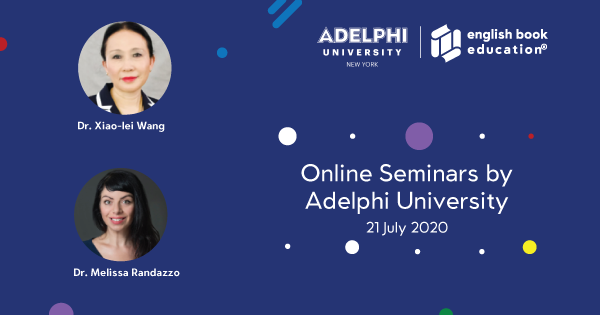
We would like to thank you for attending the online seminars organized by English Book Education in partnership with Adelphi University on the 21st of July.
The first session “Nonverbal communication in Teaching”was conducted by Dean and ProfessorDr.Xiao-lei Wang, College of Education and Health Sciences at Adelphi University.
During
the webinar the speaker discussed how teachers can take advantage of
the nonverbal modality to help students learn, also how to use hand gestures,
facial expressions, and body postures in teaching, and how to “read” students’
nonverbal communication cues and use them as an index in instruction.
Please follow the link to download the PDF of the material used during the webinar.
The second session “Teaching with Zoom” was conducted by Dr.Melissa Randazzo, Assistant Professor in the Department of Communication Sciences and Disorders at Adelphi University.
During
the webinar, the speaker discussed how advances in online communication
platforms increased options for students and instructors. This session was focused
on three Zoom tools to make teaching and learning online fun and engaging:
whiteboard, polls, and reactions
Please follow the link to download the PDF of the material used during the webinar.
We would like to thank you for
attending the online seminar organized by English Book Education in partnership
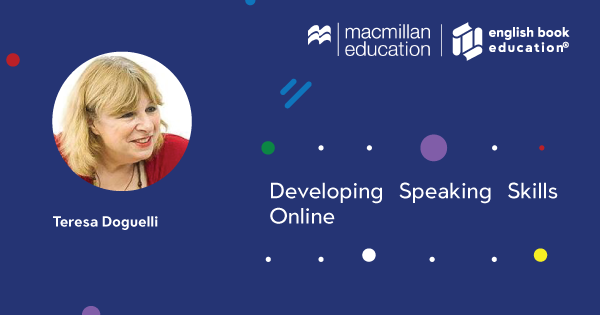
with Macmillan Education on the 15th of July.
The webinar was conducted by a
well-known teacher trainer Teresa Doguelli and focused on Developing Speaking
Skills Online.
During the webinar the speaker discussed
the necessity of developing online speaking skills, which is one of the main
challenges today. Various activities were also presented, which are important
to encourage purposeful speaking in
the FL classroom or from home.
Please follow the link to download the PDF of the material used during the webinar or find the recording below.
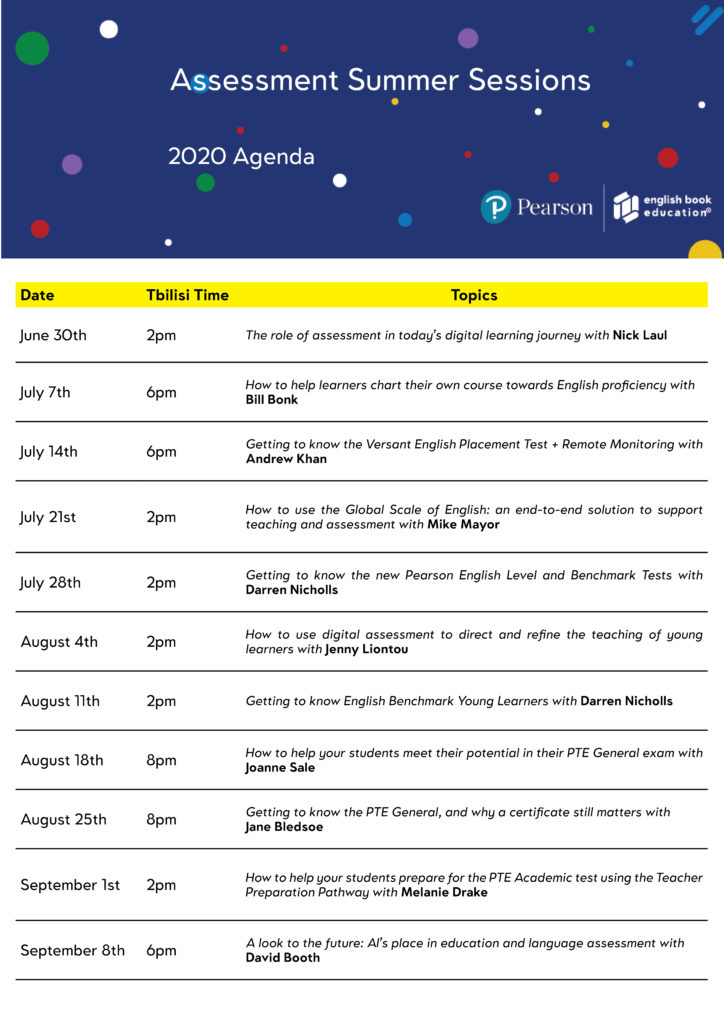
ჩვენი პარტნიორი ორგანიზაცია Pearson Education გთავაზობთ უფასო სასერტიფიკატო ვებინარების სერიას სახელწოდებით „Assessment Summer Sessions”. ვებინარები გაიმართება ყოველ სამშაბათს, 30 ივნისიდან 8 სექტემბრის ჩათვლით.
სესიებზე
განხილული
იქნება
ინგლისური
ენის სწავლებასა და შეფასებასთან დაკავშირებული სხვადასხვა საინტერესო თემა, მათ
შორის:
შეფასების როლი ინგლისური ენის
სწავლების
პროცესში,
მისი განვითარების ეტაპები და გამოყენების გზები;
დისტანციური სწავლებისა და შეფასების უპირატესობები, და მათი
ჩვენ სასარგებლოდ გამოყენების შესაძლებლობები;
სასარგებლო დამატებითი რესურსები ინგლისური
ენის სწავლებისათვის, რომლებიც
მასწავლებლებს
გაუმარტივებს
სწავლების
პროცესს,
ხოლო მოსწავლეებს დაეხმარება უფრო ეფექტიანად სწავლაში;
ასევე, როგორ მოვამზადოთ ჩვენი მოსწავლეები PTE General ტესტისათვის უფრო ეფექტიანად.
სესიებს
გაუძღვებიან
ELT სფეროს, განათლებისა და შეფასების ექსპერტები.
ვებინარების
თითოეული
მონაწილე
მიიღებს
მონაწილეობის
დამადასტურებელ
საერთაშორისო
სერტიფიკატს.
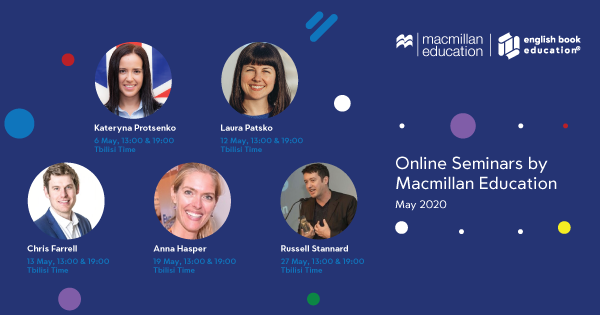
We are delighted to announce that Macmillan Education is planning a series of the following online seminars in May
1)Feedback that Empowers by Kateryna Protsenko
Date: 6 May, 13:00 & 19:00 Tbilisi Time
Agenda:
For many students, feedback is the most
valuable part of learning and is often one of the reasons why they choose
one-to-one classes over group classes. When participating in surveys on
customer satisfaction, students often say that they would like to have more
feedback from their teachers. It’s clear that feedback is a lot more than
simple error correction and praise for some good language – but what else does
it include?
In this seminar we will look at what feedback
is, what aspects of learning we can and should give feedback on and how to do
that. There are lots of things to take into account when giving feedback,
including task setting, students’ effort, level of challenge etc. – we will
also look at those things which we should be keeping in mind when giving
feedback. Finally, in the light of the current situation with COVID-19 and the
fact that learning has moved online and we will inevitable have to teach some
of our classes online from now on, we will examine how feedback online differs
from feedback given face-to-face.
2)Online lessons that are active and interactive by Laura Patsko
Date: 12 May, 13:00 & 19:00 Tbilisi Time
Agenda:
These
days, more and more teachers and learners are finding ourselves spending the
majority of our days online – planning lessons, doing self-study or attending
live synchronous classes. We can look on the bright side and say, “Well, if we
have to be locked down at home, at least we have the technology nowadays to
keep us connected.” But there’s no denying that, for many people, sitting and
staring at a computer screen for long periods every day is not very motivating
or healthy (either mentally or physically). So how can we boost levels of energy
and engagement in our live classes? This seminar will demo a few tips and
tricks, and invite teachers who have recently moved their classes online to
share their own insights.
This
session will look at the practicalities of moving your whole school apparatus
into an online context. The content of this webinar forms the basis for an
upcoming online course from NILE with the same title. The premise is that, in
the current climate, many of us have been forced to move online quickly, and
this course will offer guidance on how to do it properly. The course is rooted
in accreditation criteria from Eaquals and the Aqueduto QA Framework and will
look at the key areas which make a school successful and the considerations in
transferring these areas into an online context. This session will cover
considerations in the areas of Teaching and Learning, Quality Assurance,
Safeguarding, and Assessment and offer some practical tips in each area.
4)Engaging teens? It’s not all about technology… by Anna Hasper
Date: 19 May, 13:00 & 19:00
Tbilisi Time
Agenda:
Most
teens are more digitally literate then we will ever be, so don’t get hung up on
overloading your teens with the lastest cutting-edge Apps and tools whilst
teaching online. Engaging teens online is not all about technology…
5)Evaluation and Assessment when teaching online by Russell Stannard
Date:
27 May, 13:00 & 19:00 Tbilisi Time
Agenda:
In
this talk, Russell Stannard will highlight a range of ways of assessing
students online. From basic formative assessments through quizzes and tests to the
use of E-Portfolios, Russell will take you through practical examples of how he
assesses students on his online courses. A talk full of ideas looking
at assessment over range of skills including assessing speaking, writing,
reading, listening as well as looking at reflection, peer and self-evaluation.