Tag Archives: October 2014

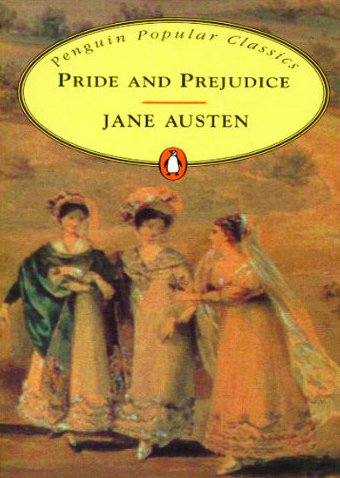
Book of the Week: Pride and Prejudice by Jane Austen

Oct 16-PridePrejudice

Since its publication in 1813, Pride and Prejudice’s blend of humor, romance, and social satire have delighted readers of all ages. In telling the story of Mr. and Mrs. Bennett and their five daughters, Jane Austen creates a miniature of her world, where social grace and the nuances of behavior predominate in the making of a great love story.

At the turn of eighteenth-century England, spirited Elizabeth Bennet copes with the suit of the snobbish Mr. Darcy while trying to sort out the romantic entanglements of two of her sisters, sweet and beautiful Jane and scatterbrained Lydia.

[button color=”blue” size=”small” link=”http://englishbookgeorgia.com/catalogue/shop/englishlibrary/pride-and-prejudice-2/” target=”blank” ]Buy the Book[/button]


Interesting Facts about Agatha Christie

Agatha-Christie   Learn some interesting facts about the world’s best-selling mystery writer.

  • Dame Agatha Christie is in the Guinness Book of World Records as the World’s Bestselling Author. With between 2 and 4 billion works sold, she is bested only by William Shakespeare and the Bible. Christie is also the most translated novelist in history.
  • Agatha Christie’s play The Mousetrap has the longest theatrical run, according to the Guinness Book of World Records. It opened at the Ambassadors Theatre in London on November 25, 1952. It continues to this day.
  • At one point in her successful career, Mrs. Christie actually owned eight different houses. Many of these houses were “used” as the houses in several of her novels.
  • Charles Dickens was Agatha’s favorite author.
  • Christie wrote her first detective story after being challenged by one of her older sisters.
  • Six publishers rejected her first manuscript before it was eventually published in 1920. She eventually received £25 for it.
  • During WWII, she worked in a hospital pharmacy. She there began acquiring a knowledge of poisons that would serve her novels well.

Enjoy a video with some interesting facts about her most famous character, Hercule Poirot in the video below.

5 Secrets For Building A Highly Successful Career

building success

Everyone wants to build a successful career: to get promoted, to gain new responsibility and authority, to earn a higher salary.

[tabs type=”vertical”][tabs_head][tab_title]Be Deeply Curious.[/tab_title][tab_title]Learn how to get the people around you to do the best they can.[/tab_title][tab_title]Find a work-life rhythm you can maintain.[/tab_title][tab_title]Care deeply.[/tab_title][tab_title]Build your team.[/tab_title][/tabs_head][tab]When looking for people to place in leadership positions, especially senior leadership positions, look for people who deeply understand the business. Probe deeply into most companies and you’ll find way too many senior executives understand their role and their division but not the overall business, much less the broader economy. An outstanding executive: 1) Deeply understands their specific areas of responsibility; 2) Thoroughly understands the aspects of the rest of their company; 3) Has a solid understanding of their industry, other industries, and macro-economic forces and trends. Sound like a lot to know? It is – but it is knowledge that will separate you from the pack. Most people work hard to check the “I’m doing a great job in my job” box, but to be a leader you need to be able to step up, care about, and truly understand the larger issues of the business. People instantly recognize when you truly care about your business and truly care about learning. That always shines through – and will always take you far. [/tab][tab]Remember: different people have different leadership styles and different ways they influence others. Authenticity is the real key to leadership at any level, especially the senior level. The goal is to be authentic and learn to work within the framework of your personality to get people to follow your lead. Be yourself and leverage your strengths. Don’t try to act like someone else; people can instantly tell. If you’re casual and easygoing, don’t try to switch personalities and become refined and polished. You’ll just come across as insincere and plastic. People like, respect, and follow real people. Be yourself and learn how to get people to do what you want them to do – as yourself.[/tab][tab]You can’t treat your career like a crash diet: Cut your calories in half and exercise like crazy and you will lose weight, but eventually you won’t be able to stick with a program like that and you’ll gain back the weight you lost. A career works the same way. While there will be periods of intense stress, in general you must find a business and life rhythm you can maintain over the long term. Find a rhythm where you can have enough time for family and friends, feel satisfied emotionally, and still excel at work, because building a great career is a marathon, not a sprint.[/tab][tab]Don’t kid yourself: Everyone knows when you’re only in it for yourself. Unless you truly care about the company you work for and are personally invested in its success, you will never work as hard as you need to work to truly succeed. Every great leader is deeply invested in the success of others; every great business leader, regardless of position or level, cares deeply about their company and the people around them. If you don’t care deeply now, find something you do care deeply about: Another function, another mission, another company, etc. You can only reach your full potential, both personally and in a career, when you truly care.[/tab][tab]Outside of work we all need a broader group of people we can rely on to provide advice and guidance – people who care about our success the same way we care about theirs. In other words you need a team. The people on your team don’t need to be older, grizzled sages – they just need to know you and care about you. Make sure you have people in your life you can always turn to and for whom you will always do the same.[/tab][/tabs]

Interesting Words and Expressions – The Pen is Mightier than the Sword.

the pen is mightier than the sword

The pen is mightier than the sword. What does it mean?

Trying to convince people with ideas and words is more effective than trying to force people to do what you want.

Where does it come from?

It was created by the English author, Edward Bulwer-Lytton, in 1839, for his play Richelieu; Or the Conspiracy.

The play was about Cardinal Richelieu. His line’s in Act II, scene II, was more fully:

True, This! —
Beneath the rule of men entirely great
The pen is mightier than the sword. Behold
The arch-enchanters wand! — itself is nothing! —
But taking sorcery from the master-hand
To paralyse the Cæsars, and to strike
The loud earth breathless! — Take away the sword —
States can be saved without it!


Which Book Would You Like To Read?

To celebrate Agatha Christie this week, we are asking you which book would you like to read?

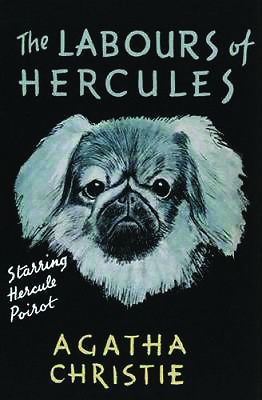
LaboursThe Labours of Hercules
Author: Agatha Christie
ISBN:9780007280513

In appearance Hercule Poirot hardly resembled an ancient Greek hero. Yet—reasoned the detective—like Hercules he had been responsible for ridding society of some of its most unpleasant monsters.

So, in the period leading up to his retirement, Poirot made up his mind to accept just twelve more cases: his self-imposed ‘Labours’. Each would go down in the annals of crime as a heroic feat of deduction.

Price: 12,9 GEL


[button color=”blue” size=”small” link=”http://englishbookgeorgia.com/catalogue/shop/harpercollins/the-labours-of-hercules/” target=”blank”  ]Buy the Book[/button]


Perfect MurdersPoirot: The Perfect Murders: Omnibus
Author: Agatha Christie
ISBN:9780007190645

A brand new Poirot omnibus, featuring four of the world-renowned detective’s most challenging cases: The Murder of Roger Ackroyd, Murder on the Orient Express, Murder in the Mews and Hercule Poirot’s Christmas.

It seems Hercule Poirot can never escape murder – and in this collection, the crimes are probably the finest he has ever had to solve. Locked rooms, wealth and jealousy – outwardly all very similar, but when the detective begins to dig, the motives and solutions couldn’t be more different…

The Murder of Roger Ackroyd
In the quiet village of King’s Abbot, a wealthy widower is found stabbbed to death in his study…

Murder on the Orient Express
A wealthy American dies of multiple stab wounds on a train bound for Paris…

Murder in the Mews
A widow is murdered in her apartment…

Hercule Poirot’s Christmas
A sadistic old man is brutally murdered in his locked study…

Price: 12,9 GEL

[button color=”blue” size=”small” link=”http://englishbookgeorgia.com/catalogue/shop/harpercollins/poirot-omnibus-the-perfect-murders/” target=”blank”  ]Buy the Book[/button]


Theme of the Week: Agatha Christie

agatha-christie

The theme for this week is about Agatha Christie, who was an English crime novelist, short story writer, and playwright.

She is the world’s best-selling mystery writer, and often referred to as the “Queen of Crime”, Agatha Christie is considered a master of suspense, plotting, and characterisation. She is also best known for her 66 detective novels and 14 short story collections, which revolve around the investigations of such characters as Hercule Poirot, Miss Jane Marple, Mr Satterthwaite, and Tommy and Tuppence.

Most of her books and short stories have been adapted for television, radio, video games and comics, and more than thirty feature films have been based on her work.

Below is a clip from her most famous character, Hercule Poirot.

Inspirational Quotes


Deprecated: preg_match_all(): Passing null to parameter #2 ($subject) of type string is deprecated in /home2/englita2/public_html/blogebg/wp-includes/media.php on line 1893

Deprecated: str_contains(): Passing null to parameter #1 ($haystack) of type string is deprecated in /home2/englita2/public_html/blogebg/wp-includes/shortcodes.php on line 150

Deprecated: preg_split(): Passing null to parameter #2 ($subject) of type string is deprecated in /home2/englita2/public_html/blogebg/wp-includes/formatting.php on line 3492

Educator’s Methodology: Part 1: Developing Students’ Trust: The Key to a Learning Partnership

We’d like to introduce you to a 3 part series we call Educator’s Methodology. It serves to inform and educate people working in the education field. We hope you enjoy this series and look forward to hearing your comments. Stay tuned and check out part 2 next week!

Educator’s Methodology

Part 1: Developing Students’ Trust: The Key to a Learning Partnership

Trust

By Ben Johnson (Administrator, author and educator)

I am a pragmatist, and I believe in simple, systemic solutions. I firmly believe that the true art/skill/magic/science of teaching is to perfectly match your style with the individual student’s needs. Conceptually, many teachers know this is the right way to teach. However, it flies in the face of what most teaching professionals practice. In many classrooms still, students must either adapt to the teacher’s way of teaching or fail.

I often reflect on what we call “teaching” and have come to the brilliant conclusion that it is less about what the teacher does and all about what students learn. How you approach teaching all comes down to what you believe about students and what methods you believe are the best ways to get them to learn. Here is one example of what I believe:

A shaggy but beautiful stray dog came to our house in the country one day. Our hearts went out to it, and we decided to help it. My wife and I put out some food, which it ate, but it refused to let us approach. Every time we tried, it would shy away and stay out of reach. The bottom line is that, for one reason or another, it did not trust us. Who knows what its history was? It trusted us enough to eat our food, but that was as far as it went.

I am sure that, given a few weeks, we could have built a relationship of trust with that dog — but, unfortunately, it moved on and we haven’t seen it since.

Students who come to our classrooms are much like that dog: Unless they trust us, they are unapproachable.

We earn our students’ trust by showing them respect in the form of meaningful, challenging, and rewarding learning activities that are worthy of their time and best efforts.

Students in their early years of school are naturally trusting, and — please don’t take this the wrong way — we abuse that trust in the name of socialization and classroom management. In essence, we teach them to obey rather than to build confidence to explore. As students get older, they often trust less and start behaving much like our shaggy and suspicious visitor. Most students will take what we offer but will not allow a learning partnership because they do not trust us.

Trust works the other way, too. As teachers, we have learned to distrust our students. All it takes is one disruptive young person to ruin it for the rest of the students that follow. We don’t want to get burned again, so we tighten the rules and narrow the focus. We develop an attitude that we can’t trust our students to learn independently. Especially in the early grades, we feel it is our responsibility to control every aspect of their learning activities so things don’t get out of hand, or so they don’t make a mess.

We could call this way of thinking the color-between-the-lines syndrome: We like everything neat and orderly. So, by the time the students get to high school, some know how to color between the lines, while others drop out because they don’t want to.

There is a solution to this: student-directed learning. As the name suggests, student independence and choice is a central part of it. Teaching is just as much about taking risks as learning is. A teacher has to take a chance on students and trust them enough to be independent learners. That can’t happen if the teacher is uncomfortable about tailoring the curriculum to multiple levels of student performance. (Does this sound familiar?) This lofty goal of differentiated instruction is achievable on many levels, but it is much easier to reach when teachers work together to help individual students.

Unfortunately, many teachers have tried cooperative groups, inquiry, project (process/product/performance)-based learning and had a terrible experience. Perhaps the students did not behave appropriately, or they did not learn, or it was a waste of time. Too often teachers with this first experience are hesitant to try again. Instead, they fall back on what they know works — students in straight rows, individual worksheets, slide show lectures, and direct instruction. If this applies to you, I would urge you to try again (trust again). I guarantee that each time you try again, it will get better. Students will learn what to do, they will behave better, and they will appreciate your trust.

As I said earlier, teaching flows from what an educator believes is the best way to teach a student. That belief is not demonstrated in mission statements and platitudes, but it is clearly visible in the way teachers set up and run their classrooms and in how they treat their students. Once a teacher understands the mechanics of the teaching (learning) cycle, discipline and classroom management take a secondary role and the teacher can begin to focus on what he or she can do to help each individual student to learn best — whatever it takes. We have to get beyond socialization and control, and teach students how to trust themselves to learn in the early grades. Otherwise, we will continue to be frustrated as we end up trying to teach a bunch of skittish stray dogs for students.

How do you feel about this approach? Please share your thoughts.
Inspirational Quotes


Deprecated: preg_match_all(): Passing null to parameter #2 ($subject) of type string is deprecated in /home2/englita2/public_html/blogebg/wp-includes/media.php on line 1893

Deprecated: str_contains(): Passing null to parameter #1 ($haystack) of type string is deprecated in /home2/englita2/public_html/blogebg/wp-includes/shortcodes.php on line 150

Deprecated: preg_split(): Passing null to parameter #2 ($subject) of type string is deprecated in /home2/englita2/public_html/blogebg/wp-includes/formatting.php on line 3492

Spinosaurus Takes Over NAT GEO

spinosaurus-exhibit.jpg.adapt.590.1

Move over Tyrannosaurus rex! National Geographic Explorer Nizar Ibrahim worked with colleagues to digitally reconstruct the Spinosaurus and confirmed that it grew up to 15 meters in length and was 3 meters larger than T. rex.

The first partial skeletons of the Spinosaurus were found by Bavarian paleontologist, Ernst Stromer von Reichenbach in the Egyptian Sahara on an expedition. The fossils were displayed in Munich Germany but were destroyed during WWII.

Ibrahim was inspired by children’s books that featured the Spinosaurus and later learned about Stromer’s discovery while studying in the United Kingdom.

While traveling in Morocco for his studies, Ibrahim bought some fossils not realizing their actual value. The next year, he was shown a partial Spinosaurus skeleton and realized the fossils he owned matched this skeleton.

Using all known information he had collected over the years, he and his colleagues were able to create a computer model and 3D-printed life-size Spinosaurus skeleton. With this information they verified it was not only larger than T. rex but also the only carnivore to walk on four legs.

[button color=”blue” size=”small” link=”http://kids.nationalgeographic.com/explore/science/spinosaurus-at-nat-geo/” target=”blank” ]Source[/button]