Tag Archives: Interesting Word

Interesting Words And Expressions – Brouhaha

What does brouhaha mean?

It is a noun and means a noisy and overexcited reaction or response to something.

How do you pronounce it?

ˈ/bro͞o′hä-hä′/

or

[brou·ha·ha]
Where does it come from?

Some etymologists think the word is onomatopoeic (imitating a sound) in origin, but others believe it comes from the Hebrew phrase “bārūkh habbā’,” meaning “blessed be he who enters”.

Although we borrowed our spelling and meaning of “brouhaha” directly from French in the late 19th century, etymologists have connected the French derivation to that frequently recited Hebrew phrase, distorted to something like “brouhaha” by worshipers whose knowledge of Hebrew was limited. Thus, once out of the synagogue, the word first meant “a noisy confusion of sound” — a sense that was later extended to refer to any tumultuous and confused situation.

How do you use it?

  1. brouhaha erupted over her statements about the president.
  2. There’s been a lot of brouhaha in the city about the prime minister’s decision to raise taxes.

Interesting Words And Expressions – Collywobbles

What does collywobbles mean?

It is a noun and means pain in the abdomen and especially in the stomach; a bellyache or “butterflies in the stomach”.

How do you pronounce it?

ˈ/kɒlɪwɒb(ə)lz/

or

[col·ly·wob·bles]

Where does it come from?

Etymologist believe that collywobbles most likely has its origin in cholera morbus, the Latin term for the disease cholera (the symptoms of which include severe gastrointestinal disturbance).

How would cholera morbus have shifted into collywobbles? By folk etymology – a process in which speakers make an unfamiliar term sound more familiar. In this case, the transformation was probably influenced by the words colic and wobble.

How do you use it?

“… unfortunately I awoke this morning with collywobbles and had to take some medicine, the doctor gave me, to settle my stomach.”

Interesting Words And Expressions – Cattywampus

What does cattywampus mean?

It is an adjective and an adverb and means askew or awry; positioned diagonally or cater-cornered.

How do you pronounce it?

kat′ə wämpəs

or

[kat-ee-wom-puh s]

Where does it come from?

Long ago English gamblers called the four-dotted side of a die cater (from the French quatre, “four”). The placement of those four dots suggested two diagonal lines, which is likely how cater came to mean (dialectally, anyway) “to place, move, or cut across diagonally.”

Catercorner (later kitty-corner) and caterwampus –and eventually cattywampus –followed.

How do you use it?

Measure carefully before cutting, or the entire building will be cattywampus.

City hall is cattywampus to the post office.


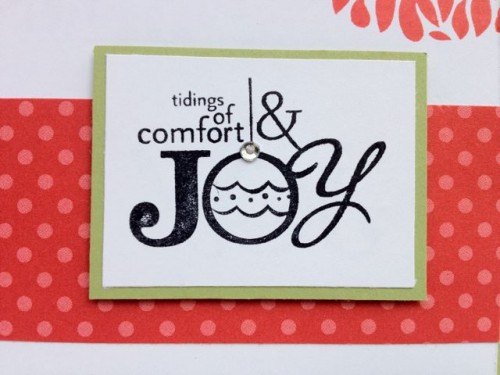
Interesting Words And Expressions – Tidings

tidings

What does tidings mean?

It is an old-fashioned word that simply means news and information. Bidding someone “good tidings” wishes them good, positive news and thoughts. It’s the same if you have “bad tidings,” you bring bad, negative news or thoughts with you. This term is a little unusual since it’s almost always in the plural form; you would never say, “I bring you a good tiding“!

How do you pronounce it?

/ˈtʌɪdɪŋz/

or

[tahy-dingz]

Where does it come from?

In 1069, the Old English pronounced it as tīdung, which is related to the Middle Low German word of tīdinge information. In Old Norse it is tidhendi events.

How do you use it?

The new broadcast brought better tidings about the outlook for public jobs.

I bring you good tidings this Christmas holiday.

Interesting Words And Expressions – Eclectic

Eclectic art

What does eclectic mean?

It is an adjective and a noun and is deriving ideas, style, or taste from a broad and diverse range of sources.

How do you pronounce it?

ɪˈklɛktɪk/

or

[ih-klek-tik]

Eclectic fashion

Where does it come from?

The term comes from the Greek ἐκλεκτικός (eklektikos), literally “choosing the best”, and that from ἐκλεκτός (eklektos), “picked out, select”. Well known eclectics in Greek philosophy were the Stoics Panaetius and Posidonius, and the New Academics Carneades and Philo of Larissa. Among the Romans, Cicero was thoroughly eclectic, as he united the Peripatetic, Stoic, and New Academic doctrines. Other eclectics included Varro and Seneca.

How do you use it?

I want to go to a university that offers an eclectic mix of classes.

I like her eclectic taste in clothes. She’s a mix of hip-hop, bohemian and hipster.


Interesting Words And Expressions – Faux Pas

Faux-Pas

What does faux pas mean?

It’s a slip or blunder in etiquette, manners, or conduct; an embarrassing social blunder or indiscretion.

How do you pronounce it?

\ˈfō-ˌpä, fō-ˈ\

or

[foh pah]

Where does it come from?

The expression faux pas comes from France, where it means “false step”, “misstep” (in a physical as well as a figurative sense). It has been used in English for over 300 years. Synonyms in English include gaffe and (social) blunder.

How do you use it?

Arriving too early would be a serious faux pas.

According to an oft-told story, the queen set a guest at ease about a faux pas by politely imitating it.


Interesting Words and Expressions – Annihilate

What does annihilate mean?

It is a verb that means to destroy (something or someone) completely; obliterate OR to defeat (someone) completely.

How do you pronounce it?

/əˈnʌɪɪleɪt/

or

[an·ni·hi·late]

Where does it come from?

From the 1520’s, Late Latin ‘annihilatus’, past participle of ‘annihilare’, to bring to nothing.

How do you use it?

For example, “The enemy troops were annihilated.” OR “He annihilated his opponent in the last election.”

Interesting Words and Expressions – Floccinaucinihilipilification

Floccinaucinihilipilification

What does floccinaucinihilipilification mean?

It is an uncountable noun that is often used humorously. It is the act or habit of describing or regarding something as unimportant, of having no value or being worthless.

How do you pronounce it?

/flɒksɪˌnɔːsɪˌnɪhɪlɪˌpɪlɪfɪˈkeɪʃ(ə)n/

or

[flok-suh-naw-suh-nahy-hil-uh-pil-uh-fi-key-shuh n]

Where does it come from?

A jocular coinage, apparently by pupils at Eton College in England, combining a number of roughly synonymous Latin stems. The word was inspired by a line in the Eton Latin Grammar Book.

It is a rare word and is also an example of the longest word in the English language. The word is used chiefly as a curiosity.

How do you use it?

For example, “There’s a little bit of floccinaucinihilipilification going on here.”

Interesting Words and Expressions – Ailurophile

McCall Cover, Joan Caulfield

What does Ailurophile mean?

A cat-lover or a person who adores all things feline.

Where does it come from?

From Ancient Greek aílouros, (“cat”) + phile (from Ancient Greek phílos, (“dear”, “beloved”).

How do you use it?

For example: “You don’t have to be a crazy old cat lady to be an ailurophile!”