Tag Archives: For Teachers

Which Book Would You Read?

In honor of our celebration of William Shakespeare this week!

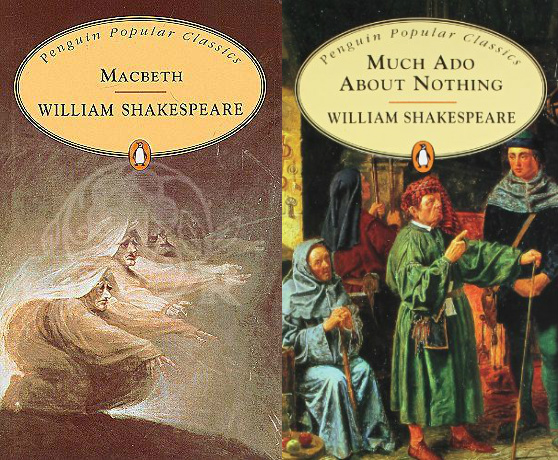
Macbeth

Author: William Shakespeare

ISBN: 9780140623475

Promised a golden future as ruler of Scotland by three sinister witches, Macbeth murders the king to ensure his ambitions come true. But he soon learns the meaning of terror – killing once, he must kill again and again, and the dead return to haunt him. A story of war, witchcraft and bloodshed, Macbeth also depicts the relationship between husbands and wives, and the risks they are prepared to take to achieve their desires.

Price: 5.50ლ

[button color=”blue” size=”small” link=”http://onlinebookshop.ge/?product=macbeth” target=”blank” ]Buy the Book[/button]


Much Ado About Nothing

Author: William Shakespeare

ISBN: 9780141197739

A vivacious woman and a high-spirited man both claim that they are determined never to marry. But when their friends trick them into believing that each harbors secret feelings for the other, they begin to question whether their witty banter and sharp-tongued repartee conceals something deeper. Schemes abound, misunderstandings proliferate and matches are eventually made in this sparkling and irresistible comedy.

Price: 15.90ლ

[button color=”blue” size=”small” link=”http://onlinebookshop.ge/?product=much-ado-about-nothing” target=”blank” ]Buy the Book[/button]

William Shakespeare Activities

Its William Shakespeare week and we have some Shakespeare activities that you can do with your English class that are fun and educational. Enjoy!


1. Who am I?

Tell your students to imagine that you’re a very famous Briton! Get them to ask you ‘yes/no’ questions until they guess who you are. (You are Shakespeare!)

If you want to, play a few more rounds of the guessing game using other famous Britons, or use it in another class to practice question forms again.

Alternatively, write an anagram of WILLIAM SHAKESPEARE such as MALILIW RAKESHAPEES on the board and have a race to see which student can find the name first.


2. Shakespeare Mind Map

Once you have established that Shakespeare is going to be the topic for the lesson, write the word Shakespeare with a little picture if you are artistic, inside a bubble on the board. Ask students what they know about him or what comes to mind when they think about William Shakespeare. This will help you to know how much or how little your students already know in order to gauge the level of input for the class.


 WILLIAM SHAKESPEARE


3. Shakespeare Quiz

Here is the printout for the Shakespeare Quiz (make sure not to include the answers):

[box type=”shadow” align=”aligncenter” ]How much do you know about William Shakespeare? Try this quiz to find out.

1) When was William Shakespeare born?

a) 1498

b) 1564

c) 1895


2) What period in English history was it when Shakespeare was alive?

a) Elizabethan

b) Georgian

c) Victorian


3) Which of these plays was not written by Shakespeare?

a) Hamlet

b) Romeo and Juliet

c) The Taming of the Rat


4) Where was Shakespeare born?

a) Stratford Upon Avon

b) Cambridge

c) Oxford


5) How many plays did Shakespeare write?

a) 8

b) 38

c) 108


6) Which type of plays did Shakespeare not write?

a) Tragedies

b) Comedies

c) Musicals


7) What’s the name of the ‘Shakespeare theatre’ in London?

a) The World Theatre

b) The Globe Theatre

c) The Old Shakespeare Theatre


8) Who played Romeo in the most recent film version of ‘Romeo and Juliet’?

a) Leonardo Dicaprio

b) Johnny Depp

c) Brad Pitt[/box]


Quiz Answers:

1-b, 2-a, 3-c, 4-a, 5-b, 6-c, 7-b, 8-a


4. Information gap reading.

Put students into pairs to do this activity. It’s very important that your students don’t look at each others’ texts during the task so make this clear when you give the instructions. If this type of task is new to your students, demonstrate it with one of the stronger students before the class begin. Before students begin speaking they need to read the text carefully and prepare the questions that they are going to ask their partner. The first question is given as an example. You may need to help your students write the questions.

Here’s the complete text for you to check the students’ answers.

William Shakespeare was a poet and a playwright, and is widely regarded as the greatest writer in the English language. He was born in Stratford-upon-Avon, in central England, in 1564 and he died in 1616. His surviving work consists of 38 plays, 154 sonnets (a special type of poem with 14 lines), and some other poems. He is best known for his plays which have been translated into every major language and are performed more than those of any other playwright in the world.

When William Shakespeare was 18 years old he married Anne Hathaway, and they had three children. Shakespeare went to London to work as an actor and a writer. In 1599 the Globe Theatre was built in London and it was in this theatre, situated on the banks of the River Thames, that some of Shakespeare’s plays were first performed. In 1613 the theatre was destroyed by a fire. However, a modern reconstruction of the theatre was built near the original site in 1997 so even today you can go to the Globe Theatre to see one of Shakespeare’s plays.

Here are the printouts for Student A and B:

[box type=”shadow” align=”aligncenter” ]Student A

Text adapted from Wikipedia – http://en.wikipedia.org/wiki/William_Shakespeare

William Shakespeare was a poet and a playwright, and is widely regarded as the greatest writer in the English language. He was born in 1) _____________________, in central England, in 1564 and he died in 2)_______. His surviving work consists of 38 plays, 154 sonnets (a special type of poem with 14 lines), and some other poems. He is best known for his 3) ______ which have been translated into every major language and are performed more than those of any other playwright in the world.

When William Shakespeare was 18 years old he married 4) ______________, and they had three children. Shakespeare went to 5) ________ to work as an actor and a writer. In 1599 the Globe Theatre was built in London and it was in this theatre, situated on the banks of the River Thames, that some of Shakespeare’s plays were first performed. In 6) _______the theatre was destroyed by a fire. However, a modern reconstruction of the theatre was built near the original site in 1997 so even today you can go to the Globe Theatre to see one of Shakespeare’s plays.

Prepare your questions here (the first one is done for you):

1) Where was Shakespeare born?

2)

3)

4)

5)

6)[/box]


[box type=”shadow” align=”aligncenter” ]Student B

Text adapted from Wikipedia – http://en.wikipedia.org/wiki/William_Shakespeare

William Shakespeare was a poet and a playwright, and is widely regarded as the greatest writer in the English language. He was born in Stratford-upon-Avon, in central England, in 1) _____ and he died in 1616. His surviving work consists of 2)____ plays, 154 sonnets (a special type of poem with 14 lines), and some other poems. He is best known for his plays which have been translated into every major language and are performed more than those of any other playwright in the world.

When William Shakespeare was 3) ______ years old he married Anne Hathaway, and they had 4)_______ children. Shakespeare went to London to work as an actor and a writer. In 5) ______ the Globe Theatre was built in London and it was in this theatre, situated on the banks of the River Thames, that some of Shakespeare’s plays were first performed. In 1613 the theatre was destroyed by a 6) ______. However, a modern reconstruction of the theatre was built near the original site in 1997 so even today you can go to the Globe Theatre to see one of Shakespeare’s plays.

Prepare your questions here (the first one is done for you):

1) When was Shakespeare born?

2)

3)

4)

5)

6)[/box]

5. Find somebody who…

The aim of this task is to get students talking to each other. Your students may well be familiar with the classic ‘Find Somebody Who..’ task. First get students to complete the last row with something they’d like to find out about their classmates, then remind students how important the extra information column is. Demonstrate a few of the question forms or elicit these from students and if necessary write the questions on the board to support weak students during the task. For example, ‘Can you name three of Shakespeare’s plays?’ and ‘Have you ever seen a film of a Shakespeare play?’ etc. When your students are ready to start, make sure everyone is standing up and has something to lean on and a pen with them, and off they go. As students are speaking to each other and completing the table make sure you monitor carefully so you can offer some constructive feedback at the end.

Here is the printout for your students:

Find someone who                Name                                Extra information           
…can name three of Shakespeare’s plays.
…has seen a film of a Shakespeare play.
… likes going to the theatre.
 … would like to be a writer.
… would like to be an actor / actress.


6. Complete the Shakespeare Quotes

This is a task for higher levels, as it’s quite challenging. Put students into small groups or pairs and give your students time to try and match the quotes. If you like, cut up a set of quote halves so students can move them around on a table to experiment with different combinations. Encourage your students to look for words that normally go together, such as ‘borrow and lend’ or ‘blind and see’. Then check their answers and ask them what they understand by them.

Here is the printout for your students (make sure not to include the answers):

Here are some famous quotes from Shakespeare. Can you match the two halves to make the quote?

 All the world’s a stage  that I shall say good night till it be morrow.
 Love is blind  never did run smooth
 that is the question  Neither a borrower
 and lovers cannot see  Good Night, Good night! Parting is such sweet sorrow,
 what’s done is done  To be, or not to be:
 and all the men and women are merely players  Things without remedy should be without regard;
 wherefore art thou Romeo?  The course of true love
nor a lender be  O Romeo, Romeo!


Answers:

All the world’s a stage and all the men and women are merely players

Love is blind and lovers cannot see

Neither a borrower nor a lender be

Good Night, Good night! Parting is such sweet sorrow, that I shall say good night till it be morrow.”

To be, or not to be: that is the question

Things without remedy should be without regard; what’s done is done

The course of true love never did run smooth

O Romeo, Romeo! wherefore art thou Romeo?
 

საინტერესო სიტყვები და გამონათქვამები – Effervescence

What does Effervescence mean?

It is a noun that means bubbles in a liquid; fizz.

How do you pronounce it?

/ˌɛfəˈvɛs(ə)ns/

OR

ef·fer·ves·cence

Where does it come from?

1675-85; < Latin effervēscent- (stem of effervēscēns), present participle of effervēscere to effervesce

How do you use it?

Bubbles are engaging because of their effervescence.

Bubbly soft drinks tickle our tongues with their effervescence.

Which Book Would You Read?

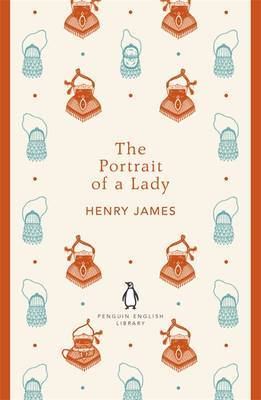
large_9780141199122The Portrait of a Lady

Author: Henry James

ISBN: 9780141199122

Widely regarded as Henry James’s greatest masterpiece, The Portrait of a Lady features one of the author’s most magnificent heroines: Isabel Archer, a beautiful, spirited American who becomes a victim of her provincialism during her travels in Europe.

As the story begins, Isabel, resolved to determine her own fate, has turned down two eligible suitors. Her cousin, who is dying of tuberculosis, secretly gives her an inheritance so that she can remain independent and fulfill a grand destiny, but the fortune only leads her to make a tragic choice and marry Gilbert Osmond, an American expatriate who lives in Florence. Outwardly charming and cultivated, but fundamentally cold and cruel, Osmond only brings heartbreak and ruin to Isabel’s life. Yet she survives as she begins to realize that true freedom means living with her choices and their consequences.

Richly complex and nearly aesthetically perfect, The Portrait of a Lady brilliantly portrays the clash between the innocence and exuberance of the New World and the corruption and wisdom of the Old.

Price: 15.0 ლ

[button color=”blue” size=”small” link=”http://onlinebookshop.ge/product/the-portrait-of-a-lady/” target=”blank” ]Buy the Book[/button]


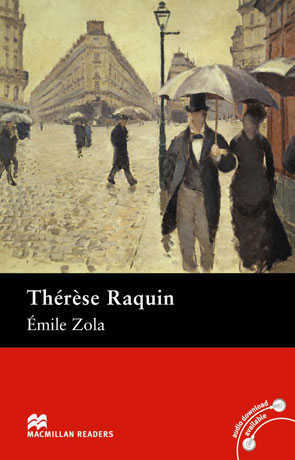
9780230035331Therese Raquin

Author: Emile Zola

ISBN: 9780230035331

In a dingy apartment on the Passage du Pont-Neuf in Paris, Therese Raquin is trapped in a loveless marriage to her sickly cousin, Camille. The numbing tedium of her life is suddenly shattered when she embarks on a turbulent affair with her husband’s earthy friend Laurent, but their animal passion for each other soon compels the lovers to commit a crime that will haunt them for ever.

Therese Raquin caused a scandal when it appeared in 1867 and brought its twenty-seven-year-old author a notoriety that followed him throughout his life.

Zola’s novel is not only an uninhibited portrayal of adultery, madness and ghostly revenge, but also a devastating exploration of the darkest aspects of human existence.

Price: 9.0 ლ

[button color=”blue” size=”small” link=”http://onlinebookshop.ge/product/macmillan-readers-therese-raquin-without-cd/” target=”blank” ]Buy the Book[/button]


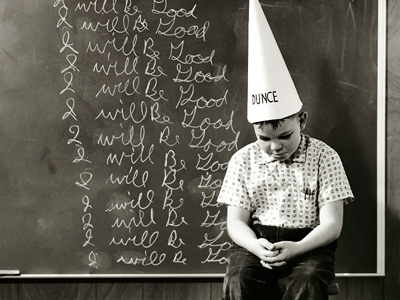
12 Ways to Avoid Student Humiliation

teach

Humiliation Is Never OK

Many of us can recall a situation when we were humiliated by a teacher. If you close your eyes and recall it, it still has the power to make you cringe. And also for many of us, if we never resolved our feelings with those teachers, we still haven’t forgiven them.

Teachers choose to humiliate students for several reasons: to gain control over them, because the teacher is desperate; to frighten other students; or because they’re over-compensating for their own lack of confidence. Some teachers actually think they have a right to humiliate a student because the student deserves it. Other teachers think that because students frequently humiliate themselves, especially online, students don’t mind being humiliated — some might even enjoy it.

Prevention and Repair

Many readers of this post are in positions of influencing other teachers, both formally and informally. We all need to use our influence to provide a safe haven for all students regardless of their behavior. Here are a dozen ways to prevent students from humiliation, or to fix the situation should you accidently embarrass a student and want to make things better.

  1. Don’t give a student an embarrassing haircut.
  2. Keep communication between you and your students private when talking about behavior or academic progress.
  3. Frequently check with your students that the message they are receiving is the same one that you are sending.
  4. Avoid sarcasm, even if your students might laugh at it. Students often save face by hiding how humiliated they really feel.
  5. Pay close attention to body language. Sometimes what a student is saying is not what he is feeling. If a student shows discomfort, defensiveness, or withdrawal, make sure everything is OK between you.
  6. If you notice any sudden change in a student’s behavior, especially indications of withdrawal, find time as quickly as possible to make sure that you have not been hurtful to that student, even unintentionally.
  7. Never write a student’s name in a public place.
  8. Do not praise a student for doing a simple task. This only makes her feel that you have low expectations for her.
  9. Call on all students equally. If a student gives a wrong answer, don’t say, “Can anybody help him?” Instead, ask the student if he’d like to choose another student to be his consultant. Let him chose his own consultant.
  10. Ask students to tell you (or preferably write you a note) about anything that they might find humiliating or embarrassing in class, and be sure not to do those things with any student that specifically informs you.
  11. Always give students the right to pass when you call upon them in class.
  12. Tell your students a story about a time when you were embarrassed by a teacher, discuss it with them, and listen to their suggestions of what you could have done to resolve the incident. Come up with a class poster called, “When you are embarrassed, you can. . .” and list the best suggestions.

Every student in school deserves the right to feel emotionally safe from embarrassment and humiliation by teachers, by other students — and by local barbers. When this safety is violated, not only does academic performance suffer, but also students might never be free of the hurt for the rest of their lives.


საინტერესო სიტყვები და გამონათქვამები – Jostle

Image source: Mark van Manen, Vancouver Sun

What does Jostle mean?

It is a verb that means to bump, push, shove, brush against, or elbow roughly or rudely.

How do you pronounce it?

/ˈdʒɒs(ə)l/

OR

[jos-uh l]

Landon Donovan
Image source: Robert Hanashiro, USA TODAY Sports

Where does it come from?

From 1350-1400, it’s a variant (in Middle English, variant spelling) of justle, equivalent to just or to joust + le

How do you use it?

The two football players jostled each other as both went for the ball.

10 Incredible European Libraries Every Booklover Should Visit

“The world is a book, and those who don’t travel only read one page.” – Augustine of Hippo


1. Stuttgart City Library

Location: Stuttgart, Germany.

Characterized by its cube shape and clinical white interior, this great crystalline building stands a whopping 9-storeys high over the German city of Stuttgart.

Stuttgart City Library
Flickr: schubi74 / Creative Commons

2. Mafra Palace Library

Location: Mafra, Portugal.

Situated inside the Mafra National Palace, the library is open to scholars, researchers, historians and members of the public by appointment. Unsurprisingly, many rare works furnish its shelves.

Mafra Palace Library
Flickr: anijdam / Creative Commons

3. TU Delft Library

Location: Delft, Netherlands.

At the heart of Delft University lies its library, whose unique cone shaped structure forms the focal point of the campus. The roof of the library is covered with grass, allowing visitors to graze above the library’s book filled central space.

TU Delft Library
Flickr: tudelftlibrary

4. Sainte-Geneviève Library

Location: Paris, France.

This magisterial library contains around 2 million documents and was a reading place of Marcel Duchamp and James Joyce. The building’s iconic architecture served as the inspiration for the deign of the Boston Public Library.

Sainte-Geneviève Library
Flickr: jastrow / Creative Commons

5. Malmö City Library

Location: Malmö, Sweden.

Located in the heart of the multicultural Malmö, this library is filled with books in some 60 different languages and attracts almost 1 million visitors each year.

Malmö City Library
Flickr: infomastern / Creative Commons

6. The Codrington Library

Location: Oxford, UK.

With its modern collection comprising of some 185,000 items, about a third of which being produced before 1800, the prestigious Codrington Library attracts scholars from around the world.

The Codrington Library
Flickr: biker_jun / Creative Commons

7. Wiblingen Abbey Library

Location: Wiblingen, Germany.

The majestic hall of Wiblingen Abbey’s library still holds some original manuscripts, despite most of the books having been transferred to other libraries. Besides, the main reason this library to visit is to marvel at the main hall, which remains in its original form.

Wiblingen Abbey Library
Flickr: volzotan / Creative Commons

8. Halmstad City Library

Location: Halmstad, Sweden.

Standing near the beach of the river Nissan, the unique shape of the building was inspired from the trees that stand on the site.

Halmstad City Library
Flickr: jacobwod / Creative Commons

9. Strahov Monastery Library

Location: Strahov, Czech Republic.

Completed in 1679, Strahov Monastery is one of the oldest monasteries still in existence in the world. During its long history many important personalities have visited, amongst which are admiral lord Horatio Nelson and Napoleon´s wife Marie Louise.

Strahov Monastery Library
Flickr: paulcoyne / Creative Commons


10. Handelingenkamer

Location: The Hague, Netherlands.

Handelingenkamer is the name given to the Dutch Parliament’s library. It’s unique design with its open cast-iron staircases and balustrades are designed to allow daylight to filter down the four storeys and illuminate the more than 100,000 volumes that line the shelves.

Handelingenkamer
Flickr: suasso / Creative Commons

[button color=”blue” size=”small” link=”http://www.buzzfeed.com/jamiejones/libraries-all-book-lovers-will-want-to-visit#.oaOz1xmnJQ” target=”blank” ]Source[/button]


საინტერესო სიტყვები და გამონათქვამები – Practice makes perfect

“Practice makes perfect.”

What does it mean?

You have to practice a skill a lot to become good at it.

Where does it come from?

The proverb has been traced back to the 1550s-1560s, when its form was ‘Use makes perfect.‘ The Latin version is: ‘Uses promptos facit.’ It was first used in it’s current form in the United States of Americca in ‘Diary and Autobiography of John Adams’.

Which Book Would You Read?

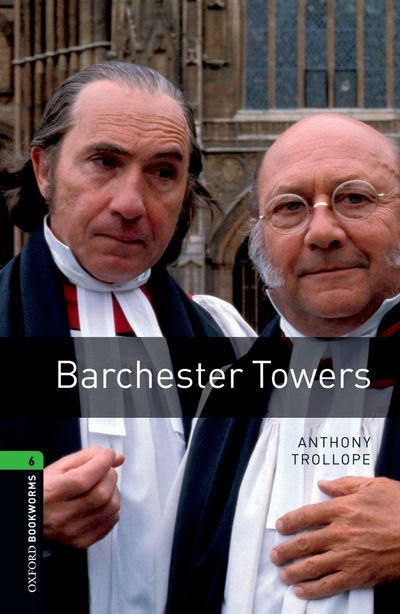
9780194792547Barchester Towers

Author: Anthony Trollope

ISBN: 9780194792547

Mrs Proudie, the warlike wife of the new Bishop of Barchester, brings the Reverend Slope into the Bishop’s Palace to help dominate her husband and rule the local clergy. But Slope is a snake in the grass, determined to find a rich wife, to win advancement for himself, even to fight Mrs Proudie if necessary. Their battle becomes a furious dance, involving rich, pretty Widow Bold, angry Archdeacon Grantly, man-eating Signora Neroni, gentle Mr Harding, confused Parson Quiverful and his fourteen noisy children. This classic comic story is Trollope’s most famous novel.

[button color=”blue” size=”small” link=”http://onlinebookshop.ge/product/barchester-towers-2/” target=”blank” ]Buy the Book[/button]


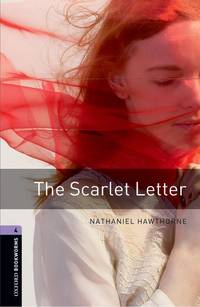
9780194791830.OU.0.mThe Scarlet Letter

Author: Nathaniel Hawthorne

ISBN: 9780194791830

Scarlet is the colour of sin, and the letter ‘A’ stands for ‘Adultery’. In the 1600s, in Boston, Massachusetts, love was allowed only between a husband and a wife. A child born outside marriage was a child of sin. Hester Prynne must wear the scarlet letter on her dress for the rest of her life. How can she ever escape from this public shame? What will happen to her child, growing up in the shadow of the scarlet letter? The future holds no joy for Hester Prynne. And what will happen to her sinful lover – the father of her child?

[button color=”blue” size=”small” link=”http://onlinebookshop.ge/product/the-scarlet-letter-3/” target=”blank” ]Buy the Book[/button]

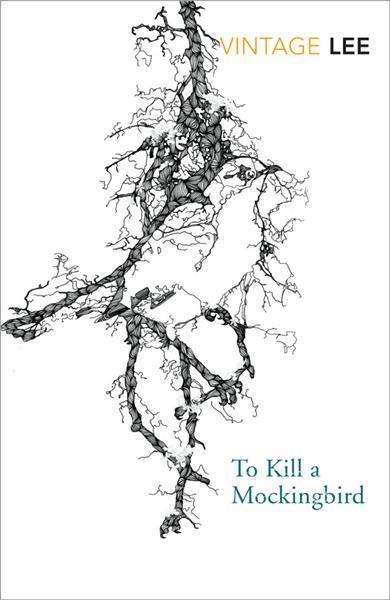
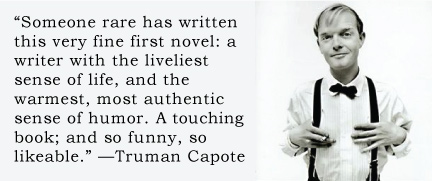
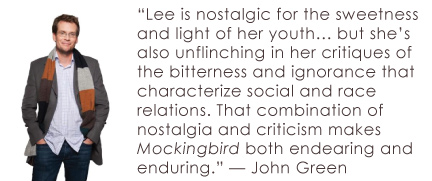
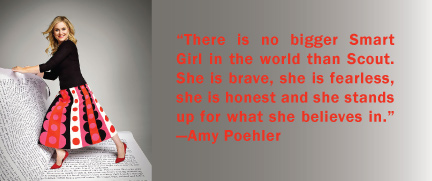
10 Famous Authors Discuss To Kill a Mockingbird

Many famous authors, near and far, have been affected by Harper Lee’s To Kill a Mockingbird. See what they have to say about the book below.

theme2a

“Few contemporary literary American novels have such a sweep and fewer have the confidence to take on social issues in the way Harper Lee does. Much literary writing today about racism is cloaked in irony or in so much lyricism that it becomes gaseous. Lee refuses to hide behind aesthetics. Her writing is so beautiful, so steady and even and limpid, that she might have evaded confronting these tribalisms head-on, but she doesn’t.” —Chimamanda Ngozi Adichie

“From my sister’s nightstand, I grabbed the paperback she’d been yapping about, To Kill a Mockingbird. The cover had a Technicolor picture of Gregory Peck and some little girl in overalls. I opened the book and read the first sentence, ‘When he was nearly thirteen, my brother Jem got his arm badly broken at the elbow.’ Three days later, I finished the book. A novel had never kidnapped me before. Until Mockingbird, I’d had no idea that literature could exert so strong a power.” –Wally Lamb 

theme2b

“I remember reading a portion of it thinking, reluctantly, this is really good. But I couldn’t admit it… It’s hard to imagine Empire Falls being written without To Kill a Mockingbird, because I don’t think Tick could have existed without Scout.” —Richard Russo

“Every time I go back, I’m impressed more by the simplicity of the prose . . . Although it’s plainly written from the point of view of an adult, looking back through a child’s eyes, there’s something beautifully innocent about the point of view, and yet it’s very wise.” —Mark Childress

theme2c

“I promised myself that when I grew up and I was a man, I would try to do things as good and noble as what Atticus had done for Tom Robinson.” —Scott Turow

To Kill a Mockingbird is probably in the top three of books like that, where you utterly live in the book, and walk around in the book, and know everyone down to the ground in the book, and then leave, and then inevitably come back. I can’t imagine anyone I like reading To Kill a Mockingbirdand then not rereading it.” —Anna Quindlen

“I think it is our national novel.” —Oprah Winfrey