Tag Archives: English Book in Georgia

Facts about Football

Football fever has taken over in our lives – at home, outside in the streets and cafes, on web, TV, radio and in everyday casual talks with friends, family members or neighbors.

Almost everyone is involved in the events of FIFA World Cup 2014. But how much do you know about football or the World Cup traditions? Below are some facts that you might find interesting.

  • USA and Canada are practically the only countries where Football is called Soccer
  • But where did the name “Soccer” come from? The game was originally called association football. “Soccer” is a corruption of “assoc” which is derived in turn from “association”
  • European Teams have reached the final of every World Cup except in 1930 and 1950
  • The highest scoring soccer game ever was 149-0!
  • Australia achieved the largest victory ever in an international soccer match when they defeated American Samoa 32-0 in 2001
  • Brazilian soccer star Ronaldinho first gained media attention after he scored every goal in a 23-0 game at age 13
  • Barbados once had to score a goal on themselves in order to win a soccer match!

Are there any other interesting facts, you would like to share with us?


Happy Birthday to Happy Birthday Song!!!

Did you know that today marks 155th anniversary of the day when this song was first sung? A song we heard thousands of times, in different languages and always on happy occasions!

Happy Birthday to you,
Happy Birthday, Dear Happy Birthday Song
Happy Birthday to you!


Here are some interesting facts about the song:

  • The song was published in 1893
  • The melody of “Happy Birthday to You” comes from the song “Good Morning to All”, which has been attributed to American siblings Patty Hill and Mildred J. Hill
  • According to the 1998 Guinness Book of World Records, “Happy Birthday to You” is the most recognized song in the English language
  • The combination of melody and lyrics in “Happy Birthday to You” first appeared in print in 1912, and probably existed even earlier
  • It has been sung in 143 movies, translated into at least 18 languages
  • Although the authors are believed to have earned very little from the song, reportedly it later generated about $1 million a year for its copyright owner
  • The Summy Company registered for copyright in 1935. There are still disputes about the copyright expiration dates.
  • Based on the 1935 copyright registration, Warner (company which owns the copyrights) claims that the United States copyright will not expire until 2030, and that unauthorized public performances of the song are technically illegal unless royalties are paid to Warner
  • One of the most famous performances of “Happy Birthday to You” was Marilyn Monroe’s rendition to U.S. President John F. Kennedy in May 1962
  • Another notable use was by comedy pianist Victor Borge, who would play the song in styles of various composers, or begin playing Claire de Lune then transition into Happy Birthday which then transitioned into the Moonlight Sonata and so on.

10 Things Real Leaders Always Do

Lead
This is not complicated, folks. Lead is the opposite of follow. When you spend a lot of your time trying to replicate how others do things, that’s not leading. It’s following. Great leaders lead by example. First they do, then they point the way for others to follow. You’re either one or the other, not both.

Manage
Yes, leadership and management are different. Hallelujah. Whether it’s managing their company’s organization, brand, products, customer experience, operations, finances, whatever, business leaders spend most of their time managing. Leadership is a skill set. Manage is what they do.

Strategize
In the old days, the big buzzword was invention. Then it was innovation. Now it’s improvement. Whatever. If you want to lead in business, you have to come up with a unique solution to a big problem that people are willing to pay for. You can call that Sylvester if you like, but I call it strategy.

Create culture
The root of the word culture is cult. Steve Jobs created a unique, cult-like culture at Apple. Likewise John Mackey at Whole Foods and the original Trader Joe … Joe Coulombe, that is. If you’ve never been to Google, check out the movie “The Internship.” Great leaders are not cast in a mold. They break the mold.

Inspire
We all need inspiration at times, but real leaders are usually inspired by their lives, which typically revolve around work and family. And since their job is to inspire and motivate others, they tend to have a pretty big source of it inside. If you’re in constant need of inspiration, you’re probably not leadership material.

Prioritize
Before everyone became so obsessed with personal improvement, productivity, and time management, real executives and business leaders learned to prioritize their time. And they prioritize their organization’s time by setting direction and goals, as well. That’s how the work gets done on time.

Juggle
No matter how well you prioritize or delegate, when your business is growing, you’ve got to keep a lot of balls up in the air. And if you’re not growing, you’re stagnating. For CEOs, especially in high-growth industries, multitasking is just a way of life … and I don’t mean tweeting while watching a YouTube video.

Plan, execute, adapt
There’s a three-part cycle to operating just about any business: plan, execute, adapt. In the beginning it’s mostly ad-hoc, but the bigger a company gets and the faster it needs to scale, the more formalized its operating processes must be.

Make smart decisions
Life is full of decisions but the vast majority — like what to eat for dinner or which phone to buy — aren’t super critical. Business is not the same because, unlike food choices, competitive markets are essentially zero-sum games. The bigger your title, the more critical your decisions. Great leaders make smart decisions.

Win
Just about any type of human performance is described by a bell-curve. Every field has its top performers, its bottom performers, and everything in between. Leadership is no different. Good leaders win more than they lose. Great leaders consistently beat the competition. That’s just what they do, and they do it better than anyone else.

Bottom line: Leaders lead and followers follow. It’s not complicated — you’re either one or the other. Which are you?
Source: Entrepreneur 

 

George Orwell’s Birthday

Today is George Orwell’s Birthday!

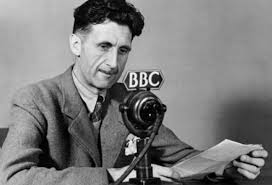
Eric Arthur Blair, better known by his pen name George Orwell, was an English author and journalist. His work is marked by keen intelligence and wit, a profound awareness of social injustice, an intense opposition to totalitarianism, a passion for clarity in language, and a belief in democratic socialism.

3
FRONT404

Interesting Art Project to celebrate 110th birthday of George Orwell (2013)

Last year, to celebrate what would’ve been George Orwell’s 110th birthday, two Dutch artists sought inspiration from his novel 1984. The artists took to the streets of the Dutch city of Utrecht to put party hats on CCTV cameras in an attempt to draw attention to the culture of surveillance in modern cities.

“On Tuesday the 25th of June, to celebrate the 110th birthday of George Orwell, surveillance cameras in the center of the city of Utrecht were decorated with colorful party hats!

George Orwell is best known for his book ‘1984’, in which he describes a dystopian future society where the populace is constantly watched by the surveillance state of Big Brother.

By putting these happy party hats on the surveillance cameras we don’t just celebrate Orwell’s birthday. By making these inconspicuous cameras that we ignore in our daily lives catch the eye again we also create awareness of how many cameras really watch us nowadays, and that the surveillance state described by Orwell is getting closer and closer to reality.”, write the artists on their website


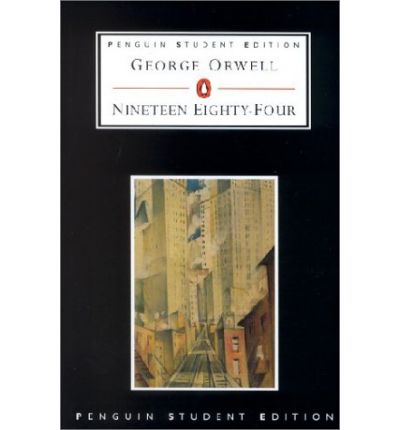
Book of the Week: Nineteen Eighty-Four (1984) by George Orwell

9780140817744


Written in 1948, 1984 was George Orwell’s chilling prophecy about the future. And while 1984 has come and gone, Orwell’s narrative is more timely that ever.

The novel is set in the superstate Oceania in a world of perpetual war, omnipresent government surveillance, and public manipulation, dictated by a political system euphemistically named English Socialism under the control of a privileged Inner Party elite that persecutes all individualism and independent thinking as “thoughtcrimes”. The tyranny is epitomized by Big Brother, the quasi-divine Party leader who enjoys an intense cult of personality, but who may not even exist. Big Brother and the Party justify their oppressive rule in the name of a supposed greater good.

The protagonist of the novel, Winston Smith, is a member of the Outer Party who works for the Ministry of Truth, which is responsible for propaganda and historical revisionism. His job is to rewrite past newspaper articles so that the historical record always supports the current party line. Smith is a diligent and skillful worker, but he secretly hates the Party and dreams of rebellion against Big Brother.

1984 presents a “negative utopia,” that is at once a startling and haunting vision of the world—so powerful that it is completely convincing from start to finish. No one can deny the power of this novel, its hold on the imaginations of entire generations of readers, or the resiliency of its admonitions—a legacy that seems to grow, not lessen, with the passage of time.

[button color=”blue” size=”small” link=”http://englishbookgeorgia.com/catalogue/shop/classics/nineteen-eighty-four/” target=”blank” ]Buy the Book[/button]

Getting Ready for the Conference

Dear all,

We are happy to inform you that the preparations for the conference are almost finalized!

Starting from tomorrow, the conference will gather hundreds of Georgian English language teachers in four different cities: Batumi (25 June), Kutaisi (26 June), Telavi (27 June) and Tbilisi (28 June).

The event is organized by English Book in Georgia with the great support of Macmillan and we are honored to have Jim Scivener (a freelance writer, consultant, teacher, trainer and conference speaker), Maura O’Brien (teacher trainer), Philip Kerr (lecturer, teacher trainer and materials writer), Teresa Doğuelli (teacher trainer) and Nick Goode(Regional Manager, Central Europe for Macmillan Education) as the guest-speakers of the conference.

მოგესალმებით,

კონფერენციის მზადება თითქმის დასრულებულია! ხვალიდან საქართველოს ოთხ ქალაქში: ბათუმი(25 ივნისი), ქუთაისი(26 ივნისი), თელავი(27 ივნისი), თბილისი(28 ივნისი) ინგლისური ენის პედაგოგებისთვის ჩატარდება კონფერენცია, რომელიც გაიმართება „ინგლისური წიგნი საქართველოში“-ს ინიციატივითა და Macmillan-ის მხარდაჭერით.

კონფერენციის მომხსენებლები არიან Jim Scivener (a freelance writer, consultant, teacher, trainer and conference speaker), Maura O’Brien (teacher trainer), Philip Kerr (lecturer, teacher trainer and materials writer), Teresa Doğuelli (teacher trainer), Nick Goode(Regional Manager, Central Europe for Macmillan Education), რომლებიც Macmillan-ის და English Book in Georgia-ს მოწვევით ესტუმრებიან საქართველოს.


Inspirational Quotes


Deprecated: preg_match_all(): Passing null to parameter #2 ($subject) of type string is deprecated in /home2/englita2/public_html/blogebg/wp-includes/media.php on line 1893

Deprecated: str_contains(): Passing null to parameter #1 ($haystack) of type string is deprecated in /home2/englita2/public_html/blogebg/wp-includes/shortcodes.php on line 150

Deprecated: preg_split(): Passing null to parameter #2 ($subject) of type string is deprecated in /home2/englita2/public_html/blogebg/wp-includes/formatting.php on line 3492

Classroom Resources: Practicing the Language of Giving Advice (Intermediate Level)

Help! This is what you should do!

Aim: To practise the language of giving advice: should, ought to
Level: Pre-Intermediate, Intermediate
Lesson Time: 30 minutes
Skill: Speaking

  • Tell the class about a problem you or a friend has
    For example: My friend Roger is getting quite fat. My sister Angela has been dumped by her boyfriend and is heartbroken
  • You could write up these problems on the board
  • Elicit or present the language used to respond to such statements:
    should or ought to
    Roger should eat less. Angela should forget him and find a nicer boy to go out with.

GRAMMAR:

Positive: I/you/he/she/it/we/you/they should/ought to do more exercise.
Negative: I/you/he/she/it/we/you/they shouldn’t/oughtn’t to/ought not to eat fatty food.

Question: Should I apply for this job?

Use should/ought to to say that something is a good idea or the right thing to do. Use shouldn’t to say something is not a good idea or the wrong thing to do.
He should apply for the job. They shouldn’t take the bus.

Should/ought to is not as strong as have to.
You have to go to the doctor. (= it is necessary to go)
You should go to the doctor. (= it is a good idea)

The phrases below can also be used to give advice:
Why don’t you try the fish?
Try reading more books.

  • Divide students into groups of three. Ask each student to write down two problems they have in their lives (they can be imagined). Then each group gathers together their problems and swaps them with another group’s problems 
  • The students then discuss what advice to give each problem as stated by the other group
  • Bring the two groups together and ask them to feedback to each other their advice
  • To practise questions, collect all the problems and deal out two to each student
  • In groups of three, students then ask each other questions according to the problem on their slip of paper
    E.g. My tooth hurts a lot. Should I go to the dentist? 
  • Students can then affirm the questions (Yes, you should) or suggest alternative advice

Lesson submitted by Robin Cheverton, PearsonELT.com 

Interesting Words and Expressions – Red-Letter Day

Do you know what “Red-Letter Day” means?

It’s an important day, or a day that you will remember, because of something good that happened then. Origin: from the custom of using red ink to mark holidays and festivals on a calendar.

Source: The Little Book of Word Origins – Oxford University Press


Theme of the Week: George Orwell

George Orwell

We would like to inform you that our main theme for this week will be the birthday of one of the world’s greatest authors of 20th century, George Orwell (25 June, 1903). Everyday we will post something that is related to him and his works. And we hope you will find it interesting!

Speaking of interesting: do you know what George Orwell’s real name is? And why he chose”George Orwell” as his pen name? The answer is quite simple: he chose his pen name, “George Orwell” because “George” was the patron saint of England and “Orwell” was the name of a river he liked.

Have you read his books? Which one is your favourite? Can you remember any interesting quotes or facts about him that you want to share with us?