Category Archives: Primary Learners

Dumbledore’s Army

download

The quote from chapter 1 Dadley  Demented

If it hadn’t been for, him nobody would even have known Voldemort was back! And his reward was to be Stach is little whinging for four solid weeks, completely cut off ftom the magical world…

Dumbledore’s Army (also known as the D.A.) was a secret organisation initiated by Harry Potter, Hermione Granger, and Ron Weasley to teach their fellow Hogwarts colleagues proper Defence Against the Dark Arts in 1995. It was founded by Hermione, but taught and led by Harry.

This organisation was made necessary by the refusal of Dolores Umbridge, the subject’s professor during the 1995-1996 school year, to teach anything in her classes other than textbook theory. It was originally founded with twenty-eight members. The group was disbanded during the 1996-1997 school year following the appointment of Severus Snape as Defence Against the Dark Arts teacher, although several members heeded the call and participated in the Battle of the Astronomy Tower at the end of the year.

It was restarted by Neville Longbottom, Ginny Weasley, and Luna Lovegood during the 1997-1998 school year after Hogwarts fell under the control of Lord Voldemort in order to oppose Death Eaterprofessors Alecto and Amycus Carrow, who spread propaganda against Muggles and Muggle-borns and taught the Dark Arts. Dumbledore’s Army played a vital role during the Second Wizarding War, and members of the organisation fought in the Battle of the Department of Mysteries, the Battle of the Astronomy Tower, and the Battle of Hogwarts.


Books are available at : goo.gl/Duycqh

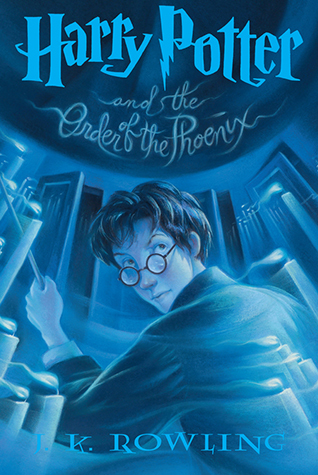
Harry Potter and the Order of the Phoenix

Harry Potter and the Order of the Phoenix2

There are many strange happenings in the wizarding world, whether it’s the horrific visions Harry views whenever he sleeps, the strange disappearance of Hagrid, or the arrival of a new Dark Arts teacher, Mrs.Umbridge. Harry Potter and the Order of the Phoenix is starring Harry, now in his 5th year at Hogwarts, along with his friends Ron and Hermione, now Perfects, the main characters are ready to tackle anything that comes in their way. The plot thickens with the antagonists; Malfoy and the wicked Mrs. Umbridge. Mrs. Umbridge works for the Ministry of Magic and thinks Harry is a crazy lunatic for trying to warn people of the return of Lord Voldemort.  Not only does she have the ability to make any insane rule for the school, but she can also fire any teacher she feels is unsuited or doesn’t like. Within the storyline, Harry has a wide assortment of emotions from anger to glee. He is going through a cluster of feeling due to the stress of his horrific visions, and the viewing of Voldemort alive. On top of having to deal with school, Harry now is part of a secret organization called to Order of the Phoenix, at Sirius’s house. Adding to that, he is the leader of a Defence against the Dark Arts group called Dumbledore’s Army.

Although it may seem Harry’s life is becoming worse, Harry grows stronger, he’s more willing to take chances, and acquires much-more self-sufficient when facing his opponents. Honestly, it seems the more Harry loses to his opponents, the more he is ready to fight.

The way responsibility is shown in this book, is shown in an interesting manner; Harry had lots of friends to take after. In this adventure, Harry now has to deal with being the sole person to find and fight Lord Voldemort, no matter the cause, no matter the challenge. Though the book has an amazing lesson it has some huge flaws. Without spoiling most of the book, I can say that it feels like the entire world hates him.  As it seems that he losing his friends, family, and prized possessions to sudden that it makes it seem like he can deal with the loss. While I dislike this part I can understand why the author does it. Like Harry, there are many people who lose an abundance of things that were a huge part of their lives. Similarly, they could be feeling a cluster of emotions. They also could be pushing away the ones that try to help, but they can be strong. Like Harry, they can deal with the loss of others, and try to achieve a victory on their side. This outstanding representation of real-life issues is why the Harry Potter series is stupendous, as they know exactly where to go to make whatever happens relatable.

In conclusion, Harry Potter and the order of the Phoenix is a fantastic book for any age group. Whether it’s adult, teen, or child, it unlocks that imagination and child-like wonder that anyone enjoys experiencing.

Book available atgoo.gl/eyB8Wo

Printable young learner worksheets

levinson-169hero-playintesting-shutterstock

A selection of worksheets and lesson plans from Macmillan resources.

We offer a broad range of worksheets on this site. We are proud to say our worksheets cover every area in teaching ESL/EFL Young learners and beginners. We have handwriting worksheets, crossword puzzles, word searches, grammar sheets, coloring (colouring) exercises, reading text mazes, word scrambles and lots more. The worksheets have been carefully classified according to sets.


[gview file=”http://englishbookgeorgia.com/blogebg/wp-content/uploads/2018/02/Classroom-cubes.pdf”]

[gview file=”http://englishbookgeorgia.com/blogebg/wp-content/uploads/2018/02/Racing-past.pdf”]

10 ways home learning apps cans boost children’s English learning

pexels-photo-256468

10 ways home learning apps cans boost children’s English learning

Today’s children are much more tech savvy than yesterday’s, and this has had a profound effect on the way that they learn languages! No wonder then that there has been an increasing interest in home learning technologies that support language learning at school and back at home.

Children are natural language learners. They love to seek out and soak up new experiences, and we can’t deny that they are much more stimulated and motivated when they interact with apps. Apps enhance their curiosity, spice up their learning, and keep them engaged as they make learning animated, fun and more appealing to children.

We want our children to learn on the go; learning apps engage them with opportunities to improve their listening, reading, writing, speaking and cognitive skills in an authentic way, wherever they may be. Apps can create an enjoyable learning atmosphere when they are used effectively.

Today, with little or no English at all, parents can be a part of their children’s language learning journey using home learning apps with them.

Home learning apps that are specifically designed for pre-primary children may include listening and pointing activities, games, singing songs, and listening to stories. Apps are designed to keep children on task, maintaining their interest and concentration by gradually increasing the level of difficulty and challenge. By using instructions and activities that reflect what children learn in the classroom, children can easily navigate apps by themselves. The educational value of home learning apps can be enhanced by simply watching, guiding, and sharing children’s enthusiasm as they navigate the app. Parental engagement transforms screen time into family time, and refocuses a child’s attention to the task at hand while simultaneously reinforcing their language learning.

There are thousands of language learning apps out there, and they all do things differently. So we’re basing our 10 tips on the Lingokids English language learning app.

Lingokids (available free via the Apple and Google Play stores) is an educational app that features materials from Oxford University Press ‘Jump In!’ and ‘Mouse and Me’ coursebooks. The curriculum has been designed by experts in early language learning development. The app targets pre-primary children who are studying ‘Jump In!’ and ‘Mouse and Me’ coursebooks at school, and aims to help parents reinforce their children’s English at home in a highly engaging and fun way. It immerses children with a wide range of vocabulary in meaningful contexts using cross-curricular topics. The app uses stories, songs, animations, games, letter tracing and interactive live-action videos of native English teachers introducing a variety of topics. The adaptive learning system also adjusts the level of difficulty according to the child’s performance, providing each child with a unique learning experience. There’s also a reward system in place to encourage and reinforce language!App-parent-child-1

The potential and success of Lingokids can be maximized with the support and the participation of parents at home. Here are ten activities for you to share with your parents using Lingokids to extend their children’s English learning outside the classroom.

Create a mini-story book: After watching the stories, parents and their children can work together to create mini-story books, encouraging children to retell the stories to other family members. If parents know how to write in English, they can write sentences or words that their children have said as they are retelling the stories. The mini-story books can be shared with teachers at school as well.

Dramatize the stories: Children love to watch videos over and over again. Parents can use their interest in the characters by making puppets that their children can use to dramatize the stories. Parents can also take part in this role-play.

Turn off the sound: After practicing with the app, parents can turn off the sound and view the topics that they have played again. They can ask their children to name the things that they see as they play the app.

What they remember: After using the app, parents can ask their children to recall what they remember from what they have just practiced. Children can describe and draw the things that they remember. The drawings can be displayed in the house to be referred to any time that parents would like to practice English with their children.

Create a picture dictionary: After practicing with the app, children and parents can draw and colour the words together in their picture dictionaries. If parents know how to write in English, they can even write the English words next to the pictures.

Picture cards: After practicing with the words in the app, parents can create picture cards of the target vocabulary. Children can help by drawing the pictures on the cards. Then, they can play flashcard games together. They can play a memory game, or they can put the picture cards in a bag before taking them out one by one and naming them. They can put the picture cards on the floor. As they play the app, children can point out the picture cards that they see and hear on the app.

Sing the songs: The app is full of songs that parents and children alike can sing along to. Singing along and performing the actions referred to in the song is a great way of embedding the language in a unique and engaging way.

Record: Parents can record their children as they are dramatizing the stories, playing with the flashcards, retelling the stories through their mini-story books, or singing along to the app. By listening to themselves speak, they can become more confident and more fluent in the new language.

Additional materials: Each topic has worksheets that parents can download, print out, and do with their children. The worksheets include song lyrics, more books and craft activities, and useful phrases that parents can integrate into their children’s daily lives.

Learn with them: Learning English with children helps to foster in them a positive attitude towards English. If parents use the app enthusiastically, children will imitate, encouraging and motivating them to learn English. Parents should practice with their children even if they’re proficient in English themselves, as it’ll help young learners to stay on task.

The activities above should not only help children to learn English, it’ll allow parents to spend quality time with their children, learning and having fun together. It’s a win-win situation!

The Triwizard Tournament: a retrospective

Terrifying dragons, an unexpected champion and a tragic ending: the revival of the Triwizard Tournament had all the facets of a truly epic sporting events in history.
Dragon_PM_B4C19M1_TheFourDragons_Moment

But this was no ordinary competition…

The history

A notorious and perilous contest to its core, this particular tournament was like no other. Without giving you too much of a Professor Binns-esque history lesson, the story of the tournament went a little bit like this:

Dating back around 700 years, this contest of intelligence, courage and wizards-losing-their-minds-because-there’s-a-dragon-half-a-metre-away was traditionally held every five years between the three biggest wizarding schools in Europe: Durmstrang, Beauxbatons and Hogwarts.

After some, er, accidents (all three champions were injured in 1792), the contest petered out. That was until its revival two centuries later in 1994, when extra safety precautions were added by the organisers.
HarryPotter_PM_B4C17M1_TriwizardChampionsInChamber_Moment

The tournament

Muggle Olympics may have up to 300 events, but the Triwizard Tournament only had three tasks… and they were quite enough.

The rules were simple: each school was represented by a champion, chosen by the Goblet of Fire. The champions took part in three punishing tasks to win the Triwizard Cup, one thousand Galleons, eternal glory and probably eternal bruises.

The revival of the tournament was made a lot safer by the addition of an age limit: only students aged 17 and over could apply. At least, that was the plan.

TriwizardMaze_PM_B4C31M1_TriwizardMazeFull_Moment

An unexpected champion

Although every tournament in history had only ever had three champions, Harry Potter found himself chosen as the unprecedented fourth. The other three champions were Fleur Delacour of Beauxbatons, Viktor Krum of Durmstrang and Cedric Diggory of Hogwarts.
AlbusDumbledore_PM_B4C16M1_DumbledoreAndTriwizardCup_V1_Moment

Triwizard arguments

As with any sporting event, the tournament was not shy of politics behind the scenes. With Hogwarts having two champions, the mood turned sour as the school was seen to have an unfair advantage over Beauxbatons and Durmstrang.

To make matters worse, reports from The Daily Prophet neglected to state actual Hogwarts champion Diggory’s inclusion in the tournament, and cynics branded Harry a glory-hog and show off. Slytherin students even circulated ‘Potter Stinks’ badges.

ViktorKrum_PM_B4C15M2_DurmstrangShipEmerges_Moments

The first task

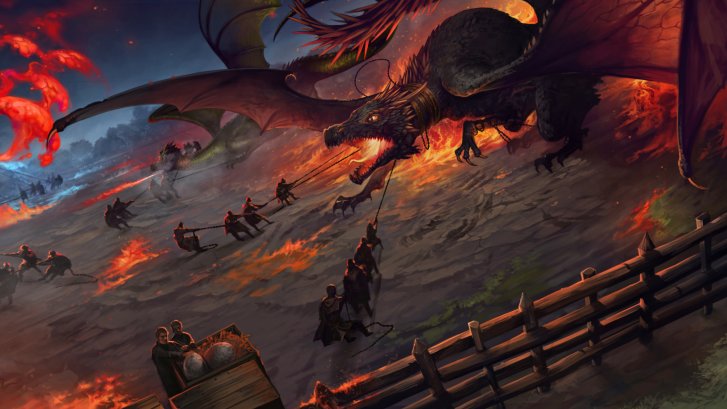
By the day of the first task, 24 November, things were already heating up – which, to be fair, was probably also helped along by those huge dragons.

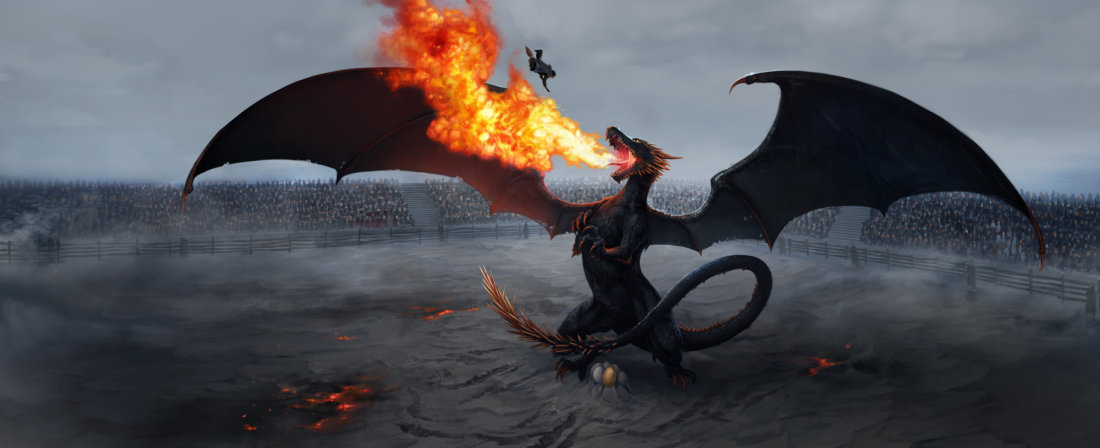
The challenge was to retrieve a golden egg from one of four immensely dangerous fire-breathing beasts, and somehow it ended with all four champions still intact. Potter and Krum came out in joint first place. Krum opted for a Conjunctivitis curse to confuse the dragon, whereas Potter went for the more sensible option of summoning his broomstick to play to his strengths as a skilled flyer.
HarryPotter_PM_B4C20M1_HarryBattlingHungarianHorntailSecondTask_Moment

The second task

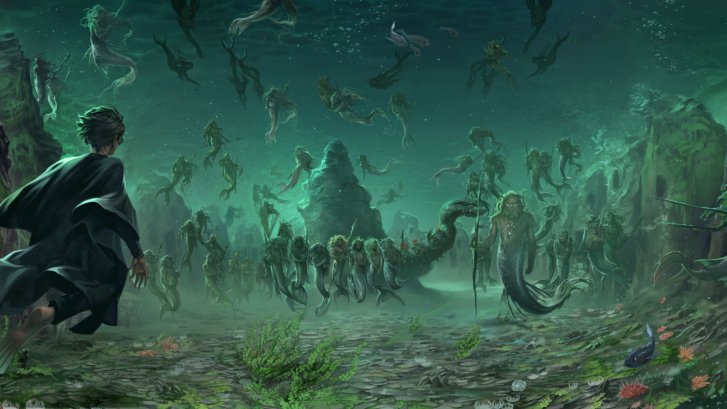
On 24 February, the champions, judges and supporters assembled at the edge of the lake for the second task. The merpeople had taken something that ‘you’ll sorely miss’ from each contestant, and the champions were given one hour to get it back.

For all four champions, that missing something turned out to be an important person in their lives: Hermione Granger was Krum’s captive, even though they’d been hanging out for about a day; Ron Weasley was, of course, Harry’s; Fleur’s little sister Gabrielle was taken to spur her on, while Cho Chang was Diggory’s ‘sorely missed’.

Despite finishing third, it was decided that Harry would be awarded second place after Diggory for saving everyone and showing ‘moral fibre’. Good on you, Harry.
HarryPotter_PM_B4C26M1_HarryInGreatLakeMerpeopleSecondTask_Moment

Disarray on the judge’s panel

Unbeknown to the outside world, the behind-the-scenes drama of the tournament was just as much of a whirlwind as the contest itself.

Judge Bartemius Crouch went missing and mad, while Ludo Bagman was faced with spiralling debts. After betting on Harry to win, the former Quidditch star spent the majority of the tournament freaking the 14-year-old out by offering him unsolicited help.

Of course, the wizarding world remained blissfully unaware of these strange goings-on.

The final task

Going into the third task, Harry and Diggory were tied in first place with Krum in second and Delacour positioned third.

On the evening of 24 June, the champions were tasked with traversing an imposing 20-foot-high maze full of obstacles, creatures and riddles. Little did Cedric Diggory’s fellow students or family know that this would be the last time they would see him alive.

Cedric and Harry made it to the centre of the maze and both clutched the Triwizard Cup as joint winners. But instead of enjoying a double victory for Hogwarts, the pair were thrust into unexpected danger.

TriwizardMaze_PM_B4C31M1_DementorInTriwizardMaze_Moment

Hogwarts in mourning

The Triwizard Tournament was rocked forever when the Cup turned out to be a Portkey, which took Cedric and Harry to a graveyard far from Hogwarts where Diggory was killed by Peter Pettigrew. Harry managed to escape and return his fellow champion’s body to his family.

There were many deaths in Triwizard history, but Cedric’s was a defining moment and arguably marked the point at which the tournament stopped being a contest and became a war.
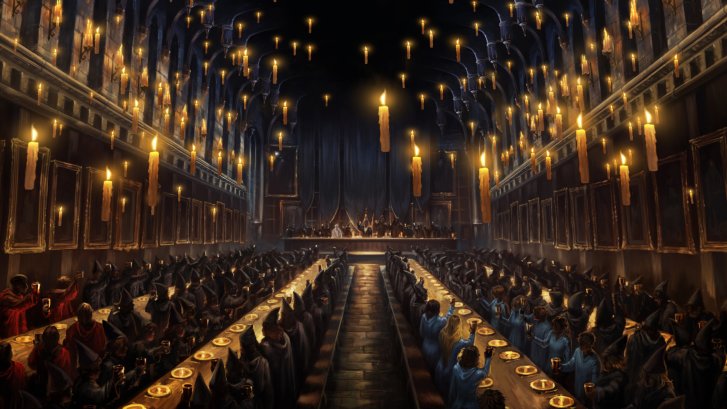
Hogwarts_PM_B4C37M1_GreatHallMourningCedricsDeath_Moment

Books are available at : goo.gl/Duycqh
 

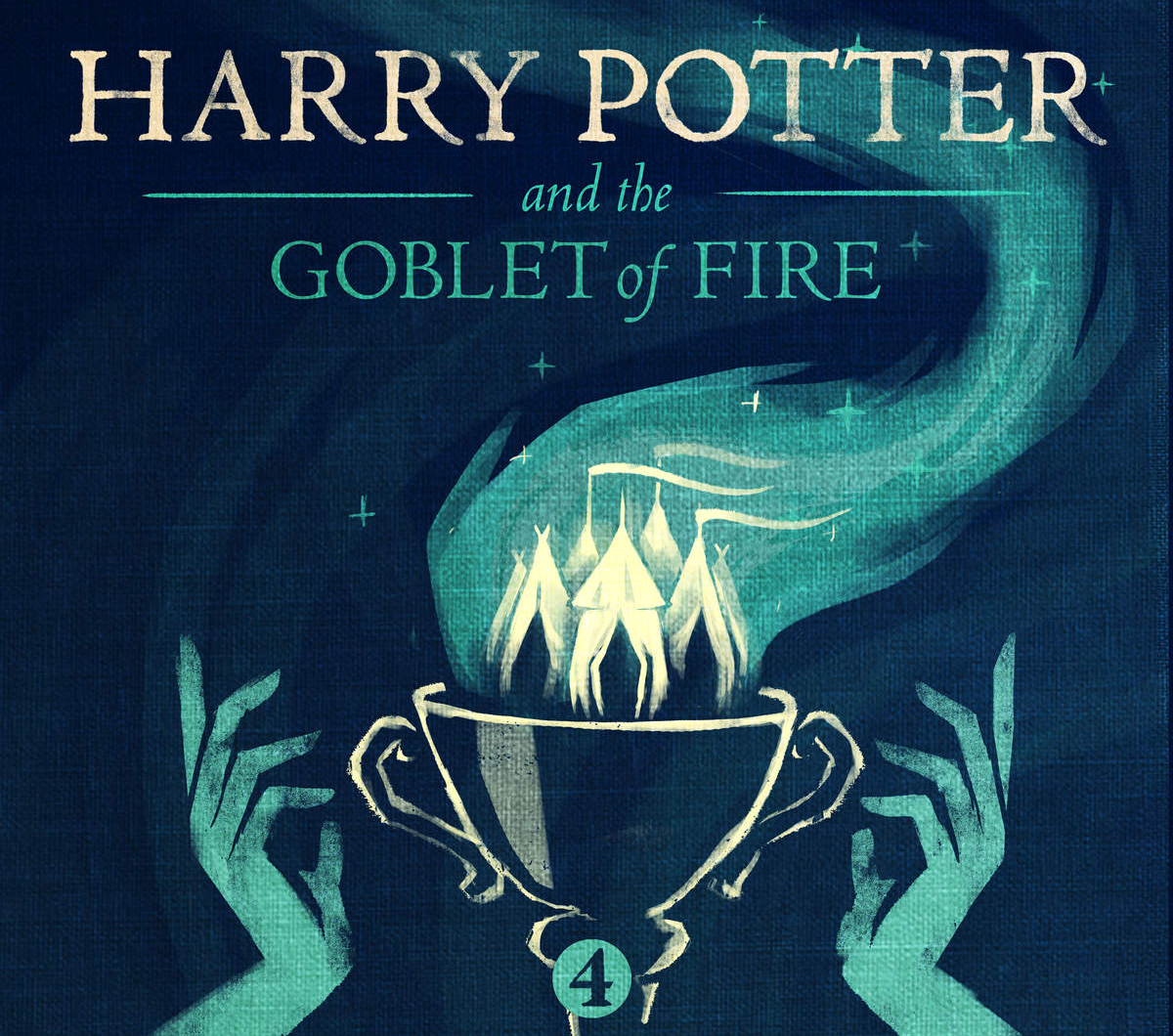
Harry Potter and the Goblet of Fire

HP-and-GOblet-of-Fire-1

“Tomorrow night Halloween the Goblet will return the names of the three it has judged most worthy  to represent their schools.”

Albus Dumbledore

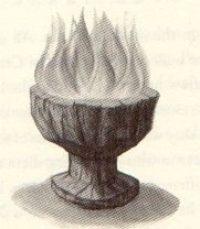
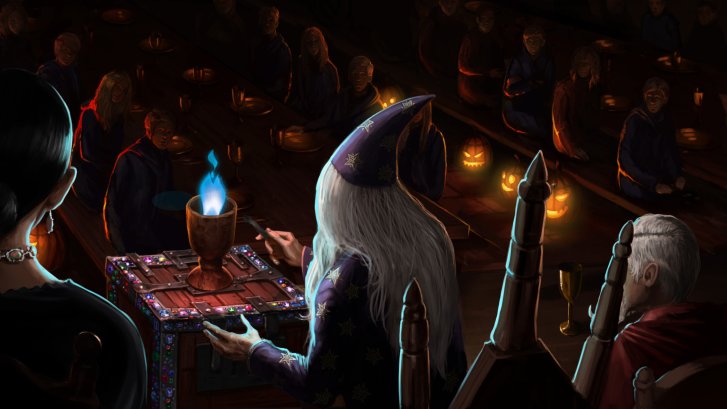
The Goblet of Fire is a rough wooden goblet which fills with blue flames when it is time for it to choose champions of the Triwizard Tournament.

In order to make the selection of champions completely fair, the decision is left up to a very powerful magic artifact, the Goblet of Fire. The Goblet is contained in a ancient wooden chest which is encrusted with jewels. When the casket it tapped three times with a wand, it opens. The Goblet is then removed and set on top of the chest. gf.c16-the-goblet-of-fire-200x0-c-default

The Goblet of Fire is a large, roughly hewn wooden cup, filled to the brim with dancing blue flames.

In order to make the selection of champions completely fair, the decision is left up to a very powerful magic artifact, the Goblet of Fire. The Goblet is contained in a ancient wooden chest which is encrusted with jewels. When the casket it tapped three times with a wand, it opens. The Goblet is then removed and set on top of the chest.

The Goblet of Fire is a large, roughly hewn cup, filled to the brim with dancing blue flames. Dumbledore described the selection process in this way:

Goblet”Anybody wishing to submit themselves as champion must write their name and school clearly upon a slip of parchment and drop it into the goblet. Aspiring champions have twenty-four hours in which to put their names forward. Tomorrow night, Halloween, the goblet will return the names of the three it has judged most worthy to represent their schools. The goblet will be placed in the entrance hall tonight, where it will be freely accessible to all those wishing to compete. To ensure that no underage student yields to temptation, I will be drawing an Age Line around the Goblet of Fire once it has been placed in the entrance hall. Nobody under the age of seventeen will be able to cross this line…I wish to impress upon any of you wishing to compete that this tournament is not to be entered into lightly. Once a champion has been selected by the Goblet of Fire, he or she is obliged to see the tournament through to the end. The placing of your name in the goblet constitutes a binding, magical contract. There can be no change of heart once you have become a champion. Please be very sure, therefore, that you are wholeheartedly prepared to play before you drop your name into the goblet.”

The next evening, the Goblet was taken into the Great Hall after the Halloween Feast. On cue, it disgorged a slip of paper for each chosen champion. To everyone’s shock, the Goblet chose FOUR champions. Barty Crouch jr., in disguise as Moody, had used a Confundus Charm on the Goblet to trick it into accepting a name from another school. Once the names had been chosen, the Goblet’s flames died out and would not reignite until the next Tournament.


Book available at : goo.gl/RSYFc1


Welcome to Next Move

NM_logo1-toucan_2

Macmillan Next Move is a fun and engaging seven-level British English course which takes students on a journey through different countries and cultures as they explore the English language.

With fresh and dynamic Pupil’s Books and Workbooks and new digital materials, both teachers and students will always be on the move with Macmillan Next Move.      MNM-Three-covers

Key features:

-A reading comprehension programme with fiction and non-fiction texts.

– A variety of activities to develop competencies and story-based lessons to develop values.

-New digital components with resources for teachers and students including videos and animated phonics.

Find out all about the Macmillan Next Move course and browse sample print and digital resources to discover how our rich content can support you and your learners inside and outside the classroom.
If you are already a Macmillan Next Move teacher, register or log-in to access our Teacher Resources including printable tests and a variety of printable templates to enhance your lessons.
[gview file=”http://englishbookgeorgia.com/blogebg/wp-content/uploads/2018/02/mnm1_scope.pdf”]
[gview file=”http://englishbookgeorgia.com/blogebg/wp-content/uploads/2018/02/mnm1_pb01.pdf”]
[gview file=”http://englishbookgeorgia.com/blogebg/wp-content/uploads/2018/02/mnm1_tb01.pdf”]

Harry potter and the Chamber of Secrets

Harry potter and the Chamber of Secrets

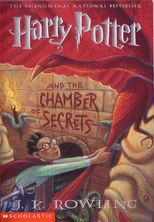
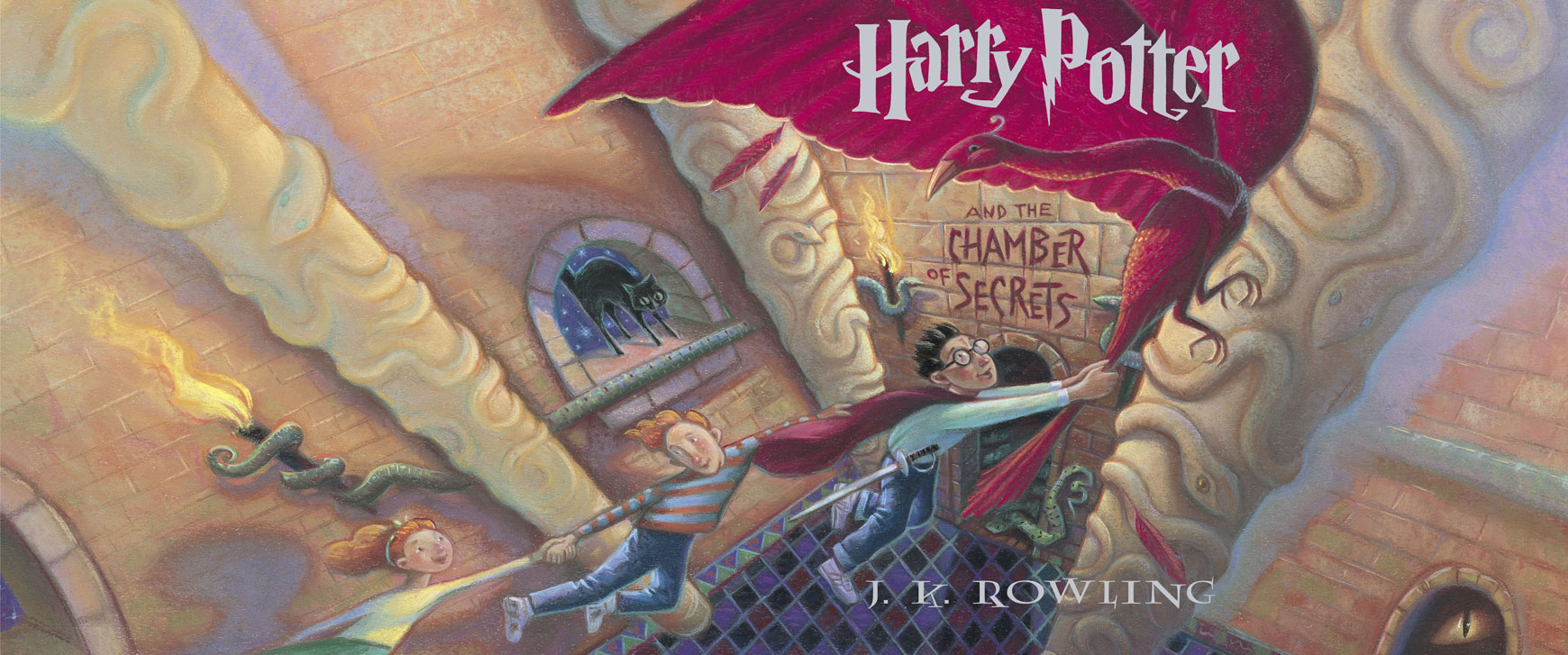
Harry Potter and the Chamber of Secrets, by J. K. Rowling, is the sequel to Harry Potter and the Philosopher’s Stone. It is the second book in the series of seven Harry Potter books.

chamber-of-secrets-full-jacket

Chapter 1: The Worst Birthday

No cards, no presents, and he would be spending the evening pretending not to exist.
—Description of Harry’s 12th Birthday
Books chapterart cos 01

Harry sitting on a bench, unaware of someone in the bushes

Harry Potter has returned to the Dursleys for the summer holiday in mid-1992, and things are very bad for him. Over the summer, the Dursleys have become so fearful of Harry’s new-found magical abilities that they have locked away all of Harry’s magical supplies (e.g. his wand, his broomstick, spellbooks, etc.) immediately after his arrival home. They have also banned Harry from saying words such as “magic” in the house, as evident in Uncle Vernon’s outburst at breakfast. This has become a problem for Harry himself, who begins to worry about what his teachers at Hogwarts School of Witchcraft and Wizardry will think if he heads back to them without back homework done, and whether or not he’ll be banned from the Gryfindor House Quidditch team since he has not been able to practise. The only thing the Dursleys let him keep in his room, however, is his pet snowy owl Hedwig, but have put a padded lock on her cage to keep her inside day and night to avoid suspicion from the neighbours. This does not go well for the bird, because every time she has become bored, her screech has rung throughout the house, causing an irritated Vernon to warn Harry that if he cannot control her, she will have to go.

On 31 July (Harry’s twelfth birthday), Harry has never felt so lonely, for he misses Hogwarts and his best friends there, Ron Weasley and Hermione Granger. Neither of them have written to him all summer, not even to send birthday wishes. The Dursleys seem to have also forgotten his birthday, because they are too busy preparing for a dinner party meant for one of Uncle Vernon’s clients, Mr Mason, from whom Vernon is hoping to get a huge order. The only unchangeable thing on the Dursley’s schedule, however, is that Harry has to stay in his room for the night, making no noise and “pretending he doesn’t exist”. While Uncle Vernon and Dudley are preparing to drive into town to buy dinner jackets, Harry himself goes out into the garden in order to stay out of his Aunt Petunia’s way as she is cleaning, singing happy birthday to himself. He stares into the hedge, and sits bolt upright when he sees a pair of enormous green eyes staring back at him among the leaves. When Dudley comes waddling over and wishes his cousin a happy birthday, mocking him with the lack of celebrations. Harry gets annoyed and scares him away by pretending to think of a spell meant to bur the bush bare out loud, but Petunia comes out when Dudley calls for her and beats her nephew with a soapy frying pan. She then gives Harry some chores to do while Vernon and Dudley are gone, and once he is finished, it’s almost a half-hour before the Masons are due to arrive. Harry goes up to his room without making a sound during the party as promised, but when he gets there, someone else is on his bed.

Books are available at: https://goo.gl/ezZg9p

Using games for win-win learning

Dice-e1516866978505

Using games for win-win learning

Like many people around the world, I recently took time off at the end of December and the New Year to relax at home. A common feature of any holiday season, alongside eating large meals and seeing family and old friends, is playing games. For example, my son was playing with a new video game console and within a short time I was addicted and striving to reach the ‘next level’. Then, after finishing off yet another large meal, someone suggested playing a board game that hadn’t been opened since last year. Initially, there was typical resistance to starting a game which had a long set of rules and which could take up the whole evening. And yet, 15 minutes later, everyone was thoroughly engrossed and participating fully.

This was a demonstration of just how engaging games can be! And it doesn’t stop at board games, there are action or guessing games, treasure hunts, trivia or memory games, games with props, online games, or even game shows on TV (which we invest our time in with no hope of winning an actual prize). Games incorporate fun, incite collaboration and competition, which in combination is incredibly motivating.

One theory for the motivational power of games (both physical and online) is that players reach a mental state where they are completely focused on the task. This is sometimes referred to as ‘flow’ (1); in other words, the difficulty of the game is not too hard or too easy, equally matched to the player’s skill level.

It is at this level that games have the most potential as valuable classroom tools. As teachers, we are always looking for classroom activities which take students to that place in their language learning when they feel fully engaged and motivated to continue to the end. Of course, we normally think of games as involving winning and losing, but when we use games in the classroom I prefer to think of them as achieving a win-win outcome.

Yes, you can try to win the game, but you also win by taking advantage of playing a well-designed language practice game. Because when games work well, students often forget that they are doing an exercise, as they start to use English in their state of flow.

As for the type of language that games can practise, I have yet to find a language point that a game isn’t good for! Take, for example, the board game format where everyone starts on one square, rolls a dice and moves round the board landing on different squares. For vocabulary, you can write different words on squares and students have to say a sentence with the word or ask another player a question using the word. For functional language, write speaking tasks on the squares such as ‘Ask the player on your right out for dinner this evening.’ Or even have students make their own board game and write the rules for other teams to play.

Finally, when choosing or creating a game to use in the classroom with your students, try to make sure that it contains these five components which all begin with the letter ‘C’:

  • Games benefit from having an element of chance which can be created by the throwing of a dice or picking up of a card at random. Chance adds tension to a game, and for language practice it encourages students to use language in response to changing situations.
  • Challenge. Players like to feel a sense of achievement in a game and this is only reached by including the right level of difficulty and including factors where students must succeed against adversity in some way.
  • Competition. Although you don’t want a classroom entirely based on winning and losing, a little bit of competition is often an effective way to change the pace of a lesson.
  • Collaboration. Games which involve students working together in teams or pairs are the perfect way to create a collaborative environment in which students support each other’s learning.
  • Communication. This is probably the most important C. Games for provide students with an authentic reason to communicate, allowing them to start using the targeted language.

Learning English through stories

storytelling-1-1

As a child, I loved sitting on my grandfather’s lap while he read me stories. I remember most of them even though I am now a grandparent, too! As a child, I was blissfully unaware that, as I listened to the stories, I was also learning new words and ways in which those new words combined to communicate ideas and life lessons.

A good story encourages us to turn the next page and read more. We want to find out what happens next and what the main characters do and what they say to each other. We may feel excited, sad, afraid, angry or really happy. This is because the experience of reading or listening to a story is much more likely to make us ‘feel’ that we are part of the story, too. Just like in our ‘real’ lives, we might love or hate different characters in the story. Perhaps we recognise ourselves or others in some of them. Perhaps we have similar problems.

Because of this natural empathy with the characters, our brains process the reading of stories differently from the way we read factual information. Our brains don’t always recognise the difference between an imagined situation and a real one so the characters become ‘alive’ to us. What they say and do is therefore more meaningful. This is why the words and structures that relate a story’s events, descriptions and conversations are processed in this deeper way.

In fact, cultures all around the world have always used storytelling to pass knowledge from one generation to another. Our ancestors understood very well that this was the best way to make sure our histories and information about how to relate to others and to our world was not only understood, but remembered too. (Notice that the word ‘history’ contains the word ‘story’ – this is not a coincidence!)

Encouraging your child to read or listen to stories should therefore help them to learn a second language in a way that is not only fun, but memorable.

Let’s take a quick look at learning vocabulary within a factual text or within a story. Imagine the readers are eight-year-olds interested in animals. In your opinion, are they more likely to remember AND want to continue reading the first or second text?

Many birds and animals live in the world, for example, parrots, pandas, lions, leopards and rabbits. In the sea we can find whales, dolphins, sharks and octopuses.

My younger brother is called Fred. Fred’s very interested in animals. He talks and asks questions about animals ALL the time! Fred’s really interested in parrots and pandas and lions and leopards and rabbits. But Fred’s favourite animals live in the sea. He has pictures of whales, dolphins, sharks and octopuses on all the walls of his bedroom.

From: Do whales have stomach aches? (Storyfun for Movers, Cambridge University Press, 2011).

When choosing second language story books, you might consider questions like:

  • Will your child easily identify with the central characters? Are they of similar ages for example?
  • Will the events interest and excite, scare or amuse your child enough to motivate them to continue reading?
  • Is the story an appropriate length – not too short, not too long?
  • Will the layout – the font, the titles, the amount of text on each page – appeal to your child?
  • Is it supported by illustrations that your young reader will enjoy looking at?

For your child to gain the maximum benefit and language learning from reading stories, consider the story’s language level carefully, too. Is the grammar and vocabulary not too easy but still accessible to the reader? Would the language be similar to that which your child might use in their first language? Would it support school work and help prepare for tests? Useful EFL publications such as Storyfun for Starters, Movers and Flyers and other graded readers are carefully written with these important considerations in mind.

But, of course, stories don’t only offer the young reader a chance to read. The experience also creates an opportunity to talk about the story. As a parent, you can encourage your child to describe their favourite person, part of the story or picture. Their creativity might be developed by drawing new story pictures or even by writing their own short stories as a result.

If your child is reluctant to read or has little confidence in their ability to read in another language, you might help them by reading the story to them, stopping where necessary to interact and ask questions like ‘What do you think will happen next?’ If you read to your children in a relaxed and fun way, they will subconsciously relate to the reading and language learning process more confidently and positively. Of course, being read to by a parent, for whatever reason, is also simply a lovely way to share quiet and close time.

The experience of reading or listening to a story allows us to escape our own lives for a moment and live in another one in a fun and safe way. In the same magical experience, a goldmine of language may be learned, so do encourage your child to read stories in their second language as well as their first!