Tag Archives: November 2014

საინტერესო სიტყვები და გამონათქვამები – People who live in glass houses should not throw stones

people who live in glass houses

“People who live in glass houses should not throw stones.”

What does it mean?

A phrase one can say meaning people should not criticize others for faults that they have themselves.

Where does it come from?

It originated during the early Middle Ages. The Middle Ages were a tumultuous, yet fascinating period of history: Robert the Bruce, the Black Death, and Canterbury Tales.

According to some online sources, the phrase was first noted in Geoffrey Chaucer’s ‘Troilus and Criseyde’ in 1385. But, it is thought that Chaucer took it from the bible. John 8:7 says, “Let him without sin, be the first to throw a stone.”


Which Book Would You Read?

To celebrate our authors of November, we’d like to ask, which book would you read?

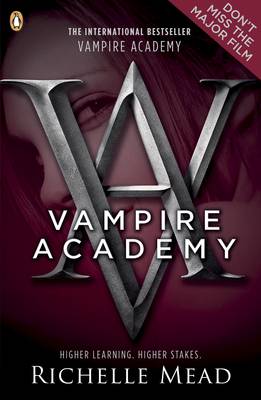
vampVampire Academy (Vampire Academy Series #1)

Author: Richelle Mead

ISBN: 9780141328522

The story that kicked off the international #1 bestselling Vampire Academy series is NOW A MAJOR MOTION PICTURE!

St. Vladimir’s Academy isn’t just any boarding school—it’s a hidden place where vampires are educated in the ways of magic and half-human teens train to protect them. Rose Hathaway is a Dhampir, a bodyguard for her best friend Lissa, a Moroi Vampire Princess. They’ve been on the run, but now they’re being dragged back to St. Vladimir’s—the very place where they’re most in danger. . . .

Rose and Lissa become enmeshed in forbidden romance, the Academy’s ruthless social scene, and unspeakable nighttime rituals. But they must be careful lest the Strigoi—the world’s fiercest and most dangerous vampires—make Lissa one of them forever.

Price: 24,9 GEL

[button color=”blue” size=”small” link=”http://englishbookgeorgia.com/catalogue/shop/bestsellers/vampire-academy-book-1/” target=”blank” ]Buy the Book[/button]


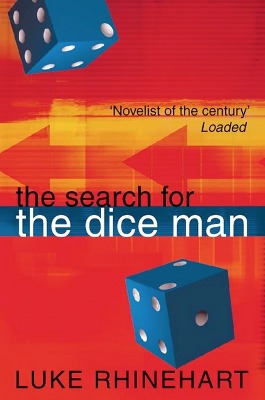
searchThe Search for the Dice Man

Author: Luke Rhinehart

ISBN: 9780006513919

Larry Rhinehart is the son of the renegade psychiatrist Luke Rhinehart, who introduced the world to dice-living and dice therapy, where decisions are made not by the self but by the roll of a die. Since his father deserted him when he was still a child, Larry has bitterly rejected everything his father stood for. He has embraced order and control. Now a wealthy Wall Street analyst, he is about to marry the boss’s daughter, and become a good deal wealthier. Then Homeland Security shows up in Larry’s office searching for his father, suspected of being behind acts of cyber warfare against government, banking and Wall Street interests. Larry’s carefully organized world begins to crumble. Forced to try find his father before the government can, his search is made in the company of Kim, a sexy admirer of Luke’s. His quest takes him to Lukedom, a Dice Commune where everyone changes roles every day; to Larry’s own dicing, which leads to love, a broken engagement, rigging the stock market–and total chaos. Larry’ search is by turns funny, moving, and erotic. By the time he finally confronts Luke he has been profoundly and hilariously changed, his previous successful conservative life turned on its head.

Price: 24,9 GEL

[button color=”blue” size=”small” link=”http://englishbookgeorgia.com/catalogue/shop/bestsellers/the-search-for-the-dice-man/” target=”blank” ]Buy the Book[/button]


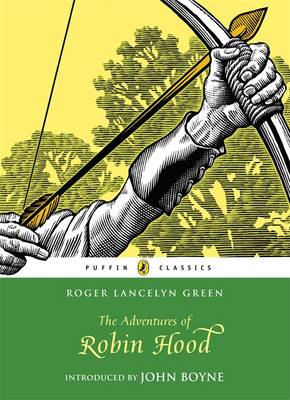
robinThe Adventures of Robin Hood

Author: Roger Lancelyn Green

ISBN: 9780141329383

Robin Hood, champion of the poor and opponent of the Sheriff of Nottingham, takes refuge in the Sherwood Forest and outwits his enemies with daring and panache. Every moment of the story is filled with action and excitement.

Price: 15,9 GEL

[button color=”blue” size=”small” link=”http://englishbookgeorgia.com/catalogue/shop/penguin/the-adventures-of-robin-hood/” target=”blank” ]Buy the Book[/button]


Theme of the Week: Celebrating Authors of November

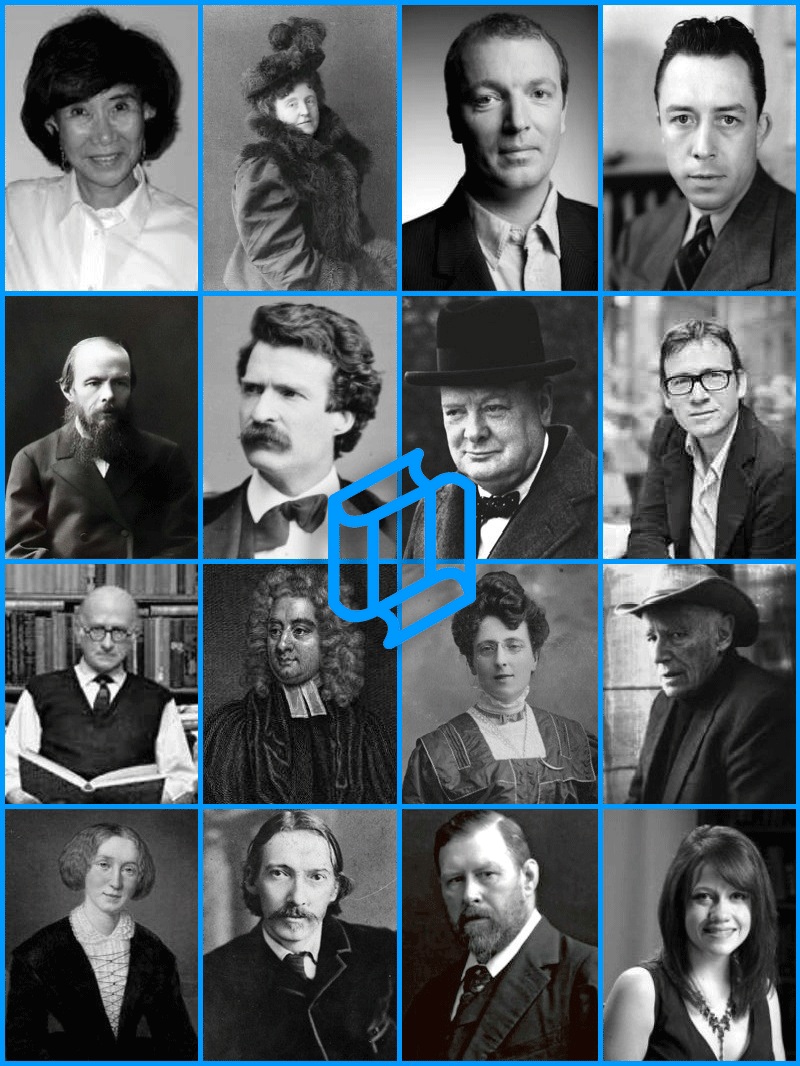
This week we celebrate authors of the past and present who had birthdays in the month of November. Check them out below.

november authors3

Row 1: (L-R) Adeline Yen Mah, Frances Hodgson Burnett, Leander Kahney, Albert Camus Row 2: (L-R) Fyodor Dostoyevsky, Mark Twain, Winston Churchill, David Nicholls Row 3: (L-R) Roger Lancelyn Green, Jonathan Swift, L. M. Montgomery, Luke Rhinehart Row 4: (L-R) George Eliot, Robert Louis Stevenson, Bram Stoker, Richelle Mead

Albert Camus

(November 7, 1913 – January 4, 1960)

Camus was a French Nobel Prize winning author, journalist, and philosopher. He was awarded the 1957 Nobel Prize for Literature “for his important literary production, which with clear-sighted earnestness illuminates the problems of the human conscience in our times.”

[button color=”blue” size=”small” link=”http://englishbookgeorgia.com/catalogue/shop/modernclassics/the-adulterous-woman/” target=”blank” ]Buy the Book[/button]


Mark Twain

(November 30, 1835 – April 21, 1910)

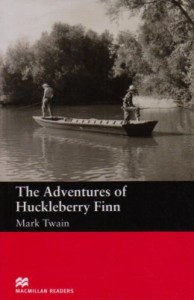
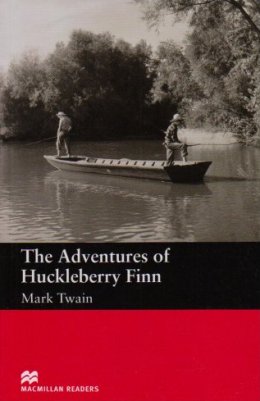
Samuel Langhorne Clemens, known by his pen name Mark Twain, was an American author and humorist. He wrote The Adventures of Tom Sawyer (1876), The Prince and the Pauper (1881) and Tom Sawyer’s sequel, The Adventures of Huckleberry Finn (1885).

  huck

[button color=”blue” size=”small” link=”http://englishbookgeorgia.com/catalogue/shop/macmillan/adventures-of-tom-sawyer/” target=”blank” ]Buy the Book[/button]             [button color=”blue” size=”small” link=”http://englishbookgeorgia.com/catalogue/shop/classics/the-prince-and-the-pauper/” target=”blank” ]Buy the Book[/button]             [button color=”blue” size=”small” link=”http://englishbookgeorgia.com/catalogue/shop/macmillan/the-adventures-of-huckleberry-finn/” target=”blank” ]Buy the Book[/button]


Bram Stoker 

(November 8, 1847 – April 20, 1912)

Stoker was an Irish author known today for his 1897 Gothic novel, Dracula.

[button color=”blue” size=”small” link=”http://englishbookgeorgia.com/catalogue/shop/classics/dracula/” target=”blank” ]Buy the Book[/button]


Fyodor Dostoyevsky

(November 11, 1821 – February 9, 1881)

Dostoyevsky was a Russian novelist, short story writer, essayist, journalist and philosopher. Dostoyevsky’s literary works explore human psychology in the context of the troubled political, social, and spiritual atmosphere of 19th-century Russia. The Double was made into a film in 2013.

[button color=”blue” size=”small” link=”http://englishbookgeorgia.com/catalogue/shop/classics/the-double/” target=”blank” ]Buy the Book[/button]


Luke Rhinehart

(November 15, 1932 – )

George Cockcroft, known by his pen name Luke Rhinehart, is an American writer, most notable as the author of The Dice Man series.

[button color=”blue” size=”small” link=”http://englishbookgeorgia.com/catalogue/shop/bestsellers/the-search-for-the-dice-man/” target=”blank” ]Buy the Book[/button]


Richelle Mead

(November 12, 1976 – )

Mead is a bestselling American fantasy author. She is known for the Georgina Kincaid series, Vampire Academy. It was made into a film in 2014.

[button color=”blue” size=”small” link=”http://englishbookgeorgia.com/catalogue/shop/bestsellers/vampire-academy-book-1/” target=”blank” ]Buy the Book[/button]


Leander Kahney

(November 25, 1965 – )

Kahney is a technology writer and author. He is a former managing editor, and previously a senior reporter, at ‘Wired News’, the online sister publication of ‘Wired’.

[button color=”blue” size=”small” link=”http://englishbookgeorgia.com/catalogue/shop/bestsellers/jony-ive-the-genius-behind-apples-greatest-products/” target=”blank” ]Buy the Book[/button]


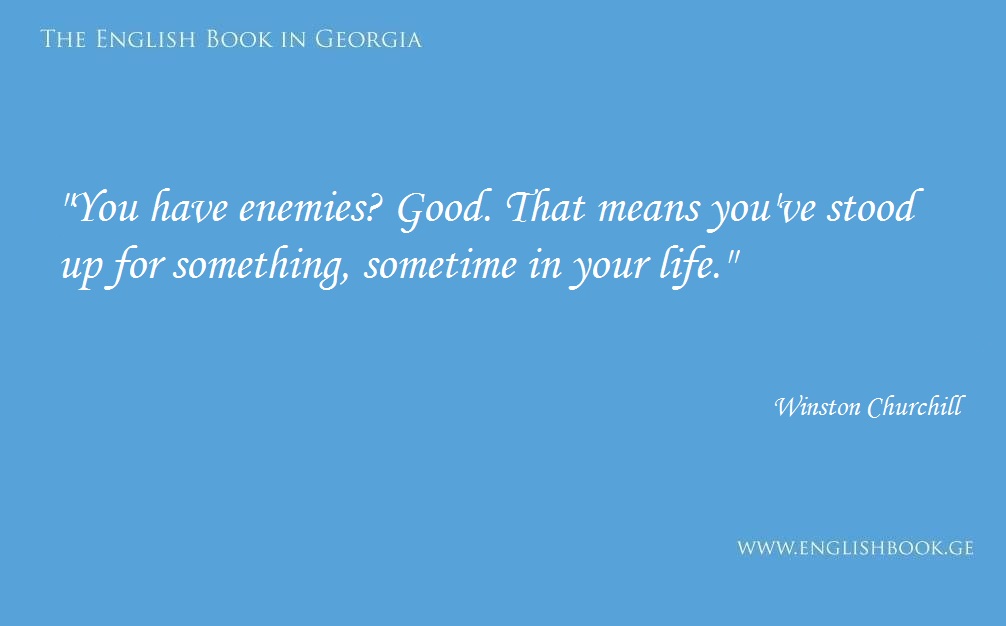
Winston Churchill

(November 30, 1874 – January 24, 1965)

Churchill was a British politician and Nobel laureate who was the Prime Minister of the United Kingdom from 1940 to 1945 and again from 1951 to 1955. Widely regarded as one of the greatest wartime leaders of the 20th century, Churchill was also an officer in the British Army, a historian, a writer and an artist. Churchill is the only British Prime Minister to have won the Nobel Prize in Literature since its creation in 1901, and was the first person to be made an honorary citizen of the United States.

[button color=”blue” size=”small” link=”http://englishbookgeorgia.com/catalogue/shop/penguin-books/we-will-all-go-down-fighting-to-the-end/” target=”blank” ]Buy the Book[/button]


Roger Lancelyn Green

(November 2, 1918 – October 8, 1987)

Green was a British biographer who became known primarily for his writings for children, particularly his retellings of the stories of King Arthur, King Arthur and His Knights of the Round Table, and Robin Hood, The Adventures of Robin Hood.


[button color=”blue” size=”small” link=”http://englishbookgeorgia.com/catalogue/shop/penguin/the-adventures-of-robin-hood/” target=”blank” ]Buy the Book[/button]             [button color=”blue” size=”small” link=”http://englishbookgeorgia.com/catalogue/shop/macmillan/king-arthur-and-the-knights-of-the-round-table/” target=”blank” ]Buy the Book[/button]


Adeline Yen Mah

(November 30, 1937 – )

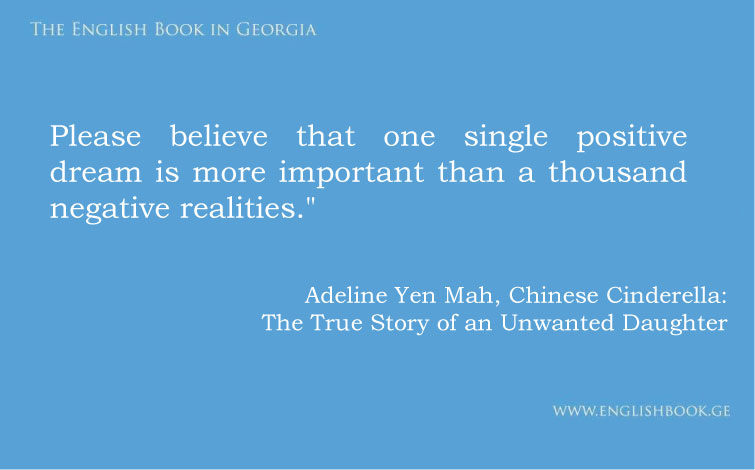
Mah is a Chinese-American author and physician. Chinese Cinderella: The Secret Story of an Unwanted Daughter describes her experiences growing up in China during the Second World War.

[button color=”blue” size=”small” link=”http://englishbookgeorgia.com/catalogue/shop/penguin/chinese-cinderella/” target=”blank” ]Buy the Book[/button]


Jonathan Swift

(November 30, 1667 – October 19, 1745)

Swift was an Anglo-Irish satirist, essayist, poet and cleric who is remembered for such work as Gulliver’s Travels.

[button color=”blue” size=”small” link=”http://englishbookgeorgia.com/catalogue/shop/macmillan/gullivers-travels-in-lilliput/” target=”blank” ]Buy the Book[/button]


George Eliot

(November 22, 1819 – December 22, 1880)

Mary Ann Evans, known by her pen name George Eliot, was an English novelist, journalist, translator and one of the leading writers of the Victorian era. She is the author of several novels, including The Mill on the Floss (1860), Silas Marner (1861)  and Middlemarch (1871–72), most of them set in provincial England and known for their realism and psychological insight.

 9780141198910.jpg (258×400) 

[button color=”blue” size=”small” link=”http://englishbookgeorgia.com/catalogue/shop/macmillan/middlemarch/” target=”blank” ]Buy the Book[/button]             [button color=”blue” size=”small” link=”http://englishbookgeorgia.com/catalogue/shop/englishlibrary/the-mill-on-the-floss-2/” target=”blank” ]Buy the Book[/button]             [iphorm_popup id=”1″ name=”მოითხოვე სასურველი წიგნი”]Order the Book[/iphorm_popup]


Robert Louis Stevenson

(November 13, 1850 – December 3, 1894)

Stevenson was a Scottish novelist, poet, essayist, and travel writer. His most famous works are Treasure Island, Kidnapped and Dr Jekyll and Mr Hyde.


[button color=”blue” size=”small” link=”http://englishbookgeorgia.com/catalogue/shop/macmillan/dr-jekyll-and-mr-hyde/” target=”blank” ]Buy the Book[/button]             [button color=”blue” size=”small” link=”http://englishbookgeorgia.com/catalogue/shop/macmillan/treasure-island/” target=”blank” ]Buy the Book[/button]             [button color=”blue” size=”small” link=”http://englishbookgeorgia.com/catalogue/shop/bookworms/kidnapped/” target=”blank” ]Buy the Book[/button]


David Nicholls

(November 30, 1966 – )

Nicholls is an English novelist and screenwriter. His book, One Day, was turned into a film in 2011.

[button color=”blue” size=”small” link=”http://englishbookgeorgia.com/catalogue/shop/macmillan/one-day/” target=”blank” ]Buy the Book[/button]


Frances Hodgson Burnett

(November 24, 1849 – October 29, 1924)

Burnett was an English playwright and author. She is best known for her children’s stories, in particular Little Lord Fauntleroy (1885-86) and The Secret Garden (1911). Both were made into films.


[button color=”blue” size=”small” link=”http://englishbookgeorgia.com/catalogue/shop/bookworms/the-secret-garden/” target=”blank” ]Buy the Book[/button]             [button color=”blue” size=”small” link=”http://englishbookgeorgia.com/catalogue/shop/bookworms/little-lord-fauntleroy/” target=”blank” ]Buy the Book[/button]


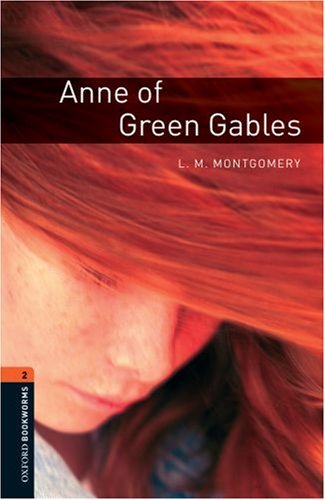
L. M. Montgomery

(November 30, 1874 – April 24, 1942)

Montgomery was a Canadian author best known for a series of novels beginning with Anne of Green Gables, published in 1908. Anne of Green Gables was an immediate success.


[iphorm_popup id=”1″ name=”მოითხოვე სასურველი წიგნი”]Order the Book[/iphorm_popup]

 

Inspirational Quotes


Deprecated: preg_match_all(): Passing null to parameter #2 ($subject) of type string is deprecated in /home2/englita2/public_html/blogebg/wp-includes/media.php on line 1893

Deprecated: str_contains(): Passing null to parameter #1 ($haystack) of type string is deprecated in /home2/englita2/public_html/blogebg/wp-includes/shortcodes.php on line 150

Deprecated: preg_split(): Passing null to parameter #2 ($subject) of type string is deprecated in /home2/englita2/public_html/blogebg/wp-includes/formatting.php on line 3492

What I Wish I’d Known as a New Teacher

new teacher tips

By Elena Aguilar, Transformational Leadership Coach from Oakland, California

This can be a difficult time for new teachers. I know this from personal experience, and also because there’s a graph out there that shows the dip that new teachers take in the fall as their energy wanes. When I first saw this graph, I felt a tremendous relief: I’m normal! This is documented! Yes, I know that we don’t always need research to validate our experiences, but I did.

Now, almost two decades later, I wish I’d known a few things about myself, about teaching, and about my students. Some of what I wish I’d known could have been shared with me — some I just had to live and learn from. So I offer this reflection both for new teachers as well as for those who support them. And so if you work with a new teacher, I’m hoping you might stop by their room in the next few days and share some insights from your own experience. And if you are a new teacher, then I’m hoping these reflections might help you feel validated, hopeful, and resourceful.


1. This will get better. The first year of teaching is so, so hard. You don’t even know why it’s so hard — you can’t wrap your head around that because you’re in survival mode. It’s so hard because you are being asked to push your heart and mind and body in ways you never have. You are making thousands of decisions each day, and there are big parts of you that know you don’t know what you’re doing. So you question the decisions you’re making each day (questioning is good, it is) but that questioning also makes you feel tired and insecure. It will get better. You’re just overloaded. You’re learning so much (I know you can’t even recognize this because you’re so tired) but it’ll sink in as the months pass. Nothing will ever be as hard as the first year.

2. Always work from the heart. If your actions and words emerge from the heart, you can’t make too many mistakes. Let yourself love your students — don’t be afraid of falling in love with them. That’s the path to take as a new teacher. Get to know them, indulge your curiosity and spend time learning about who they are as human beings; the rest will follow.

3. They will remember this about you. Your students will remember how you made them feel, whether they felt loved and cared for by you. I know this: I’m in touch with dozens of former students who were amongst the first groups of kids I taught. They remember my love for them in various ways; they don’t remember the lessons that I botched, or that I didn’t return their homework within a promised two days, or my disorganization. When I listen to what they remember, I hear: it was my love for them. And I did love them. Deeply.

4. Be open to surprises. Students will surprise you — they will learn things you didn’t think they could learn, they will grow in ways you didn’t expect. You might think that a particular student will struggle later on (after all, he’s already been retained in second grade and he can’t spell his own name and clearly has a learning disability). And then you might find yourself ten years later at his high school graduation hearing that he’s been accepted to art college and there’ll be tears ruining your makeup and you didn’t bring tissues and when he sees you he grins and gives you a huge hug and says, “Ms. Aguilar, I’m so glad you came.” And you’ll still be crying and telling him how proud you are. It will truly be one of the most joyful days of your life. Truly — because it was a surprise! And he was from that first year, when you thought you’d ruined them all. “You were really nice to me and you encouraged me to draw,” he says, and you beam.

5. Find a coach. Find someone who can support your growth, someone who has training to be a coach, someone who will observe you and give you feedback and help you fulfill the vision you have for yourself as a teacher. You won’t be able to figure this all out on your own. You can’t see what you can’t see. You don’t know what you need to know. Ask for a coach, beg, search out all possible options — and find someone to help you grow.

6. And if you can’t find a coach . . . Move. Find another school. I’m serious. Find a place where someone will support you in your growth as a teacher. Ok, if it can’t be a coach, settle for a mentor, an administrator who will commit to supporting you in a non-evaluative way, or find a partner-teacher who might be a mentor, or a professional learning community of teachers who observe each other. You won’t be able to guide your own development by yourself; the weekly (if you’re lucky) or annual professional development won’t be enough.

As a new teacher you need a lot of feedback and support. Don’t stop searching out support until you get it. If you feel like you’re learning and increasingly meeting the needs of your students, you’ll feel good. You’ll stay. And kids need teachers who stay.

The first year (like a first love) has so many highs and lows and I still get both dreamy-eyed and panicky when I remember my first school year. Capture this year, share stories with people you trust, and then in twenty years, look back and write yourself a “What I Wish I’d Known” letter.

[button color=”blue” size=”small” link=”http://www.edutopia.org/blog/what-i-wish-id-known-new-teacher-elena-aguilar” target=”blank” ]Source[/button]


Inspirational Quotes


Deprecated: preg_match_all(): Passing null to parameter #2 ($subject) of type string is deprecated in /home2/englita2/public_html/blogebg/wp-includes/media.php on line 1893

Deprecated: str_contains(): Passing null to parameter #1 ($haystack) of type string is deprecated in /home2/englita2/public_html/blogebg/wp-includes/shortcodes.php on line 150

Deprecated: preg_split(): Passing null to parameter #2 ($subject) of type string is deprecated in /home2/englita2/public_html/blogebg/wp-includes/formatting.php on line 3492

7 Animal Myths and Facts

Students-7animalmyths-giraffe

Animals do some pretty strange things. Giraffes clean their eyes and ears with their tongues. Snakes see through their eyelids. Some snails can hibernate for three years. But other weird animal tales are hogwash. National Geographic Kids finds out how some of these myths started—and why they’re not true.

Myth

Ostriches bury their heads in the sand when they’re scared or threatened.

How It Started

It’s an optical illusion! Ostriches are the largest living birds, but their heads are pretty small. “If you see them picking at the ground from a distance, it may look like their heads are buried in the ground,” says Glinda Cunningham of the American Ostrich Association.

Why It’s Not True

Ostriches don’t bury their heads in the sand—they wouldn’t be able to breathe! But they do dig holes in the dirt to use as nests for their eggs. Several times a day, a bird puts her head in the hole and turns the eggs. So it really does look like the birds are burying their heads in the sand!

Myth

Opossums hang by their tails.

How It Started

Opossums use their tails to grasp branches as they climb trees. So it’s not surprising that people believe they also hang from branches.

Why It’s Not True

A baby opossum can hang from its tail for a few seconds, but an adult is too heavy. Besides, says Paula Arms of the National Opossum Society, that wouldn’t help them survive. “Why would they just hang around? That skill isn’t useful—there’s no point.”

Myth

Touching a frog or toad will give you warts.

How It Started

Many frogs and toads have bumps on their skin that look like warts. Some people think the bumps are contagious.

Why It’s Not True

“Warts are caused by a human virus, not frogs or toads,” says dermatologist Jerry Litt. But the wartlike bumps behind a toad’s ears can be dangerous. These parotoid glands contain a nasty poison that irritates the mouths of some predators and often the skin of humans. So toads may not cause warts, but they can cause other nasties. It’s best not to handle these critters—warts and all!

Myth

Mother birds will reject their babies if they’ve been touched by humans.

How It Started

Well-meaning humans who find a chick on the ground may want to return the baby bird to the nest. But the bird is probably learning to fly and shouldn’t be disturbed. The tale may have been invented to keep people from handling young birds.

Why It’s Not True

“Most birds have a poorly developed sense of smell,” says Michael Mace, bird curator at San Diego Zoo’s Wild Animal Park. “They won’t notice a human scent.” One exception: vultures, who sniff out dead animals for dinner. But you wouldn’t want to mess with a vulture anyway!

Myth

Penguins fall backward when they look up at airplanes.

How It Started

Legend has it that British pilots buzzing around islands off South America saw penguins toppling over like dominoes when the birds looked skyward.

Why It’s Not True

An experiment testing the story found that penguins are perfectly capable of maintaining their footing, even if they’re watching airplanes. “But the reality isn’t funny,” says John Shears, who worked on the survey. “Low-flying aircraft can cause penguins to panic and leave their nests.”

Myth

Bats are blind.

How It Started

Often associated with darkness, witches and black magic, bats have a lot of mythology and are very misunderstood, making them seem like scary creatures of the night. Because of this, people often think bats are blind due to their hunting only at night.

Why It’s Not True

The fact is that all species of bats can see, although their vision is very poor. Instead, they have excellent senses of smell and hearing, and are able to use echo-location and sonar abilities to navigate and hunt at night. Their sonar abilities are so exceptional that they’re often better than military sonar, which is amazing for such small animals.

Myth

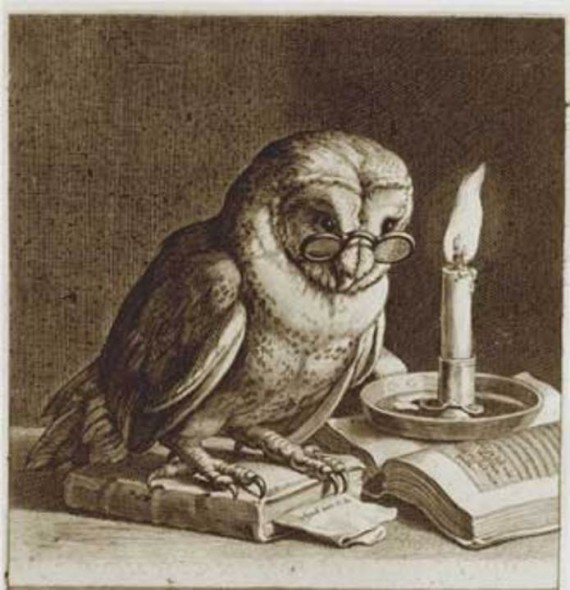
Owls are the wisest among birds.

How It Started

Perhaps the earliest known link between owls and wisdom is their association with Athena, as the Greek goddess of wisdom is often depicted holding an owl. With their overly large eyes and the constant serious, almost thoughtful look on their faces, owls give off the impression of wisdom, of being a cut above the rest. From legends, folklore, children’s tales to Hollywood, owls have always been the night watchmen – sometimes sinister, always smart.

Why It’s Not True

Unfortunately owls are actually placed on the lower-end of intelligent birds, with the common crow considered the wisest among birds.


[button color=”blue” size=”small” link=”http://kids.nationalgeographic.com/explore/nature/animal-myths-busted/” target=”blank” ]Source[/button] [button color=”blue” size=”small” link=”http://www.toptenz.net/top-10-facts-about-animals-that-are-totally-wrong.php” target=”blank” ]Source[/button]

Interesting Words And Expressions – Bumfuzzle

Lost and Confused Signpost

What does bumfuzzle mean?

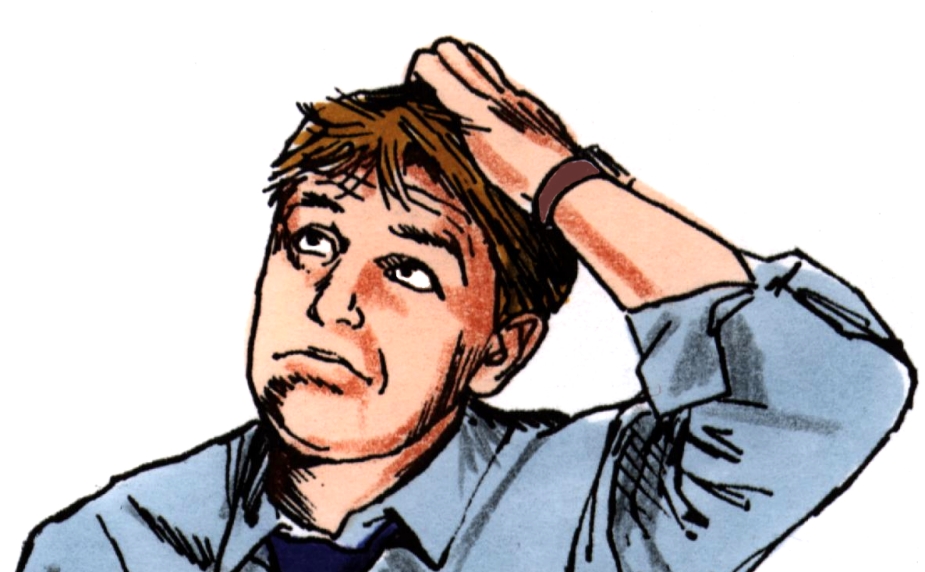
It’s a transitive verb that means confuse; perplex; fluster.

How do you pronounce it?

\¦bəm¦fəzəl\

Where does it come from?

Bumfuzzle may have begun as dumfound, which was then altered first into dumfoozle and then into bumfoozle. Dumfound (or dumbfound) remains a common word today, but bumfuzzle unfortunately is extremely rare.

How do you use it?

For example: “Irish can bumfuzzle any team” – headline about the Notre Dame “Fighting Irish” football team in the Chicago Tribune newspaper.

Macmillan Summer Training and Conference Certrificates

teacher certificate

ATTENTION TEACHERS!!

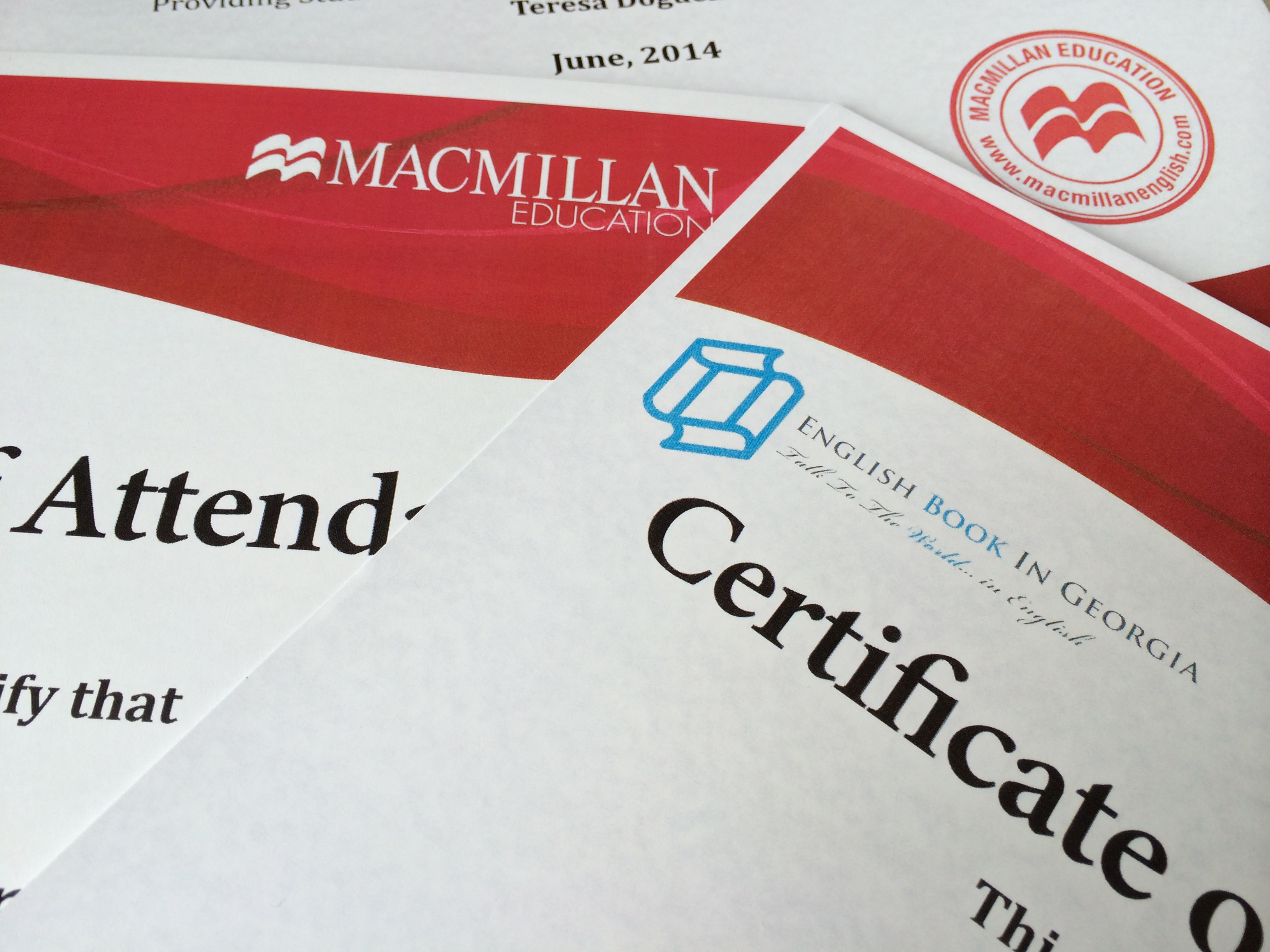
Certrificates for Macmillan Summer Training and Conference are still available until December 2014.
To collect your certificate(s), please come to our main office at:

Tbilisi, Didi Digomi, 3 m/r, Nestan-Darejani Str.1

If you have questions, please contact:

Lali Jokhadze at 032.200.1242 ext.1006 or l.jokhadze@englishbook.ge

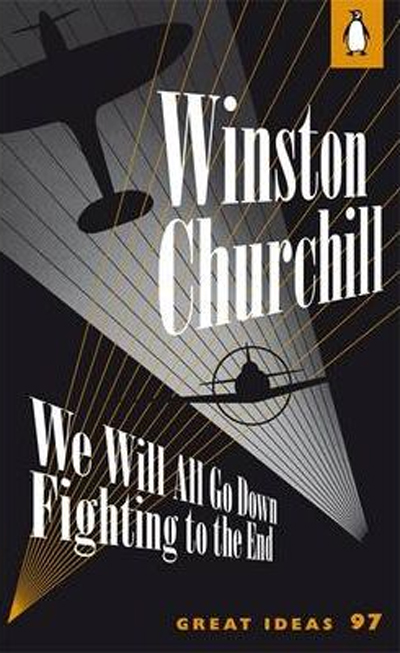
Book of the Week: We Will All Go Down Fighting to the End by Winston Churchill

Nov 20 - Churchill

Wars are not won by evacuations

We will all go down fighting to the end

We can take it!

Westward look, the land is bright”

This collection of speeches from one of the great modern orators includes Churchill’s famous words on the declaration of war with Germany, as well as his rousing call to the British in June 1940 after Dunkirk, and his immortal tribute to the young men fighting in the Battle of Britain.

Throughout history, some books have changed the world. They have transformed the way we see ourselves – and each other. They have inspired debate, dissent, war and revolution. They have enlightened, outraged, provoked and comforted. They have enriched lives – and destroyed them. Now Penguin brings you the works of the great thinkers, pioneers, radicals and visionaries whose ideas shook civilization and helped make us who we are.

[button color=”blue” size=”small” link=”http://englishbookgeorgia.com/catalogue/shop/penguin-books/we-will-all-go-down-fighting-to-the-end/” target=”blank” ]Buy the Book[/button]