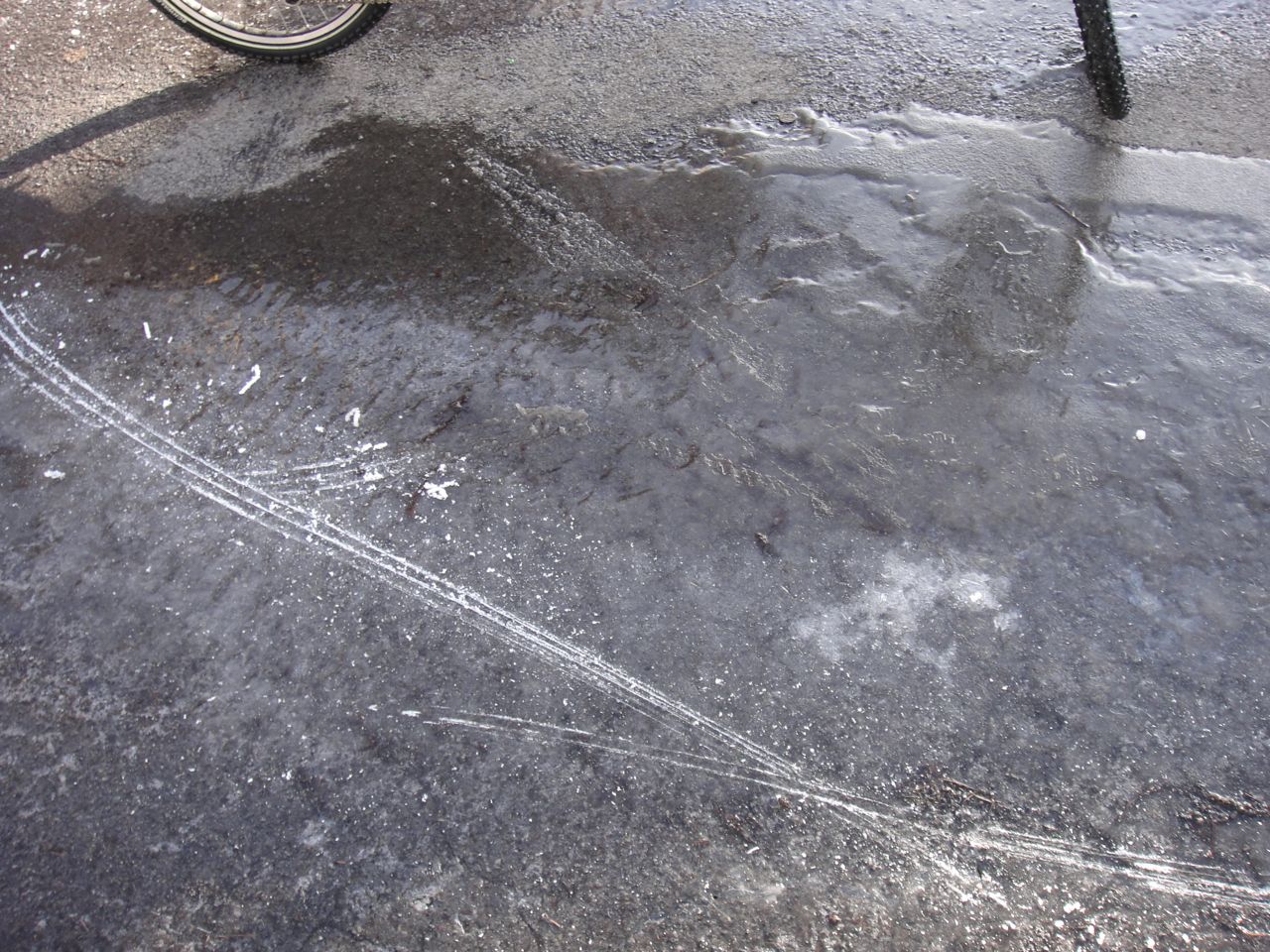
Very dangerous for drivers, black ice is completely transparent, which makes it very difficult to see. Make sure to drive slowly if there are warnings of black ice on the road.
content-views-query-and-display-post-page domain was triggered too early. This is usually an indicator for some code in the plugin or theme running too early. Translations should be loaded at the init action or later. Please see Debugging in WordPress for more information. (This message was added in version 6.7.0.) in /home2/englita2/public_html/blogebg/wp-includes/functions.php on line 6170js_composer domain was triggered too early. This is usually an indicator for some code in the plugin or theme running too early. Translations should be loaded at the init action or later. Please see Debugging in WordPress for more information. (This message was added in version 6.7.0.) in /home2/englita2/public_html/blogebg/wp-includes/functions.php on line 6170gravity-forms-pdf-extended domain was triggered too early. This is usually an indicator for some code in the plugin or theme running too early. Translations should be loaded at the init action or later. Please see Debugging in WordPress for more information. (This message was added in version 6.7.0.) in /home2/englita2/public_html/blogebg/wp-includes/functions.php on line 6170
Very dangerous for drivers, black ice is completely transparent, which makes it very difficult to see. Make sure to drive slowly if there are warnings of black ice on the road.

“Actions speak louder than words.”
What does it mean?
Just saying that you’ll do something doesn’t mean much. Actually doing it is harder and more meaningful.
Where does it come from?
In the 1500s, French writer, Michel de Montaigne, was quoted as stating:
“Saying is one thing and doing is another.”

“People who live in glass houses should not throw stones.”
What does it mean?
A phrase one can say meaning people should not criticize others for faults that they have themselves.
Where does it come from?
It originated during the early Middle Ages. The Middle Ages were a tumultuous, yet fascinating period of history: Robert the Bruce, the Black Death, and Canterbury Tales.
According to some online sources, the phrase was first noted in Geoffrey Chaucer’s ‘Troilus and Criseyde’ in 1385. But, it is thought that Chaucer took it from the bible. John 8:7 says, “Let him without sin, be the first to throw a stone.”
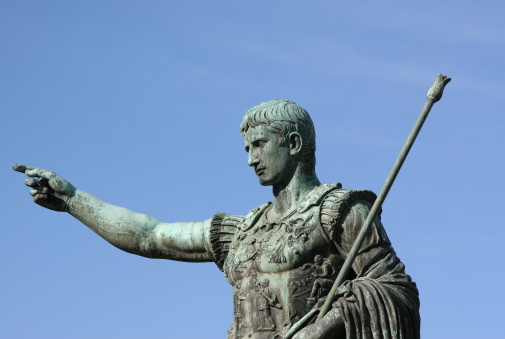 “Fortune favors the bold”
What does it mean?
The phrase means that Fortuna, the Goddess of luck, is more likely to help people who bravely go after what they want. These people will most likely be more successful than people who try to live safely.
Where does it come from?
Its earliest recorded use is in latin as ‘Audaces fortuna iuvat’ by the second century BC playwright Terence, Phormio.
The Roman dictator and consul Lucius Cornelius Sulla was said to believe in the influence of the goddess Fortuna in his life. He was a consummate risk-taker, achieving martial distinction by taking risks on the battlefield such as wearing disguises and living among the enemy. He was also the first of the great Republican Romans to march upon Rome — a great taboo, but one which cemented his power and influence. Sulla so believed in his favor with Fortuna that he took the agnomen Felix which means “lucky” and gave his twin son and daughter the antiquated praenomina Faustus and Fausta because those names were also associated with luck.
Julius Caesar also transformed his fortunes when he marched on Rome, declaring alea jacta est (the die is cast) as he crossed the Rubicon river. The utterance was a commitment of his fate to Fortune. While Caesar was a professional soldier, many of his victories were achieved by taking bold risks which exposed him and his troops to significant danger, but resulted in memorable victories.

“When the going gets tough, the tough get going.”
What does it mean?
When you break it down and put it into context, “the going” means “the situation,” “gets tough” means “becomes difficult,” “the tough” means “people who are strong or enduring,” and “get going” means “become fully engaged.” Taken together, the meaning of the phrase is “When the situation becomes difficult, the strong will work harder to meet the challenge.”
Where does it come from?
The origin of the phrase has been attributed both to Joseph P. Kennedy (1888–1969), father of U.S. President John F. Kennedy (JFK), and sometimes to Norwegian-born American football player and coach Knute Rockne (1888–1931).
Enjoy a very popular American song that uses this proverb below.
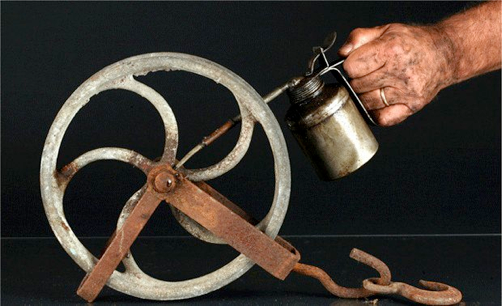
“The squeaky wheel gets the grease.”
What does it mean?
This idiom means that the most noticeable (or loudest) problems (or people) are the ones most likely to get attention. It is alternately expressed as “The squeaky wheel gets the oil”.
Where does it come from?
The origin of the squeaky wheel idiom is unknown, but its current form is attributed to American humorist Josh Billings who is said to have popularized it in his putative poem “The Kicker” written in 1870.
I hate to be a kicker,
I always long for peace,
But the wheel that does the squeaking,
Is the one that gets the grease.
However, this poem has been attributed to various authors, anonymous or otherwise, and its provenance has never been verified.
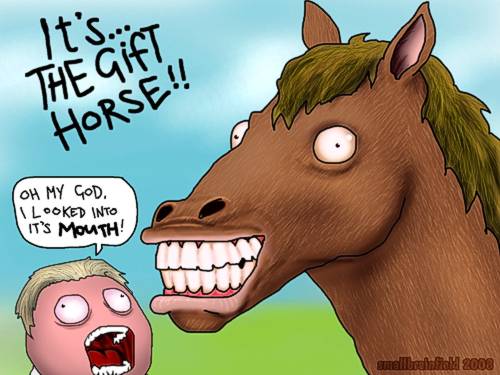
Never look a gift horse in the mouth. What is a gift-horse? Why shouldn’t you look in its mouth? What does this idiom actually mean?
A gift horse is a horse that was a gift, quite simply. When given a horse, it would be bad manners to inspect the horse’s mouth to see if it has bad teeth. This can be applied as an analogy to any gift: Don’t inspect it to make sure it matches some standard you have, just be grateful and say thank you!
Where does it come from?
As with most proverbs the origin is ancient and unknown. We have some clues with this one however. The phrase appears in print in English in 1546, as “don’t look a given horse in the mouth”, in John Heywood’s A dialogue conteinyng the nomber in effect of all the prouerbes in the Englishe tongue.
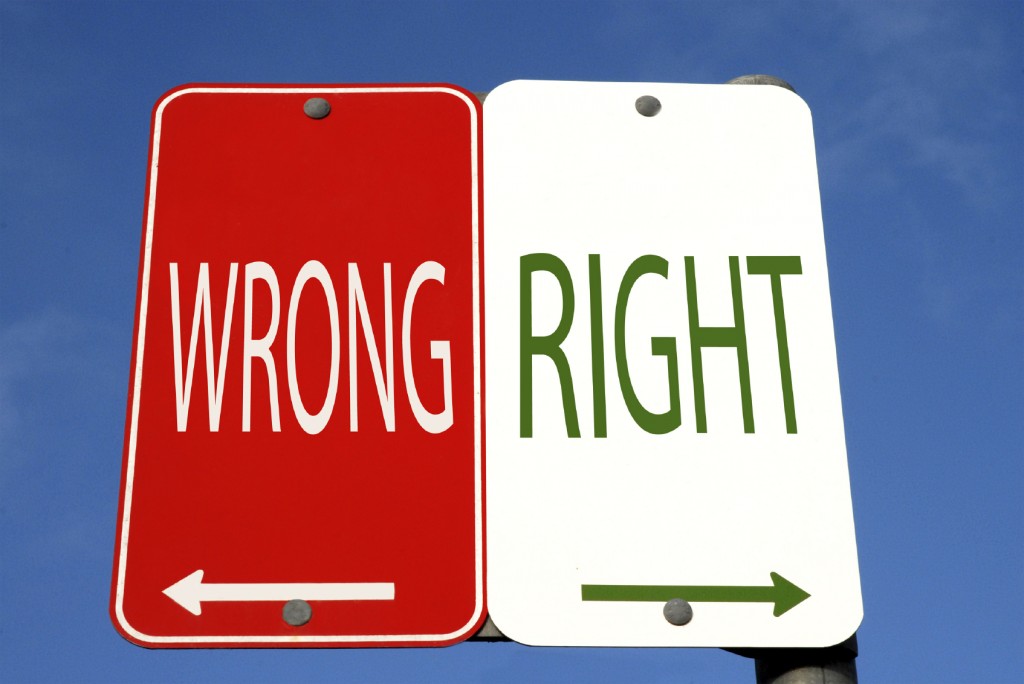
Two wrongs don’t make a right. So does that mean they make a left? No?
No. It means that when someone has done something bad to you, trying to get revenge will only make things worse. So it’s better to maintain your ethics and don’t take revenge.
In the words of Mahatma Ghandi:


The pen is mightier than the sword. What does it mean?
Trying to convince people with ideas and words is more effective than trying to force people to do what you want.
Where does it come from?
It was created by the English author, Edward Bulwer-Lytton, in 1839, for his play Richelieu; Or the Conspiracy.
The play was about Cardinal Richelieu. His line’s in Act II, scene II, was more fully:
True, This! —
Beneath the rule of men entirely great
The pen is mightier than the sword. Behold
The arch-enchanters wand! — itself is nothing! —
But taking sorcery from the master-hand
To paralyse the Cæsars, and to strike
The loud earth breathless! — Take away the sword —
States can be saved without it!

Book-Bosomed describes someone who carries a book at all times.
Scottish novelist and poet, Sir Walter Scott, coined the phrase Book-Bosomed. The phrase first appeared in Scott’s celebrated 1805 poem The Lay of the Last Minstrel.