Notice: Function _load_textdomain_just_in_time was called incorrectly. Translation loading for the content-views-query-and-display-post-page domain was triggered too early. This is usually an indicator for some code in the plugin or theme running too early. Translations should be loaded at the init action or later. Please see Debugging in WordPress for more information. (This message was added in version 6.7.0.) in /home2/englita2/public_html/blogebg/wp-includes/functions.php on line 6170
Notice: Function _load_textdomain_just_in_time was called incorrectly. Translation loading for the js_composer domain was triggered too early. This is usually an indicator for some code in the plugin or theme running too early. Translations should be loaded at the init action or later. Please see Debugging in WordPress for more information. (This message was added in version 6.7.0.) in /home2/englita2/public_html/blogebg/wp-includes/functions.php on line 6170
Notice: Function _load_textdomain_just_in_time was called incorrectly. Translation loading for the gravity-forms-pdf-extended domain was triggered too early. This is usually an indicator for some code in the plugin or theme running too early. Translations should be loaded at the init action or later. Please see Debugging in WordPress for more information. (This message was added in version 6.7.0.) in /home2/englita2/public_html/blogebg/wp-includes/functions.php on line 6170 April 2015 | Blog EBE | Page 3
Skip to content
Deprecated: preg_match_all(): Passing null to parameter #2 ($subject) of type string is deprecated in /home2/englita2/public_html/blogebg/wp-includes/media.php on line 1893
Deprecated: str_contains(): Passing null to parameter #1 ($haystack) of type string is deprecated in /home2/englita2/public_html/blogebg/wp-includes/shortcodes.php on line 150
Deprecated: preg_split(): Passing null to parameter #2 ($subject) of type string is deprecated in /home2/englita2/public_html/blogebg/wp-includes/formatting.php on line 3492
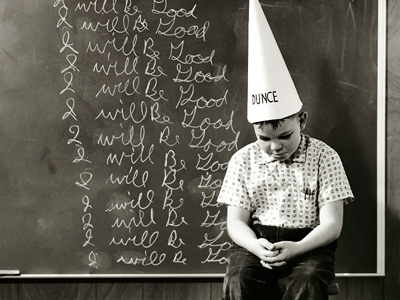
Many of us can recall a situation when we were humiliated by a teacher. If you close your eyes and recall it, it still has the power to make you cringe. And also for many of us, if we never resolved our feelings with those teachers, we still haven’t forgiven them.
Teachers choose to humiliate students for several reasons: to gain control over them, because the teacher is desperate; to frighten other students; or because they’re over-compensating for their own lack of confidence. Some teachers actually think they have a right to humiliate a student because the student deserves it. Other teachers think that because students frequently humiliate themselves, especially online, students don’t mind being humiliated — some might even enjoy it.
Prevention and Repair
Many readers of this post are in positions of influencing other teachers, both formally and informally. We all need to use our influence to provide a safe haven for all students regardless of their behavior. Here are a dozen ways to prevent students from humiliation, or to fix the situation should you accidently embarrass a student and want to make things better.
Don’t give a student an embarrassing haircut.
Keep communication between you and your students private when talking about behavior or academic progress.
Frequently check with your students that the message they are receiving is the same one that you are sending.
Avoid sarcasm, even if your students might laugh at it. Students often save face by hiding how humiliated they really feel.
Pay close attention to body language. Sometimes what a student is saying is not what he is feeling. If a student shows discomfort, defensiveness, or withdrawal, make sure everything is OK between you.
If you notice any sudden change in a student’s behavior, especially indications of withdrawal, find time as quickly as possible to make sure that you have not been hurtful to that student, even unintentionally.
Never write a student’s name in a public place.
Do not praise a student for doing a simple task. This only makes her feel that you have low expectations for her.
Call on all students equally. If a student gives a wrong answer, don’t say, “Can anybody help him?” Instead, ask the student if he’d like to choose another student to be his consultant. Let him chose his own consultant.
Ask students to tell you (or preferably write you a note) about anything that they might find humiliating or embarrassing in class, and be sure not to do those things with any student that specifically informs you.
Always give students the right to pass when you call upon them in class.
Tell your students a story about a time when you were embarrassed by a teacher, discuss it with them, and listen to their suggestions of what you could have done to resolve the incident. Come up with a class poster called, “When you are embarrassed, you can. . .” and list the best suggestions.
Every student in school deserves the right to feel emotionally safe from embarrassment and humiliation by teachers, by other students — and by local barbers. When this safety is violated, not only does academic performance suffer, but also students might never be free of the hurt for the rest of their lives.
Deprecated: preg_match_all(): Passing null to parameter #2 ($subject) of type string is deprecated in /home2/englita2/public_html/blogebg/wp-includes/media.php on line 1893
Deprecated: str_contains(): Passing null to parameter #1 ($haystack) of type string is deprecated in /home2/englita2/public_html/blogebg/wp-includes/shortcodes.php on line 150
Deprecated: preg_split(): Passing null to parameter #2 ($subject) of type string is deprecated in /home2/englita2/public_html/blogebg/wp-includes/formatting.php on line 3492
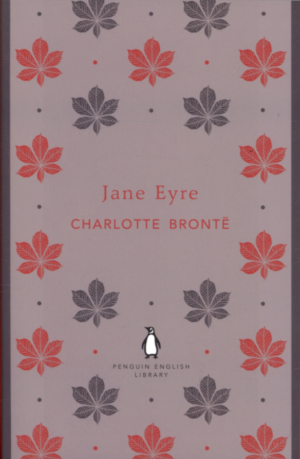
Immediately recognized as a masterpiece when it was first published in 1847, Charlotte Brontë’s Jane Eyre is an extraordinary coming-of-age story featuring one of the most independent and strong-willed female protagonists in all of literature. Poor and plain, Jane Eyre begins life as a lonely orphan in the household of her hateful aunt. Despite the oppression she endures at home, and the later torture of boarding school, Jane manages to emerge with her spirit and integrity unbroken. She becomes a governess at Thornfield Hall, where she finds herself falling in love with her employer—the dark, impassioned Mr. Rochester. But an explosive secret tears apart their relationship, forcing Jane to face poverty and isolation once again.
One of the world’s most beloved novels, Jane Eyre is a startlingly modern blend of passion, romance, mystery, and suspense.
[button color=”blue” size=”small” link=”http://onlinebookshop.ge/product/jane-eyre/” target=”blank” ]Buy the Book[/button]
At the beginning of “House of Cards,” Kevin Spacey’s character explains why power beats money.
Money is the McMansion in Sarasota that starts falling apart after 10 years. Power is the old stone building that stands for centuries. I cannot respect someone who doesn’t see the difference.
But should you find and hold power — as Underwood so deliciously does — it’s going to do some really weird things to your perception of yourself and others.
Here’s what the research says:
1. If you feel powerful, you’re more inspired by yourself than anybody else.
According to a 2015 study led by Gerben A. Van Kleef at the University of Amsterdam, powerful people find themselves more inspiring than anybody else. In a study of 140 undergraduates, he found that people who agreed highly to statements like “I can get others to do what I want” were more inspired by talking about their own life-changing experiences than hearing other people discuss theirs.
To Research Digest blogger Alex Fradera, it’s indicative of self-sufficiency.
“As a matter of course, powerful people don’t expect others to fulfill their needs, and may therefore find it difficult to consider anyone else a worthy source of inspiration,” he writes. “It’s a little like a child for whom no one in the playground is up to scratch, so they become their own best friend.”
2. If you feel powerful, you’re the first to act.
In a 2003 study led by Columbia University psychologist Adam Galinsky, people who felt more powerful than their peers were more likely to take a card in a game of blackjack, fix an annoying fan in a room, and take action in social dilemmas. A 2007 study coauthored by Galinsky added to that theme, finding that powerful people are more likely to act first in a negotiation.
In 2012, the University of Texas’ Jennifer A. Whitson found an explanation as to why: Powerful people are less likely to perceive — and remember — constraints to their goals.
It’s like how eagles and alligators evolved to have their eyes close together.
“The vision of predators is fixated on their object of pursuit — their prey — leaving little visual room for unexpected danger or potential threats in their surroundings,” she and her authors write. “This directed focus allows them to pounce into action to secure their meal.”
Same for CEOs.
3. If you feel powerful, you’re more likely to cheat.
According to a 2011 study led by Joris Lammers at Tilburg University in the Netherlands, it’s that powerful people are more likely to cheat.
His team surveyed 1,561 professionals, asking how high up in their organizations they were and their history or interest in cheating.
“Results showed that elevated power is positively associated with infidelity because power increases confidence in the ability to attract partners,” they wrote. “This association was found for both actual infidelity and intentions to engage in infidelity in the future.”
Gender didn’t matter.
Powerful women were just as likely to have or pursue affairs as powerful men. This goes against a commonly held assumption about cheating. It’s not that men are inherently more likely to cheat than women; it’s just that men are more likely to hold powerful positions.
“As a social psychologist, I believe that the situation is everything and that the situation or instance is often stronger than the individual,” Lammers said in a statement. “As more and more women are in greater positions of power and are considered equal to men, then familiar assumptions about their behavior may also change.”
4. If you feel powerful, you feel distant from other people.
According to Joe Magee at New York University and Pamela Smith at the University of California at San Diego, powerful people feel more socially distant than non-powerful people.
It happens for a few reasons:
People become close to one another when they are “symmetrically dependent” on one another and have repeated interactions, Magee and Smith say. You and your boss aren’t symmetrically dependent; you depend on her approval more than she does yours. But you and the other people on her team are symmetrical, so you’re likely to become close over time.
Research indicates that powerful people don’t need to associate with others in the same way.
Powerful people have to think more abstractly than everybody else. They’re concerned with meeting goals more than developing relationships.
So the isolation is a result of the social situation that power puts you in — and the need to get things done.
“The world is a book, and those who don’t travel only read one page.” – Augustine of Hippo
1. Stuttgart City Library
Location: Stuttgart, Germany.
Characterized by its cube shape and clinical white interior, this great crystalline building stands a whopping 9-storeys high over the German city of Stuttgart.
Flickr: schubi74 / Creative Commons
2. Mafra Palace Library
Location: Mafra, Portugal.
Situated inside the Mafra National Palace, the library is open to scholars, researchers, historians and members of the public by appointment. Unsurprisingly, many rare works furnish its shelves.
Flickr: anijdam / Creative Commons
3. TU Delft Library
Location: Delft, Netherlands.
At the heart of Delft University lies its library, whose unique cone shaped structure forms the focal point of the campus. The roof of the library is covered with grass, allowing visitors to graze above the library’s book filled central space.
Flickr: tudelftlibrary
4. Sainte-Geneviève Library
Location: Paris, France.
This magisterial library contains around 2 million documents and was a reading place of Marcel Duchamp and James Joyce. The building’s iconic architecture served as the inspiration for the deign of the Boston Public Library.
Flickr: jastrow / Creative Commons
5. Malmö City Library
Location: Malmö, Sweden.
Located in the heart of the multicultural Malmö, this library is filled with books in some 60 different languages and attracts almost 1 million visitors each year.
Flickr: infomastern / Creative Commons
6. The Codrington Library
Location: Oxford, UK.
With its modern collection comprising of some 185,000 items, about a third of which being produced before 1800, the prestigious Codrington Library attracts scholars from around the world.
Flickr: biker_jun / Creative Commons
7. Wiblingen Abbey Library
Location: Wiblingen, Germany.
The majestic hall of Wiblingen Abbey’s library still holds some original manuscripts, despite most of the books having been transferred to other libraries. Besides, the main reason this library to visit is to marvel at the main hall, which remains in its original form.
Flickr: volzotan / Creative Commons
8. Halmstad City Library
Location: Halmstad, Sweden.
Standing near the beach of the river Nissan, the unique shape of the building was inspired from the trees that stand on the site.
Flickr: jacobwod / Creative Commons
9. Strahov Monastery Library
Location: Strahov, Czech Republic.
Completed in 1679, Strahov Monastery is one of the oldest monasteries still in existence in the world. During its long history many important personalities have visited, amongst which are admiral lord Horatio Nelson and Napoleon´s wife Marie Louise.
Flickr: paulcoyne / Creative Commons
10. Handelingenkamer
Location: The Hague, Netherlands.
Handelingenkamer is the name given to the Dutch Parliament’s library. It’s unique design with its open cast-iron staircases and balustrades are designed to allow daylight to filter down the four storeys and illuminate the more than 100,000 volumes that line the shelves.
You have to practice a skill a lot to become good at it.
Where does it come from?
The proverb has been traced back to the 1550s-1560s, when its form was ‘Use makes perfect.‘ The Latin version is: ‘Uses promptos facit.’ It was first used in it’s current form in the United States of Americca in ‘Diary and Autobiography of John Adams’.
Deprecated: preg_match_all(): Passing null to parameter #2 ($subject) of type string is deprecated in /home2/englita2/public_html/blogebg/wp-includes/media.php on line 1893
Deprecated: str_contains(): Passing null to parameter #1 ($haystack) of type string is deprecated in /home2/englita2/public_html/blogebg/wp-includes/shortcodes.php on line 150
Deprecated: preg_split(): Passing null to parameter #2 ($subject) of type string is deprecated in /home2/englita2/public_html/blogebg/wp-includes/formatting.php on line 3492