Tag Archives: April 2015

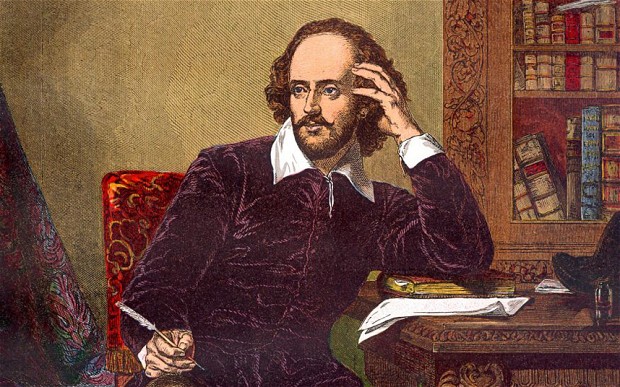
William Shakespeare Activities

Its William Shakespeare week and we have some Shakespeare activities that you can do with your English class that are fun and educational. Enjoy!


1. Who am I?

Tell your students to imagine that you’re a very famous Briton! Get them to ask you ‘yes/no’ questions until they guess who you are. (You are Shakespeare!)

If you want to, play a few more rounds of the guessing game using other famous Britons, or use it in another class to practice question forms again.

Alternatively, write an anagram of WILLIAM SHAKESPEARE such as MALILIW RAKESHAPEES on the board and have a race to see which student can find the name first.


2. Shakespeare Mind Map

Once you have established that Shakespeare is going to be the topic for the lesson, write the word Shakespeare with a little picture if you are artistic, inside a bubble on the board. Ask students what they know about him or what comes to mind when they think about William Shakespeare. This will help you to know how much or how little your students already know in order to gauge the level of input for the class.


 WILLIAM SHAKESPEARE


3. Shakespeare Quiz

Here is the printout for the Shakespeare Quiz (make sure not to include the answers):

[box type=”shadow” align=”aligncenter” ]How much do you know about William Shakespeare? Try this quiz to find out.

1) When was William Shakespeare born?

a) 1498

b) 1564

c) 1895


2) What period in English history was it when Shakespeare was alive?

a) Elizabethan

b) Georgian

c) Victorian


3) Which of these plays was not written by Shakespeare?

a) Hamlet

b) Romeo and Juliet

c) The Taming of the Rat


4) Where was Shakespeare born?

a) Stratford Upon Avon

b) Cambridge

c) Oxford


5) How many plays did Shakespeare write?

a) 8

b) 38

c) 108


6) Which type of plays did Shakespeare not write?

a) Tragedies

b) Comedies

c) Musicals


7) What’s the name of the ‘Shakespeare theatre’ in London?

a) The World Theatre

b) The Globe Theatre

c) The Old Shakespeare Theatre


8) Who played Romeo in the most recent film version of ‘Romeo and Juliet’?

a) Leonardo Dicaprio

b) Johnny Depp

c) Brad Pitt[/box]


Quiz Answers:

1-b, 2-a, 3-c, 4-a, 5-b, 6-c, 7-b, 8-a


4. Information gap reading.

Put students into pairs to do this activity. It’s very important that your students don’t look at each others’ texts during the task so make this clear when you give the instructions. If this type of task is new to your students, demonstrate it with one of the stronger students before the class begin. Before students begin speaking they need to read the text carefully and prepare the questions that they are going to ask their partner. The first question is given as an example. You may need to help your students write the questions.

Here’s the complete text for you to check the students’ answers.

William Shakespeare was a poet and a playwright, and is widely regarded as the greatest writer in the English language. He was born in Stratford-upon-Avon, in central England, in 1564 and he died in 1616. His surviving work consists of 38 plays, 154 sonnets (a special type of poem with 14 lines), and some other poems. He is best known for his plays which have been translated into every major language and are performed more than those of any other playwright in the world.

When William Shakespeare was 18 years old he married Anne Hathaway, and they had three children. Shakespeare went to London to work as an actor and a writer. In 1599 the Globe Theatre was built in London and it was in this theatre, situated on the banks of the River Thames, that some of Shakespeare’s plays were first performed. In 1613 the theatre was destroyed by a fire. However, a modern reconstruction of the theatre was built near the original site in 1997 so even today you can go to the Globe Theatre to see one of Shakespeare’s plays.

Here are the printouts for Student A and B:

[box type=”shadow” align=”aligncenter” ]Student A

Text adapted from Wikipedia – http://en.wikipedia.org/wiki/William_Shakespeare

William Shakespeare was a poet and a playwright, and is widely regarded as the greatest writer in the English language. He was born in 1) _____________________, in central England, in 1564 and he died in 2)_______. His surviving work consists of 38 plays, 154 sonnets (a special type of poem with 14 lines), and some other poems. He is best known for his 3) ______ which have been translated into every major language and are performed more than those of any other playwright in the world.

When William Shakespeare was 18 years old he married 4) ______________, and they had three children. Shakespeare went to 5) ________ to work as an actor and a writer. In 1599 the Globe Theatre was built in London and it was in this theatre, situated on the banks of the River Thames, that some of Shakespeare’s plays were first performed. In 6) _______the theatre was destroyed by a fire. However, a modern reconstruction of the theatre was built near the original site in 1997 so even today you can go to the Globe Theatre to see one of Shakespeare’s plays.

Prepare your questions here (the first one is done for you):

1) Where was Shakespeare born?

2)

3)

4)

5)

6)[/box]


[box type=”shadow” align=”aligncenter” ]Student B

Text adapted from Wikipedia – http://en.wikipedia.org/wiki/William_Shakespeare

William Shakespeare was a poet and a playwright, and is widely regarded as the greatest writer in the English language. He was born in Stratford-upon-Avon, in central England, in 1) _____ and he died in 1616. His surviving work consists of 2)____ plays, 154 sonnets (a special type of poem with 14 lines), and some other poems. He is best known for his plays which have been translated into every major language and are performed more than those of any other playwright in the world.

When William Shakespeare was 3) ______ years old he married Anne Hathaway, and they had 4)_______ children. Shakespeare went to London to work as an actor and a writer. In 5) ______ the Globe Theatre was built in London and it was in this theatre, situated on the banks of the River Thames, that some of Shakespeare’s plays were first performed. In 1613 the theatre was destroyed by a 6) ______. However, a modern reconstruction of the theatre was built near the original site in 1997 so even today you can go to the Globe Theatre to see one of Shakespeare’s plays.

Prepare your questions here (the first one is done for you):

1) When was Shakespeare born?

2)

3)

4)

5)

6)[/box]

5. Find somebody who…

The aim of this task is to get students talking to each other. Your students may well be familiar with the classic ‘Find Somebody Who..’ task. First get students to complete the last row with something they’d like to find out about their classmates, then remind students how important the extra information column is. Demonstrate a few of the question forms or elicit these from students and if necessary write the questions on the board to support weak students during the task. For example, ‘Can you name three of Shakespeare’s plays?’ and ‘Have you ever seen a film of a Shakespeare play?’ etc. When your students are ready to start, make sure everyone is standing up and has something to lean on and a pen with them, and off they go. As students are speaking to each other and completing the table make sure you monitor carefully so you can offer some constructive feedback at the end.

Here is the printout for your students:

Find someone who                Name                                Extra information           
…can name three of Shakespeare’s plays.
…has seen a film of a Shakespeare play.
… likes going to the theatre.
 … would like to be a writer.
… would like to be an actor / actress.


6. Complete the Shakespeare Quotes

This is a task for higher levels, as it’s quite challenging. Put students into small groups or pairs and give your students time to try and match the quotes. If you like, cut up a set of quote halves so students can move them around on a table to experiment with different combinations. Encourage your students to look for words that normally go together, such as ‘borrow and lend’ or ‘blind and see’. Then check their answers and ask them what they understand by them.

Here is the printout for your students (make sure not to include the answers):

Here are some famous quotes from Shakespeare. Can you match the two halves to make the quote?

 All the world’s a stage  that I shall say good night till it be morrow.
 Love is blind  never did run smooth
 that is the question  Neither a borrower
 and lovers cannot see  Good Night, Good night! Parting is such sweet sorrow,
 what’s done is done  To be, or not to be:
 and all the men and women are merely players  Things without remedy should be without regard;
 wherefore art thou Romeo?  The course of true love
nor a lender be  O Romeo, Romeo!


Answers:

All the world’s a stage and all the men and women are merely players

Love is blind and lovers cannot see

Neither a borrower nor a lender be

Good Night, Good night! Parting is such sweet sorrow, that I shall say good night till it be morrow.”

To be, or not to be: that is the question

Things without remedy should be without regard; what’s done is done

The course of true love never did run smooth

O Romeo, Romeo! wherefore art thou Romeo?
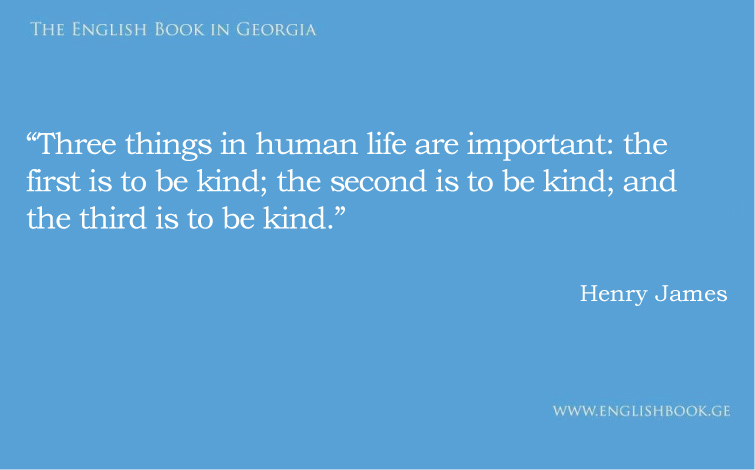
 

Inspirational Quotes


Deprecated: preg_match_all(): Passing null to parameter #2 ($subject) of type string is deprecated in /home2/englita2/public_html/blogebg/wp-includes/media.php on line 1893

Deprecated: str_contains(): Passing null to parameter #1 ($haystack) of type string is deprecated in /home2/englita2/public_html/blogebg/wp-includes/shortcodes.php on line 150

Deprecated: preg_split(): Passing null to parameter #2 ($subject) of type string is deprecated in /home2/englita2/public_html/blogebg/wp-includes/formatting.php on line 3492

საინტერესო სიტყვები და გამონათქვამები – Effervescence

What does Effervescence mean?

It is a noun that means bubbles in a liquid; fizz.

How do you pronounce it?

/ˌɛfəˈvɛs(ə)ns/

OR

ef·fer·ves·cence

Where does it come from?

1675-85; < Latin effervēscent- (stem of effervēscēns), present participle of effervēscere to effervesce

How do you use it?

Bubbles are engaging because of their effervescence.

Bubbly soft drinks tickle our tongues with their effervescence.

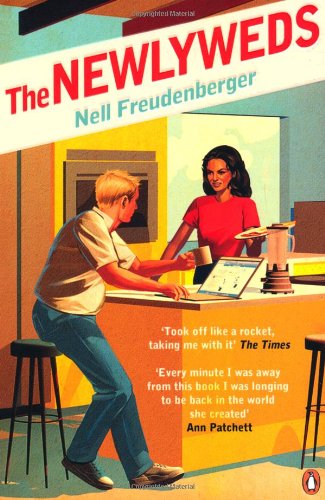
Book of the Week: The Newlyweds by Nell Freudenberger

newlyweds

Amina Mazid is twenty-four when she moves from Bangladesh to Rochester, New York, for love. A hundred years ago, Amina would have been called a mail-order bride. But this is the twenty-first century: she is wooed by—and woos—George Stillman online.

For Amina, George offers a chance for a new life for her and her parents, as well as a different kind of happiness than she might find back home. For George, Amina is a woman who doesn’t play games. But each of them is hiding something: someone from the past they thought they could leave behind. It is only when Amina returns to Bangladesh that she and George find out if their secrets will tear them apart, or if they can build a future together.

[button color=”blue” size=”small” link=”http://onlinebookshop.ge/product/newlyweds/” target=”blank” ]Buy the Book[/button]

The 8 Signs of a Bad Leader

It’s an interesting conundrum. Say you’re a manager, a senior-level executive, or a human resources employee; your job is to be a leader, yes, but also to pick out leaders, to select who will be promoted, given extra responsibility, head up a project or team. How do you know who will make a great leader in a given circumstance?

There are loads of articles floating around about attributes that make great leaders great, but what makes a poor leader? We can all pick them out after the fact (hindsight is 20/20 after all), but what traits set these people apart even before they assume a leadership role?

Any one or more of the following traits would be a red flag that a person might not be ready for a leadership position:

[box type=”shadow” align=”aligncenter” ]1. Lack of empathy.

Lack of empathy is a key indicator of a poor leader. If the person cannot seem to put him or herself in another person’s shoes and see things from a different perspective, they will never be a truly great leader.

2. Fear of change.

Hey, change is scary for everyone, especially when it involves loads of money and/or people’s jobs. But leaders who cannot embrace change are destined to be left behind.

3. Too willing to compromise.

The ability to find a win/win situation is a gift for a leader, but anyone who is too quick to compromise his or her ideas or ideals is not going to be a benefit to the team. It’s a fine balance between understanding when to give in and when to stand your ground.

4. Too bossy.

It’s a common misconception that bossy people make good bosses. Actually, the opposite is true. Someone who simply orders others around is unlikely to engender any loyalty or make subordinates feel empowered. True leaders have followers who want to be led by them.

5. Wishy-washy.

Leaders must make decisions, and so if a person always seems to vacillate on choices big and small — from who should handle a certain client to where to go for lunch — they will probably have difficulty in a leadership position. It indicates a lack of self-confidence.

6. Poor judge of character.

A person who has a blind spot when it comes to friends and coworkers, making excuses or being unable to see another’s true character, won’t surround himself with the kinds of people who will help him rise to the top.

7. Out of balance.

Someone who is the first into the office every day and the last to leave might seem like a great candidate for promotion, but ask yourself if they have any balance in their lives. A lack of balance can be a precursor to burnout, and can also signal that they may have unreasonable expectations of the rest of the team.

8. Lack of humility.

The person who acts as though they can do it all — and are the only one who can do it right — is unlikely to rise to be a great leader, because they’ll be too busy doing everyone else’s job. Micro-managers need not apply.[/box]

This is not to say that having one of these characteristics automatically bars anyone from assuming a leadership position. In fact, I believe people can learn to overcome any of these bad habits and become a better leader.

But if someone exhibits more than one trait on this list, it’s a good bet that they’re not ready to lead at this time. If you are in a position to help them grow, take the time to constructively point this out to them, and give them the opportunity to improve. You’ll be modeling how a great leader really works.


საინტერესო სიტყვები და გამონათქვამები – If it ain’t broke, don’t fix it

“If it ain’t broke, don’t fix it.”

What does it mean?

Don’t try to improve something that already works fairly well. You’ll probably end up causing new problems.

Where does it come from?

It’s been a colloquial phrase in the southern states of the USA. For example, this piece is from the Texas newspaper The Big Spring Herald, December, 1976:

“We would agree with the old Georgia farmer who said his basic principle was ‘If it ain’t broke, don’t fix it.'”

The phrase has to be American. In England things don’t get broke, they get broken. ‘Ain’t broke’ is intended as a knowing southern yokelism, as opposed to ‘proper’ American, but it is one that wouldn’t have originated anywhere else.

Which Book Would You Read?

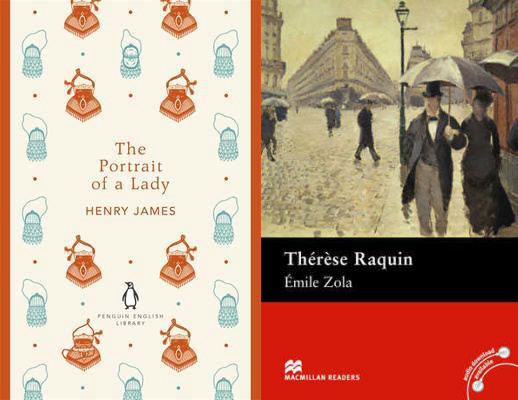
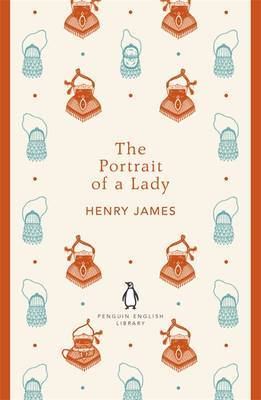
large_9780141199122The Portrait of a Lady

Author: Henry James

ISBN: 9780141199122

Widely regarded as Henry James’s greatest masterpiece, The Portrait of a Lady features one of the author’s most magnificent heroines: Isabel Archer, a beautiful, spirited American who becomes a victim of her provincialism during her travels in Europe.

As the story begins, Isabel, resolved to determine her own fate, has turned down two eligible suitors. Her cousin, who is dying of tuberculosis, secretly gives her an inheritance so that she can remain independent and fulfill a grand destiny, but the fortune only leads her to make a tragic choice and marry Gilbert Osmond, an American expatriate who lives in Florence. Outwardly charming and cultivated, but fundamentally cold and cruel, Osmond only brings heartbreak and ruin to Isabel’s life. Yet she survives as she begins to realize that true freedom means living with her choices and their consequences.

Richly complex and nearly aesthetically perfect, The Portrait of a Lady brilliantly portrays the clash between the innocence and exuberance of the New World and the corruption and wisdom of the Old.

Price: 15.0 ლ

[button color=”blue” size=”small” link=”http://onlinebookshop.ge/product/the-portrait-of-a-lady/” target=”blank” ]Buy the Book[/button]


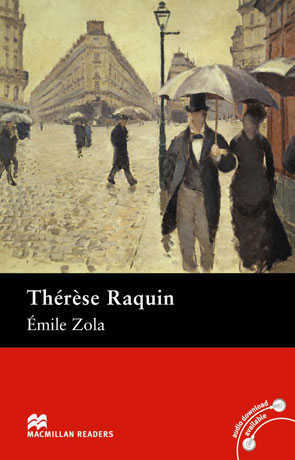
9780230035331Therese Raquin

Author: Emile Zola

ISBN: 9780230035331

In a dingy apartment on the Passage du Pont-Neuf in Paris, Therese Raquin is trapped in a loveless marriage to her sickly cousin, Camille. The numbing tedium of her life is suddenly shattered when she embarks on a turbulent affair with her husband’s earthy friend Laurent, but their animal passion for each other soon compels the lovers to commit a crime that will haunt them for ever.

Therese Raquin caused a scandal when it appeared in 1867 and brought its twenty-seven-year-old author a notoriety that followed him throughout his life.

Zola’s novel is not only an uninhibited portrayal of adultery, madness and ghostly revenge, but also a devastating exploration of the darkest aspects of human existence.

Price: 9.0 ლ

[button color=”blue” size=”small” link=”http://onlinebookshop.ge/product/macmillan-readers-therese-raquin-without-cd/” target=”blank” ]Buy the Book[/button]


Theme of the Week: Henry James

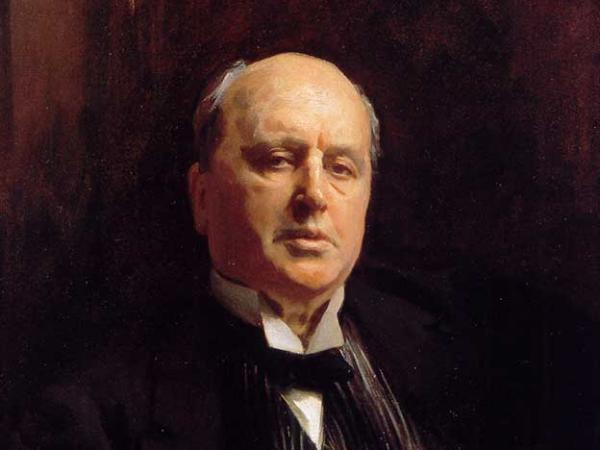
“Portrait of Henry James”, oil painting by John Singer Sargent (1913)

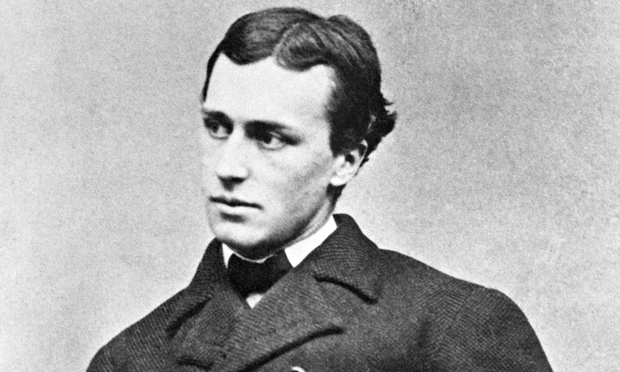
Henry James was an American-British writer who spent most of his writing career in Britain. He is regarded as one of the key figures of 19th-century literary realism.

He is best known for a number of novels showing Americans encountering Europe and Europeans. His method of writing from the point of view of a character within a tale allowed him to explore issues related to consciousness and perception, and his style in later works has been compared to impressionist painting.


[box type=”shadow” align=”aligncenter” ]5 Facts about Henry James

1. Henry James was born and raised in America but loved England so much that he traveled there often and eventually died there as a British citizen.

2. Even though he died in England, his body was returned to the United States and buried in Cambridge, Massachusetts.

3. Henry James influences as a writer were Honoré de Balzac, Nathaniel Hawthorne, Henrik Ibsen, Ivan Turgenev and George Elito.

4. He frequently wrote about character differences between people from the Old World (Europe) and people from the New World (United States).

5. For most of his life, James possessed ambitions for success as a playwright. He converted his novel The American into a play that enjoyed modest returns in the early 1890s. In all he wrote about a dozen plays, most of which went unproduced.[/box]