Category Archives: Teacher Resources

General lesson plan

glp

Remember, a plan is not a route-map of what must happen in class, it is only your informed setting-up of some possibilities. Here are a few ideas for alternative plans:

Your training course probably offered you some ideas for making ‘traditional’ formal lesson plans – but don’t assume that these are the beginning and end of planning. There may be many good reasons for not writing a standard ‘aims plus procedure’ plan. Planning is essentially a thinking skill i.e. imagining the lesson before it happens – and anything that helps you think more clearly and effectively can be useful. Remember, a plan is not a route-map of what must happen in class, it is only your informed setting-up of some possibilities. Here are a few ideas for alternative plans:

Flow-chart

Write your procedure notes in sketch-boxes rather than in traditional linear down-the-page fashion. Show a variety of different possible running orders and routes through the stages by drawing arrows between different boxes.

Dream through the lesson

Don’t write anything. Repeatedly imagine your way through the lesson, perhaps with your eyes closed. Think up possible different routes that you might initiate – or that learners might. See where each leads. (Try this just before you fall asleep at night!)

Focus on the ‘critical learning moments’

List some specific key things you hope learners will gain from the class (e.g. being able to pronounce a set of new words well e.g. being able to replay a difficult tape until they can understand the main message etc). For each of these, decide what the ‘critical learning moment’ will probably be i.e. something you or they do (lasting no more than 30 seconds) that is likely to make the most significant impact on their success. Focus 95% of your planning on paying attention to the ‘challenge’ inherent in these moments.

Plan the ‘critical teaching moments’

Which instructions, explanations, feedback stages etc will be ‘critical teaching moments’ for the teacher which may need to be prepared in detail in advance?

Half-plan

(Plan the skills; don’t plan the language)Put your energy into planning how your class will do skills work (e.g. reading, speaking etc). Don’t plan any language systems work (e.g. lexis, grammar etc). In class spontaneously work on language issues as they come up if they are useful, interesting and appropriate for students. (NB ‘work on’ doesn’t just mean ‘explain explain’ – can you invent engaging on-the-spot practice tasks as well? )

Lesson images

Draw sketch pictures of the class at several key moments in the lesson. Show what learners and teacher are doing. (Not appropriate for a ‘sit down and write all the time’ kind of lesson …)

Plan with the learners

Allow 10 minutes a week to negotiate and plan with learners – not just “What shall we do?” but also “How shall we do that?”. You may be surprised to find some strong opinions and preferences.

Or perhaps, don’t …

… plan anything. Discover what a lesson is like without any previous thought. (Many teachers are surprised to come out feeling that they have taught particularly well – is this because they have had to listen and respond to students far more carefully than usual?)


Learning English through stories

storytelling-1-1

As a child, I loved sitting on my grandfather’s lap while he read me stories. I remember most of them even though I am now a grandparent, too! As a child, I was blissfully unaware that, as I listened to the stories, I was also learning new words and ways in which those new words combined to communicate ideas and life lessons.

A good story encourages us to turn the next page and read more. We want to find out what happens next and what the main characters do and what they say to each other. We may feel excited, sad, afraid, angry or really happy. This is because the experience of reading or listening to a story is much more likely to make us ‘feel’ that we are part of the story, too. Just like in our ‘real’ lives, we might love or hate different characters in the story. Perhaps we recognise ourselves or others in some of them. Perhaps we have similar problems.

Because of this natural empathy with the characters, our brains process the reading of stories differently from the way we read factual information. Our brains don’t always recognise the difference between an imagined situation and a real one so the characters become ‘alive’ to us. What they say and do is therefore more meaningful. This is why the words and structures that relate a story’s events, descriptions and conversations are processed in this deeper way.

In fact, cultures all around the world have always used storytelling to pass knowledge from one generation to another. Our ancestors understood very well that this was the best way to make sure our histories and information about how to relate to others and to our world was not only understood, but remembered too. (Notice that the word ‘history’ contains the word ‘story’ – this is not a coincidence!)

Encouraging your child to read or listen to stories should therefore help them to learn a second language in a way that is not only fun, but memorable.

Let’s take a quick look at learning vocabulary within a factual text or within a story. Imagine the readers are eight-year-olds interested in animals. In your opinion, are they more likely to remember AND want to continue reading the first or second text?

Many birds and animals live in the world, for example, parrots, pandas, lions, leopards and rabbits. In the sea we can find whales, dolphins, sharks and octopuses.

My younger brother is called Fred. Fred’s very interested in animals. He talks and asks questions about animals ALL the time! Fred’s really interested in parrots and pandas and lions and leopards and rabbits. But Fred’s favourite animals live in the sea. He has pictures of whales, dolphins, sharks and octopuses on all the walls of his bedroom.

From: Do whales have stomach aches? (Storyfun for Movers, Cambridge University Press, 2011).

When choosing second language story books, you might consider questions like:

  • Will your child easily identify with the central characters? Are they of similar ages for example?
  • Will the events interest and excite, scare or amuse your child enough to motivate them to continue reading?
  • Is the story an appropriate length – not too short, not too long?
  • Will the layout – the font, the titles, the amount of text on each page – appeal to your child?
  • Is it supported by illustrations that your young reader will enjoy looking at?

For your child to gain the maximum benefit and language learning from reading stories, consider the story’s language level carefully, too. Is the grammar and vocabulary not too easy but still accessible to the reader? Would the language be similar to that which your child might use in their first language? Would it support school work and help prepare for tests? Useful EFL publications such as Storyfun for Starters, Movers and Flyers and other graded readers are carefully written with these important considerations in mind.

But, of course, stories don’t only offer the young reader a chance to read. The experience also creates an opportunity to talk about the story. As a parent, you can encourage your child to describe their favourite person, part of the story or picture. Their creativity might be developed by drawing new story pictures or even by writing their own short stories as a result.

If your child is reluctant to read or has little confidence in their ability to read in another language, you might help them by reading the story to them, stopping where necessary to interact and ask questions like ‘What do you think will happen next?’ If you read to your children in a relaxed and fun way, they will subconsciously relate to the reading and language learning process more confidently and positively. Of course, being read to by a parent, for whatever reason, is also simply a lovely way to share quiet and close time.

The experience of reading or listening to a story allows us to escape our own lives for a moment and live in another one in a fun and safe way. In the same magical experience, a goldmine of language may be learned, so do encourage your child to read stories in their second language as well as their first!


Tiger Time

TT_banner


English time is Tiger Time!

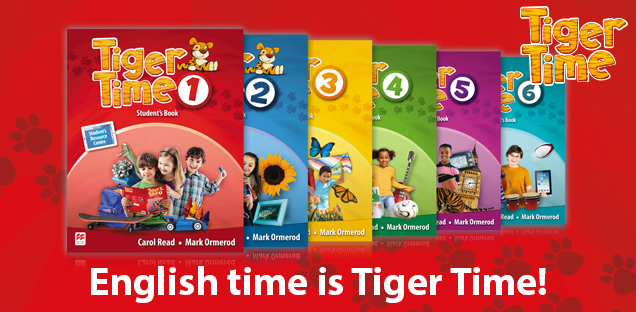
Tiger Time is a vibrant, six-level primary course based around different settings and characters which grow and change with the students, reflecting their evolving interests and needs.

Units contain humorous stories told through different genres, which use everyday language as well as catchy songs, chants and raps at the lower levels. Within each unit lessons are carefully structured focusing first on vocabulary, grammar and skills, and building to CLIL, culture and projects, allowing children to practise and consolidate their learning throughout the unit. Each unit ends with a review, encouraging active communication.

Written with classroom management in mind, activities are practical and well-staged. The accompanying Presentation Kit and Teacher’s Resource Centre help teachers create dynamic lessons, which cater to diverse classroom situations. The Student’s Resource Centre provides a home-school connection offering extra activities and support.

Sample Unit for Level 1 Teacher’s book :

[gview file=”http://englishbookgeorgia.com/blogebg/wp-content/uploads/2018/02/Tiger-Time-Level-1-TB-Unit-5.pdf”]

Sample Unit for Level 1 Student’s book :

[gview file=”http://englishbookgeorgia.com/blogebg/wp-content/uploads/2018/02/Tiger-Time-Level-1-SB-Unit-5-sml.pdf”]

Scholarships from Unique Learning

Scholarships-


[gview file=”http://englishbookgeorgia.com/blogebg/wp-content/uploads/2018/01/HMC.pdf”]

[gview file=”http://englishbookgeorgia.com/blogebg/wp-content/uploads/2018/01/Bosworth-1.pdf”]

[gview file=”http://englishbookgeorgia.com/blogebg/wp-content/uploads/2018/01/Harrogate-1.pdf”]

[gview file=”http://englishbookgeorgia.com/blogebg/wp-content/uploads/2018/01/Highbury-1.pdf”]


Season’s Greetings | English Language Teachers

222

To help you prepare lessons for the holiday season, onestopenglish has put together a page of themed resources, some of which are free to download and use.

http://www.onestopenglish.com/…/themed…/christmas-resources/

If you would like to use the resources that are not downloadable without a subscription, remember you can also sign up for a 30-day free trial subscription on the onestopenglish website!

Halloween Resources for ELT

[gview file=”http://englishbookgeorgia.com/blogebg/wp-content/uploads/2017/10/GBLAD10000273-Scary-Consequences.pdf”]

[gview file=”http://englishbookgeorgia.com/blogebg/wp-content/uploads/2017/10/GBLAD10000274-Pumpkin-Pie-Dialogue.pdf”]

[gview file=”http://englishbookgeorgia.com/blogebg/wp-content/uploads/2017/10/GBLAD10000275-Apple-Bobbing.pdf”]

[gview file=”http://englishbookgeorgia.com/blogebg/wp-content/uploads/2017/10/GBLAD10000278-Halloween-Worksheet-2.pdf”]

[gview file=”http://englishbookgeorgia.com/blogebg/wp-content/uploads/2017/10/GBLAD10000280-Spooky-Statements.pdf”]

[gview file=”http://englishbookgeorgia.com/blogebg/wp-content/uploads/2017/10/GBWSE10000097-Halloween-Wordsearch.pdf”]

[gview file=”http://englishbookgeorgia.com/blogebg/wp-content/uploads/2017/10/GBWSE10000098-Halloween-Wordsearch-Answer-Key.pdf”]

for more please visit: http://www.macmillanenglish.com/resources/halloween/

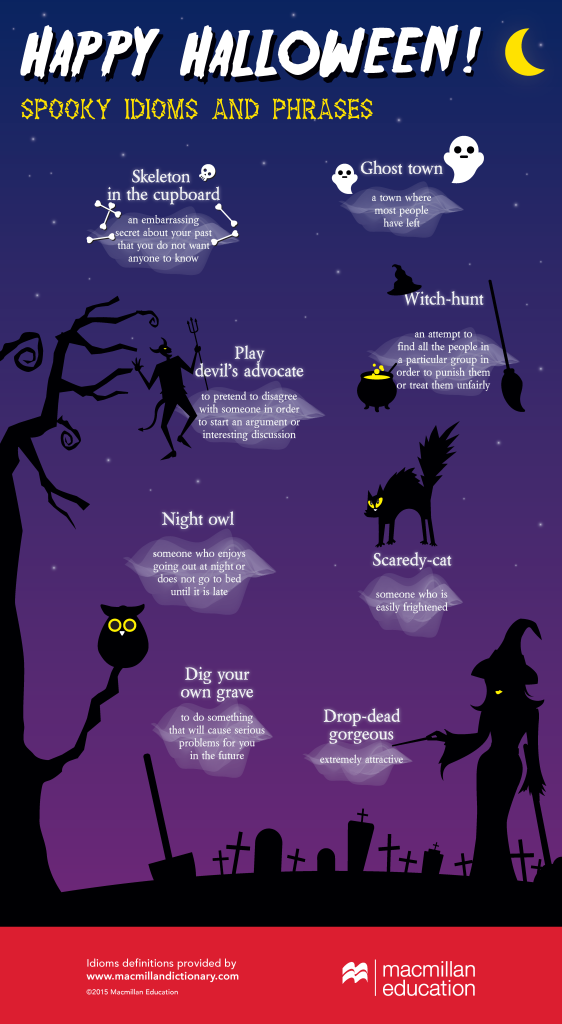
Spooky-halloween-idioms-infographic-image