Category Archives: #backtoschool

Teaching Languages and Learning Strategies

main-qimg-2b465e2edee7bbe898568835686f5d12

It’s clear that some people pick up languages more quickly and effectively than others. This, of course, depends on various factors, such as background, motivation, age, intelligence, aptitude, level of education, knowledge of other languages, etc. Another factor which could be important for successful learning is called ‘language-learning strategies’.

According to Wenden & Rubin, LLS is “specific actions employed to facilitate the learning and recall of one or several components of proficiency. Facilitation does not only imply making the process easier, but also making it faster, more enjoyable, more self-directed, more effective, and more transferable to new situations.”

There are a number of ways to group LLS. Direct strategies consist of memory strategies, cognitive strategies and compensation strategies. Indirect strategies consist of metacognitive strategies (how to coordinate the process), effective strategies (how to control emotions, and social strategies.)

Everyone learning a language uses LLS. Those who are successful at doing so chose the most appropriate strategy for addressing a specific learning obstacle or task.

One of the most popular and accessible manuals for learning more about LLS is called “Learning to Learn English” by Ellis & Sinclair, published in 1989. Non-native speakers have a better chance at explaining LLS to their students, as they’re also conscious learners of English. As such, their training should also touch upon the role of LLS

Source: Peter Medgyes, “Teaching language-learning strategies”, The Non-Native Teacher

A Teacher Centered Approach

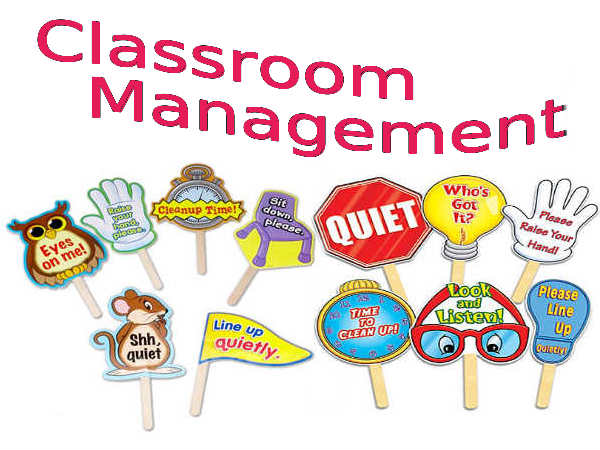
15-classroom-management

According to the classical model, it’s the teacher’s job to do the teaching and the student’s job to do the learning. But most modern experts agree that ideal classroom interaction involves a two-way process, where both the students and the teacher try to adapt to each other’s goals and procedures.

For instance, the teacher may first initiate an activity, but should then observe the students’ reactions. He should intervene and join those students who are having trouble. If this intervention doesn’t help the problem, then he would change the activity altogether. This negotiation sustains motivation in the classroom.

The student is “an active participant assuming partial responsibility for his own progress”. This means that the student must, first of all, make efforts to acquire the knowledge imparted by the teacher. But on an advanced level, the student seeks to share responsibility for his education with his teacher by keeping him informed about his progress through feedback.

Source: Peter Medgyes, “A ‘teacher-centered’ approach”, The Non-Native Teacher

Grammar Goals – Go for Gold!

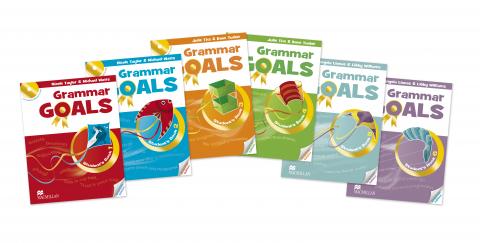
SBCOVERSrgb72DPI_2

Welcome to Grammar Goals

Grammar Goals is a new six-level grammar series for children aged 6-12 years. It presents and practises grammar in lively and meaningful age-appropriate contexts that reflect pupils’ real lives and interests. Linked to the Cambridge and Trinity external exam syllabuses, Grammar Goals offers regular exam-style practice tasks in the Pupil’s Books.

The visually appealing nature of the course ensures that grammar is presented in a child-friendly format that keeps pupils actively involved in learning the language form, function and meaning. The careful staging of the units provides three levels of challenge and success – bronze, silver and gold – helping students reflect on their progress and aim for higher goals.

Key features:

  • Clearly contextualised language makes grammar pratice meaningful.
  • Interactive grammar boxes break down form and clarify use.
  • Carefully graded activities build confidence and accuracy.
  • Cross-curricular topics link grammar to everyday life and teach pupils about the world around them.
  • Activities develop young learner competences, such as thinking and interpersonal skills.  –
  • A separate writing syllabus teaches key skills and strategies.
  • Exam-style activities practise task types from the Cambridge English: Young Learners English tests.
  • Step-by-step lesson notes with extra, mixed-ability and extension activities provide extra teacher support.

GRAMMAR GOALS

Authors:

Nicole Taylor and Michael Watts and Julie Tice and Dave Tucker and Angela Llanasand Libby Williams

Source :  www.macmillanyounglearners.com

Integrated skills – Vocabulary : Phrasal verbs

-OSE-Skills-376x23_376

Phrasal verbs: Teaching phrasal verbs using equivalents/ definitions – tips and activities

Tips and activities for teaching phrasal verbs to intermediate students and above.
Introduction | Stage one | Stage two | Stage three | Stage four | Stage five

Anchor Point:introIntroduction

Many phrasal verbs can be said or written another way. This can be a Latinate one-word equivalent (to put out a fire is to extinguish a fire) or by a series of words (to get on well with someone is to have a good relationship with someone). Whether it is one or several words, many learners of English tend to favour the non-phrasal verb equivalent. This often makes them sound formal:

“Can I remove my shoes?” and sometimes inappropriate “Just a minute, let me extinguish my cigarette”.

It is important to point out to learners that phrasal verbs are often a more informal way of saying something, and as such they are more common in spoken English than in written English. When teaching phrasal verbs according to their equivalents, it is not enough just to have a simple matching exercise. There must be some opportunity to use the language.

In the lesson at the bottom of the page the phrasal verbs and their equivalents are all personalized with a Find Someone Who activity.

Aim: To present and practise 12 phrasal verbs

Level: Intermediate and above


Anchor Point:1Stage one

Distribute the worksheets and explain the Find Someone Who activity. The learners must go around the class asking each other questions to find a person who fits one of the sentences. When they find that person, they write their name in the space. Write the first two sentences on the board and elicit the question for each (Do you recover from illnesses very quickly? Do you often begin arguments with strangers?) Tell them that they cannot have the same name written down more than two times during this exercise. Instruct everyone to stand up and begin the activity.


Anchor Point:2Stage two

After five to seven minutes, stop the activity and ask learners to sit down. Do some feedback on the activity, asking what learners found out about each other. Tell them that today they are going to learn some phrasal verbs related to the Find Someone Who activity they have just completed.


Anchor Point:3Stage three

Distribute the second worksheet. Ask learners to match the phrasal verb to its equivalent. To help them, each phrasal verb is listed with some common collocations (words that go with other words). Tell learners that they can look at their original Find Someone Who worksheet for more help.

Answers: a) 8 b) 1 c) 2 d) 7 e) 9 f) 12 g) 10 h) 3 i) 4 j) 11 k) 6 l) 5


Anchor Point:4Stage four

Write on the board the following phrasal verbs: bump into, get over, launch into, get on well with, give back, put out, talk over, bring up, put off, take off, look into, take down. Tell learners to rewrite the completed sentences from the first worksheet (Find Someone Who) using the phrasal verbs on the board. Tell them that they must try to do this without referring back to the second worksheet.

Answers

____ gets over illnesses very quickly; ______ often launches into arguments with strangers;
 ____ borrows things but sometimes doesn’t give them back; _____ has looked into changing jobs/schools recently; _____ gets on well with his/her brothers and sisters; _____ was brought up in the countryside; ____ puts everything off until the last minute; ____ likes to talk things over before making a decision; _____ never takes down notes in class; _____ bumped into an old friend last week; ______ has put out a fire; _____ doesn’t take off their socks when they go to bed.

Stage five

Ask learners to write an original sentence about themselves using each of the phrasal verbs in their notebooks. Learners could do this for homework.

Source : www.onestopenglish.com

Minimal Resources: Students’ Ideas

2710

Minimal resources: Students’ ideas

Run out of ideas yourself? Let your students come up with the ideas! Adrian Tennant provides tips and ideas for incorporating ideas from students in your lessons.

Some of the most productive lessons, and the most useful, can come from the learners. Here are some ideas of how you can incorporate ideas from your learners.

The student test

Most tests actually check what your students don’t know rather than what they do (unfortunately this is the very nature of most testing). However, it doesn’t need to be like this. Here is an idea to make the whole process far more useful.

  1. Divide your students into small groups (between 3 and 5 students is best).
  2. Ask the students to look back over what they have been learning (you might want to set a time limit).
  3. Then, ask the groups to write a test for the other students. The tests can then be exchanged and each group try another test. Once the tests have been done the original group can mark it.
  4. Finally, collect all the tests in and take a look at them – particularly at the questions, not just the answers.

Oops!

  1. Make a note of 8 sentences that contain mistakes that your students make – these can be from written work or from when they speak. You will need two pieces of paper (for larger classes you may need more).
  2. On one piece write down the eight sentences, but correct 4.
  3. On the other piece of paper write down the same eight sentences, but correct the four sentences that on the first piece of paper were left incorrect.
  4. Now divide your class into two groups and give each group one of the pieces of paper.
  5. Ask the students to work in their groups and decide which sentences are right and which are wrong.
  6. Tell the students to correct the sentences that are wrong. The students should make their own copies of the sentences.
  7. Next, put the students into pairs – so they are working with someone from the other group – and compare their answers.
  8. Finally, collate and discuss as a class.

A student dictogloss

  1. Find a suitable piece of writing from one of your students (sometimes it is fine to work with a piece that contains mistakes as these can become part of the focus of the activity. However, it is worth thinking about how the individual student may react to their mistakes being discussed by all the other students).
  2. Tell the students you are going to read out a short text.
  3. Ask the students to put their pens down and just listen.
  4. Read out the text once and then ask the students to note down all the words they can remember – this should be done focusing on key words and NOT trying to remember everything verbatim.
  5. Read out the text again and then ask the students to work in pairs and reconstruct the entire text. Then ask the pairs to compare their texts.
  6. Finally, compare their texts to the original and discuss.

An object feast

  1. 1st lesson: bring in a small object, or a photo. (For example, I would bring in a photo taken from a visit to the rainforest in South America. Another friend would take in a Boomerang they bought while on holiday in Australia). Tell the story behind the photo/object and then put the students into groups. Ask the students to write questions to ask you. Conduct a Q&A session.
  2. 2nd lesson: Ask the students to bring in an object or photo. If your class is large divide into small groups and get them to discuss their photos/objects. In small classes the whole activity can be done together.

Word limits

  1. Ask your students to choose 3 words that they have recently learnt and to write these words in their notebooks.
  2. Next, ask them to write 4 words that they associate with each of their ‘key’ words. Put students into pairs or groups and explain the task.
  3. Students should take it in turns to explain each of their key words to the other students in their group. However, when explaining they must not use the other words that they wrote down (those that that they associated with each key word). They must not mime, draw or resort to L1 either.
  4. Often students get better at explaining if they have to do it more than once. Therefore, after the first go put students into new groups and get them to repeat the activity.


The question box

  1. 1st lesson. Ask students to write down three questions (you could limit the focus or allow the questions to be about anything) that they would like answered. If you want, this can be done for homework. Put all the questions in a box.
  2. 2nd (and subsequent lessons). Put students in groups and ask each group to pick a question from the box. In their groups they should discuss the question (you might want to set a time limit. e.g. 10 minutes) before reporting back to the class. If there is one question of particular interest you might want the class to spend more time on it.

Our project

  1. 1st lesson. Put students into groups and explain that over the next X weeks/lessons they are going to be involved in a project. Give the groups 6 minutes to brainstorm project ideas and then two minutes to vote/choose which project their group will do. (Alternatively, ask students to think of projects on their own and then form groups where all the students have similar ideas).
  2. 2nd (and subsequent lessons). Devote a section of the lesson (from 10 minutes upwards) to the groups discussing their project. During this time they can set tasks for themselves, and each other, that can be done outside the class, discuss progress, exchange information etc.
  3. Note: It is important to have an outcome and time limit for the project. i.e. In 10 lessons time you will ‘present’ your project to the rest of the class.
    This type of project work is extremely motivating for many learners, especially those studying at school where classes are levelled by age, not ability.

    Source : www.onestopenglish.com

Minimal Resources: Miscellaneous Ideas

award-winning-creativity-brought-to-you-by-constraint-3-638

Low-level activities

Miles Craven provides some valuable tips and ideas for teaching starter- and elementary-level students with minimal resources.

Starter level

Word tennis: Vocabulary

This is a good activity to review key vocabulary for a variety of starter-level word groups.

  • Put students into pairs and tell them to turn their chairs to face each other.
  • Choose a word group (e.g. colours or furniture) and write it on the board.
  • Explain that students should take turns to say one word they can think of that belongs to the word group.
  • They should continue, like a game of tennis, with the ‘rally’ lasting as long as either of them can think of an appropriate word.
  • The winner is therefore the last student to say a word!
  • You may wish to follow this up by telling students to write down all the words they thought of.
  • Tell the pair with the longest list to write it on the board, and then review spelling and pronunciation.

Dialogue build: writing and reading

  • Put students into pairs and give each pair six strips of blank paper.
  • Tell them to write a short dialogue to practise any English they know.
  • Explain that they should write each line of dialogue on a separate strip of paper.
  • Give students time to think of a dialogue and write the six lines of their dialogue on their strips of paper.
  • Monitor and check for accuracy. When students have finished, tell them to mix their strips of paper and exchange them with another pair of students.
  • Explain they should read the strips of paper and try to put the dialogue in the correct order.
  • When students have completed the reordering activity, tell them to practice the dialogue with their partner.
  • Tell students to continue to exchange their strips of paper with their classmates until each pair has reordered and practiced each of the dialogues.

Elementary level

Category game: vocabulary This is one way you might wish to revise key vocabulary:

  • List the following categories in a column on the board: country, sport, meat, vegetable, fruit, animal, job, colour.
  • Divide the class into groups, and write one letter at the top of the board, for example S. Tell each group to think as quickly as they can of a word for each category that begins with that letter (e.g. spain, swimming, sausages, etc.)
  • The first group to finish should shout ‘Stop!’
  • Tell them to call out their list of words and write them on the board next to the appropriate category.
  • You may wish to ask groups to spell any difficult words. If all words are correct, award the group five points. If they make a mistake, deduct five points from their total.
  • Then begin the game again by writing a different letter on the board.

One minute, please!: speaking

This is a good exercise to try top develop confidence and fluency with students at lower levels.

  • Begin by writing a list of topics on the board, such as football, boys, school, parents, food, holidays, etc.
  • Then divide the class into two teams and ask for a volunteer from one team to come to the front to sit in a chair facing the rest of the class.
  • Explain that students from the opposing team should choose a topic from the board, and that the student must try to talk about that topic for no less than one minute.
  • Add that while some pauses are allowed for thinking time, no pause should be longer than five seconds.
  • If the student manages to talk for a full one minute, award five points. Give proportionally fewer points for less than one minute of talking time.
  • Continue the game with students from each team taking turns to come to the ‘hot seat’ and talk about a topic for one minute.
  • The team with the most number of points at the end of the game is the winner.
  • You many wish to note any grammar, vocabulary or pronunciation errors and review these in a later lesson.

    High-level activities

    Intermediate level

    Yes/no: speaking

    This is a popular, fast-paced question and answer game.

    • Have a volunteer come to the front of the class and sit in a chair facing the rest of the students.
    • Explain that the class must ask as many questions as possible in a time limit of one minute.
    • The volunteer must answer each question truthfully, but avoid saying the words Yes or No. If they say Yes or No in reply to a question, they lose and are replaced by another volunteer.
    • You may wish to demonstrate the activity first by asking for a volunteer and questioning them yourself. Try to ask questions that naturally expect a Yes or No answer. Question tags are good for this: You’re Spanish, aren’t you?
    • Also, repeating back their answer with rising intonation as if asking for clarification is a good trick:
    A: What nationality are you?
    B: Spanish
    A: Spanish?
    B: Yes…Ah!

    This can be great fun and but remember to keep the pace as fast as possible. It’s a good revision activity for various tenses (simple present/ simple past, etc.), question tags, and practicing intonation.


    Whisper, whisper: speaking/grammar

    This simple activity is a nice way to review reported speech.

    • Put students into groups of three and tell student A to whisper a sentence to student B. Student B must then tell the student C what student A said, using the reported speech.
    • Student C then whispers a new sentence to Student A and so the game continues.

    We’ve got so much in common!: speakingThis is a handy ‘getting-to-know-each other’ activity you might wish to use with a new class.

    • Put students into pairs and tell them to ask and answer questions to find three things that they have in common with each other. You might wish to write a few ideas on the board, such as What’s your star sign? What’s your favourite food?, etc.
    • When each pair of students has found three things they have in common, tell them to stand up and tell the class what those three things are.
    • You can then mix the class again by telling students to find a new partner who they have something in common with.

    Party time: speaking/vocabulary

    • Brainstorm adjectives of character (shy, generous, etc) and write as many as students can think of on the board.
    • Then tell each student to choose one of the adjectives of character from the board. Explain to students that they are all at a party, and that they must mingle and chat to each other in the role of their character adjective.
    • Explain that they must pretend to have that character, but that they must never say what the adjective is.
    • Have students write the name of each student in the class on a piece of paper. Tell them to start mingling, and explain that they should try to speak to everyone and identify the character adjective they are representing.
    • When they think they know what adjective the person they are speaking to is trying to express, they should write it next to their name and move on to speak to someone else.
    • At the end of the game, tell students to sit down and then call out the name of each person in the class and ask students to say the adjective they thought that person was trying to represent.

    Upper Intermediate level

    If….writing/speaking

    • Give students two or three strips of paper each and tell them to write the beginning part of a second conditional sentence on each strip.
    • Write a few examples on the board to give them some ideas, such as ‘If I was a bird…’, ‘If I went to Rome…’
    • Make sure students only write the beginning part of the sentence. When they have finished collect all the strips of paper and mix them.
    • Put students into small groups and divide the strips of paper between each group.
    • Place the strips of paper face down on the desk in front of the students.
    • Tell students to take turns choosing a strip of paper, turning it over and reading what it says.
    • Explain they must finish the sentence. Demonstrate this activity by using the examples on the board: ‘If I was a bird… I’d fly around the world’ ‘If I went to Rome I’d visit the Vatican Museum.’
    • When students have finished tell groups to swap their strips of paper and continue the activity.
    • You may wish to monitor and make notes of any errors students make. At the end, read out the incorrect sentences and have the class listen and correct any mistakes they hear.

    Soap opera drama: speaking

    • Choose a famous soap opera that all your students know.
    • Tell them to list six of the most famous characters, and have them explain to you the personality and profile of each one.
    • Then divide the class into groups of six and tell each student to choose a different character.
    • Explain they must prepare a scene from the next episode of the soap opera!
    • Tell them that the scene should include all the characters, and give them time to prepare their ideas.
    • When students are ready, have each group come to the front of the class and perform their role play.
    • For each role play award up to five points for each of the following categories: level of interest, level of acting, accuracy of language, pronunciation.
    • The winner is the group with the most points.

    Mini presentations: speaking

    • Tell students to individually make a list of three things they are interested in (e.g. a hobby or sport they have, etc.).
    • Give them time to make their list, then put them into groups to exchange their ideas.
    • Tell students to choose one of the three topics on their list and prepare a one minute presentation.
    • When they are ready, have student come to the front of the class to give their presentation.
    • Give each student up to five points for each of the following categories: level of interest, eye contact, fluency, grammatical accuracy, range of vocabulary, pronunciation.
    • Finally, give your feedback to each student on their performance before announcing the winner.

    Chain story: listening/speaking/writing

    • Tell students to sit in a large circle.
    • Explain they have to tell a story, each taking turns to add a sentence as the story goes around the class in a circle.
    • Begin the story yourself, with something like ‘It was a dark, stormy night when suddenly Jennifer heard a noise at the door.’
    • The student on your left should then continue the story, adding the next sentence.
    • The student on their left should then add the next sentence, and so on until the story has gone around the whole class.
    • When the last student has concluded the story, say your first sentence again and have students each repeat their part of the story as it goes around the class once more to help them remember.
    • Finally, put students into pairs and tell them to write the story. Monitor and help with grammar and spelling.

    Source : www.onestopenglish.com

Methodology – Minimal Resources: Skills

role-playing


Minimal resources: Role-plays and discussion

ELT legend Scott Thornbury gives us some imaginative tips and ideas for using role-plays in lessons.

In the last instalment I looked at ways that dialogues could be set up in the classroom using minimal materials. An extension of dialogue-type interaction is the role play, in which the interactants get speaking practice by stepping outside their own character, job, and so on, in order to experience a wider range of situations than the classroom normally offers, and to explore other registers and domains of language use. Further along the line from controlled to free, discussions and debates provide learners opportunities to interact freely and spontaneously, to cope with unpredictability, and to voice opinions using language that is both complex and fluent.

Teachers are sometimes discouraged from setting up either role plays or discussions, because they think that they will need to provide elaborate resources, such as role cards, or preparatory reading texts, in advance. However, many of the most successful fluency activities require no materials at all. They simply draw on the learners’ own experience, knowledge, and imagination.

Here are a few materials-light ideas for role plays and discussions:

1. Choose a holiday

The idea is to set up a situation whereby students in pairs shop around for a package holiday, visiting different “travel agencies” (also pairs of students) in turn, and then making their decision. Divide the class into two – one half will be “shoppers”, the other half “agents”. Divide these groups again, into pairs. The agent pairs should be distributed around the room, and separated as much as possible from the shoppers. Tell the agents each to put together an attractive ten-day holiday package, including destination, itinerary, excursions, accommodation, and so on. (It is important, by the way, that all the holidays cost the same – fix a price in advance – so that the agents don’t simply undercut one another). Meanwhile, the pairs of shoppers decide what it is that they, personally, want out of their holiday, e.g. relaxation, adventure sports, shopping opportunities, etc. The shoppers then “visit” each agency in turn – seating should be arranged so that the shoppers can sit down when visiting the agencies. After sufficient time has elapsed for the an exchange of information, the shoppers all move round one, and the process starts again, until all the shoppers have visited all the agencies. Each pair of shoppers can then decide which holiday they will choose.

The format for this role play works for a number of different situations that involve shopping around. I have used it successively for a “choosing a school” scenario: each “school” puts together a policy on such things as discipline, homework, uniform, compulsory subjects, extra-curricular activities, even a school motto! Meanwhile, each pair of “parents” decide what kind of school they are looking for, for their “special needs” child. They then interview – and are interviewed by – the school’s representatives.

Other situations that lend themselves to this idea are: choosing a flatmate, choosing a wedding function, choosing a retirement village, and so on.

The beauty of this role play format – apart from the lack of materials – is that there is in-built repetition, as each pair of shoppers repeats its interaction with a new agent. Task repetition is an important factor in the development of fluency.

2. Alibis

This is an old favourite which, like the previous activity, is inherently repetitive. It also has an added game element, in that the participants have to try and outwit each other. The basic format starts with two students being “accused” of having committed some crime, such as a robbery in the institution where the class takes place, in a fixed period, say, between the hours of 10 and 11 in the morning on the preceding day. The two “accused” then have to establish an alibi, and they go out of the room to do this. The alibi needs to account for their actions only during the time period in question (anything before or after is irrelevant), and it is important to establish that they were together for all that time. While the accused contrive their alibi, the rest of the class can prepare generic questions, with the teacher prompting, if necessary, of the type: What were you doing…What did you do next? Did you meet anyone? What did you say? How much did it cost? Who paid? etc. The accused are then led in, one at a time, and have to answer the questions put to them. (It helps to establish the rule that they are not allowed to claim that they don’t remember). Any significant discrepancy in their answers means that they are, of course, guilty.

With large classes, Alibis can be played in groups, each group playing their own version of the game. Alternatively, (and so long as they are out of earshot) the two accused can be interviewed simultaneously by two different groups, and then exchange places.

A variant is Green Card, in which immigration officers interview, separately, two candidates who claim to be members of the same family (in which case, they have to answer questions about the other members of their immediate family – their names, age, and appearance), or who claim to be partners (in which case, they have to answer questions about their daily routine). Another variant of Alibis is UFO, in which two people are interviewed separately by The Institute of Paranormal Research about an encounter with aliens that they claim to have experienced.

3. Pyramid (or consensus) debate

The principle of this format is that at first individuals work in pairs to achieve consensus on an issue, and then these pairs try to convince other pairs, before forming groups of four, and so on, until the whole class comes to an agreement. For example, the teacher might set the class the task of devising some “class rules” with regard to such things as classroom etiquette, discipline, duties, homework, etc. First individuals draft a list of a maximum of, say, eight rules. They then compare in pairs, and draft a new list of eight rules, but one that they are both agreed on. This will normally involve some discussion and negotiation. Once they have their list they join forces with another pair, and the process begins again. Finally, the two halves of the class come together to agree on the definitive version.

Other ideas that work well in this format are ranking tasks – e.g. the five most important people in history; the ten best pop songs of all time; the eight things I would take to a desert island; the six school subjects that should be compulsory, and so on. Or students take a bare statement and qualify it in such a way as to make it acceptable. For example:

– Children should be beaten.
– Smoking should be banned.
– Anyone should be allowed to adopt children.

 

Methodology – Minimal Resources

ose-methodology-620


Minimal resources: Coursebooks

Exhausted every last idea from your coursebook and in search of new material? Think again! Miles Craven helps us wring every last teaching idea from your faithful coursebook.

Starter level

Speech bubbles: speaking

  • For lower-level students, choose a picture in their coursebook (or magazines – choose famous stars) that has several people in and have them think about what each person is saying.
  • This could be as simple as What’s your name? or How are you? but encourage students to be as creative as they can.
  • Give them time to think of their ideas, then tell them to write what they think each person is saying in a speech bubble on the picture.
  • Finally, put students into groups to practise the conversations they have made.

Pictionary: speaking

This is a good game to review vocabulary that students have covered in class, such as household objects, animals, jobs, food, sports, etc.

  • First, make a list of twelve or fifteen words that you want to review.
  • Then draw a line down the middle of the board to split it into two sections.
  • Divide the class into two teams and explain that one person from each team must come to the board and draw a word that you give them.
  • Explain that the students in their team must correctly guess the word.
  • When their teammates have correctly guessed the word, they should sit down and another person from their team should come to the board and draw the next word.
  • Explain that they have to guess as many words as they can in the time available.
  • The team with the most number of correct guesses at the end is the winner.
  • Tell each team to elect one person to go first. Give them each a different word from your list to draw and begin the game!

Elementary level

Describe the picture: speaking

  • Choose an interesting photograph or illustration from your course book and put students into pairs to describe what they can see. You might want students to concentrate on using a target structure you have recently covered. For example, an elementary class might review the present continuous by saying what each person in a picture is doing. She is sitting on a chair/He is speaking on the phone, etc.
  • You could turn this into a game by putting students into groups of three or four and having one student ask a question (e.g. What is she doing?/Who is speaking on the phone? etc.) while the other students compete to be the first to answer. Students gets one point for each correct answer. The winner is the person at the end of the game with the most points.
  • Alternatively, choose a picture that allows them to recycle the vocabulary they have covered in the class, such as clothes, adjectives appearance and character, etc. He looks shy, I think she’s very intelligent.

Describe the picture: writing

  • Tell students to find an interesting photograph or illustration in their coursebook and to write a few sentences to describe what they can see.
  • Monitor and provide help as necessary. When they finish, put students into small groups and tell them show their picture while they read aloud their sentences.
  • You may wish to make this more challenging by telling students to include three factual errors. For example by writing The man is wearing a blue shirt when the shirt is actually white. As they read their sentences their partners must listen carefully to identify the three errors.
  • Note: You might want to include useful language for describing a picture, such as In the foreground/background, on the left/right, in the middle, I think it may/might be…because…, etc.

Intermediate level

Story building: speaking

  • Choose an interesting picture from the coursebook that includes some people and put students into groups to talk about it.
  • Tell them to choose one person in the picture and to think in detail about them; they should decide on the person’s name, age, job, what they are saying or thinking, where they are going, why, who they are going to see, etc.
  • Encourage students to build up as big a story as possible using the picture as a prompt.
  • Explain they have to remember all the details as they cannot make notes.
  • When students are ready, mix the groups and tell each student to say who they chose and then talk about the story they made up about them.

Vocabulary definitions: vocabulary

  • Put students into pairs with one person in each pair facing away from the board so they cannot see what you are writing.
  • Write on the board about ten words that you want to review from work previously done in class.
  • Tell the students facing the board to choose a word and describe it to their partner.
  • Give them a time limit and tell them to record how many words their partner can guess.
  • When they finish, have students swap chairs and repeat the activity with a different list of words.

Grammar mime: grammar

You can review grammar structures such as the past simple and past continuous through simple mime, by making a story.

  • Write Last night on the board and then mime to the class what you did (watched television, ate dinner, etc).
  • Have the class call out what you did as you mime each action. When you finish, repeat the mime with students all calling out what you did. Then put students into groups to do the same.
  • Encourage them to think up their own original stories and mime them to their classmates.

Vocabulary mime: vocabulary

You can use mime to review certain vocabulary sets, such as sport, jobs, character adjectives, etc.

  • Begin by putting students into groups to make a list of as many words as they can connected to each vocabulary set you want to review.
  • Have the group with the most words write their list on the board. Check spelling and add any additional words, then model the pronunciation and have the class repeat after you.
  • Then choose one word from the board and mime it to the class. For example, pretend to play tennis, be a doctor, be miserable, etc.
  • Encourage students to call out the word you are miming. Mime a few more as examples and then put students into groups to do the same.

Upper-intermediate level

Link the pictures: speaking

  • Tell students to turn to a page in their coursebooks that has several pictures and to try to think of a situation to connect all the pictures.
  • Tell them to build up a story with as much detail as they can. Then tell each group that they must prepare a role play of their story to the class.
  • Give them time to decide their roles and what each of them says, then tell them to perform their role play.

Good for any level

How many … can you find?

A good way to revise grammar is to choose a text from the coursebook and tell students to count the number of times they can see a certain structure. For example, ask How many examples of the past simple can you find? or How many irregular verbs are there? You can also focus on word forms this way, by asking How many adjectives/adverbs are there? etc.

Spelling check

  • Choose ten new words that students have recently covered from a unit in the coursebook.
  • Write them at random on the board.
  • Give students one minute to memorize them, then erase the words from the board and tell students to write down every word they remember.
  • Have volunteers come to the board and write the words. Then tell students to turn to the unit where you took the words from and to find each word and check the spelling themselves.
  • Finally, practise pronunciation and review the meaning of each word.
  • As a variation, rather than choose the words for this activity yourself you could tell the students to look through a unit and make a list of words themselves that they think are difficult to spell. When they finish, have them dictate their list to a partner.

Word jumble

  • Choose ten words that you want to review and write them on the board but with the letters jumbled up. For example, jantosirlu (journalist), roeevrttx (extrovert), etc.
  • Tell students to unscramble the words as quickly as they can. Then have them look through a unit they have completed and choose five words to jumble for their partner.