Category Archives: Articles

Accents


pronunciation-am-vs-br

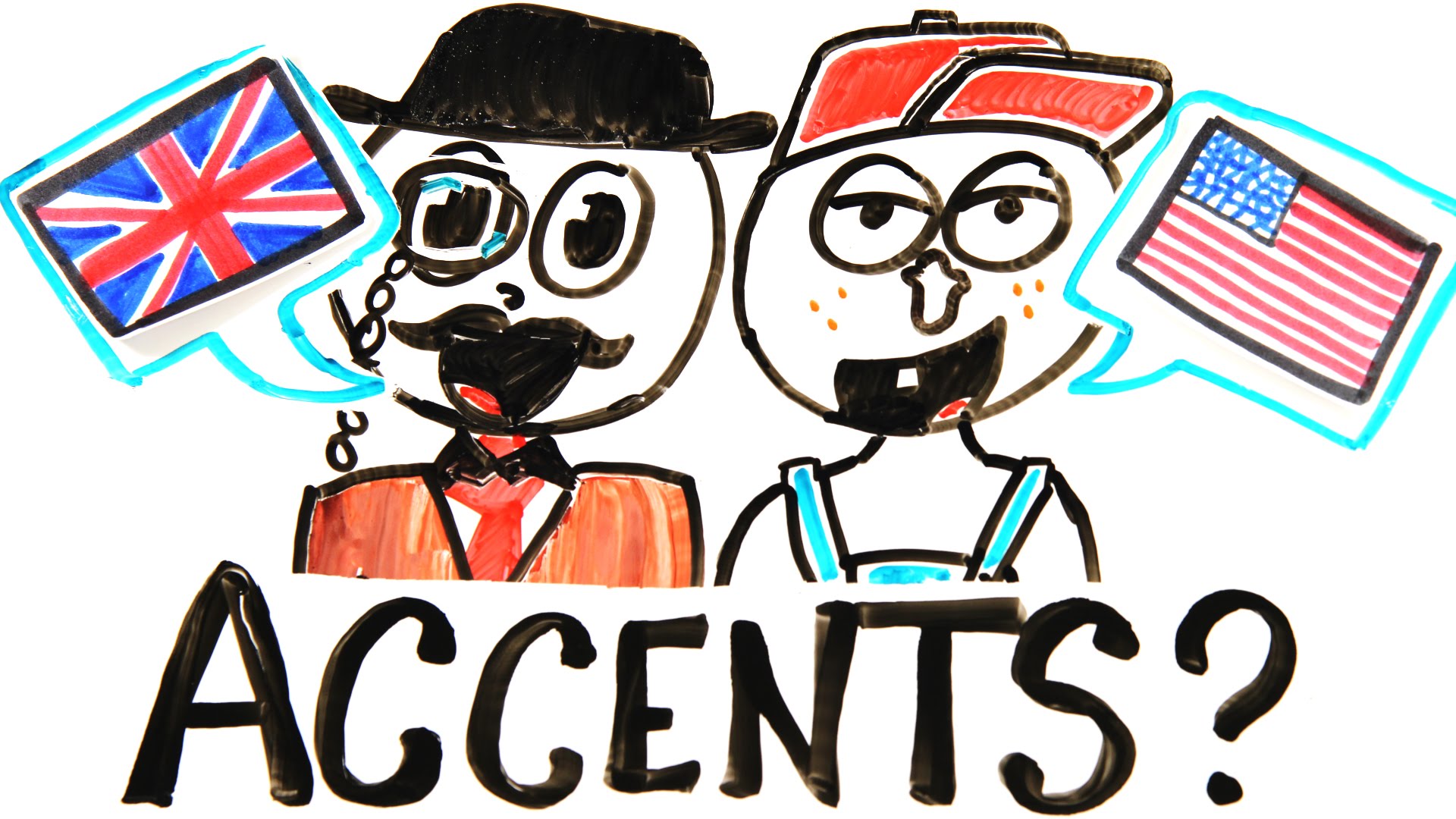
A fun experiment for teachers to do with their students involves accents. An accent is a particular way of speaking that tells you a lot about the speaker (their geographic and social background). The experiment starts out with splitting into groups of three. Then, each person has to speak for 60-90 seconds about a topic of interest while the other two listeners make notes on the speaker’s pronunciation. Then, in order, the groups discuss their findings.

This can be extremely beneficial to both students and teachers, as they’ll be more aware of their accents and be able to better grade language and understand differences between accents and the range of variation. Though there are broad types of accents, each person has his or her own ways of pronouncing things. Being aware of such differences is crucial for teachers.

Source: Ozog, Chris “’I don’t have an accent!’ Said Alison from Sussex” Cambridge University Press, 4 April, 2017, P3

Macmillan Education Training 2017

june-training[3]

Dear Teachers,

We would like to inform you that English Book in Georgia in partnership with Macmillan Education is organising ELT training sessions on the 14th-17th of June in the following cities:

  • Batumi- 14 June, 09:30-17:00
  • Kutaisi-15 June, 11:30-17:45
  • Telavi-16 June, 11:30-17:45
  • Tbilisi-17 June, 09:30-17:00, N2 Nestan-Darejani Str. 3 m/r, Didi Dighomi

The training sessions will be conducted by famous trainers and authors – Dave Spencer, Teresa Doguelli and Anna Hasper.

The sessions include the following topics:

  • Keep Calm and Carry On: Tips for managing and motivating teens
  • Hey! Teacher! Leave them kids alone!
  • Grammar for Pleasure
  • KEYS for Engaging Young Learners
  • Activating Literacy Skills for Young Learners

 For booking your place contact us at englishbookteam@englishbook.get.khachidze@englishbook.co.uk

Or contact your sales representative till the 8th of June.


Gail Rebuck

Random_House_logo_bw2-1024x819

Gail Rebuck

Back in April, Penguin Random House UK Chair Gail Rebuck gave a 20-minute talk at the London Book Fair’s Quantum conference, during which she shared her views on the effect technology has on books today. According to Rebuck, books will forever remain the “DNA of our civilisation”, despite the technological changes that have already happened or will happen in the future.

That is not to say, of course, that technology hasn’t changed anything. To the contrary, Rebuck believes that publishers’ jobs are made easier by the huge amount of online research tools, since they can learn more about the world’s tastes in literature. It’s not all positive, however. Rebuck also thinks that technology has its dangers. In her speech, Rebuck noted a “concerning decline in authors’ revenues”, as only one out of ten writers live on the money they make from writing. She believes that modern problems such as price deflation and more competition from other media forms could be responsible for this situation.

That being said, Rebuck urged publishers to not think of digital and physical media as “enemies”. After all, books are books, no matter how or where they’re read. She hopes for a balanced future, one which will allow the possibility of giving young writers more options for getting published, but also one in which “the uniqueness of the author” is never put under risk.

For more than 20 years, Gail Rebuck has been the most important publisher in the UK. As the head of Random House, she’s been responsible for many literacy projects and industry promotions, achieving success in a very difficult industry. Surprisingly, no one could’ve predicted this when she was appointed back in 1991; she had a reputation as a publisher of lifestyle titles rather than “serious” books. However, in the years that followed, she has become the dominant force in UK publishing.

For Rebuck, this success has come as a result of her approach to work. Failure is not an option. She wants only the best efforts from all of her employees. However, she’s not arrogant, despite her success; she believes it’s always the authors that are responsible for a publisher’s success.


Source : Albanese, Andrew “Rebuck: technology ‘cuts two ways’.” London Show Daily, April 2016, 1

Clee, Nicholas “Gail Rebuck: making things work.” London Show Daily, April 2016, 24

Dramatic Results

breaking-bad-sti-news


Dramatic results

Roleplaying activities in classes can benefit students in many ways. This fact is well known among experts. In such activities, students can practice new words while using English more naturally than in grammar exercises. However, it’s usually hard to organise big roleplaying activities, like entire drama projects (mostly because of not having enough time or money), which is unfortunate, because these projects can be very good for children. They get a chance to meet new friends and improve their self-esteem.

Of course, the lack of time can really be a problem, but drama projects don’t have to be very complicated. All it takes is children that are willing to participate. Even if they’re shy, they can still work off-stage as script writers; as long as they’re working in English, they’ll benefit from the activity.

Picking the drama to stage can be tricky. You can find a huge number of scripts, especially those adapted for English learners, but it’s also possible to have the students write their own play. This is incredibly important and beneficial for their English education, since they’ll be able to express their ideas using vocabulary that they find themselves.

Everyone can get involved. Even those that are still beginners can have roles that require more movement and less speaking. The only requirement is for everyone to feel like they’re participating and having fun.

It’s also important to make the children discuss the project throughout the process. Ask them questions about their characters and the situations they find themselves in during the play. This gives the children an opportunity to become familiar with the vocabulary of their characters.

However, don’t forget that drama projects don’t just involve English. The children have to act instead of just memorizing lines, they have to be comfortable with moving on the stage, and, most importantly, they have to be confident on the stage.

Drama project preparation also gives teachers a chance to “sneak in” some pronunciation practice. Since the atmosphere is more relaxed during rehearsals, students won’t be too embarrassed to practice some parts of pronunciation that they find difficult.

Naturally, many students have trouble memorizing lines, especially in English. A good idea is to not make the students remember their whole text in one rehearsal; instead, rehearse only scene by scene.

Using drama projects in English class can give you the chance to improve students’ pronunciation, vocabulary and even intonation without boring them. Though staging a play isn’t easy, it’s worth it.

Source : Hill, Trev. “Dramatic Results.” English Teaching Professional, March 2016, 30-32.

Integrated skills – Vocabulary : Phrasal verbs

-OSE-Skills-376x23_376

Phrasal verbs: Teaching phrasal verbs using equivalents/ definitions – tips and activities

Tips and activities for teaching phrasal verbs to intermediate students and above.
Introduction | Stage one | Stage two | Stage three | Stage four | Stage five

Anchor Point:introIntroduction

Many phrasal verbs can be said or written another way. This can be a Latinate one-word equivalent (to put out a fire is to extinguish a fire) or by a series of words (to get on well with someone is to have a good relationship with someone). Whether it is one or several words, many learners of English tend to favour the non-phrasal verb equivalent. This often makes them sound formal:

“Can I remove my shoes?” and sometimes inappropriate “Just a minute, let me extinguish my cigarette”.

It is important to point out to learners that phrasal verbs are often a more informal way of saying something, and as such they are more common in spoken English than in written English. When teaching phrasal verbs according to their equivalents, it is not enough just to have a simple matching exercise. There must be some opportunity to use the language.

In the lesson at the bottom of the page the phrasal verbs and their equivalents are all personalized with a Find Someone Who activity.

Aim: To present and practise 12 phrasal verbs

Level: Intermediate and above


Anchor Point:1Stage one

Distribute the worksheets and explain the Find Someone Who activity. The learners must go around the class asking each other questions to find a person who fits one of the sentences. When they find that person, they write their name in the space. Write the first two sentences on the board and elicit the question for each (Do you recover from illnesses very quickly? Do you often begin arguments with strangers?) Tell them that they cannot have the same name written down more than two times during this exercise. Instruct everyone to stand up and begin the activity.


Anchor Point:2Stage two

After five to seven minutes, stop the activity and ask learners to sit down. Do some feedback on the activity, asking what learners found out about each other. Tell them that today they are going to learn some phrasal verbs related to the Find Someone Who activity they have just completed.


Anchor Point:3Stage three

Distribute the second worksheet. Ask learners to match the phrasal verb to its equivalent. To help them, each phrasal verb is listed with some common collocations (words that go with other words). Tell learners that they can look at their original Find Someone Who worksheet for more help.

Answers: a) 8 b) 1 c) 2 d) 7 e) 9 f) 12 g) 10 h) 3 i) 4 j) 11 k) 6 l) 5


Anchor Point:4Stage four

Write on the board the following phrasal verbs: bump into, get over, launch into, get on well with, give back, put out, talk over, bring up, put off, take off, look into, take down. Tell learners to rewrite the completed sentences from the first worksheet (Find Someone Who) using the phrasal verbs on the board. Tell them that they must try to do this without referring back to the second worksheet.

Answers

____ gets over illnesses very quickly; ______ often launches into arguments with strangers;
 ____ borrows things but sometimes doesn’t give them back; _____ has looked into changing jobs/schools recently; _____ gets on well with his/her brothers and sisters; _____ was brought up in the countryside; ____ puts everything off until the last minute; ____ likes to talk things over before making a decision; _____ never takes down notes in class; _____ bumped into an old friend last week; ______ has put out a fire; _____ doesn’t take off their socks when they go to bed.

Stage five

Ask learners to write an original sentence about themselves using each of the phrasal verbs in their notebooks. Learners could do this for homework.

Source : www.onestopenglish.com
Catching up with the Trail blazers

132738-let-s-catch-up


Catching up with the Trail blazers

The Trailblazer Awards, run by the Society of Young Publishers in partnership with the London Book Fair, aim to highlight young publishing professionals in their twenties who have already done great things in the industry. The first ceremony was held in February this year, and the winners have been keeping busy since.

Ella Kahn and Bryony Woods (Diamond Kahn and Woods Literary Agency):

  Kahn and Woods won a joint award for their work at the Diamond Kahn and Woods Literary Agency, launched in 2012. According to Kahn, working at the agency has given her “the chance to work in close collaboration with authors, and to be involved with them in every step of the publishing process, rather than just one particular stage of it”. Since the awards, they’ve been signing new authors and brokering deals. Some of their children’s authors have already added to the agency’s success, with David Owen’s Panther shortlisted for the Sheffield Children’s Book Award. At the same time, however, they both agree that literary agents are finding life harder in recent years due to the rising popularity of self-publishing among authors. Yet, they remain optimistic. “There will always be demand for books and authors-and for agents who can negotiate the best deals in a fast-changing market and protect those authors’ rights and interests.”

Clio Cornish (Harlequin):

 For Cornish, an editor at Harlequin, being named as a 2016 Trailblazer “really was a genuine honour and career highlight.” Like Kahn and Woods, she hopes that publishing remains relevant. “Authors have an ever-increasing number of routes to market on offer–which means that, as publishers, we need to offer the best service possible.”


Nick Coveney (Kings Road Publishing & Blink Publishing of Bonnier Publishing Group):

  As the Head of Digital and Social Media at Kings Road Publishing and Blink Publishing, Coveney has a good understanding of the digital market. “We’re definitely going to see things change again in the ebook market soon,” he claims. Though mobile and cloud-based reading is growing at a slower rate in the UK than elsewhere, Coveney believes that there will be “a second of third-wave with ebook sales spiking, but when it’ll come and exactly what it will look like is hard to predict.”

George Burgess

 George Burgess, the Co-Founder of the Edtech Founders Exchange and Founder and CEO of the UK’s most popular exam preparation app company, Gojimo, was just 17 when he created his own A Level prep app. Now, only a few years later, one out of five A Level students uses Gojimo to revise. “It’s an honour to have been named a Trailblazer”, says Burgess. “I think it’s a testament to the innovative work we’re doing at Gojimo. Since winning the Trailblazer award we’ve been working hard to prep for the exam season. This included the development of our new product, Gojimo Tutor, which goes live this month, as well as improving our existing revision app. It is now being updated every three weeks and we’re already seeing a quarter of a million users revising with it each month, and that number will only continue to increase through June.”


Source : Kirkbride, Jasmin “Catching up with the Trailblazers’.” London Show Daily, April 2016, 27

Changes in the children’s and YA book market

l-12550

Changes in the children’s and YA book market

According to Nielsen Book’s research, print books remain popular among young readers. Despite the accessibility of e-books, most readers aged 8-17 don’t use their smartphones and tablets to read, preferring print books.

It’s not all good news, however, since the research also showed that the proportion of readers aged 0-17 had dropped by another percentage point. Percentages are dropping fastest in boys aged 8-10. (At the same time, though, those considered “frequent” readers are actually reading more per week.)

Instead of reading, children aged 3-10 are increasingly turning toward online activities, such as YouTube and computer games. Watching TV on mobile devices is another popular activity, which increased by 13%(!) points in 2015 over 2014 as a weekly activity among 0-17 year olds.

The research also split up UK readers into four groups: the “Superfans”, the “Distractibles”, the “Potentials” and the “Antis”. The latter group tend to be male (aged 14-17) and don’t like reading at all, preferring to use YouTube, social media and texting instead. The “Superfans”, on the other hand, are more likely to be female and love reading. The “Potentials” are the largest group; they enjoy reading but only occasionally. Finally, the “Distractibles” are mostly male, who enjoy some reading, but still prefer the internet and physical activities.


Source : Henry, Jo “Changes in the children’s and YA book market.” London Show Daily, April 2016, 14

Thomas Edison Mother’s Letter Changed the World

thomas-edisons-reaction-to-his-factory-burning-down-shows-why-he-was-so-successful

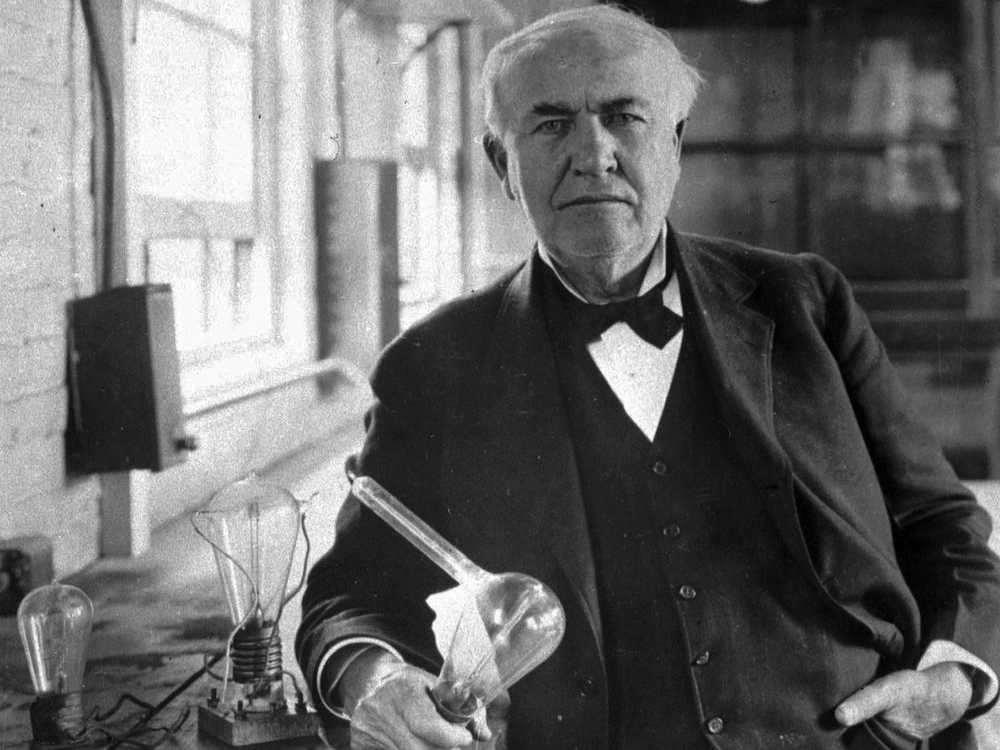
     One day Thomas Edison came home and gave a paper to his mother. He told her, “My teacher gave this paper to me and told me to only give it to my mother.”

     His mother’s eyes were tearful as she read the letter out loud to her child: Your son is a genius. This school is too small for him and doesn’t have enough good teachers for training him. Please teach him yourself.

     After many, many years, after Edison’s mother died and he was now one of the greatest inventors of the century, one day he was looking through old family things. Suddenly he saw a folded paper in the corner of a drawer in a desk. He took it and opened it up. On the paper was written: Your son is addled [mentally ill]. We won’t let him come to school any more.

     Edison cried for hours and then he wrote in his diary: “Thomas Alva Edison was an addled child that, by a hero mother, became the genius of the century.”

 Thomas Edison – Interview

Source : www.Linkedin.com

Minimal Resources: Students’ Ideas

2710

Minimal resources: Students’ ideas

Run out of ideas yourself? Let your students come up with the ideas! Adrian Tennant provides tips and ideas for incorporating ideas from students in your lessons.

Some of the most productive lessons, and the most useful, can come from the learners. Here are some ideas of how you can incorporate ideas from your learners.

The student test

Most tests actually check what your students don’t know rather than what they do (unfortunately this is the very nature of most testing). However, it doesn’t need to be like this. Here is an idea to make the whole process far more useful.

  1. Divide your students into small groups (between 3 and 5 students is best).
  2. Ask the students to look back over what they have been learning (you might want to set a time limit).
  3. Then, ask the groups to write a test for the other students. The tests can then be exchanged and each group try another test. Once the tests have been done the original group can mark it.
  4. Finally, collect all the tests in and take a look at them – particularly at the questions, not just the answers.

Oops!

  1. Make a note of 8 sentences that contain mistakes that your students make – these can be from written work or from when they speak. You will need two pieces of paper (for larger classes you may need more).
  2. On one piece write down the eight sentences, but correct 4.
  3. On the other piece of paper write down the same eight sentences, but correct the four sentences that on the first piece of paper were left incorrect.
  4. Now divide your class into two groups and give each group one of the pieces of paper.
  5. Ask the students to work in their groups and decide which sentences are right and which are wrong.
  6. Tell the students to correct the sentences that are wrong. The students should make their own copies of the sentences.
  7. Next, put the students into pairs – so they are working with someone from the other group – and compare their answers.
  8. Finally, collate and discuss as a class.

A student dictogloss

  1. Find a suitable piece of writing from one of your students (sometimes it is fine to work with a piece that contains mistakes as these can become part of the focus of the activity. However, it is worth thinking about how the individual student may react to their mistakes being discussed by all the other students).
  2. Tell the students you are going to read out a short text.
  3. Ask the students to put their pens down and just listen.
  4. Read out the text once and then ask the students to note down all the words they can remember – this should be done focusing on key words and NOT trying to remember everything verbatim.
  5. Read out the text again and then ask the students to work in pairs and reconstruct the entire text. Then ask the pairs to compare their texts.
  6. Finally, compare their texts to the original and discuss.

An object feast

  1. 1st lesson: bring in a small object, or a photo. (For example, I would bring in a photo taken from a visit to the rainforest in South America. Another friend would take in a Boomerang they bought while on holiday in Australia). Tell the story behind the photo/object and then put the students into groups. Ask the students to write questions to ask you. Conduct a Q&A session.
  2. 2nd lesson: Ask the students to bring in an object or photo. If your class is large divide into small groups and get them to discuss their photos/objects. In small classes the whole activity can be done together.

Word limits

  1. Ask your students to choose 3 words that they have recently learnt and to write these words in their notebooks.
  2. Next, ask them to write 4 words that they associate with each of their ‘key’ words. Put students into pairs or groups and explain the task.
  3. Students should take it in turns to explain each of their key words to the other students in their group. However, when explaining they must not use the other words that they wrote down (those that that they associated with each key word). They must not mime, draw or resort to L1 either.
  4. Often students get better at explaining if they have to do it more than once. Therefore, after the first go put students into new groups and get them to repeat the activity.


The question box

  1. 1st lesson. Ask students to write down three questions (you could limit the focus or allow the questions to be about anything) that they would like answered. If you want, this can be done for homework. Put all the questions in a box.
  2. 2nd (and subsequent lessons). Put students in groups and ask each group to pick a question from the box. In their groups they should discuss the question (you might want to set a time limit. e.g. 10 minutes) before reporting back to the class. If there is one question of particular interest you might want the class to spend more time on it.

Our project

  1. 1st lesson. Put students into groups and explain that over the next X weeks/lessons they are going to be involved in a project. Give the groups 6 minutes to brainstorm project ideas and then two minutes to vote/choose which project their group will do. (Alternatively, ask students to think of projects on their own and then form groups where all the students have similar ideas).
  2. 2nd (and subsequent lessons). Devote a section of the lesson (from 10 minutes upwards) to the groups discussing their project. During this time they can set tasks for themselves, and each other, that can be done outside the class, discuss progress, exchange information etc.
  3. Note: It is important to have an outcome and time limit for the project. i.e. In 10 lessons time you will ‘present’ your project to the rest of the class.
    This type of project work is extremely motivating for many learners, especially those studying at school where classes are levelled by age, not ability.

    Source : www.onestopenglish.com

Minimal Resources: Miscellaneous Ideas

award-winning-creativity-brought-to-you-by-constraint-3-638

Low-level activities

Miles Craven provides some valuable tips and ideas for teaching starter- and elementary-level students with minimal resources.

Starter level

Word tennis: Vocabulary

This is a good activity to review key vocabulary for a variety of starter-level word groups.

  • Put students into pairs and tell them to turn their chairs to face each other.
  • Choose a word group (e.g. colours or furniture) and write it on the board.
  • Explain that students should take turns to say one word they can think of that belongs to the word group.
  • They should continue, like a game of tennis, with the ‘rally’ lasting as long as either of them can think of an appropriate word.
  • The winner is therefore the last student to say a word!
  • You may wish to follow this up by telling students to write down all the words they thought of.
  • Tell the pair with the longest list to write it on the board, and then review spelling and pronunciation.

Dialogue build: writing and reading

  • Put students into pairs and give each pair six strips of blank paper.
  • Tell them to write a short dialogue to practise any English they know.
  • Explain that they should write each line of dialogue on a separate strip of paper.
  • Give students time to think of a dialogue and write the six lines of their dialogue on their strips of paper.
  • Monitor and check for accuracy. When students have finished, tell them to mix their strips of paper and exchange them with another pair of students.
  • Explain they should read the strips of paper and try to put the dialogue in the correct order.
  • When students have completed the reordering activity, tell them to practice the dialogue with their partner.
  • Tell students to continue to exchange their strips of paper with their classmates until each pair has reordered and practiced each of the dialogues.

Elementary level

Category game: vocabulary This is one way you might wish to revise key vocabulary:

  • List the following categories in a column on the board: country, sport, meat, vegetable, fruit, animal, job, colour.
  • Divide the class into groups, and write one letter at the top of the board, for example S. Tell each group to think as quickly as they can of a word for each category that begins with that letter (e.g. spain, swimming, sausages, etc.)
  • The first group to finish should shout ‘Stop!’
  • Tell them to call out their list of words and write them on the board next to the appropriate category.
  • You may wish to ask groups to spell any difficult words. If all words are correct, award the group five points. If they make a mistake, deduct five points from their total.
  • Then begin the game again by writing a different letter on the board.

One minute, please!: speaking

This is a good exercise to try top develop confidence and fluency with students at lower levels.

  • Begin by writing a list of topics on the board, such as football, boys, school, parents, food, holidays, etc.
  • Then divide the class into two teams and ask for a volunteer from one team to come to the front to sit in a chair facing the rest of the class.
  • Explain that students from the opposing team should choose a topic from the board, and that the student must try to talk about that topic for no less than one minute.
  • Add that while some pauses are allowed for thinking time, no pause should be longer than five seconds.
  • If the student manages to talk for a full one minute, award five points. Give proportionally fewer points for less than one minute of talking time.
  • Continue the game with students from each team taking turns to come to the ‘hot seat’ and talk about a topic for one minute.
  • The team with the most number of points at the end of the game is the winner.
  • You many wish to note any grammar, vocabulary or pronunciation errors and review these in a later lesson.

    High-level activities

    Intermediate level

    Yes/no: speaking

    This is a popular, fast-paced question and answer game.

    • Have a volunteer come to the front of the class and sit in a chair facing the rest of the students.
    • Explain that the class must ask as many questions as possible in a time limit of one minute.
    • The volunteer must answer each question truthfully, but avoid saying the words Yes or No. If they say Yes or No in reply to a question, they lose and are replaced by another volunteer.
    • You may wish to demonstrate the activity first by asking for a volunteer and questioning them yourself. Try to ask questions that naturally expect a Yes or No answer. Question tags are good for this: You’re Spanish, aren’t you?
    • Also, repeating back their answer with rising intonation as if asking for clarification is a good trick:
    A: What nationality are you?
    B: Spanish
    A: Spanish?
    B: Yes…Ah!

    This can be great fun and but remember to keep the pace as fast as possible. It’s a good revision activity for various tenses (simple present/ simple past, etc.), question tags, and practicing intonation.


    Whisper, whisper: speaking/grammar

    This simple activity is a nice way to review reported speech.

    • Put students into groups of three and tell student A to whisper a sentence to student B. Student B must then tell the student C what student A said, using the reported speech.
    • Student C then whispers a new sentence to Student A and so the game continues.

    We’ve got so much in common!: speakingThis is a handy ‘getting-to-know-each other’ activity you might wish to use with a new class.

    • Put students into pairs and tell them to ask and answer questions to find three things that they have in common with each other. You might wish to write a few ideas on the board, such as What’s your star sign? What’s your favourite food?, etc.
    • When each pair of students has found three things they have in common, tell them to stand up and tell the class what those three things are.
    • You can then mix the class again by telling students to find a new partner who they have something in common with.

    Party time: speaking/vocabulary

    • Brainstorm adjectives of character (shy, generous, etc) and write as many as students can think of on the board.
    • Then tell each student to choose one of the adjectives of character from the board. Explain to students that they are all at a party, and that they must mingle and chat to each other in the role of their character adjective.
    • Explain that they must pretend to have that character, but that they must never say what the adjective is.
    • Have students write the name of each student in the class on a piece of paper. Tell them to start mingling, and explain that they should try to speak to everyone and identify the character adjective they are representing.
    • When they think they know what adjective the person they are speaking to is trying to express, they should write it next to their name and move on to speak to someone else.
    • At the end of the game, tell students to sit down and then call out the name of each person in the class and ask students to say the adjective they thought that person was trying to represent.

    Upper Intermediate level

    If….writing/speaking

    • Give students two or three strips of paper each and tell them to write the beginning part of a second conditional sentence on each strip.
    • Write a few examples on the board to give them some ideas, such as ‘If I was a bird…’, ‘If I went to Rome…’
    • Make sure students only write the beginning part of the sentence. When they have finished collect all the strips of paper and mix them.
    • Put students into small groups and divide the strips of paper between each group.
    • Place the strips of paper face down on the desk in front of the students.
    • Tell students to take turns choosing a strip of paper, turning it over and reading what it says.
    • Explain they must finish the sentence. Demonstrate this activity by using the examples on the board: ‘If I was a bird… I’d fly around the world’ ‘If I went to Rome I’d visit the Vatican Museum.’
    • When students have finished tell groups to swap their strips of paper and continue the activity.
    • You may wish to monitor and make notes of any errors students make. At the end, read out the incorrect sentences and have the class listen and correct any mistakes they hear.

    Soap opera drama: speaking

    • Choose a famous soap opera that all your students know.
    • Tell them to list six of the most famous characters, and have them explain to you the personality and profile of each one.
    • Then divide the class into groups of six and tell each student to choose a different character.
    • Explain they must prepare a scene from the next episode of the soap opera!
    • Tell them that the scene should include all the characters, and give them time to prepare their ideas.
    • When students are ready, have each group come to the front of the class and perform their role play.
    • For each role play award up to five points for each of the following categories: level of interest, level of acting, accuracy of language, pronunciation.
    • The winner is the group with the most points.

    Mini presentations: speaking

    • Tell students to individually make a list of three things they are interested in (e.g. a hobby or sport they have, etc.).
    • Give them time to make their list, then put them into groups to exchange their ideas.
    • Tell students to choose one of the three topics on their list and prepare a one minute presentation.
    • When they are ready, have student come to the front of the class to give their presentation.
    • Give each student up to five points for each of the following categories: level of interest, eye contact, fluency, grammatical accuracy, range of vocabulary, pronunciation.
    • Finally, give your feedback to each student on their performance before announcing the winner.

    Chain story: listening/speaking/writing

    • Tell students to sit in a large circle.
    • Explain they have to tell a story, each taking turns to add a sentence as the story goes around the class in a circle.
    • Begin the story yourself, with something like ‘It was a dark, stormy night when suddenly Jennifer heard a noise at the door.’
    • The student on your left should then continue the story, adding the next sentence.
    • The student on their left should then add the next sentence, and so on until the story has gone around the whole class.
    • When the last student has concluded the story, say your first sentence again and have students each repeat their part of the story as it goes around the class once more to help them remember.
    • Finally, put students into pairs and tell them to write the story. Monitor and help with grammar and spelling.

    Source : www.onestopenglish.com