
Beyond is a new course for teenagers, focused on developing the linguistic skills and strategies language learners need. A fusion of life skills and motivating material prepares students for success in the 21st century classroom and beyond.
content-views-query-and-display-post-page domain was triggered too early. This is usually an indicator for some code in the plugin or theme running too early. Translations should be loaded at the init action or later. Please see Debugging in WordPress for more information. (This message was added in version 6.7.0.) in /home2/englita2/public_html/blogebg/wp-includes/functions.php on line 6170js_composer domain was triggered too early. This is usually an indicator for some code in the plugin or theme running too early. Translations should be loaded at the init action or later. Please see Debugging in WordPress for more information. (This message was added in version 6.7.0.) in /home2/englita2/public_html/blogebg/wp-includes/functions.php on line 6170gravity-forms-pdf-extended domain was triggered too early. This is usually an indicator for some code in the plugin or theme running too early. Translations should be loaded at the init action or later. Please see Debugging in WordPress for more information. (This message was added in version 6.7.0.) in /home2/englita2/public_html/blogebg/wp-includes/functions.php on line 6170
Beyond is a new course for teenagers, focused on developing the linguistic skills and strategies language learners need. A fusion of life skills and motivating material prepares students for success in the 21st century classroom and beyond.
Beyond is a new six-level course for teenagers, from A1+ to B2. The course is based on detailed CEFR mapping and helps to prepare students for international exams.
The creative and dynamic approach to topics motivates students to engage with the material, making language learning more meaningful and successful. Two separate video strands (Speaking videos and Moving Picture videos), accompanied by a variety of task types, bring the pages to life and make the new language accessible and motivating for this age group.

Beyond focuses on developing strong linguistic skills, as well as teaching the wider skills and strategies students need to improve as language learners. Beyond develops a comprehensive and practical sub-skills syllabus, equipping students with invaluable skills they can transfer to other areas of their education.
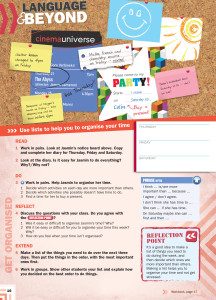
The inclusion of age-appropriate, 21st century life skills introduces a new dimension to language teaching. With their strong links to the unit topic and language, the life skills lessons ensure students not only develop academically, but also grow into self-aware, considerate and confident individuals with the ability to think for themselves. A life skills lesson in every unit promotes planning and organisation, critical thinking, problem-solving, social skills or cultural awareness.
The regular use of multimedia materials and class and homework activities on the Resource Centreensures that the students are learning from a variety of sources. The language practice environment for students is extended into an Online Workbook which provides a wide range of interactive and engaging activities accessible on computers or mobile devices.


Book available at : goo.gl/1aWMSi
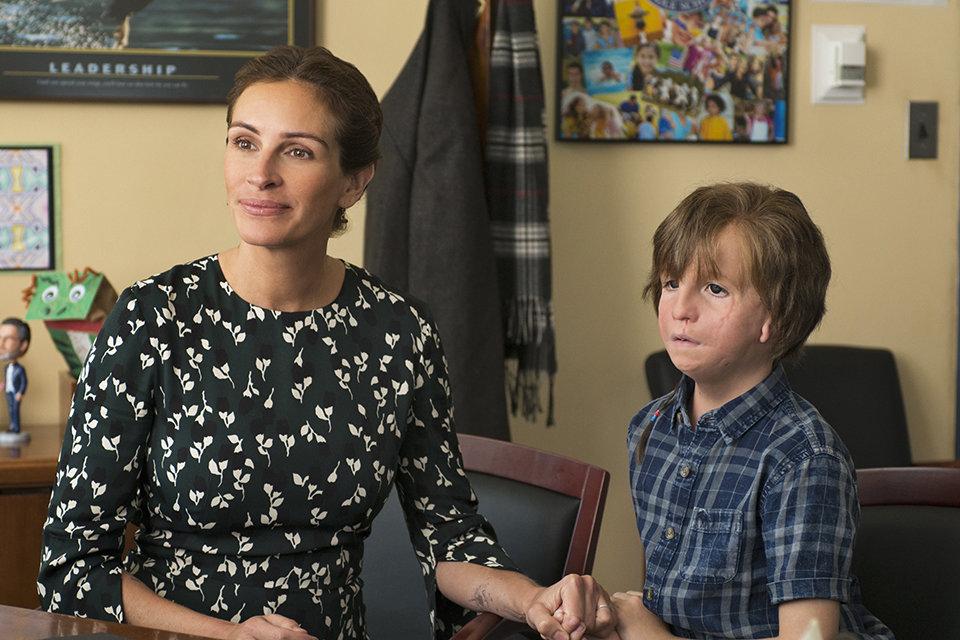
Julia Roberts as Isabel Pullman and Jacob Tremblay as her son, Auggie, in “Wonder,” which arrived to triple the expected ticket sales.CreditDale Robinette/Lionsgate
“I know I’m not an ordinary 10-year-old kid,” says Auggie (Jacob Tremblay), the lead character of “Wonder,” as we see him standing on his bed wearing an astronaut’s helmet. When the helmet is removed, we know how he knows what he knows: His young face is scarred, his earlobes are little flaps and his eyes are seemingly tear-shaped, giving him a perpetual sad-puppy expression.
The good-natured fellow describes his facial birth defects, and the 27 operations he’s endured to deal with them, as “hilarious.” But Auggie is less amused by the prospect of entering the fifth grade, and no longer being home-schooled by his brilliant and loving mother, Isabel Pullman (Julia Roberts).
The Pullmans are an upper-middle-class family living in a fairy-tale New York, one that the film’s location manager conjured up from the most genteel corners of Brooklyn and Manhattan (as well as New Westminster, British Columbia, where the interior of the family’s brownstone was built on a warehouse stage). So Auggie, whose father, Nate (Owen Wilson), has a job that lets him wear a suit and sneakers, is certainly going to a good school. Nonetheless, he knows that he will encounter bullies, and he does. But Auggie is smart, clever and exceptionally good-hearted (at least when he is not being made to feel self-conscious and alone), and has a knack for winning people over.
The movie, based on the popular children’s novel by R.J. Palacio, hews to the book’s multicharacter narration structure. This tactic reminded me of a line in Jean Renoir’s classic “The Rules of the Game” about everybody having their own reasons for their behavior. In Renoir’s movie, that fact is called a “truly terrible thing.” In the world of this film, understanding another person’s reasons is the first step in establishing meaningful communication. During the section of the film narrated by Auggie’s older sister, Via (Izabela Vidovic), you learn why, in an awkward first conversation with her future boyfriend, she impulsively tells him that she’s an only child, despite the fact that she loves and ardently protects her little brother.
Directed by Stephen Chbosky, who wrote the screenplay with Steve Conrad and Jack Thorne, the movie has a cast that’s wonderful from top to bottom. As Auggie’s parents, Ms. Roberts and Mr. Wilson are doing things we love to see those actors doing. (Ms. Roberts lets loose with her trademark ebullient laugh at least once, and Mr. Wilson explains life’s issues to Auggie in a droll drawl.) All the young people in the ensemble, anchored by Mr. Tremblay’s Auggie, are perfect.
“Wonder” is that rare thing, a family picture that moves and amuses while never overtly pandering. Mr. Chbosky’s 2012 feature, “The Perks of Being a Wallflower,” split the difference between the sentimental heart-tugging associated with more standard Hollywood fare, and the intelligence and intimacy often associated with independent films. He accomplishes something very similar, and equally worthwhile, here.
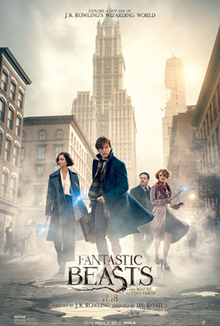
“Fantastic Beasts and where to find them takes us to new era in J.K. Rowling’s wizarding world, decades Harry Potter and half a world away.”
Fantastic Beasts and Where to Find Them is a 2001 book written by British author J. K. Rowling (under the pen name of the fictitious author Newt Scamander) about the magical creatures in the Harry Potter universe. The original version purports to be Harry Potter’s copy of the textbook of the same name mentioned in Harry Potter and the Philosopher’s Stone (or Harry Potter and the Sorcerer’s Stone in the US), the first novel of the Harry Potter series. It includes several notes inside it supposedly handwritten by Harry, Ron Weasley, and Hermione Granger, detailing their own experiences with some of the beasts described, and including in-jokes relating to the original series.
In a 2001 interview with publisher Scholastic, Rowling stated that she chose the subject of magical creatures because it was a fun topic for which she had already developed a lot of information in earlier books. Rowling’s name did not appear on the cover of the first edition, the work being credited under the pen name “Newt Scamander”, who, in the books, wrote this textbook as seen on Harry’s supply list for his first year.
“Harry Potter” fans who are missing the wizarding world introduced in J.K. Rowling’s books may be comforted by the newly released images from “prequel” film “Fantastic Beasts and Where to Find Them,” which takes place in New York 70 years before we meet Harry and his friends.
“Fantastic Beasts” is based on the Hogwarts textbook of the same name and follows the adventures of its author, Newt Scamander (Eddie Redmayne), who is described as a “magizoologist” — someone who studies magical creatures. The adaptation was penned by Rowling — marking her first screenplay — and directed by David Yates, who helmed the last four “Harry Potter” movies.
Book available at : goo.gl/2iYKqD
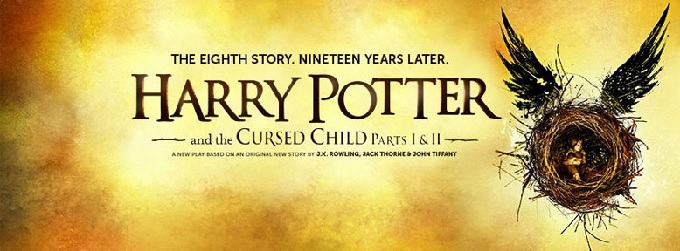
It is the eight story in the Harry Potter series and the first official Harry Potter story to be presented on stage.
Part l
Act I
The play begins on Platform 9 3/4 and picks up from where Harry Potter and the Deathly Hallows left off, with a few modifications. Albus Potter and Rose Granger-Weasley say goodbye to their parents and board the train. Harry Potter, Ginevra Weasley, Ronald Weasley and Hermione Granger wonder whether their children will be okay. Ron remembers his time at Hogwarts and wishes he could be going.
Albus and Rose wander around the train looking for a compartment to sit in. Rose reminds Albus that their parents met on the train, so decides that finding the right compartment to sit in is very important as they too could meet their lifelong friends here. They open the door to one compartment and find Scorpius Malfoy sitting there. They shyly introduce themselves and Scorpius makes a joke about their parents rivalry. Albus and Scorpius get along very well, but Rose leaves to look for another compartment because she thinks that Scorpius is nothing but trouble. Albus stays and the two kids become friends, sharing stories and sweets on the journey to Hogwarts.
When the train reaches Hogwarts, the students attend the Sorting ceremony. The Sorting Hat places Rose in Gryffindor, and both Scorpius and Albus in Slytherin. Albus sits next to Scorpius at their table. Unfortunately, Albus is mocked by the other students for being a Potter in Slytherin as every Potter had been placed in Gryffindor. He does not have a natural gift for magic and struggles at his first flying lesson, where the other children call him the “Slytherin Squib.”
Book available at: goo.gl/WZoj6k
Learning doesn’t stop once the bell rings and class is over. The interactive, online activities in MyEnglishLab make practising English fun. Teachers can keep track and parents can get involved.
An online learning tool that perfectly partners Big English for personalised practice and assessment.
MyEnglishLab provides an enriched learning environment and activities that are instantly graded and correlated to the course. It allows you the flexibility of personalising tasks for each student to help them reach their goals and instant access to a range of diagnostic tools.
MyEnglishLab is an online component for your Big English course. Use the code provided with your course book to register.
Student access is valid for 21 months or, if earlier, until the end of course date as set by the teacher or course administrator.
LINK: http://www.myenglishlab.com/courses-bigenglish.html
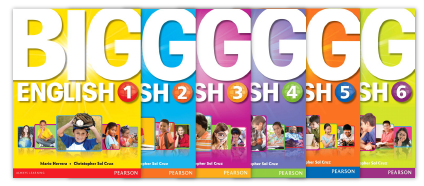
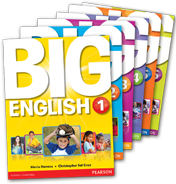
Big English is the most complete package for young learners. It gives your pupils all they need to learn English and provides everything you need to engage your class and get great results.
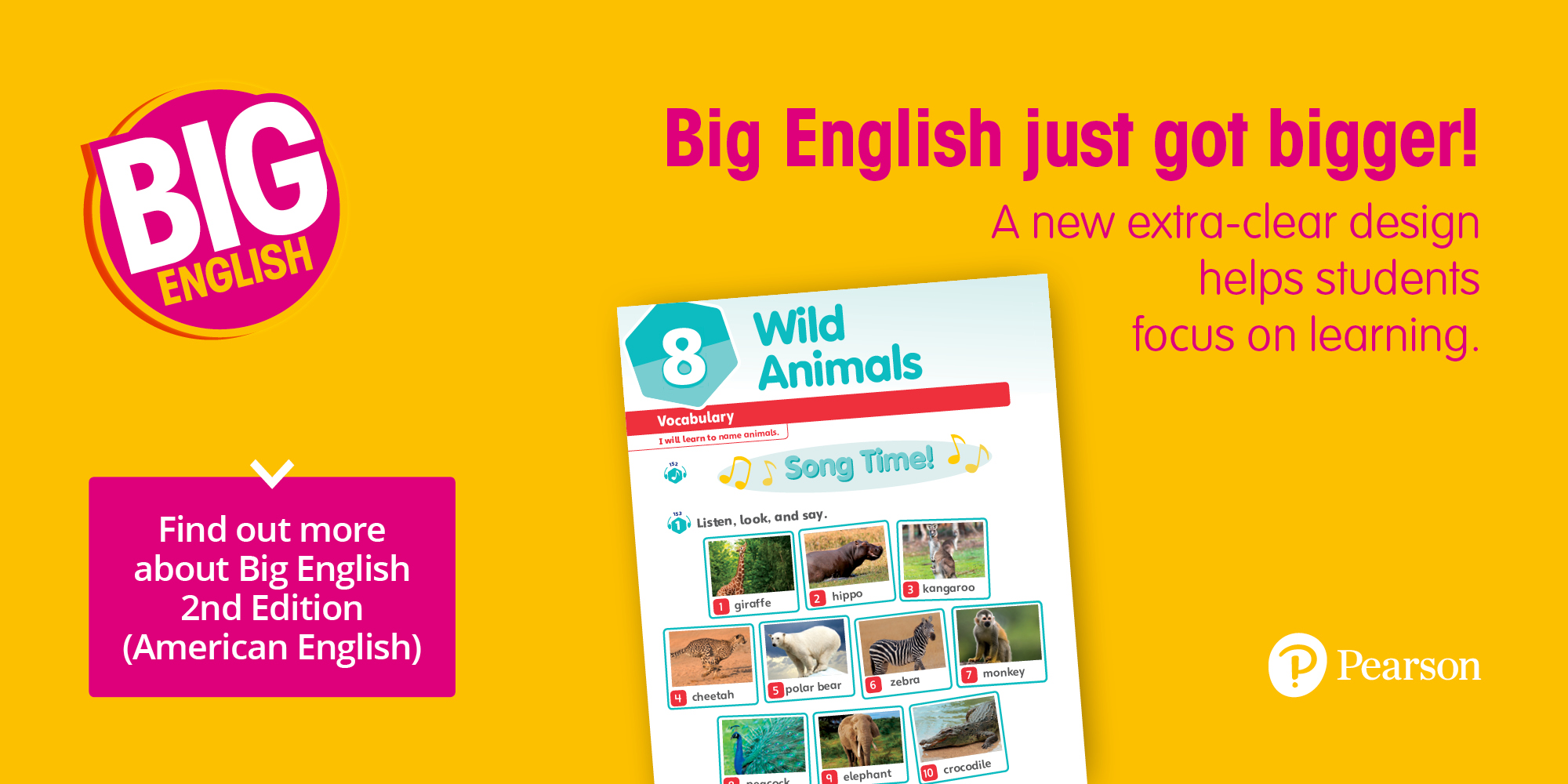
Activities present key language in context, and include songs, stories, sticker activities, content language and values lessons to help students develop 21st Century Skills. Regular four-page checkpoints focus on Assessment for Learning and allow students to assess their own progress. Each book includes a Young Learner’s Exams preparation section.
The Activity Book, with colour photographs and illustrations, provides engaging additional practice for each lesson in the Pupil’s Book. Activity Book pages can be used on an interactive white board and in MyEnglishLab.
The Teacher’s Book provides step-by- step Lesson Plans, activities and ideas, a game bank, Pupil’s Book and Activity Book audio scripts, Activity Book answer keys, and notes for using the Young Learners’ Exams Practice Materials found in the Pupil’s Book. Assessment for Learning techniques and ideas for developing 21st Century Skills are contained in each Lesson Plan.
[gview file=”http://englishbookgeorgia.com/blogebg/wp-content/uploads/2018/02/Big-English-lyrics.pdf”]
The quote from chapter 1 Dadley Demented
If it hadn’t been for, him nobody would even have known Voldemort was back! And his reward was to be Stach is little whinging for four solid weeks, completely cut off ftom the magical world…
Dumbledore’s Army (also known as the D.A.) was a secret organisation initiated by Harry Potter, Hermione Granger, and Ron Weasley to teach their fellow Hogwarts colleagues proper Defence Against the Dark Arts in 1995. It was founded by Hermione, but taught and led by Harry.
This organisation was made necessary by the refusal of Dolores Umbridge, the subject’s professor during the 1995-1996 school year, to teach anything in her classes other than textbook theory. It was originally founded with twenty-eight members. The group was disbanded during the 1996-1997 school year following the appointment of Severus Snape as Defence Against the Dark Arts teacher, although several members heeded the call and participated in the Battle of the Astronomy Tower at the end of the year.
It was restarted by Neville Longbottom, Ginny Weasley, and Luna Lovegood during the 1997-1998 school year after Hogwarts fell under the control of Lord Voldemort in order to oppose Death Eaterprofessors Alecto and Amycus Carrow, who spread propaganda against Muggles and Muggle-borns and taught the Dark Arts. Dumbledore’s Army played a vital role during the Second Wizarding War, and members of the organisation fought in the Battle of the Department of Mysteries, the Battle of the Astronomy Tower, and the Battle of Hogwarts.
Books are available at : goo.gl/Duycqh
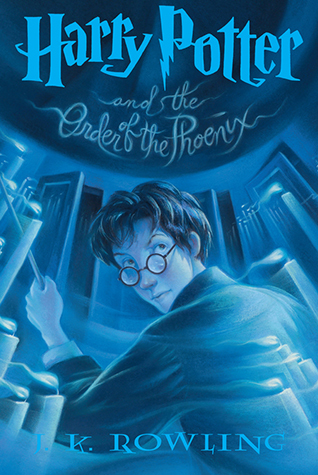
There are many strange happenings in the wizarding world, whether it’s the horrific visions Harry views whenever he sleeps, the strange disappearance of Hagrid, or the arrival of a new Dark Arts teacher, Mrs.Umbridge. Harry Potter and the Order of the Phoenix is starring Harry, now in his 5th year at Hogwarts, along with his friends Ron and Hermione, now Perfects, the main characters are ready to tackle anything that comes in their way. The plot thickens with the antagonists; Malfoy and the wicked Mrs. Umbridge. Mrs. Umbridge works for the Ministry of Magic and thinks Harry is a crazy lunatic for trying to warn people of the return of Lord Voldemort. Not only does she have the ability to make any insane rule for the school, but she can also fire any teacher she feels is unsuited or doesn’t like. Within the storyline, Harry has a wide assortment of emotions from anger to glee. He is going through a cluster of feeling due to the stress of his horrific visions, and the viewing of Voldemort alive. On top of having to deal with school, Harry now is part of a secret organization called to Order of the Phoenix, at Sirius’s house. Adding to that, he is the leader of a Defence against the Dark Arts group called Dumbledore’s Army.
Although it may seem Harry’s life is becoming worse, Harry grows stronger, he’s more willing to take chances, and acquires much-more self-sufficient when facing his opponents. Honestly, it seems the more Harry loses to his opponents, the more he is ready to fight.
The way responsibility is shown in this book, is shown in an interesting manner; Harry had lots of friends to take after. In this adventure, Harry now has to deal with being the sole person to find and fight Lord Voldemort, no matter the cause, no matter the challenge. Though the book has an amazing lesson it has some huge flaws. Without spoiling most of the book, I can say that it feels like the entire world hates him. As it seems that he losing his friends, family, and prized possessions to sudden that it makes it seem like he can deal with the loss. While I dislike this part I can understand why the author does it. Like Harry, there are many people who lose an abundance of things that were a huge part of their lives. Similarly, they could be feeling a cluster of emotions. They also could be pushing away the ones that try to help, but they can be strong. Like Harry, they can deal with the loss of others, and try to achieve a victory on their side. This outstanding representation of real-life issues is why the Harry Potter series is stupendous, as they know exactly where to go to make whatever happens relatable.
In conclusion, Harry Potter and the order of the Phoenix is a fantastic book for any age group. Whether it’s adult, teen, or child, it unlocks that imagination and child-like wonder that anyone enjoys experiencing.
Book available at: goo.gl/eyB8Wo
Terrifying dragons, an unexpected champion and a tragic ending: the revival of the Triwizard Tournament had all the facets of a truly epic sporting events in history.
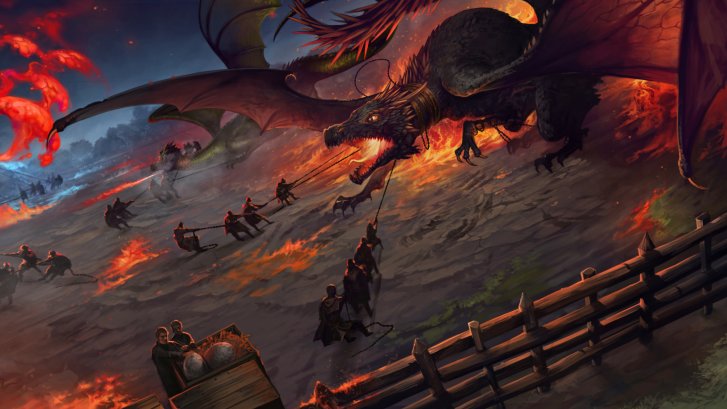
But this was no ordinary competition…
The history
A notorious and perilous contest to its core, this particular tournament was like no other. Without giving you too much of a Professor Binns-esque history lesson, the story of the tournament went a little bit like this:
Dating back around 700 years, this contest of intelligence, courage and wizards-losing-their-minds-because-there’s-a-dragon-half-a-metre-away was traditionally held every five years between the three biggest wizarding schools in Europe: Durmstrang, Beauxbatons and Hogwarts.
After some, er, accidents (all three champions were injured in 1792), the contest petered out. That was until its revival two centuries later in 1994, when extra safety precautions were added by the organisers.
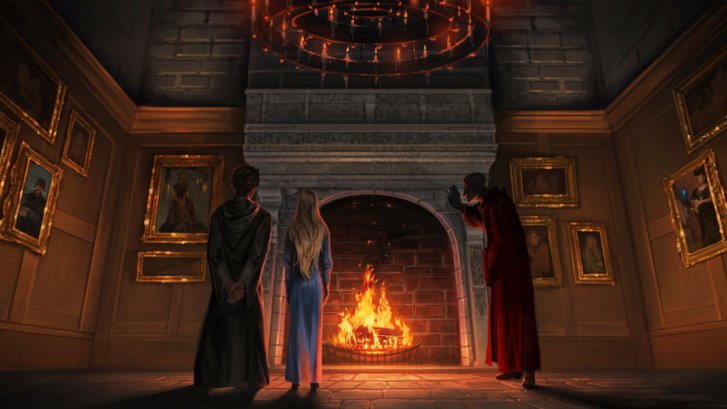
The tournament
Muggle Olympics may have up to 300 events, but the Triwizard Tournament only had three tasks… and they were quite enough.
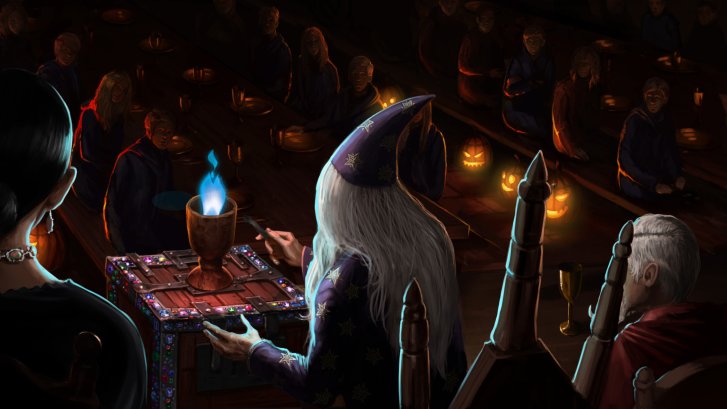
The rules were simple: each school was represented by a champion, chosen by the Goblet of Fire. The champions took part in three punishing tasks to win the Triwizard Cup, one thousand Galleons, eternal glory and probably eternal bruises.
The revival of the tournament was made a lot safer by the addition of an age limit: only students aged 17 and over could apply. At least, that was the plan.
An unexpected champion
Although every tournament in history had only ever had three champions, Harry Potter found himself chosen as the unprecedented fourth. The other three champions were Fleur Delacour of Beauxbatons, Viktor Krum of Durmstrang and Cedric Diggory of Hogwarts.
Triwizard arguments
As with any sporting event, the tournament was not shy of politics behind the scenes. With Hogwarts having two champions, the mood turned sour as the school was seen to have an unfair advantage over Beauxbatons and Durmstrang.
To make matters worse, reports from The Daily Prophet neglected to state actual Hogwarts champion Diggory’s inclusion in the tournament, and cynics branded Harry a glory-hog and show off. Slytherin students even circulated ‘Potter Stinks’ badges.

The first task
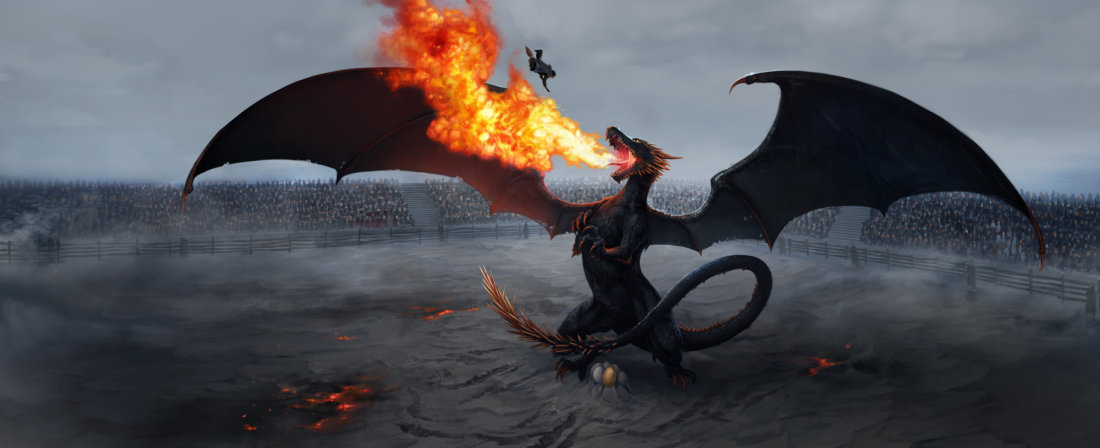
By the day of the first task, 24 November, things were already heating up – which, to be fair, was probably also helped along by those huge dragons.
The challenge was to retrieve a golden egg from one of four immensely dangerous fire-breathing beasts, and somehow it ended with all four champions still intact. Potter and Krum came out in joint first place. Krum opted for a Conjunctivitis curse to confuse the dragon, whereas Potter went for the more sensible option of summoning his broomstick to play to his strengths as a skilled flyer.
The second task
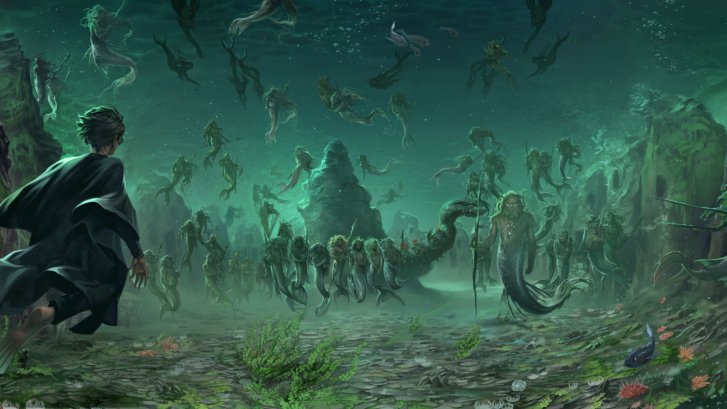
On 24 February, the champions, judges and supporters assembled at the edge of the lake for the second task. The merpeople had taken something that ‘you’ll sorely miss’ from each contestant, and the champions were given one hour to get it back.
For all four champions, that missing something turned out to be an important person in their lives: Hermione Granger was Krum’s captive, even though they’d been hanging out for about a day; Ron Weasley was, of course, Harry’s; Fleur’s little sister Gabrielle was taken to spur her on, while Cho Chang was Diggory’s ‘sorely missed’.
Despite finishing third, it was decided that Harry would be awarded second place after Diggory for saving everyone and showing ‘moral fibre’. Good on you, Harry.
Disarray on the judge’s panel
Unbeknown to the outside world, the behind-the-scenes drama of the tournament was just as much of a whirlwind as the contest itself.
Judge Bartemius Crouch went missing and mad, while Ludo Bagman was faced with spiralling debts. After betting on Harry to win, the former Quidditch star spent the majority of the tournament freaking the 14-year-old out by offering him unsolicited help.
Of course, the wizarding world remained blissfully unaware of these strange goings-on.
The final task
Going into the third task, Harry and Diggory were tied in first place with Krum in second and Delacour positioned third.
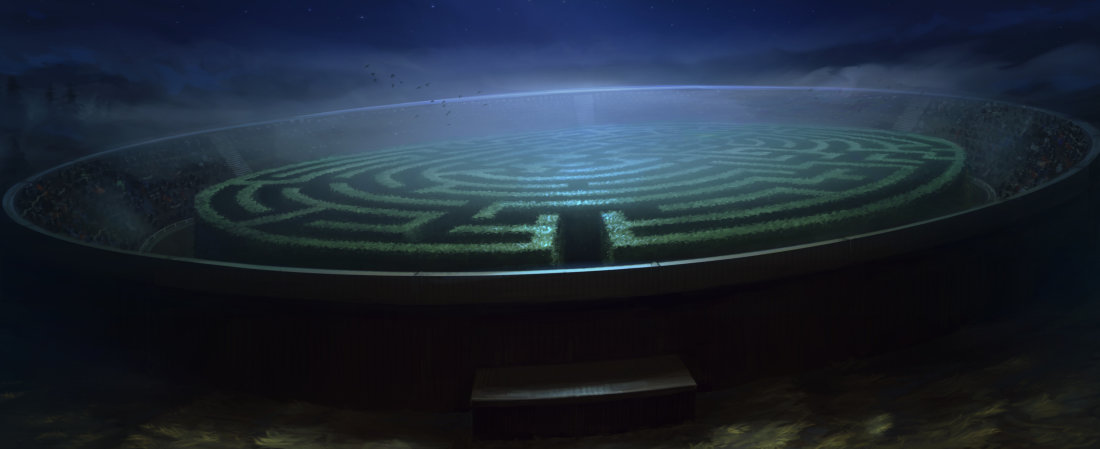
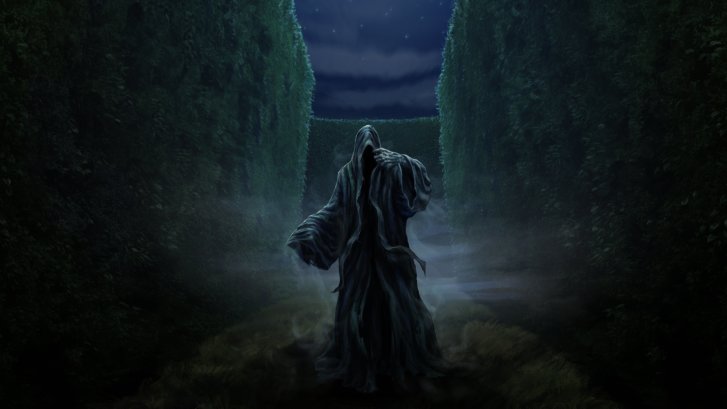
On the evening of 24 June, the champions were tasked with traversing an imposing 20-foot-high maze full of obstacles, creatures and riddles. Little did Cedric Diggory’s fellow students or family know that this would be the last time they would see him alive.
Cedric and Harry made it to the centre of the maze and both clutched the Triwizard Cup as joint winners. But instead of enjoying a double victory for Hogwarts, the pair were thrust into unexpected danger.
Hogwarts in mourning
The Triwizard Tournament was rocked forever when the Cup turned out to be a Portkey, which took Cedric and Harry to a graveyard far from Hogwarts where Diggory was killed by Peter Pettigrew. Harry managed to escape and return his fellow champion’s body to his family.
There were many deaths in Triwizard history, but Cedric’s was a defining moment and arguably marked the point at which the tournament stopped being a contest and became a war.
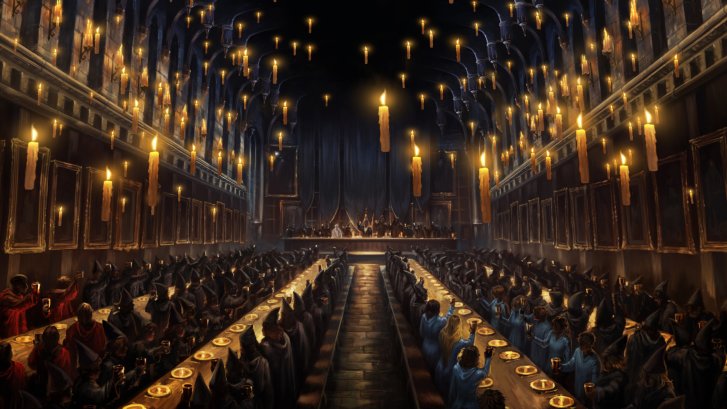
Books are available at : goo.gl/Duycqh