Tag Archives: February 2016

Harry Potter illustrated edition

potter-illustrated-keeper-keys (2)We still find ourselves unearthing new tidbits of info every time we re-read  Harry Potter books.

  1. The very first Harry Potter book was published in 1998, the same year that the Battle of Hogwarts took place.
  2. Harry, Ron and Hermione unite the three different Ollivander wand core  – That’s phoenix tail for Harry, unicorn hair for Hermione and dragon heartstring for Ron.
  1. After Harry defeated Voldemort he lost the ability to speak Parse tongue Not that he had much of a cause to use it, but still, he lost the connection because it was linked to the shared bond Harry had with Voldemort.
  2. We’ve actually all been saying ‘Voldemort’ wrong this whole time Yep – the’t’ at the end of Voldemort is actually apparently meant to be silent. The name comes from the French words meaning ‘flight of death’ so maybe try it out with a fancy accent next time you say ‘Voldemort’ out loud.
  3. Origin of the Potter Name Harry’s oldest recorded descendent is a wizard named Linfred, who Muggles viewed as an eccentric old man who was always “pottering about in his garden with all his funny plants.” In reality he was inventing potions — like   Skele-gro and Pepperup Potion — but they nonetheless nicknamed him “the Potterer,” which over time became just Potter.
  4. The Sacred Twenty-Eight In the Harry Potter books, any wizarding family that only married others with magical blood — meaning, no Muggles — were considered “pure bloods.” Those families, like the Malfoys and the Blacks, were often elitist snobs who looked down on mixed blood families and even came up with the slur “mud bloods” to express their distaste. In Rowling’s new story, it is revealed that the Potters were excluded from the definitive list of pure blood families known as the “Sacred Twenty-Eight.” We always knew there were other pure blood families out there aside from the ones mentioned in the books, but It’s interesting to learn that the exact number is 28, although it’s worth noting that some may have been deluded over the years.
  5. The Tradition of the Invisibility Cloak The mysterious and powerful invisibility cloak that Harry so often used in his adventures was left to him by his late father, James Potter. Apparently it is a long-standing Potter family tradition to pass the cloak on to your children.
  6. Harry’s ScarThe Boy-Who-Lived was marked with a lightning bolt shaped scar on his forehead. It’s unclear as to why it was shaped like a lightning bolt.One popular assumption is that the bolt is in-fact made of two sevens. As we know 7 is the most powerful magical number in the Potter verse. It’s considered to be a nod to that itself.

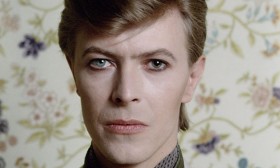
David Bowie and his work


51g+iKLTuoL._SX325_BO1,204,203,200_

“Astonishing and absorbing…from glam rock, minimalism and punk, to radical left-wing politics, music video, and a mass of other subjects that helped shape the ideas behind Bowie’s songs.” —Sunday Times (London)

The Man Who Sold the World by Peter Doggett—author of the critically acclaimed Beatles biography, You Never Give Me Your Money—is a song-by-song chronicle of the evolution of David Bowie. Focusing on the work and the life of one of the most groundbreaking figures in music and popular culture during the turbulent seventies, Bowie’s most productive and innovative period, The Man Who Sold the World is the book that serious rock music lovers have been waiting for. By exploring Bowie’s individual achievements and breakthroughs one-by-one, Doggett paints a fascinating portrait of the performer who paved the way for a host of fearless contemporary artists, from Radiohead to Lady Gaga.

51jPS1mYhqL._SX316_BO1,204,203,200_

The Sunday Times bestseller.

David Bowie was arguably the most influential artist of his time, reinventing himself again and again, transforming music, style and art for over five decades.

Thirty years on from his first hit single, ‘Space Oddity’. he remains the most influential rock star from the post-Woodstock generation – yet unlike Hendrix, the Beatles or even Prince, his life has never been the subject of a major biography. Strange Fascination chronicles Bowie’s career against the colourful backdrop of post-Beatles pop culture; of glam-era gender- bending. It’s a story of amazing creativity, of huge, showboating theatricality and of an almost pathological quest to remain relevant and at pop’s cutting edge. Strange Fascination is the most complete account of David Bowie and his impact on pop culture ever written.

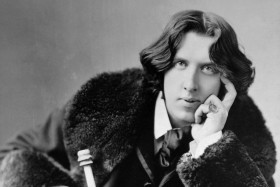
Amazing facts about the Irish Legend Oscar Wilde

Many today know the controversial Victorian dramatist Oscar Wilde, through his works the “The Picture of Dorian Gray” and The “Importance of Being Earnest.” Larger than life, Wilde was a poet, dramatist, author, and celebrity, donning many quite fashionable hats.

His work and spirit are as relevant, witty, and alive as ever 112 years after his death.

Here are ten interesting facts about Oscar Wilde:

  1. Wilde was born with three middle names. His full name is “Oscar Fingal O’Flahertie Wills Wilde,” born in Dublin in 1854.
  2. His mother, Jane Wilde was a successful poet and Irish nationalist whose pen name was “Sperenza.” His father was also an author but more well known for his work as an oto-ophthalmologic and for being knighted for his work as an assistant commissioner to the censuses of Ireland.
  3. Wilde was an impressive linguist. Home schooled, he was taught French and German and also had working knowledge of Italian and Ancient Greek.
  4. Wilde, adding “lecturer” to his array of talents, embarked on a tour of America in 1882 and held talks on a wide variety of subjects from “The English Renaissance” to “Decorative Art.”
  5. Wilde married Constance Lloyd on May 29, 1884 and had two sons, Cyril and Vyvyan. Cyril fought and died in World War I in the Battle of Festubert in France where he is buried. Vyvyan and Cyril changed their last name to Holland, like his mother, after their father’s imprisonment. Vyvyan went on to become a translator for the BBC and author of the autobiography ‘Son of Oscar Wilde’ (1954). Vyvyan’s son and Wilde’s grandson, Merlin Holland, published the Oscar Wilde biography ‘A Portrait of Oscar Wilde’ (2008).
  6. Though thought of as an author, he only published one novel, “The Portait of Dorian Gray” (1891).
  7. He was an advocate of socialism and in his only political essay “The Soul of Man under Socialism” (1891) Wilde expounds an anarchist philosophy.
  8. Before his death due to cerebral meningitis he was conditionally baptized in the Catholic Church.
  9.  Oscar Wilde’s last words were “My wallpaper and I are fighting a duel to the death. One or other of us has got to go.”
  10. His famous tomb was designed by Sir Jacob Epstein, whose ashes were placed alongside Wilde in the structure in 1950 per his request. The Angel statue adorning the tomb was originally installed with male genitalia which has since been vandalized.


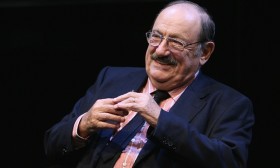
Umberto Eco

umberto eco

Umberto Eco was an Italian writer of fiction, essays, academic texts, and children’s books, and certainly one of the finest authors of the twentieth century. A professor of semiotics at the University of Bologna, Eco’s brilliant fiction is known for its playful use of language and symbols, its astonishing array of allusions and references, and clever use of puzzles and narrative inventions. His perceptive essays on modern culture are filled with a delightful sense of humor and irony, and his ideas on semiotics, interpretation, and aesthetics have established his reputation as one of academia’s foremost thinkers.

The celebrated Italian intellectual shot to fame with his 1980 novel The Name of the Rose, a medieval detective novel set in an Italian abbey, which follows Brother William of Baskerville as he investigates a series of suspicious deaths. The novel captured imaginations globally and was turned into a film starring Sean Connery as William.

After finished his doctoral thesis, Eco lectured at his alma mater and during the same period worked at Italy’s state broadcaster, RAI, as a cultural editor. He went on to develop his interest in semiotics, the study of signs and symbols, and became a professor of the subject at the University of Bologna. His significant academic writings include On Beauty and the later On Ugliness, exploring how people’s perceptions are shaped through history.

He was “an extraordinary example of a European intellectual, combining unique intelligence of the past with a limitless capacity to anticipate the future”, said Italy’s prime minister.

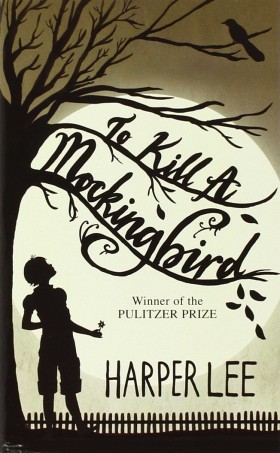
Harper Lee passes away

harper lee

  • Harper Lee, the elusive novelist whose child’s-eye view of racial injustice in a small Southern town, “To Kill a Mockingbird,” became standard reading for millions of young people and an Oscar-winning film, has died.
  • To Kill a Mockingbird,” published in 1960, is the story of a girl nicknamed Scout growing up in a Depression-era Southern town. A black man has been wrongly accused of raping a white woman, and Scout’s father, the resolute lawyer Atticus Finch, defends him despite threats and the scorn of many.
  • The book quickly became a best-seller.
  • By 2015, its sales were reported by HarperCollins to be more than 40 million worldwide, making it one of the most widely read American novels of the 20th century.
  • “Now, 75 years later in an abundant society where people have laptops, cellphones, iPods, and minds like empty rooms, I still plod along with books,” she wrote.
  • By 2014, she had given in to the digital age and allowed her novel to come out as an e-book, calling it “‘Mockingbird’ for a new generation.”
  • A new play adaptation of “To Kill a Mockingbird” will land on Broadway during the 2017-18

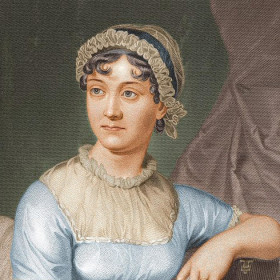
6 Interesting facts about Jane Austen

Jane Austen: 6 Interesting Facts About the Beloved English Author

Here are  some interesting highlights of Austen’s life, career, and literary impact.

  1. Although she never married,Jane Austendid become engaged — for one night. She received and accepted a proposal of marriage on December 2, 1802, two weeks before her 27 birthday. Jane Austen changed her mind overnight, however, and refused the proposal the next morning. And, perhaps she changed her mind because she believed – as she later wrote to a niece considering a marriage of convenience – that “nothing can be compared to the misery of being bound without Love.” Fortunately for her readers, she chose to remain single and was able to focus on writing rather than running a household and raising children.
  2. Jane Austen continued to imagine how the lives of her characters evolved long after she finished a novel.InA Memoir of Jane Austen, her nephew James Edward Austen-Leigh wrote, “She would, if asked, tell us many little particulars about the subsequent career of some of her people.” For example, Anne Steele, Lucy’s silly and vulgar sister in Sense and Sensibility, did not catch Dr. Davies after all. And, after the close of Pride and Prejudice, Kitty Bennet eventually married a clergyman near Pemberley, while Mary ended up with a clerk who worked for her Uncle Philips. Some of the most interesting revelations, however, related to Emma. Mr. Woodhouse not only survived Emma’s marriage to Mr. Knightly, but also kept his daughter and son-in-law living at Hartfield for two years. Deirdre Le Faye has also noted in Jane Austen: A Family Record that “According to a less well-known tradition, the delicate Jane Fairfax lived only another nine or ten years after her marriage to Frank Churchill.”
  3. The surnames of a number of Austen’s characters can be found within the prominent and wealthy Wentworth family of Yorkshire — which also happens to intersect with Jane Austen’s own family tree.
  4. Jane Austen took her writing very seriously. She began writing stories, plays and poetry when she was 12 years old. Most of her “Juvenilia,” as the material she wrote in her youth is called, was in the comic vein. She wrote a parody of textbook histories,The History of England… by a partial, prejudiced and ignorant historian, when she was 16 years old. She also wrote parodies of the romantic novels of “sensibility” that were popular in her day. Austen’s family members read aloud and performed plays for each other, and she learned about writing from these activities and the comments her family made about her own efforts. By the age of 23, Austen had written first drafts of the novels that later became Sense and SensibilityPride and Prejudice and Northanger Abbey.     From the letters she wrote to her sister, Cassandra, and other family members, one can see that Jane Austen was proud of her writing. She enjoyed discussing her latest work, sharing news about a novel’s progress at the printer, and offering advice on the craft of writing to other aspiring authors in the family. She also carefully tracked comments made by family members and friends about Mansfield Park and Emma and referred to Pride and Prejudice as her “own darling child.” Jane Austen continued writing throughout her adult life until just before she died in July of 1817.
  5. Jane Austen’s life was not limited to a sheltered country existence. On the surface, her life seems to have been quiet and secluded; she was born in a small country village and lived there for 25 years. Her nephew James Edward Austen-Leigh publishedA Memoir of Jane Austen in 1869, which reinforced the image that she was a demure, quiet maiden aunt in the best Victorian tradition. However, she led a very active life with travel and social contacts of many types. Through her family and friends she learned a great deal about the world around her.
  6. Men read Jane Austen, too.Jane Austen’s novels are sometimes viewed as “chick-lit” romances, leading some men to think they wouldn’t enjoy reading them. But, Jane Austen has always had male admirers. Her books are not just about romance; they have a serious instructional purpose clothed in novel form. British Prime Minister Harold Macmillan admitted to reading Austen’s novels, andWinston Churchill credited her with helping him win World War II .Rudyard Kipling read Jane Austen aloud to his wife and daughter each evening in an effort to raise their spirits after his son, fighting in WWI, was reported missing and believed dead. And one of her male contemporaries, Sir Walter Scott, praised her writing in his journal: “Also read again, and for the third time at least, Miss Austen’s very finely written novel of Pride and Prejudice. That young lady had a talent for describing the involvements and feelings and characters of ordinary life, which is to me the most wonderful I ever met with.”

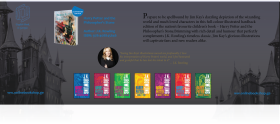
The ‘Harry Potter’ illustrated edition

This illustarted edition brings back the magic!

sorcerers-stone-illustrated

Those of us who’ve read the Harry Potter series fell in love because of the wonder of it all.

In a way, these Harry Potter books are new. Paging through the Illustrated Edition brings back the magic and wonder you felt while reading the series for the first time. Jim Kay’s illustrations are simply gorgeous — they’re peppered throughout the story in different shapes and sizes, and perfectly blend with Rowling’s words.

This Illustrated Edition is wider and taller than other versions of the Potter books in order to accommodate the combination of Rowling’s words and Kay’s illustrations. Printed in full color with a slight gloss, turning each page is an exciting prospect.

And these two illustrations depicting Harry with Hagrid and Dumbledore remind you of the wonder Sorcerer’s Stone beholds: Harry is a new, young wizard being introduced to a complicated, beautiful, magical world for the first time.

harry-dumbledore-illustrated-edition


[button color=”grey” size=”medium” link=”http://www.hypable.com/harry-potter-illustrated-edition-review-price/” ]Source[/button]

Author: Andrew Sims

Can Social Media Have a Role to Play in Managing a Successful Classroom?

Social Media is one venue (of many) to LEARN.

Learning for the 22nd century increasingly means being social and connected

Social Media adds so many layers of depth to traditional learning strategies to include modern/now literacies , why would we not want to expose, facilitate and support our students in becoming literate in the area of global, network, media, information literacies and digital citizenship?

Communication has changed in the world around us. It is more visual, it is more concise, it is shareable, it is exponential in terms of the reach of our communication…how is this reflected in our current curriculum and pedagogies?

Information has changed our lives. The way we have access to it, the way we filter it, the way we consume it, the way we need to evaluate it, the way we produce it, the way we disseminate it. Social Media plays an integral part in the way information flows in our daily lives. Why would we not give the learners in our classroom the opportunity to play, experiment, touch, mold, nurture, take apart, put together, create, disseminate, connect and learn to live and thrive in a world of exponential growth of information?

The lines between our lives and “digital lives” are blurring at an accelerating speed, just as the difference between citizenship and “digital citizenship” is becoming hazier

The world is shrinking. Connecting, communicating and collaborating with people from around the world, due to technology, is sometimes easier than the same task involving people from the same geographic location… how can we not give our students the opportunities to broaden their geographic and cultural horizons by interacting beyond their culture, language and perspective.

[button color=”grey” size=”medium” link=”http://langwitches.org/blog/2015/10/13/can-social-media-have-a-role-to-play-in-managing-a-successful-classroom/” ]Source[/button]