Notice: Function _load_textdomain_just_in_time was called incorrectly. Translation loading for the content-views-query-and-display-post-page domain was triggered too early. This is usually an indicator for some code in the plugin or theme running too early. Translations should be loaded at the init action or later. Please see Debugging in WordPress for more information. (This message was added in version 6.7.0.) in /home2/englita2/public_html/blogebg/wp-includes/functions.php on line 6170
Notice: Function _load_textdomain_just_in_time was called incorrectly. Translation loading for the js_composer domain was triggered too early. This is usually an indicator for some code in the plugin or theme running too early. Translations should be loaded at the init action or later. Please see Debugging in WordPress for more information. (This message was added in version 6.7.0.) in /home2/englita2/public_html/blogebg/wp-includes/functions.php on line 6170
Notice: Function _load_textdomain_just_in_time was called incorrectly. Translation loading for the gravity-forms-pdf-extended domain was triggered too early. This is usually an indicator for some code in the plugin or theme running too early. Translations should be loaded at the init action or later. Please see Debugging in WordPress for more information. (This message was added in version 6.7.0.) in /home2/englita2/public_html/blogebg/wp-includes/functions.php on line 6170 Build the skills for the future | Blog EBE
Skip to content
This gallery is dedicated to winner schools that participated in Easter Competition 2024!
We would like to, once again, congratulate and thank our participants for their efforts, hard-work and team building.
Teachers – we thank you for being part of this competition – we are proud of you for being educational treasure seekers. Please see album of your school, down below:
This gallery is dedicated to winner schools that participated in Halloween Competition 2023!
We would like to, once again, congratulate and thank our participants for their efforts, hard-work and team building.
Teachers – we thank you for being part of this competition – we are proud of you for being educational treasure seekers. Please see album of your school, down below:
Looking for ways to help your students take their exam writing to the next level? One of the best ways to boost writing scores is with the power of formative assessment. In this webinar we’ll explore the principles and best practices for formative assessment of writing, techniques for providing feedback, and ways of using assessment results to drive instruction.
The event will take place live 3 times on Friday 19th May.
Register for the time that best suits your busy schedule!
Kateryna Protsenko is Head of Tutoring at Promova, a one-stop solution for all language learning needs. Having been in English language teaching for over 15 years, Kate has worked as a Cambridge CELTA / Delta trainer, materials writer, manager for several language learning organizations, and has co-authored an exam preparation coursebook. She is passionate about learning and teaching, loves a good challenge, and is constantly looking for ways to expand her horizons and pick up new ideas from various industries.
This gallery is dedicated to winner schools that participated in Easter Competition 2023!
We would like to, once again, congratulate and thank our participants for their efforts, hard-work and team building.
Teachers – we thank you for being part of this competition – we are proud of you for being educational treasure seekers. Please see album of your school, down below:
Speaking: Ensure your new hires and students can be easily understood when they communicate with customers, co-workers or other students.
Listening: Check that job candidates and students can understand what they are hearing on the phone with customers, or in class during a lecture.
Reading: Confirm that staff and students understand what they are reading, whether it be customer or co-worker emails, lecture notes or assignments.
Writing: Evaluate how clearly and effectively an employee can write emails or provide real-time chat support to customers.
Level Test
Place new students at the right level, fast.
The Pearson English Level Test removes the time, stress and risk of human error involved in first day testing. It gives you the accurate, at-a-glance data you need to understand your students’ needs, both individually and as a group – so you can start supporting them and target your teaching right away.
With just a few basic set-up requirements, the Level Test can even be taken from home.
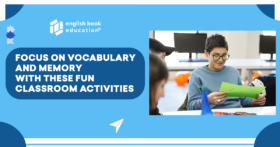
All learning is remembering said Plato… er… or was it Socrates? I forget. Anyway, I’m sure all of us agree that memory plays a central role in learning a foreign language and in particular, learning new words. The first two thousand are easy. As research tells us, approximately 80% of almost any text in English is made up of the 2,000 most frequent words. Students meet these words repeatedly whatever they read or listen to, and whether they like it or not. And presumably they like it. Why? Because we know that repeated exposure is vital for long-term memorisation, so it effectively means that the first 2,000 words come ‘for free’!
But what about the next thousand, and the thousand after that? Researchers suggest that a student probably needs to know about 5,000 words to pass the Cambridge First Certificate Exam and maybe upwards of 10,000 to be considered genuinely C2 level on the CEFR scale. (Just for reference, an educated native speaker will probably have a passive vocabulary of around 20,000 words.) What can we do to help our students learn the thousands of less frequent words in the English language? It’s not easy, that’s for sure. There is no magic bullet. But here are some thoughts based on my own experience of nearly 40 years in the classroom.
Focus on the most useful words
Sounds obvious, doesn’t it? But time is always limited, so make sure that the words you are asking your students to learn are the most useful, which probably means the most frequent, for their particular stage in the learning process. Usually your coursebook will do this for you. Vocabulary selection in the different levels of Focus is informed by the frequency criteria of the Global Scale of English. So, in level 1 you might teach ‘silly’ (A1), but you wouldn’t teach ‘preposterous’ (C1). That would be silly.
Focus on memorable first encounters
You never get a second chance to make a first impression. This is as true for words as it is for people. Encountering words for the first time in richly evocative, personalised, meaningful or unexpected contexts can help the memorisation process. The more neurological stimulation, the better.
Focus on teaching effective word-learning strategies
This should be an ongoing ‘learner training’ aspect of your teaching. Firstly, encourage students to expose themselves to as much English as possible outside the classroom: music lyrics, tweets, blog posts, vlogs, video clips, extensive reading and listening (including podcasts and spoken word), watching films and TV series with English subtitles. These are just a few obvious sources. Secondly, train students how to discover meanings and recognise correct usage: guessing from context; using dictionaries effectively or learning basic meanings of high frequency affixes. Finally, teach your students different ways of recording vocabulary. Encourage them to create paper or digital flash cards; introduce them to mnemonic systems such as the keyword method or simply explore more creative ways of noting words down. There are lots of ideas in the Word Store – a unique feature of the Focus series.
Focus on systematic recycling
As you can’t guarantee that words outside the top 2,000 will automatically reoccur at conveniently spaced intervals, it is your job to engineer systematic re-encounters with the new words that you teach. A coursebook like Focus incorporates frequent recycling of target vocabulary, but it’s never enough. Also, what about all that vocabulary you taught when, for whatever reason, the lesson took a different direction and you went ‘off-script’ and started scribbling words on the board that weren’t even in the coursebook? My own very low-tech solution to capturing all those words is to institute ‘Class Scribe’. Students take it in turns to be the class scribe. They are given a blank sheet of paper at the beginning of the lesson and their role is simply to record any new language that comes up. This ‘data’, along with the target vocabulary in my coursebook, becomes my learning corpus. Having a class scribe…
provides a unique record of each lesson
helps improve classroom dynamics
can reveal learning styles and difficulties
Five vocabulary activities to focus on vocabulary and memory
So now I know which words I’ve taught, I can make sure that I recycle them at regular intervals. How do I do that? By equipping myself with a repertoire of tried and trusted 5 to 10-minute activities that can be used as lead-ins, warmers or fillers. Activities that require very little or no preparation and can be adapted to cover a wide variety of different lexical areas. Here are my favourite five:
1) Board bingo
Write down twelve to fifteen words you want to revise on the board. Ask the students to choose five of the words and write them down. When they’ve done that, tell the students that you’re going to read out dictionary definitions of the words in random order and that they should cross out their words if they think they hear the definition. When they’ve crossed out all five words, they shout Bingo! Make sure you keep a record of the word definitions you call out so that you can check the students’ answers.
2) Odd one out
An old favourite. Think of the vocabulary, pronunciation or grammar point you want to revise. Write five words on the board and ask students which one is the odd one out. The students then explain why. This usually relates to the meaning of the word so in the following example the odd one out is dog.
pink / red / dog / blue / yellow
However, you could have any criteria you like, say, number of syllables. In that case, the odd one out would be yellow. In fact, the more unexpected the criteria, the better. The important thing is that they’re looking at and thinking about the words you want them to revise.
3) Category dictation
Choose the language you want to review and devise a way of categorising it into preferably two categories. Write the category headings on the board and ask the students to copy them. Then dictate the words (10–12 maximum) slowly and clearly, and ask the students to write them down in the correct category. For example, say you want to revise jobs. Your categories might be jobs you do inside and jobs you do outside.
Inside
Outside
Then dictate the words: e.g. a farmer, an archaeologist, a surgeon, an au pair, a vet, etc. The students write down the words in the correct category. When you’ve dictated 10 or 12 words, ask students to compare their lists.
4) Scrabble
Choose a lexical set you want to revise. Students work in pairs. They’ll need a piece of paper, preferably graph paper with squares on. Choose a topic, for example, school subjects. Student A writes ‘Across’ words, and Student D writes ‘Down’ words. It’s a good idea to provide the first word across, and make sure that it’s a long one. Student D then adds another school subject down the paper from top to bottom. This word must intersect with the school subject written across the page. Student A then writes another school subject across that intersects with the school subject Student D has written down. Students continue taking it in turns to write in their words.
Students build up words like on a Scrabble board until they can’t think of any more school subjects. (You could make it into a game by saying that the last person to write a school subject is a winner.) Note that students must leave one square between each word – this is why it’s better and clearer to use squared paper.
5) Random Letters
This activity is good for revising any type of vocabulary. Ask the students to call out any seven letters from the alphabet. Write the letters scattered on the board. Then ask the students in pairs to think of a word beginning with each letter on the board. The most obvious criteria is to revise words from a specific lexical set that you have taught recently, e.g. jobs, clothes, food, animals, etc. Alternatively, you could simply ask them for words they’ve noted down in lessons over the past two weeks. Another possibility would be to find the most interesting words they can from the Student Book unit that you’ve just finished. If the lexical set you want them to revise is particularly rich, you could ask the students to think of as many words for each letter as they can in say three minutes: make it into a contest to find the most words.
It’s always worth spending time thinking about how you can help your students to learn words more efficiently and more effectively. Way back in the 1970s the linguist David Wilkins summed up the importance of vocabulary learning thus: ‘Without grammar very little can be conveyed, without vocabulary nothing can be conveyed’.
It’s December already and many teachers will be
preparing for the end of term. This can be a tricky time of year to plan for,
as your younger learners start to get excited about their winter (or summer, if
you’re in the southern hemisphere) vacation!
In this post we’ll look at a few ideas to help you
get through those last few weeks of term with some fun activities suitable for
young learners of different age groups.
1. Winter time!
Your younger learners will love anything related to
snow, especially if you live in a warmer country. Snow can seem fascinating to
children who have never seen it in real life, and exciting to those who
experience it only a few times a year! Make the most of their interest and
curiosity, and teach them language through this motivating topic.
Start by teaching winter clothes vocabulary, by
having students categorize types of clothing by season. Give pairs or small
groups of students flashcards or pictures of clothing and have them classify
them into summer and winter clothes.
If possible, bring in some items such as hats,
scarves, and gloves, and have a dressing up race where two students put on the
garments you call out. This can be a lot of fun!
Have students brainstorm different activities you
can do in the snow or in cold weather and mime each action together. Some ideas
are:
Make a
snowman
Have a
snowball fight
Make
footprint trails in the snow
Go
sledding
Go
ice-skating
Go
skiing
Finally, you could do a snowy craft with your
learners, such as making paper snowflakes or a snowman paper chain. Search
online for instructional videos and
templates.
If you’re in the southern hemisphere, you could
highlight the differences between the winter and summer, and have students come
up with activities they can do at the beach, instead.
2. Crazy sweater competition
At this time of year, crazy sweaters abound!
Festive sweaters have become a trend in recent years and the more extravagant
the better! With older kids, why not try a design activity where they have to
come up with their own crazy sweater?
Lots of interesting language can be taught,
including adjectives like sparkly, fluffy, baggy, spotted; and the different
features students can add to their sweaters, such as pompoms, buttons, zips,
and even flashing lights!
Have students write a description of their
sweaters, and present to the class. Then have the class vote on their favorite
crazy sweater.
3. Countdown Challenge
Vacation is around the corner and both you and your
students will be winding down, getting ready for the end of term. Make this a
bit more special and maintain momentum in those last few weeks by making a
Countdown Challenge calendar.
Count the lessons you have until the end of term
and write a challenge for each one on a card, then place it inside an envelope.
Write a number on each envelope, and hang up somewhere in your classroom. You
could stick them around the edge of your board, or use pegs to hang them along
a piece of string.
Each day, nominate a different student (or group if
you have a large class) to take that day’s card and do the challenge. This is a
nice routine for ending the lesson.
If your students are older, have them write the
challenges themselves. You could use this to review vocabulary and structures
students have learned during the term. Some fun challenges could be: name 10
things you wear in winter, act out a famous movie without speaking, or perform
a festive song.
4. Gift messages
In many cultures, gifts are given and received at
this time of year. Children often make long lists of toys and games they want,
but sometimes the best gifts are those that make us feel special.
Instead of talking about material gifts, focus on
positive messages that your students can share with each other.
Give each student a few cards and have them write a
kind message to one of their classmates on each one. This could be a
compliment, a thank you message, or something they have noticed about that
student’s progress and behavior in class, e.g. Thank you for helping me
remember new words or You’re always smiling in class.
To make sure that each student receives an equal
number of messages, assign names to each student secretly, for whom they have
to think of something kind to say. Messages should be anonymous.
You could set up a post box for the messages and
then choose a student to be mail deliverer and hand out the
messages at the end of the week, or in the last lesson.
5. Organize a holiday party
Have your students organize a party for the last
day of term and work as a team as they do so. When students are involved in a
planning task, they are using English to make decisions and really communicate
with each other.
Assign a different area of planning to groups of
students and give them some time in each lesson leading up to the end of term
to discuss their ideas and plan for the party.
Groups could work on:
Food and drink – students make a
list of snacks to bring, taking into account any dietary needs (they could
write a questionnaire to find out if students have any allergies). Encourage
students to think of some healthy alternatives to chips, candy, and soda!
Games – this group
chooses which games to play and makes any materials that are required. These
could be traditional party games, or typical classroom games.
Decorations – here students
decide how they can decorate the classroom and can make posters, paper chains,
party hats, and so on.
Music – this group makes a
playlist of songs they want to listen to.
Then, throw the party! Students will enjoy
themselves so much more when they have participated in the planning process and
worked hard to make the party a success.
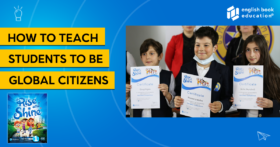
As teachers,
we all want our students to work toward making the world a
better place. And through focusing on global
citizenship, this drive to change the world is something we can help
foster every day in the classroom. In this post, we’ll explore
how:
What are global citizens?
A global
citizen is someone who knows that they are part of a worldwide community. They
understand there are people who have completely different lifestyles,
appearances, cultures and routines, but with whom we share common values and
responsibilities. Global citizenship encourages tolerance and
understanding – and learning about it helps children to become
open-minded adults.
Within
the context of a primary English classroom, helping students become aware
of themselves as citizens of the world will be an
introduction to a global way of thinking. And we can do this while also helping
them to become familiar with – and proficient – in English.
How can we introduce the concept?
Before students
put themselves in a global context, they should get to know themselves as
individuals. But they should also get to know themselves as people who are
part of their immediate communities.
In the classroom
this can be done by encouraging students to think
about something personal, such as their likes and dislikes. We
can then encourage students to look a little further: what kinds
of home do they see in their communities? What makes a house a home to them?
What about people working in their communities – what important jobs do they
do, and how do they make an impact?
For language
teachers, the idea is to combine vocabulary and grammar structures
with a slowly widening view of our world. Simply by introducing the
concept that we are part of a worldwide community can take the
children out of their own experiences, and help them start to consider
others.
Tips & activities:
Social media
makes it possible for teachers to get in contact with each
other across borders, and to set up a collaboration between their schools. Something
simple, like organizing a class video call for students after
lunchtime and encouraging students in different countries to discuss what
they ate in english, can help learners become more globally
aware.
How can we teach students to be proactive?
Once students
know something, they can progress to putting their knowledge into action.
Teachers can foster this by encouraging good habits – a simple
example is how we teach very young children to throw their
litter in a bin. As they grow older, we can ‘unpack’ these habits. That
is, we can help children look deeper into why they’re so
important. Using the example of litter again, this could
mean making students aware about how their civic responsibility has a real
environmental impact.
Let’s look at how
we can go from knowing to doing, in simple stages, with a range of
topics that are common in the language classroom:
Food:
Ask students
to think about what they like and dislike.
Ask students
to name foods that are good for us and what we should eat more of.
Teach about
school lunches in other countries.
Teach about
dishes eaten on special occasions around the world.
Have a food
festival or ‘munch day’ where students make snacks from around the
world.
Buildings:
Ask students
to talk about their own homes.
Teach about
types of home in other countries.
Discuss
eco-architecture – such as solar panels, living walls, wind turbines on
roofs and local material that might be used in building
processes.
Venture
outside as a class to plant potted flowers and improve the
school yard, or make a container to collect rainwater for the school
garden.
Jobs:
Teach about
the jobs people do at school –such as cleaning, cooking, or driving.
Think about
jobs within the community and why they are necessary.
Think about
what skills each child and their parents have, and how
these skills needed for different jobs.
Have a skill
sharing day where students teach each other something
new.
Host a ‘kids
take over day’ where students get to do an important
job at school (such as cleaning the
classrooms or serving lunch).
Technology:
Discuss the
different types of technology used at home and school.
Think about
how to use this technology responsibly.
Talk about
different households and find out how and when tablets,
laptops and phones are used. For example, who is allowed to watch videos
while eating? Who can read on their tablet in bed?
Make your
own set of technology rules for the classroom, and discuss why they’re
important.
Holidays:
Ask students
what they like to do on holiday.
Teach about
how to stay safe at the ocean or in the countryside.
Talk about
other countries students have travelled to, or would like to travel
to, and learn about interesting landmarks in those countries.
Discuss
eco-tourism efforts and why they are important.
Have
a ‘Let’s go to [name of a city or country) day.’ Make
posters about famous sights, learn some phrases of the language spoken
there and have students imagine they have gone
abroad for the day.
Rise and Shine is a 7-level story-based primary course that combines
language learning with global citizenship. It is built on the Global
Scale of English, which helps students to understand exactly
what they are learning and why.
Rise and Shine is a 7-level story-based primary course that combines language learning with global citizenship. It is built on the Global Scale of English, which helps students to understand exactly what they are learning and why.
The course inspires learners to become confident explorers – they learn English and aim to become responsible global citizens. The series is also designed for use in inclusive and mixed-ability classrooms and supports every learner to achieve and shine.